
Hogg S. Essential microbiology
Подождите немного. Документ загружается.

JWBK011-13 JWBK011-Hogg August 12, 2005 16:31 Char Count= 0
338

JWBK011-13 JWBK011-Hogg August 12, 2005 16:31 Char Count= 0
13
The Control of Microorganisms
An antiseptic is a chemi-
cal agent of disinfection
that is mild enough to be
used on human skin or tis-
sues.
Prior to Lister’s pioneering work with antiseptics,
around four out of every ten patients undergoing an am-
putation failed to survive the experience, such was the
prevalence of infections associated with operative proce-
dures, and yet, just 40 years later, this figure had fallen to
just three in a hundred. This is a dramatic demonstration
of the fact that in some situations it is necessary for us
to destroy, or at least limit, microbial growth, because of the undesirable consequences
of the presence of microorganisms, or their products.
Control of microorganisms can be achieved by a variety of chemical and physical
methods. Sterilisation is generally achieved by using physical means such as heat, radi-
ation and filtration. Agents which destroy bacteria are said to be bactericidal. Chemical
methods, whilst effective at disinfection, are generally not reliable for achieving total
sterility. Agents which inhibit the growth and reproduction of bacteria without bringing
about their total destruction are described as bacteriostatic.
Sterilisation
Sterilisation is the process
by which all microorgan-
isms present on or in an
object are destroyed or
removed.
One of the oldest forms of antimicrobial treatment is
that of heating, and in most cases this remains the pre-
ferred means of sterilisation, provided that it does not
cause damage to the material in question. The benefits
of boiling drinking water have been known at least since
the 4th century bc, when Aristotle is said to have ad-
vised Alexander the Great to order his troops to take this precaution. This of course
was many centuries before the existence of microorganisms had been demonstrated or
perhaps even suspected.
Sterilisation by heat
Boiling at 100
◦
C for 10 minutes is usually enough to achieve sterility, provided that
organisms are not present in high concentrations; in fact most bacteria are killed at about
70
◦
C. If, however, endospores of certain bacteria (notably Bacillus and Clostridium)
339
JWBK011-13 JWBK011-Hogg August 12, 2005 16:31 Char Count= 0
340 THE CONTROL OF MICROORGANISMS
Table 13.1 Temperature of steam at different pressures
Pressure
Temperature
(kPa) (psi) (
◦
C)
0 0 100
69 10 115
103.5 15 121
138 20 126
172.5 25 130
psi = pounds/in
2
.
are present, they can resist boiling, sometimes for several hours. As we saw in Chapter 7,
the causative agents of some particularly nasty conditions, such as botulism and tetanus,
are members of this group. In order to destroy the heat resistant endospores, heating
beyond 100
◦
C is required, and this can be achieved by heating under pressure in a
closed vessel (Table 13.1). A typical laboratory treatment is 15 minutes at a pressure
of 103 kpa (15 psi), raising the temperature of steam to 121
◦
C. This is carried out
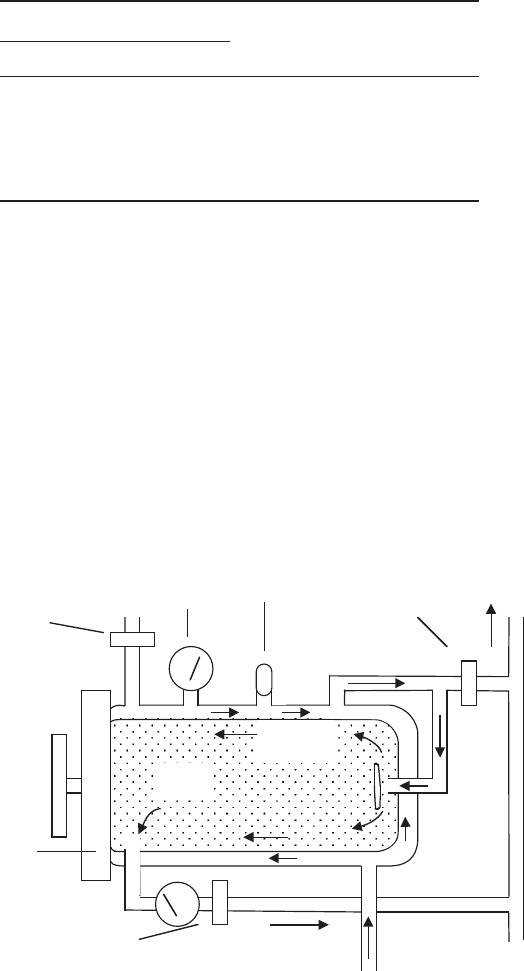
in an autoclave, which is, to all intents and purposes, a large-scale pressure cooker
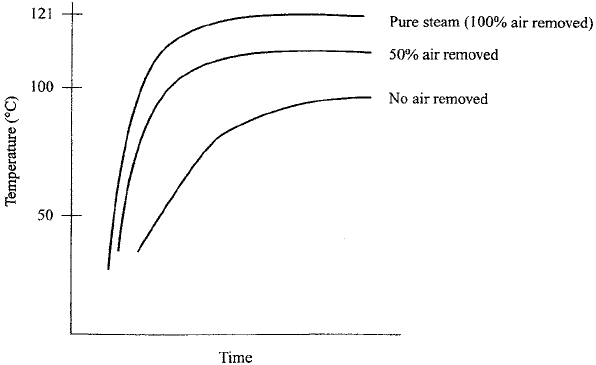
(Figure 13.1). Air is driven out of the system so that the atmosphere is made up entirely
of steam; the desired temperature will not be reached if this is not achieved (Figure 13.2).
Large loads, or large volumes of liquids, may need a longer treatment time in order for
Door
Steam
A
ir
Air exhaust
Steam exhaus
t
T
hermometer and valve
Steam
v
alve
Steam in
Exhaust
v
alve
Pressure Safety
gauge
valve
Figure 13.1 The autoclave. Steam enters the chamber, driving air out. As the pressure of
the steam reaches 103 kPa (15 psi) the temperature reaches 121
◦
C, sufficient to kill resistant
endospores as well as vegetative cells
JWBK011-13 JWBK011-Hogg August 12, 2005 16:31 Char Count= 0
STERILISATION 341
Figure 13.2 An autoclave only reaches maximum temperature in an atmosphere of pure
steam. Temperature achieved at 103 kPa (15 psi) in different atmospheres. Any air remaining
in the system will reduce the final temperature achieved. From Hardy, SP: Human Microbi-
ology, Taylor and Francis, 2002. Reproduced by permission of Thomson Publishing Services
the heat to penetrate throughout. Modern autoclaves include probes designed to assess
the temperature within a load rather than that of the atmosphere. Sometimes, spores
of Bacillus stearothermophilus are introduced into a system along with the material
to be sterilised; if subsequent testing shows that the spores have all been destroyed, it
is reasonable to assume that the system has also destroyed any other biological entity
present. Special tape which changes colour if the necessary temperature is reached can
act as a more convenient but less reliable indicator.
An effect similar to that achieved by autoclaving can be obtained by a method called
intermittent steaming or tyndallisation (after the Irish physicist John Tyndall, who was
one of the first to demonstrate the existence of heat-resistant microbial forms). This
is used for those substances or materials that might be damaged by the high tempera-
tures used in autoclaving. The material is heated to between 90 and 100
◦
C for about
30 minutes on each of three successive days, and left at 37
◦
C in the intervening periods.
Vegetative cells are killed off during the heating period, and during the 37
◦
C incubation,
any endospores that have survived will germinate. Once these have grown into more
vegetative cells, they too are killed in the next round of steam treatment. Clearly this
is quite a long-winded procedure, and it is therefore reserved for those materials which
might be harmed by steam sterilisation.
High temperatures can cause damage to the taste, texture and nutritional value of
many food substances and in such instances, it is sufficient to destroy vegetative cells by
a process of pasteurisation (among his many other achievements, Pasteur demonstrated
that the microbial spoilage of wines could be prevented by short periods of heating).
Milk was traditionally pasteurised by heating large volumes at 63
◦
C for 30 minutes,
but the method employed nowadays is to pass it over a heat exchanger at 72
◦
C for 15
seconds (HTST – high temperature, short time). This is not sterilisation as such, but

JWBK011-13 JWBK011-Hogg August 12, 2005 16:31 Char Count= 0
342 THE CONTROL OF MICROORGANISMS
it ensures the destruction of disease-causing organisms such as Brucella abortus and
Mycobacterium tuberculosis, which at one time were frequently found in milk, as well
as significantly reducing the organisms that cause food spoilage, thus prolonging the
time the milk can be kept. Some protocols exceed these minimum values in order to
reduce further the microbial content of the milk. One type of milk on sale in the shops
is subjected to more extreme heating regimes; this is ‘UHT’ milk, which can be kept for
several weeks without refrigeration, though many find that this is achieved at some cost
to its palatability! It is heated to ultra high temperatures (150
◦
C) for a couple of seconds
using superheated steam. The product is often referred to as being ‘sterilised’, but this
is not true in the strictest sense. Milk is not the only foodstuff to be pasteurised; others
such as beer, fruit juices and ice cream each has its own time/temperature combination.
All the above methods employ a combination of heat and moisture to achieve their
effect; the denaturation of proteins, upon which these methods depend, is enhanced in
the presence of water. Heat is more readily transferred through water than through air,
and the main reason that endospores are so resistant is because of their very low water
content. In some situations however, it is possible to employ dry heat, using an oven to
sterilise metal instruments or glassware for example. It is a more convenient procedure,
but a higher temperature (160–170
◦
C) and longer exposure time (2 hours) are required.
Dry heat works by oxidising (‘burning’) the cell’s components. Microorganisms are
quite literally burnt to destruction by the most extreme form of dry heat treatment,
incineration. Soiled medical dressings and swabs, for example are potentially hazardous,
and are destroyed in this way at many hundreds of degrees Celsius. As we saw in Box 4.1,
sterilising the loops and needles used to manipulate microorganisms by means of flaming
is a routine part of aseptic procedures.
Sterilisation by irradiation
Certain types of irradiation are used to control the growth of microorganisms. These
include both ionising and non-ionising radiation.
The most widely used form of non-ionising radiation is ultraviolet (UV) light. Wave-
lengths around 260 nm are used because these are absorbed by the purine and pyrimidine
components of nucleic acids, as well as certain aromatic amino acids in proteins. The
absorbed energy causes a rupture of the chemical bonds, so that normal cellular func-
tion is impaired. You will recall from Chapter 11 that UV light causes the formation of
thymine dimers (Figure 11.21), where adjacent thymine nucleotides on the same strand
are linked together, inhibiting DNA replication. Although many bacteria are capable of
The world’s biggest UV
wastewater treatment
plant was opened in
Manukau, New Zealand
in 2001. Its 8000 UV lamps
are able to treat up to
50 000 cubic metres of
water per hour.
repairing this damage by enzyme-mediated photoreac-
tivation, viruses are much more susceptible. UV lamps
are commonly found in food preparation areas, operat-
ing theatres and specialist areas such as tissue culture
facilities, where it is important to prevent contamina-
tion. Because they are also harmful to humans (particu-
larly the skin and eyes), UV lamps can only be operated
in such areas when people are not present. UV radia-
tion has very poor penetrating powers; a thin layer of
glass, paper or fabric is able to impede the passage of
JWBK011-13 JWBK011-Hogg August 12, 2005 16:31 Char Count= 0
STERILISATION 343
the rays. The chief application is therefore in the sterilisation of work surfaces and the
surrounding air, although it is increasingly finding an application in the treatment of
water supplies.
Ionising radiations have a shorter wavelength and much higher energy, giving them
greater penetrating powers. The effect of ionising radiations is due to the production
of highly reactive free radicals, which disrupt the structure of macromolecules such as
DNA and proteins. Surgical supplies such as syringes, catheters and rubber gloves are
commonly sterilised employing gamma (γ ) rays from the isotope cobalt 60 (
60
Co).
Gamma radiation has been approved for use in over 40 countries for the preservation
of food, which it does not only by killing pathogens and spoilage organisms but also
by inhibiting processes that lead to sprouting and ripening. The practice has aroused
a lot of controversy, largely due to concerns about health and safety, although the
first patent applications for its use date back nearly a hundred years! Although the
irradiated product does not become radioactive, there is a general suspicion on the part
of the public about anything to do with radiation, which has led to its use on food
being only very gradually accepted by consumers. In this respect Europe lags behind
the USA, where during the 1990s a positive attitude towards irradiation of food both
by professional bodies and the media has led to a more widespread acceptance of the
technology. Gamma radiation is used in situations where heat sterilisation would be
inappropriate, because of undesirable effects on the texture, taste or appearance of the
product. This mainly relates to fresh produce such as meat, poultry, fruit and vegetables.
Irradiation is not suitable for some foodstuffs, such as those with a high fat content,
where unpleasant tastes and odours result. Ionising radiations have the great advantage
over other methods of sterilisation that they can penetrate packaging.
Filtration
Many liquids such as solutions of antibiotics or certain components of culture media
become chemically altered at high temperatures, so the use of any of the heat regimes
described above is not appropriate. Rather than killing the microorganisms, an alter-
native approach is simply to isolate them. This can be done for liquids and gases by
passing them through filters of an appropriate pore size. Filters used to be made from
materials such as asbestos and sintered glass, but have been largely replaced by mem-
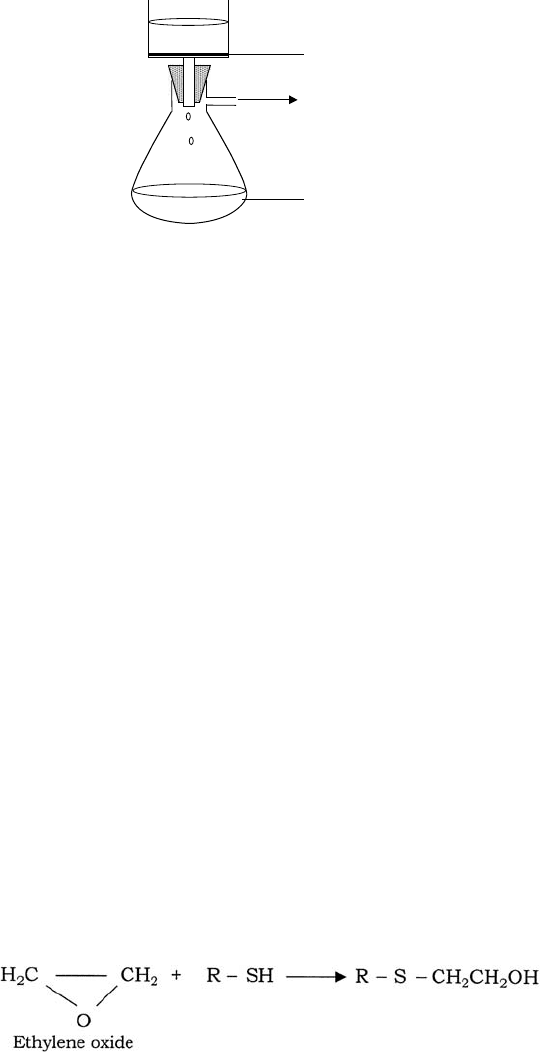
brane filters, commonly made of nitrocellulose or polycarbonate (Figure 13.3). These
can be purchased ready-sterilised and the liquid passed through by means of pressure
or suction. Supplies of air or other gases can also be filter-sterilised in this way. A pore
size of 0.22 µm is commonly used; this will remove bacteria plus, of course, anything
bigger, such as yeasts; however, mycoplasma and viruses are able to pass through pores
of this size. With a pore size 10 times smaller than this, only the smallest of viruses can
pass through, so it is important that an appropriate pore size is chosen for any given
task. A drawback with all filters, but especially those of a small pore size, is that they
can become clogged easily. Filters in general are relatively expensive, and are not the
preferred choice if alternative methods are available.
High efficiency particulate air (HEPA) filters create clean atmospheres in areas such
as operating theatres and laboratory laminar-flow hoods.
JWBK011-13 JWBK011-Hogg August 12, 2005 16:31 Char Count= 0
344 THE CONTROL OF MICROORGANISMS
To vacuum
Membrane filter
Sterile liquid
Figure 13.3 Membrane filtration. Membrane filters are used to sterilise heat-labile sub-
stances. They are available in a variety of pore sizes, according to the specific application
Sterilisation using ethylene oxide
Generally, chemical methods achieve only disinfection (see below); the use of the gas
ethylene oxide, however, is effective against bacteria, their spores and viruses. It is used
for sterilising large items of medical equipment, and materials such as plastics that would
be damaged by heat treatment. Ethylene oxide is particularly effective in sterilising items
such as dressings and mattresses, due to its great powers of penetration. In the food
industry, it is used as an antifungal fumigant, for the treatment of dried fruit, nuts and
spices. The materials to be treated are placed in a special chamber which is sealed and
filled with the gas in a humid atmosphere at 40–50
◦
C for several hours. Ethylene oxide
is highly explosive, so it must be used with great caution; its use is rendered safer by
administering it in admixture (10 per cent) with a non-flammable gas such as carbon
dioxide. It is also highly toxic, so all items must be thoroughly flushed with sterile air
following treatment to remove any trace of it. Ethylene oxide is an alkylating agent;
it denatures proteins by replacing labile hydrogens such as those on sulphydryl groups
with a hydroxyl ethyl radical (Figure 13.4).
Disinfection
We saw at the beginning of this chapter how sterilisation is an absolute term, imply-
ing the total destruction of all microbial life. Disinfection, by comparison, allows the
possibility that some organisms may survive, with the potential to resume growth when
Figure 13.4 Ethylene oxide is an alkylating agent. Like other alkylating agents, ethylene
oxide affects the structure of both proteins and nucleic acids. Labile hydrogen atoms such
as those on sulphydryl groups are replaced with a hydroxyl ethyl radical

JWBK011-13 JWBK011-Hogg August 12, 2005 16:31 Char Count= 0
DISINFECTION 345
Disinfection is the elim-
ination or inhibition of
pathogenic microorga-
nisms in or on an object
so that they no longer
pose a threat.
conditions become more favourable. A disinfectant is a
chemical agent used to disinfect inanimate objects such
as work surfaces and floors. In the food and catering
industry, especially in the USA, the term sanitisation
is used to describe a combination of cleaning and dis-
infection. Disinfectants are incapable of killing spores
within a reasonable time period, and are generally effec-
tive against a narrower range of organisms than physical
means. Decontamination is a term sometimes used interchangeably with disinfection,
but its scope is wider, encompassing the removal or inactivation of microbial products
such as toxins as well as the organisms themselves.
The lethal action of disinfectants is mainly due to their ability to react with microbial
proteins, and therefore enzymes. Consequently, any chemical agent that can coagu-
late, or in any other way denature, proteins will act as a disinfectant, and compounds
belonging to a number of groups are able to do this.
Alcohols
The antimicrobial properties of ethanol have been known for over a century. It was
soon realised that it worked more effectively as a disinfectant at less than 100 per cent
concentration, that is, when there was some water present. This is because denaturation
of proteins proceeds much more effectively in the presence of water. (Recall that moist
heat is more effective than dry heat for the same reason.) It is important, however, not to
overdo the dilution, as at low percentages some organisms can actually utilise ethanol
as a nutrient! Ethanol and isopropanol are most commonly used at a concentration of
70 per cent. As well as denaturing proteins, alcohols may act by dissolving lipids, and
thus have a disruptive effect on membranes, and on the envelope of certain viruses.
Both bacteria and fungi are killed by alcohol treatment, but spores are often resistant
because of problems in rehydrating them; there are records of anthrax spores surviving
in ethanol for 20 years! The use of alcohols is further limited to those materials that can
withstand their solvent action.
Alcohols may also serve as solvents for certain other chemical disinfectants. The
effectiveness of iodine for example, can be enhanced by being dissolved in ethanol.
Halogens
Chlorine is an effective disinfectant as a free gas, and as a component of chlorine-
releasing compounds such as hypochlorite and chloramines. Chlorine gas, in compressed
form, is used in the disinfection of municipal water supplies, swimming pools and the
dairy industry. Sodium hypochlorite (household bleach) oxidises sulphydryl (−SH) and
disulphide (S−S) bonds in proteins. Like chlorine, hypochlorite is inactivated by the
presence of organic material. Chloramines are more stable than hypochlorite or free
chlorine, and are less affected by organic matter. They are also less toxic and have the
additional benefit of releasing their chlorine slowly over a period of time, giving them
a prolonged bactericidal effect.
JWBK011-13 JWBK011-Hogg August 12, 2005 16:31 Char Count= 0
346 THE CONTROL OF MICROORGANISMS
Iodine acts by combining with the tyrosine residues on proteins; its effect is enhanced
by being dissolved in ethanol (1 per cent I
2
in 70 per cent ethanol) as tincture of iodine, an
effective skin disinfectant. Its use is being superseded by iodophores (Betadine, Isodine),
in which iodine is combined with an organic molecule, usually a detergent, to combat
bacteria, viruses and fungi, but not spores.
Phenolics
As we saw in Chapter 1, the germicidal properties of phenol (carbolic acid) were first
demonstrated by Lister in the middle of the 19th century. Since it is highly toxic, phenol’s
use in the disinfection of wounds has long since been discontinued, but derivatives such
as cresols and xylenols continue to be used as disinfectants and antiseptics. These are
both less toxic to humans and more effective against bacteria than the parent compound.
Phenol is still used, however, as a benchmark against which the effectiveness of related
disinfectants can be measured. The phenol coefficient compares the dilution at which the
derivative is effective against a test organism with the dilution at which phenol achieves
the same result. A phenol coefficient of more than one means that the new compound
is more effective than phenol against the organism tested, whereas a value of less than
one means that it is not as effective as phenol.
Phenolics act by combining with and denaturing proteins, as well as disrupting cell
membranes. Their advantages include the retention of activity in the presence of or-
ganic substances and detergents, and their ability to remain active for some time after
application; hence their effect increases with repeated use. Familiar disinfectants such
as Dettol, Lysol and chlorhexidine (Hibitane, Hibiscrub) are all phenol derivatives.
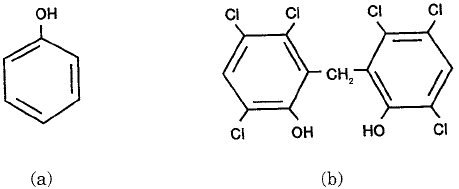
Hexachlorophene (Figure 13.5) is very effective against Gram-positive bacteria such as
staphylococci and streptococci, and used to be a component of certain soaps, surgical
scrubs, shampoos and deodorants. Its use is now confined to specialist applications in
hospitals since the finding that in some cases, prolonged application can lead to brain
damage.
Surfactants
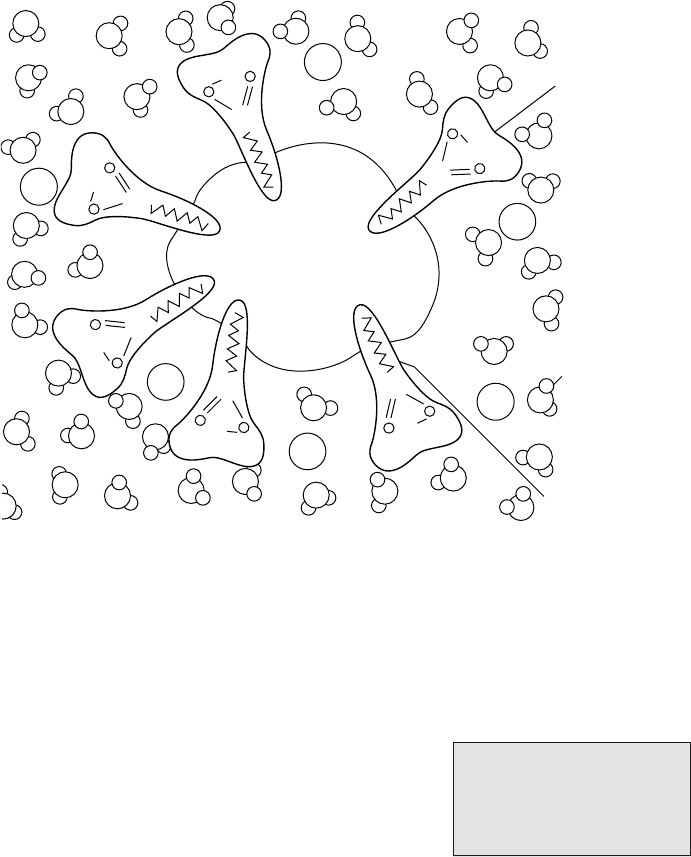
Surface active agents or surfactants, such as soaps and detergents, have the abil-
ity to orientate themselves between two interfaces to bring them into closer contact
Figure 13.5 The structure of (a) phenol and (b) hexachlorophene
JWBK011-13 JWBK011-Hogg August 12, 2005 16:31 Char Count= 0
THE KINETICS OF CELL DEATH 347
c
c
c
c
c
c
Insoluble
substance
Surfactant
molecule
Water
molecule
Hydrocarbon
chain
+
−
Na
+
Na
+
Na
+
Na
+
Na
+
+
−
−
−
+
+
−
+
Figure 13.6 The action of surfactants. The long hydrophobic tails of the detergent are
able to penetrate an insoluble grease particle. The negatively charged carboxyl group at the
other end attracts the positive pole of water molecules, enhancing the water solubility of the
grease. From Black, JG: Microbiology: Principles and Explorations, 4th edn, John Wiley &
Sons Inc., 1999. Reproduced by permission of the publishers
A surfactant reduces
the tension between two
molecules at an inter-
face.
(Figure 13.6). The value of soap has less to do with
its disinfectant properties than with ability to facilitate
the mechanical removal of dirt and microorganisms. It
does this by emulsifying oil secretions, allowing the de-
bris to be rinsed away. Detergents may be anionic (neg-
atively charged), cationic (positively charged) or non-
ionic. Cationic detergents such as quaternary ammonium compounds (ammonium chlo-
ride with each hydrogen replaced by an organic group, Figure 13.7) act by combining
with phospholipids to disrupt cell membranes and affect cellular permeability.
The kinetics of cell death
When microorganisms are exposed to any of the treatments outlined in the preceding
pages, they are not all killed instantaneously. During a given time period, only a certain
proportion of them will die. Suppose we had 1000 cells (an unrealistically small number,