
Kallen A. Understanding Biostatistics
Подождите немного. Документ загружается.

NONPARAMETRIC TESTS FOR HAZARDS 323
0
10
20
Number of events
100908070605040
Time (weeks)
Observed
Predicted
0
30
60
90
120
150
Number at risk
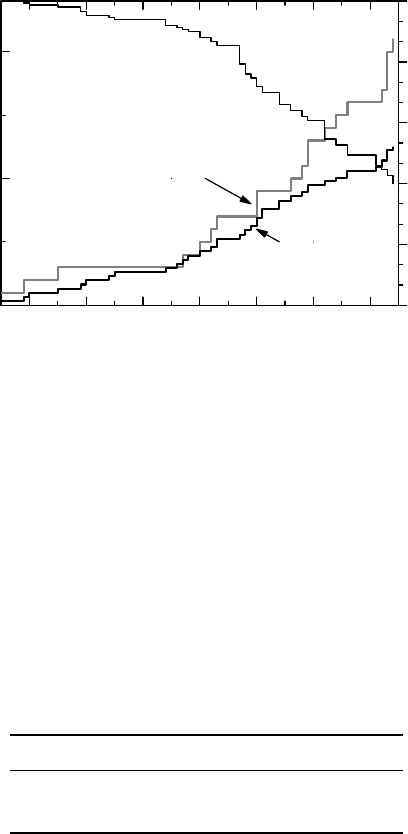
Figure 12.3 The observed and predicted number of deaths in the drug-treated rat group,
as well as the number ‘at risk’ (the decreasing curve in the upper half of the graph) at each
time point.
This means that the test statistic is formally the same as the Mantel–Haenszel test in
Section 5.5. The strata are the 2 × 2 tables we obtain at the event times, with the analysis
within each table done conditionally on margins.
Example 12.2 Figure 12.3 shows the key information for the log-rank test and the Wilcoxon
test for the rat data in Example 12.1. The three curves represent the number of cancer deaths,
N
n
(t), in the drug-treated group (Observed), the predicted number of cancer deaths in that
group based on the combined sample, assuming no difference between the groups (Predicted),
and the total number at risk, Y
+
(t) (the decreasing step function with y-axis to the right). One
summary of the log-rank test is as follows:
Group N Observed Expected
Control 100 19 27.55
Drug-treated 50 21 12.45
This test compares N
n
(∞) = N
n
(104) to the corresponding predicted value, and gives us the
p-value 0.0034. The Wilcoxon test is different: it weights the differences between observed
and predicted at each time point, with the weights given by the number of subjects at risk at
the same time. In Figure 12.3 we see that this down-weights the parts of the data where the
difference is the largest, so it should come as no surprise that the p-value in this case is larger
than that for the log-rank test, namely 0.026.
So far we have discussed the time to cancer death as an isolated phenomenon, when all
other causes of death are eliminated. If we wish to understand the effect of the drug in the
presence of these competing risks, we need to take a different approach. The analysis should
324 FROM THE LOG-RANK TEST TO THE COX PROPORTIONAL HAZARDS MODEL
now focus on the CIF G(t) (see Section 11.4) for cancer death, as we did in Example 12.1.
In general this function may also be prone to censoring; subjects may be lost to follow-up
or subject to other censoring mechanisms that are not considered to be real competing risks.
This means that we want to apply the survival analysis methods to G(t), despite the fact that
it is not a proper distribution function. The methodology only uses the fact that we can write
G(t) = e
−(t)
, with a corresponding expression as a product-limit operator at jump points. We
can therefore perform any of the tests discussed above, based on this (t), in order to derive a
comparison of the event rate in the presence of competing risks. It means that (t) is defined
through the relation d(t) = dG(t)/G
c
(t−), and we arrive at what is called Gray’s test. If
there are no other censoring mechanisms present, this test can be computed by redefining
the stochastic variable, so that observations that are censored due to a competing risk are
replaced by infinitely large values. We then analyze this modified variable with a log-rank or
Wilcoxon test.
Example 12.3 If we perform the log-rank test on the modified variable for the toxicological
rat data in Example 12.1, we get the p-value 0.00445. This is larger than the p-value we
found when we compared survival with other causes of death removed, but still statistically
significant at the conventional 5% level. The conclusion is that the drug also has an effect on
cancer survival in the presence of competing causes of death.
When we apply Gray’s test we must be careful not to conclude that an intervention is
beneficial for one event type, when it instead increases the incidence of a competing event. To
draw conclusions in a competitive environment is more complicated than in the non-competing
world targeted by the Kaplan–Meier approach, which helps to explain the popularity of the
latter approach.
12.4 Parameter estimation in hazard models
The methodology we used in the previous section has an immediate extension to an estimation
method for the appropriate hazard model. Among the models previously discussed, the shift
model in equation (8.1) is not really relevant in this situation, in contrast to the model in
equation (8.2) which can be expressed in terms of hazards as
G
(t) =
F
(t/θ). (12.4)
This model is called the accelerated failure time (AFT) model, and we will discuss it further
in Section 12.5. Since the right-hand side is the cumulative hazard for a process with time
parameter θT , we call θ an acceleration factor. It describes how much faster the biological
clock runs in the second group compared to the first. The most popular model for hazards,
however, is arguably the proportional hazards model
G
(t) = θ
F
(t), (12.5)
which we encountered in our discussion on frailty in Section 11.5. Here we will focus on
this model and discuss how to estimate the model parameter θ. (We may note in passing that,
because of the relation between the log-rank test and the Mantel–Haenszel test, this test is
PARAMETER ESTIMATION IN HAZARD MODELS 325
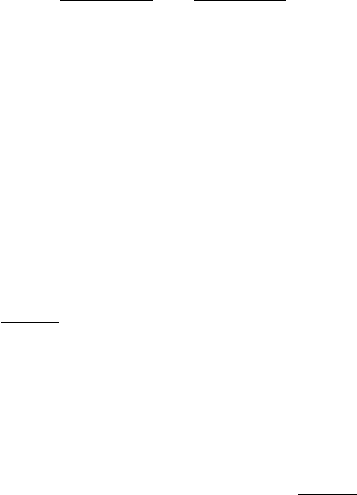
really a test of proportional odds in each 2 × 2 table of events
d
G
(t)
1 − d
G
(t)
= θ
d
F
(t)
1 − d
F
(t)
.
The denominators are one here, because the terms subtracted are zero at a continuity
point, which would not be the case if we have truly discrete distributions, instead of
continuous ones.)
The problem here is how to estimate d(t) from the combined sample, when we assume
that the proportional hazards model holds. The way to do this was given in Section 11.5, if
we note that the frailty distribution here is the θBin(1, 1 − r) distribution, which takes values
0 and θ with probability r and 1 − r, respectively. This means that
d(t, θ) = (rF
c
(t−) + (1 − r)θG
c
(t−))d(t),
and we can estimate d(t) from the combined sample by
dN
+
(t)
S
0
(t, θ)
, where S
0
(t, θ) = Y
n
(t) + θY
m
(t).
(Intuitively, if we use the combined sample and there is a twofold increased hazard for group
2, each individual in that group counts as two when we compute the probability, which is why
we multiply Y
m
(t)byθ in the denominator.) The log-rank test corresponds to the observation
that the mean of N
n
(∞) is equal to the mean of
∞
0
ˆp(t, θ)dN
+
(s), where ˆp(t, θ) =
Y
n
(t)
S
0
(t, θ)
.
If we choose a weight process
ˆ
w(t) and apply the discussion above, we arrive at the
estimating equation U(θ) = 0 for θ, where
U(θ) =
∞
0
ˆ
w(t)(dN
n
(t) − ˆp(t, θ)dN
+
(t)).
Different choices of statistical tests (which means weight function
ˆ
w(t)) produce different
estimates for θ. In order to apply a test to real data and obtain confidence information about
θ, we need to have an estimate of the variance of U(θ). Such an estimate is
ˆ
V (θ) =
∞
0
ˆ
w(t)
2
ˆp(θ, t)(1 − ˆp(θ, t))dN
+
(t),
provided there are no ties. (The true variance depends on the exact censoring mechanism and
is therefore seldom possible to compute.) An approximative (two-sided) confidence function
for θ is now given by
C(θ) = χ
1
(U(θ)
2
/
ˆ
V (θ)).
Example 12.4 In Example 12.2 we applied both the log-rank test and a Wilcoxon test to the
rat data; now we wish to estimate the corresponding parameter for the proportional hazards
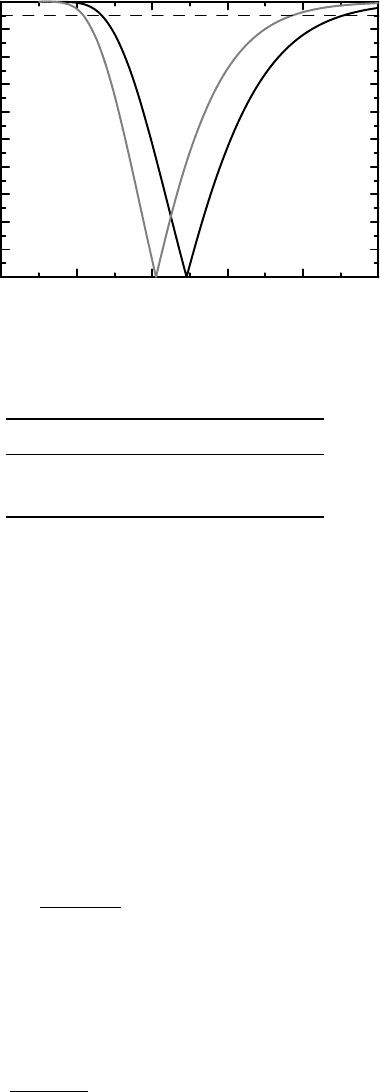
model. The two confidence functions for these tests are shown in Figure 12.4. They are similar
in shape, with the one for the Wilcoxon test lying to the left of that for the log-rank test, and
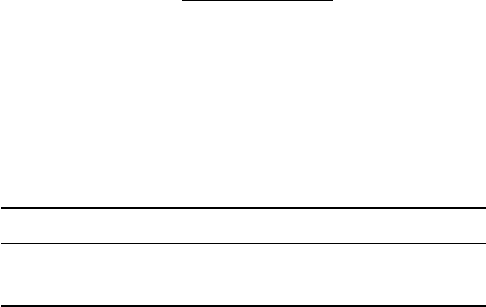
provide the following hazard ratio estimates:
326 FROM THE LOG-RANK TEST TO THE COX PROPORTIONAL HAZARDS MODEL
0
0.1
0.2
0.3
0.4
0.5
0.6
0.7
0.8
0.9
1
Confidence function
543210
Hazard ratio
Wilcoxon test
Log rank test
Figure 12.4 Two-sided confidence functions for the hazard ratio parameter using the log-
rank and Wilcoxon test statistics.
Test Estimate 95% CI
Log-rank 2.46 (1.33, 4.53)
Wilcoxon 2.05 (1.09, 3.86)
The fact that the estimate of θ is smaller with the Wilcoxon test is consistent with the ob-
servation in Example 12.2 that this test down-weights the parts where the group difference
happens to be largest.
So far we have discussed non-parametric group comparison methods under the propor-
tional hazards model. What about parametric analysis? For such an analysis we prefer to use a
family of distributions that is closed under the proportional hazards model. This means that if
we take one member from such a family and define a new distribution by equation (12.4), this
new distribution will belong to the same family. An important example is the Weibull family
discussed in Section 11.3, which includes the exponential distributions as a special subfamily.
We will use the maximum likelihood method for estimation, and therefore pick up the dis-
cussion where we left off in Section 11.3, allowing for individual hazards λ
i
(t, ψ) including
some unknown parameter vector ψ. In this notation, the estimating equation is written as
i
∞
0
∂
ψ
λ
i
(t, ψ)
λ
i
(t, ψ)
(dN
i
(t) − Y
i
(t)d
i
(t, ψ)) = 0.
For a family closed under the proportional hazards model there is a baseline hazard density
λ
0
(t, α), defined by some parameters α. The complete model is then that ψ = (α, θ) and
λ
i
(t, ψ) = λ
0
(t, α) for subjects in the first group, and λ
i
(t, ψ) = θλ
0
(t, α) in the second group.
This means that the estimating equation for α is
∞
0
∂
α
λ
0
(t, α)
λ
0
(t, α)
(dN
+
(t) − S
0
(t, θ)d
0
(t, α)) = 0,

PARAMETER ESTIMATION IN HAZARD MODELS 327
Box 12.2 Power analysis of the log-rank test
The log-rank test works conditionally on information about when each event
happens, which means that for power calculations we need to make some simplify-
ing assumptions. One such assumption is that the ratio R = Y
n
(t)/Y
m
(t) = r/(1 − r)
does not depend on t. This should be approximately true if either the fraction of in-
dividuals with events is small, or θ is close to one. This approximation means that
ˆp(θ, t) = R/(R + θ) at all time points, and that the test statistic is Z(θ) = U(θ)/
√
V (θ),
where V (θ) = DRθ/(θ + R) and D is the total number of events observed. To test the
hypothesis θ = 1weuse
Z(1) = Z(θ)
V (θ)
V (1)
+
e(θ) − e(1)
√
V (1)
where
e(θ) =
∞
0
ˆp(θ, t)dN
+
(t) =
DR
R + θ
.
For most relevant θ we have that V (θ) ≈ V (1), and with this approximation we see that
Z(1) = Z(θ) − DV (1)
−1/2
R(θ − 1)
(θ + R)(1 + R)
= Z(θ) −
√
DR
θ − 1
θ + R
.
From this we can compute the power function for a one-sided test:
β(θ) = P
θ
(Z(1) ≤−z
α
) =
−z
α
+
√
DR
θ + R
(θ − 1)
.
A further approximation is (θ − 1)/(θ + R) ≈ (ln θ)/(1 + R), which gives the
power function
β(θ) = (−z
α
+
Dr(1 − r)lnθ).
In order to find out what θ we are looking for, it may be helpful to note that under
the proportional hazards model we have that
θ =
ln(G
c
(∞))
ln(F
c
(∞))
,
so we reengineer θ from our perception of the percentage of individuals that should not
experience the event during the study for each group.
One remaining question is how many patients we need to study in order to get
the number of events this calculation assumes. Many clinical trials on survival have
an accrual period a, during which patients enter the study, and a follow-up period,
f , from the end of the accrual period until the end of the study. In order to assess
the number of patients needed, previous information on the survival distribution for
one of the treatments from a similar protocol is needed (or some qualified guess).
The proportion of patients who will survive is the average of this survival function in
the interval (f, a + f ), provided the patients enter the trial at a constant rate.
328 FROM THE LOG-RANK TEST TO THE COX PROPORTIONAL HAZARDS MODEL
with the same S
0
(t, θ) as above, whereas the estimating equation for the proportionality
constant θ is simpler:
θ
−1
∞
0
(dN
m
(t) − θY
m
(t)d
0
(t, α)) = 0.
This is essentially the same equation as we have for the log-rank test, except that it is written
for the other group. If our parametric model is flexible enough, so that
0
(t, α) is a reasonable
approximation of the true hazard for some α, we therefore do not expect much difference in
the result between the parametric model and the log-rank test. (Another observation is that
the estimating equation for θ indicates that it may be worthwhile to parameterize in β = ln θ
instead of in θ. This discussion will be picked up again in Chapter 13.) If we know the baseline
hazard we can solve this equation and get the estimate
ˆ
θ =
N
m
(∞)
∞
0
Y
m
(t)d
0
(t, α)
,
which is the ratio of the number of events we see in the second group, compared to what we
expect, based on the known hazard. In other words, it is the standardized mortality ratio.
Example 12.5 We have seen that the Weibull family supports a proportional hazards model,
and that the exponential family is a subfamily of it. We therefore compare the two groups of
rats in Example 12.1, using these distributions:
Baseline distribution Estimate 95% CI p-value
Exponential 2.30 (1.23, 4.27) 0.0086
Weibull 2.47 (1.32, 4.62) 0.0049
Comparing with the result in Example 12.4, we find that for the Weibull distribution we get a
result which is very similar to what we obtained with the log-rank test, whereas the result for
the exponential distribution is somewhat different. The reason why these two analyses differ
can be inferred from Figure 12.2, where we see that if we were to approximate the baseline
hazard by a power function (as for the Weibull distribution), the exponent must be greater
than one. The shape forced by the exponential distribution, a straight line through the origin,
is therefore a poor fit to it.
12.5 The accelerated failure time model
Analysis of time-to-event data under the AFT model in equation (12.4) uses the observation
that ln T fulfills the shift model with shift ln θ. We can therefore apply the Wilcoxon test to
the logged data when there is no censoring. If we have censored data, we can potentially
still estimate ln θ by the Hodges–Lehmann estimate, if we use the Kaplan–Meier form of
the e-CDF and can estimate sufficiently large parts of the distributions. An alternative is to
construct an estimation equation U(θ) = 0 as follows. Consider the rat data. Given θ, multiply
the observed times in the drug-treated group by it. Under the assumption that the two groups
have the same survival distribution for this modified variable, compute the test function for one
THE ACCELERATED FAILURE TIME MODEL 329
0.4
0.5
0.6
0.7
0.8
0.9
1
Fraction of rats
11010090807060504030
Time (weeks)
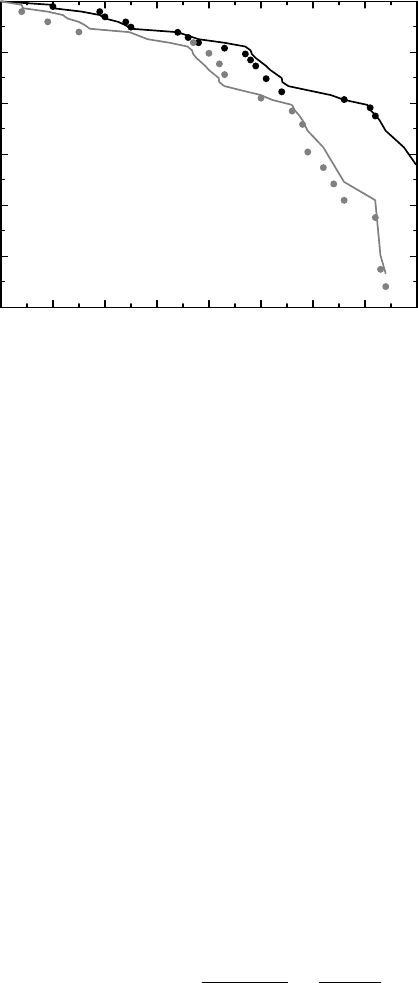
Figure 12.5 Non-parametric AFT models fitted to the rat data. The symbols represent the
Kaplan–Meier estimates for the two groups (black is control, gray drug-treated), and the
curves are obtained from a Kaplan–Meier estimate of a common survival function, using
model adjusted times.
of the tests discussed in Section 12.3. If we choose the Wilcoxon test, which seems natural,
and solve the corresponding estimating equation, we find that ‘true’ time for drug-treated rats
is really the clock time multiplied by θ = 1.17 with 95% confidence interval (1.01, 1.55).
This means that time (to death) runs 17% faster for drug-treated rats than for the controls. To
see how this model fits the data, consider Figure 12.5, in which we have estimated the survival
functions for the two groups from the combined Kaplan–Meier estimate, with survival times
adjusted by the acceleration factor.
Alternatively, we may use some parametric form for the distributions involved. This is the
most common approach to the AFT model, using distribution families that are closed under
this model. Again one example is the family of Weibull distributions, since F
c
(t/θ) = e
−λθ
−γ
t
γ
defines the CDF for a Wei(λθ
−γ
,γ) distribution. The Weibull distribution is therefore closed
under both of the most important models for time-to-event data – the proportional hazards
model and the AFT model – and if we fit data to this distribution we can choose between a
proportional hazards model and an AFT model interpretation. We may note that if θ
PH
is the
proportionality constant in the proportional hazards model, and θ
AFT
the constant in the AFT
model, we have the relation θ
γ
AFT
= θ
PH
.
Another important distribution which defines a family closed under the AFT model is
the log-logistic distribution, where ln T follows a logistic distribution. Its survival function is
given by
F
c
(t) = P(ln T>ln t) =
1
1 + λe
γ ln t
=
1
1 + λt
γ
.
That this family is closed under the AFT model follows from the observation that
F
c
(t/θ) = 1/(1 + λθ
−γ
t
γ
), so we do the same replacement as for the Weibull distribution.
A special case of the family of Weibull distributions is the family of exponential distri-
butions, and we have already noted that this family can be generalized in another direction
330 FROM THE LOG-RANK TEST TO THE COX PROPORTIONAL HAZARDS MODEL
as well, to the gamma distribution. This too defines a family closed under the AFT model. In
fact, any family for which the CDF is a function not of t but of λt for some parameter λ will
be closed under the AFT model.
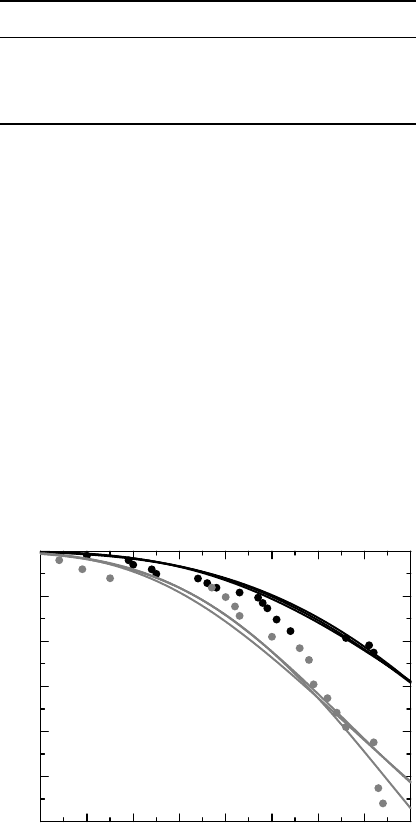
Example 12.6 The following table shows three different parametric AFT analyses of the rat
data in Example 12.1:
Distribution Estimate 95% CI p-value
Weibull 1.27 (1.06, 1.51) 0.0083
log-logistic 1.26 (1.04, 1.52) 0.018
gamma 1.28 (1.05, 1.56) 0.016
We see here a consistent message from the different models: time to death runs about 25%
faster for drug-treated rats than for controls. This conclusion is independent of which family
of distributions we analyze, but the estimate is larger than that found in the non-parametric
analysis above.
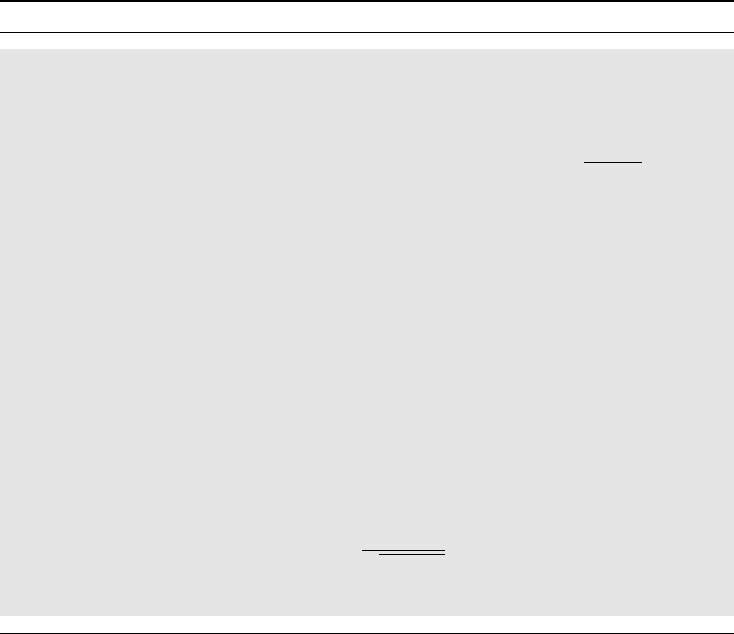
Figure 12.6 show the survival functions for these models. The individual models are not
labeled, because the choice of model does not make much of difference in this case. The data
points are the Kaplan–Meier estimates from Figure 12.2, and we see that none of the models
provides a very good fit to them.
As already noted, the fit to the data for the Weibull distribution is the same whether we
consider an AFT model or a proportional hazards model. It is the same function; it is only
a matter of how we parameterize it. In fact, the estimate of γ in the proportional hazards
model previously analyzed was 3.79, which means that θ
AFT
= θ
1/γ
PH
= 2.47
1/3.79
= 1.27, in
agreement with the analysis above.
0.4
0.5
0.6
0.7
0.8
0.9
1
Fraction of rats
11010090807060504030
Time (weeks)
Figure 12.6 Parametric AFT models fitted to rats data. Curves represent estimated group
CDFs for the Weibull, log-logistic and gamma distributions, points represent empirical
Kaplan–Meier estimates of the CDFs (from Figure 12.2).
THE COX PROPORTIONAL HAZARDS MODEL 331
Box 12.3 How to estimate the parameter in a failure time model
Parameter estimation in the nonparametric proportional hazards (PH), accelerated fail-
ure time (AFT) and accelerated hazards (AH) models is very similar. In all cases the
parameter θ is estimated by the equation U(θ) = 0, where
U(θ) =
∞
0
a(Y
+
(t))(dN
n
(t) − ˆp(θ, t)dN
+
(t, θ)), ˆp(θ, t) =
Y
n
(t)
S
0
(t, θ)
.
What differ are the functions S
0
(t, θ) and N
+
(t, θ):
PH: S
0
(t, θ) = Y
n
(t) + θY
m
(t) and N
+
(t, θ) = N
n
(t) + N
m
(t);
AFT: S
0
(t, θ) = Y
n
(t) + Y
m
(t/θ) and N
+
(t, θ) = N
n
(t) + N
m
(t/θ);
AH: S
0
(t, θ) = Y
n
(t) + Y
m
(t/θ)/θ and N
+
(t, θ) = N
n
(t) + N
m
(t/θ).
The expressions Y
m
(t/θ) and N
m
(t/θ) are obtained from an analysis of the variable θT
for group 2.
For all models the variance of U(θ)isgivenby
V (U(θ)) =
∞
0
a(Y
+
(t))
2
ˆp(θ, t)(1 − ˆp(θ, t)dN
+
(t, θ)),
and we can obtain confidence intervals and p-values by using the confidence function
C(θ) =
U(θ)
√
V (U(θ))
,
or its two-sided counterpart.
The proportional hazards and accelerated failure time models are not the only models
available for survival data. In particular, there is a compromise between the two which should
be mentioned. The assumption of the AFT model is a time acceleration of the integrated
hazard, so that
G
(t) =
F
(t/θ). This means that the instantaneous hazard is a mixture
of proportional hazards and accelerating time, because d
G
(t) = d
F
(t/θ)/θ. This leads
naturally to the alternative suggestion that the difference between the hazards is a difference
in time scale only, d
G
(t) = d
F
(t/θ), a model which is called the accelerated hazards model.
We can write down the estimating equation for this model (see Box 12.3), but the parameter
estimate can also be obtained as follows: for a given θ, perform a log-rank (or Wilcoxon) test
on time-adjusted data and estimate a proportional hazards constant θ
∗
for that data. It is then
the case that d
G
(t) = θ
∗
d
F
(t/θ)/θ, so we seek out the θ for which we have that θ
∗
= θ.
For our rat data and the log-rank test, this acceleration factor is estimated to be θ = 1.30.
12.6 The Cox proportional hazards model
The log-rank test is a special case of one of the most celebrated models in biostatistics,
the Cox proportional hazards model for survival data. In order to understand the relation
between them we will first rederive the former. It is the same derivation as before, but in new
332 FROM THE LOG-RANK TEST TO THE COX PROPORTIONAL HAZARDS MODEL
notation adapted to a more general situation. The starting point is the repeated means formula
E(Z) = E(E(Z|T )) which is valid for all stochastic variables. In our application T will be the
time-to-event variable, and we can introduce censoring into this by a censor process which is
independent of T . We then have that E(C(T )Z) = E(C(T )E(Z|T )), which we can write as
E(C(T )Z) =
∞
0
E(Z|T = t)d(t).
The left-hand side here is the expected value of Z among those individuals for whom we
observe an event, multiplied by the fraction of these among all. (t) is the sub-distribution
function describing observed events, and if we have a model from which we can deduce the
conditional means E(Z|T = t), the right-hand side is what the model predicts about Z in
individuals with an event. Replacing the left-hand side with what we observe, and d(t) with
the Nelson–Aalen estimator, this gives us a relation that can be used to fine-tune the model
that defines the conditional means. The log-rank test corresponds to the case where Z is one
for those in group 1, and zero for those in group 2. The left-hand side is then the number of
events, and the proportional hazards model tells us how to compute the conditional means.
The relation is therefore exactly what we use to estimate the hazard ratio parameter from data
(the fine-tuning referred to above). Note that this is the same interpretation as we had for the
estimating equation for the logistic equation, as was discussed in Section 9.4.
However, the derivation above is more general than the log-rank test, and we can make it
even more general by replacing Z with a predictable stochastic process. For our purposes we
settle for less, and replace Z with a(Y (T ))Z, where Y (t) is the fraction at risk at time t, a(u)a
function, and Z a stochastic variable (actually a vector). Suppose that we have a model which
depends on a parameter β, such that we can compute the function ¯z(t, β) = E(Z|T = t). This
gives us the stochastic variable U(T, β) = a(Y(T ))(Z − ¯z
(T, β)) about which we know that
E
β
(U(T, β)) = 0. If we have a sample of n from the population with observed event times t
i
,
we can estimate this mean with the average of the observations. This gives us the following
estimating equation for β:
U
n
(β) =
1
n
i
∞
0
a(Y(t))(z
i
− ¯z(t, β))dN
i
(t) = 0. (12.6)
Since a(Y(t)) is a predictable process the variance of U
n
(β) is estimated by
1
n
2
n
i=1
∞
0
a(Y(t))
2
(z
i
− ¯z(β, t))
2
dN
i
(t),
a fact we need when we want to derive a confidence function for β.
It remains to compute ¯z(t, β), for which we need a specific model. The log-rank test was
derived under the assumption of a proportional hazards model, so we assume it here as well.
This model will explain the frailty θ in terms of the covariate vector Z, so that there is a
vector of regression coefficients β such that θ = e
Zβ
. The choice of the exponential link here
is convenient, but not necessary. It simplifies some calculations and it is the assumption of the
Cox model, so we stick to it. Equation (11.4) means that this model estimates the conditional
mean ¯z(t, β)by
ˆ
S
1
(t, β)
ˆ
S
0
(t, β)
= ∂
β
ln
ˆ
S
0
(t, β),