
Kelly J.J. Graduate Mathematical Physics, With MATHEMATICA Supplements
Подождите немного. Документ загружается.


186 5 Integral Transforms
14. Born approximation for Yukawa potential
The Born approximation for elastic scattering of distinguishable particles with interaction
potential V approximates the differential cross-section by
2
where the matrix element
takes the form
Μ
2Π
@
f
rV
r@
i
r
3
r (5.328)
with Μ being the reduced mass and
r
r
1
r
2
the separation vector. The wave functions
are approximated by plane waves of the form
@
i
Exp
k
i
,
r , @
f
Exp
k
f
,
r (5.329)
where the wave vectors are equal in magnitude, such that k
f
k
i
. Evaluate for the
central part of the Yukawa interation between two nucleons, given by
VrV
0
m
Π
r
m
Π
r
(5.330)
where m
Π
is the pion mass, V
0
is a strength constant, and r
r
1
r
2
. Express your result
both in terms of the momentum transfer
q
k
i
k
f
and in terms of the scattering angle Θ.
(Note: we are neglecting the spin dependence and tensor properties of the nucleon–nucleon
interaction.)
15. Numerical convolution using FFT
Use the FFT function in your favorite mathematical software to reproduce the figures in
the text relating to the convolution
xt
Gt ΤFΤ Τ (5.331)
where
GtΩ
1
R
ExpΓt SinΩ
R
t<t , Ω
R
Ω
2
0
Γ
2
(5.332)
We used Ω
0
0.3 and Γ0.05 in natural units, N 256, and
Ftt s
3
Exp
t s
2
w
(5.333)
with s 150 and w 200. Show that a judicious choice of phase shift suppresses artifacts
due to wrap-around in the working array.
16. Temporal correlation
Use the FFT function in your favorite mathematical software to reproduce the figures in
the text relating to the autocorrelation function for the logistic map.
17. Van der Pol spectrum
Again assuming that mathematical software with both a differential-equation solver and
FFT is available, reproduce the figures in the text that illustrate the power spectrum for a
van der Pol oscillator.

Problems for Chapter 5 187
18. Windowing
The spreading of the power spectrum for a discrete sinusoid is similar to that of a finite
wave train using a continuous Fourier transform. In both cases one is effectively multiply-
ing a persistent function by a time window of the form <t<T t that has sharp edges
and reproduction of a rapid temporal transition requires Fourier components with arbi-
trarily high frequency. Therefore, the window function artificially enhances the power for
large frequencies. More realistic estimates of the power spectrum for the input signal can
be obtained by using a window function, wt, with softer features that do not distort high
frequencies as badly. For the purposes of discrete Fourier transform using sampled data
within a range 0 t T, the window function should vanish for t 0 and t 2 T , should
be relatively flat over a wide central region surrounding a maximum value of unity at T/2,
and should be symmetric about T/2. Many window functions with these properties can
be found in the literature and their proponents often argue that their version optimizes a
particularly important figure of merit, such as equivalent noise bandwidth, scallop loss, or
other esoterica. The nonspecialist may as well use the simple Welch window
w
j
1
2 j N 1
N 1
2
(5.334)
with parabolic shape. The purpose of this problem is to demonstrate numerically, with
two simple examples, that use of an appropriate window function provides qualitative
improvements in the power spectrum. More detailed analysis of the performance of various
window functions may be found in specialized literature.
a) Show that the Welch window has the desired temporal characteristics and then display
its discrete Fourier transform using N 256.
b) Compare power spectra for f t<t<T t and wt f t where f tSin0.3t and
comment on the effect of using a softer window.
c) Apply the Welch window to improve the estimated power spectrum for the van der
Pol oscillator with 10. We suggest 4096 samples within 200 t 600.
19. Laplace transform of J
0
x using an integral representation
a) Demonstrate that the integral representation
J
0
z
1
Π
Π
0
ΘCos
z CosΘ
(5.335)
provides a solution to Bessel’s equation
z
2
f
''
zzf
'
z
z
2
Ν
2
f z0 (5.336)
for Ν0 and initial condition f 01.
b) Use this integral representation to determine the Laplace transform of J
0
x.
20. Laplace transform of J
0
x using its differential equation
The Bessel function J
0
x satisfies the differential equation
2
x
2
1
x
x
1
J
0
x0 ,J
0
01 (5.337)

188 5 Integral Transforms
a) Show that the Laplace transform
˜
J
0
s satisfies a first-order differential equation and
obtain
˜
J
0
s.(Hint:if f x is continuous at x 0, you can use
0
sx
f xx
s
1
f 0 when s !.)
b) Use an expansion of
˜
J
0
s in powers of s
1
to develop a power series for J
0
x. What
is the radius of convergence?
21. Decay chain
Suppose that a radioactive nucleus decays sequentially such that the populations of the
first three members of the decay chain evolve according to the rate equations
N
1
t
Λ
1
N
1
(5.338)
N
2
t
Λ
1
N
1
Λ
2
N
2
(5.339)
N
3
t
Λ
2
N
2
Λ
3
N
3
(5.340)
Use the Laplace transform method to determine N
i
t assuming initial populations N
i
0
n
i
. How can we extend the procedure to longer sequences?
22. RC circuit using Laplace transform
In the text we demonstrated that the current in a simple RC circuit with a variable voltage
source Vt satisfying
RIt
1
C
t
0
It
'
t
'
V t ,It<00 (5.341)
can be expressed as
˜
I
s
1 sΤ
C
˜
V (5.342)
or
RItVtΤ
1
t/Τ
t
0
Expt
'
/ ΤVt
'
t
'
(5.343)
where ΤRC is the characteristic time constant for this circuit. For each of the following
Vt profiles, demonstrate that both the inverse Laplace transform and the convolution
integral give the same current It.
a) Step function: VtV
0
<t a with a>0.
b) Rectangular pulse: VtV
0
<t a<t b with b>a>0.
c) Sinusoidal voltage: VtV
0
SinΩt<t. Identify the transient component and eval-
uate the phase shift between current and voltage oscillations after the transient has
decayed away.

Problems for Chapter 5 189
23. Current in RLC circuit using Laplace transform
The current in a series RLC circuit with a variable voltage source Vt satisfies
L
I
t
RI
1
C
t
0
It
'
t
'
V t (5.344)
where we assume that the circuit is quiescent for t<0 (no current and discharged capaci-
tor). Although this equation is usually converted into a differential equation for the stored
charge, it is instructive to solve the problem as an integro-differential equation instead.
a) Express the relationship between Laplace transforms
˜
I and
˜
V for current and voltage
as a convolution and determine the Green functions for (i) underdamped, (ii) over-
damped, and (iii) critically damped circuits.
b) Use the Laplace transform method to evaluate It when the voltage is constant dur-
ing a t b. Sketch the behavior of underdamped and overdamped circuits.
c) Use the Laplace transform method to evaluate the current for a sinusoidal voltage
switched on for t>0. Identify both the transient component and the phase-shift
between current and voltage oscillations.
24. Laplace transform of periodic functions
Consider a periodic function of the form f t T f t.
a) Show that the Laplace transform is given by
˜
f s
1
1
sT
T
0
f t
st
t (5.345)
What happens in the limit T !?
b) Verify that the expected results are obtained for Sint or Cost.
c) Evaluate Laplace transforms of the square wave.
d) Evaluate the Laplace transform of the sawtooth wave, f tModt,T.
25. Rectifiers
An ideal half-wave rectifier circuit passes positive and blocks negative voltage signals
while the output of an ideal full-wave rectifier is the absolute value of the input voltage.
Evaluate the Laplace transform of the output for both half-wave and full-wave rectification
of a sinusoidal input voltage, SinΩt.
26. Initial-value problems using Laplace transform
Solve the following differential equations, with specific initial conditions, using the Laplace
transform.
a)
4
t
4
1ytt, y0y
'
0y
''
0y
'''
00 (5.346)
b) y
'
t
t
0
yΤ Τ
t
,y01 (5.347)
c) y
''
xxy
'
xyx0 ,y01 ,y
'
00 (5.348)

190 5 Integral Transforms
27. Difference-differential equation using Laplace transform
Suppose that yt satisfies a difference-differential equation
t 2 0 y
'
tytyt 10 (5.349)
with the initial condition
1 t 0 yty
0
t (5.350)
where y
0
t is a known function.
a) Show that the Laplace transform satisfies
˜ys1 s
s
1
y
0
0
s
0
1
st
y
0
tt
(5.351)
b) Compute yt for t 2 0giveny
0
t1 and check the result.
28. Abel’s integral equation
Abel’s integral equation for the unknown function yt, with t>0, is
t
0
yΤt Τ
Α
Τ f t (5.352)
where Α is a constant in the range 0 < Α < 1 and f t is a known function.
a) Use the convolution theorem for Laplace transforms to obtain a formal solution for yt.
b) Evaluate yt given f t1 and check the result.
29. Wave equation with traveling disturbance
Consider an inhomogeneous wave equation of the form
(
2
(x
2
1
c
2
(
2
(t
2
Ψx, t∆x vt (5.353)
for t>0in0<x< subject to the boundary and initial conditions
Ψ0,t0 , Ψx, 0
(Ψx, 0
(t
0 (5.354)
Use a Laplace transform with respect to t to solve this equation for v<c, v c, and v>c.
Describe and compare these scenarios.

6 Analytic Continuation
and Dispersion Relations
Abstract. If two representations of analytic functions are equivalent in the overlap-
ping regions of their domains, they represent the same function. Analytic continua-
tion provides a systematic means for extending the definition of an analytic function
into broader domains of the complex plane. Combined with physical requirements
of causality, this method can be used to relate the real and imaginary parts for func-
tions that describe the response of a physical system to an external perturbation.
We use this method to analyze the relationship between refraction and absorption in
optical media and dispersion relations for wave propagation. We also introduce the
phenomenon of solitons in systems with nonlinear dispersion.
6.1 Analytic Continuation
6.1.1 Motivation
Often one develops a representation of an analytic function f z in terms of a series expan-
sion or an integral that converges in a finite domain D
1
and would like to extend that
domain into a broader region of the complex plane. To illustrate the idea, we consider a
very simple example. The function f z1 z
1
can be expanded about any finite z
n
using a Taylor series
f z
k0
z z
n
k
1 z
n
k1
(6.1)
that will converge in the domain D
n
z z
n
< 1 z
n
. Although we can easily derive the
series for this simple function, in a more complicated problem we might have developed
the series representation near a particular z
n
without knowledge of the underlying analytic
function that it represents. Thus, if we had deduced the series
f
1
z
k0
z
k
(6.2)
we could then demonstrate that f
1
converges to f z1 z
1
within the domain
D
1
z < 1. Similarly, by considering the region around z
0
we might deduce a sec-
ond series
f
2
z
k0
z
k
1
k1
(6.3)
Graduate Mathematical Physics. James J. Kelly
Copyright © 2006 WILEY-VCH Verlag GmbH & Co. KGaA, Weinheim
ISBN: 3-527-40637-9
192 6 Analytic Continuation and Dispersion Relations
2 1.5 1 0.5 0.5 1 1.5 2
x
1
0.5
0.5
1
1.5
2
2.5
3
y
D
1
D
2
D
1
D
2
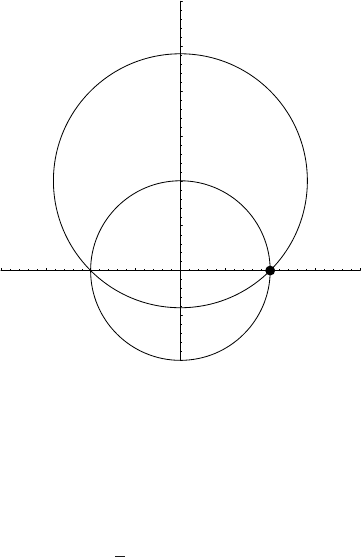
Figure 6.1. Analytic continuation using Taylor series. Here a Taylor series around z 0converges
in domain D
1
, while another series around z converges in domain D
2
. The heavy dot represents a
singularity that limits the convergence radii for both domains. If these series are equal in the overlap
D
1
) D
2
, they are elements of the same analytic function in a larger domain that includes D
1
C D
2
.
and then demonstrate that f
2
converges to the same f z1 z
1
within the domain
D
2
z <
2. Although these series look different, they represent the same function
within the overlap region D
1
) D
2
. We describe f
2
as an analytic continuation of f
1
from
domain D
1
into domain D
2
and identify both f
1
and f
2
as elements of the same analytic
function f z. Although f
1
and f
2
converge and hence are analytic only within their respec-
tive domains D
1
and D
2
, the underlying function f is analytic in a domain that is at least
as large as the union D
1
C D
2
. Therefore, the underlying analytic function is more general
than any of its representations (elements).
Generally one attempts to perform a sequence of analytic continuations which extends
the domain to the largest possible region of the complex plane, but in practice this process
is often limited by singularities or branch points. Taylor series often provide the simplest
method, where the radius of various overlapping disks is limited only by the distance to
the nearest singularity, but other methods are sometimes more efficient.
6.1.2 Uniqueness
Suppose that f
1
z and f
2
z are analytic in domains D
1
and D
2
. One can show that if
D
1
) D
2
contains more than one point it contains an infinite number of points and also
constitutes a domain. Thus, the function gz f
1
z f
2
z is analytic in D
1
) D
2
.Now
suppose that gz0 on an arc or within a subdomain that lies within D
1
)D
2
. Recognizing
that the zeros of an analytic function are isolated (recall Sec. 1.12.5) unless the function
6.1 Analytic Continuation 193
D
1
D
2
D
3
D
4
D
1
D
2
D
2
D
3
D
3
D
4
D
1
D
4
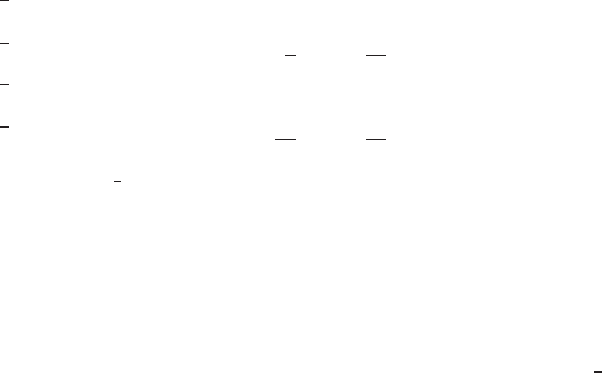
Figure 6.2. Analytic continuation using a sequence of domains D
1
! D
2
! D
3
! D
4
that surrounds
a singularity.
vanishes identically, we conclude that gz0 throughout D
1
) D
2
, such that f
1
z f
2
z
throughout D
1
) D
2
. Hence, any pair of functions f
1
and f
2
that are equal on an arc or
a subdomain within their common domain of analyticity D
1
) D
2
represents the same
analytic function everywhere throughout D
1
) D
2
. Therefore, a function that is analytic in
domain D is uniquely determined by its values on any arc or domain contained within D.
Reconsider the function
f
1
z
k0
z
k
(6.4)
which is analytic within z < 1 where it converges to f z1 z
1
. According to the
uniqueness theorem, f z is the only function that is analytic in the entire complex plane,
except for z 1, and coincides with f
1
in their common domain z < 1. Therefore, f is
the unique analytic continuation of f
1
into the entire complex plane.
Now suppose that we attempt to extend a function by analytic continuation from D
1
into D
2
into D
3
, etc., carefully avoiding singularities in an attempt to cover the largest
possible region of the complex plane. A schematic set of overlapping domains is sketched
in Fig. 6.2 representing the sequence of continuations f
1
! f
2
! f
3
! f
4
. Will f
4
z
f
1
z in D
1
)D
4
? Maybe, but maybe not – the uniqueness theorem provides no guidance on
this question because there is no overlap between D
3
and D
1
or between D
2
and D
4
in the
sequence sketched. Often a singularity or branch point in the nonoverlapping region will
spoil the closure of such a sequence. Perhaps it will help to consider a specific example,
194 6 Analytic Continuation and Dispersion Relations
even if it is somewhat artificial. The sequence of functions
f
1
z
r
Θ
1
/ 2
0 Θ
1
< Π (6.5)
f
2
z
r
Θ
2
/ 2
Π
2
Θ
2
<
3Π
2
(6.6)
f
3
z
r
Θ
3
/ 2
ΠΘ
3
< 2Π (6.7)
f
4
z
r
Θ
4
/ 2
3Π
2
Θ
4
<
5Π
2
(6.8)
all represent branches of
z continued from one half-plane into another that overlaps in
one quadrant. Thus, f
2
is a continuation of f
1
into the third quadrant with f
2
f
1
in the
second quadrant, f
3
continues into the fourth quadrant with f
3
f
2
in the third, and f
4
returns to the first quadrant with f
4
f
3
in the fourth. However, even though f
1
and f
4
are
both defined in the first quadrant, they are not equal:
f
4
zf
1
z in D
4
) D
1
(6.9)
Here analytic continuation fails to close because the path encloses a branch point of
z.
Note that both D
1
) D
3
and D
2
) D
4
contain only one point, the branch point, which does
not constitute a domain.
The theorem that an analytic function is completely determined throughout its domain
of analyticity by its values on an arc appears to be extremely powerful. If physics argu-
ments require a function to be analytic, it might appear that we could construct the entire
function by measuring on such an arc, which is surely easier than measuring it every-
where in a domain. It is almost like cloning your mother from a hair follicle! However,
mathematical and physical standards of knowledge are different. To apply this theorem
we would have to make measurements that are perfectly accurate, which is not possible.
In practice, the errors in the reconstruction process would grow quickly as the distance
from the measured region increases. The larger the arc the better the convergence of the
reconstruction is likely to be, but analysis of the accuracy of such a procedure requires
considerable sophistication. Nevertheless, in many fields one can make much progress by
measuring the function over as large an arc as possible, typically as much of the real axis
as possible, and constraining the asymptotic behavior using physical principles. Thus, the
theory of analytic functions finds widespread application in nuclear, particle, condensed
matter, and other fields. A few basic examples will be studied later in this chapter.
6.1.3 Reflection Principle
Suppose that f z is analytic in a domain D that includes a segment of the real axis and
that f x is real on that segment, such that f x f x
. Using the Cauchy–Riemann
equations, one can show that if f z is analytic in a domain that includes both z and z
,
then so is f z
. Hence, because the two analytic functions f z
and f z are equal on
an arc within D, they are equal throughout the portion of D that is symmetric with respect
to the real axis. This result is known as the Schwarz reflection principle.
6.1 Analytic Continuation 195
6.1.4 Permanence of Algebraic Form
Suppose that a function f x is defined on a portion of the real axis. If we then define f z
by replacing the real variable by a complex variable, x ! z, the function f z uniquely
determines the analytic function that has the same values on that portion of the real axis
throughout any domain that contains it; there can be no other distinct analytic continuation
from the real axis into the complex plane. For example, if fx is represented by a power
series that converges on some portion of the real axis, the same series with x ! z represents
an analytic function that converges in domains containing that portion of the real axis. We
implicitly used that property when deriving the Euler identity by replacing x by Θ in the
Taylor series for
x
(recall Sec. 1.1.3). In fact,
z
is the only entire function which reduces
to
x
on the real axis. More generally, if f x and gx satisfy an algebraic relationship
of the form F
f x,gx
0, then the analytic continuations f z and gz satisfy an
algebraic relationship F
f z,gz
0 throughout their common domain of analyticity.
Furthermore, if F
f
1
z,g
1
z
0 throughout domain D
1
, where F is an analytic function
of its arguments, then F
f
2
z,g
2
z
0 in domain D
2
where f
2
and g
2
are analytic
continuations of f
1
and g
1
from D
1
into D
2
. This property is described as permanence of
algebraic form. Often it is simpler to prove a relationship using one representation than
another, but for analytic functions we can be confident that the same relationship applies
to all representations within their domains of analyticity.
6.1.5 Example: Gamma Function
The gamma function for positive real variables x is defined by the integral
Ax
0
t
x1
t
t for x>0 (6.10)
and reduces to the factorial Ann 1! for positive integers. Note that we must restrict
the range of x to ensure convergence of this integral representation. Continuing this func-
tion into the complex plane, we attempt to define the analytic function Az as
Az
0
t
z1
t
t for Rez > 0 (6.11)
This definition clearly agrees with the first on the real axis, but we must prove that the
extended definition is analytic in a domain that includes the positive real axis. For this
we appeal to Morera’s theorem (Sec. 1.10.5) which states that if
C
f zz 0 for every
simple closed contour C in domain D, then f z is analytic in D. First, we prove that Az
converges absolutely by evaluating
Az
0
t
z1
t
t
0
t
x1
t
y
t
t
Ax y
Ax (6.12)
where t is real and z x y. Next we express contour integrals in the form
C
Azz
C
0
t
z1
t
t
z
0
C
t
z1
z
t
t 0 (6.13)