
Kenny Anthony. The Rise of Modern Philosophy: A New History of Western Philosophy. Volume 3
Подождите немного. Документ загружается.

nearly 300 years later, the German Academy is still not halfway through the
programme, begun in 1923, of a complete publication of Leibniz’s own works.
Berkeley
During the last years of Leibniz’s life several works were published which
marked the appearance of a gifted young thinker. George Berkeley was
born near Kilkenny in Ireland in 1685, the most talented philosopher from
that island since John Scotus Eriugena in the ninth century.14 When Wfteen
he entered Trinity College, Dublin, and having taken his BA in 1704 he was
made a Fellow of the College on the strength of two mathematical papers.
Unlike Leibniz, he wrote his best philosophical works when young, be-
tween the ages of twenty-four and twenty-eight.
An Essay towards a New Theory of Vision appeared in 1709. This oVered an
account of how we judge the distance, and size, of seen objects. Distance, it is
argued, is not itself visible, being ‘a line endwise to the eye’: we judge it by
the degree of distinctness of a visual appearance, and by the feelings we
experience as we adjust our eyes for optimum vision. When we consider the
visual perception of size, we have to distinguish between visible magnitude
and tangible magnitude. ‘There are two sorts of objects apprehended by
sight, each whereof has its distinct magnitude or extension—the one
properly tangible, i.e. to be perceived and measured by touch, and not
immediately falling under the sense of seeing; the other, properly and
immediately visible, by mediation of which the former is brought into
view.’ The visible magnitude of the moon, for instance, varies in accordance
with its distance from the horizon; but its tangible magnitude remains
constant. It is, however, by means of visual magnitude that we normally
judge tangible magnitude. In the case both of size and distance Berkeley’s
discussion leads to an empiricist conclusion: our visual judgements are
based on the experience of connections between sensations:
As we see distance, so we see magnitude. And we see both in the same way that we
see shame or anger in the looks of a man. Those passions are themselves invisible,
they are nevertheless let in by the eye along with colours and alterations of
countenance, which are the immediate object of vision: and which signify them
14 See vol II, pp. 30–3.
DESCARTES TO BERKELEY
76
for no other reason than barely because they have been observed to accompany
them. Without experience we should no more have taken blushing for a sign of
shame than of gladness. (BPW, 309)
The connection between shape as judged by vision and shape as judged by
touch is something learnt only by experience. Intrinsically, seen roundness
and felt roundness have nothing in common. A man born blind, who had
learnt to tell a cube from a sphere by touch, would not, if his sight were
suddenly restored, be able to tell by looking alone which of two objects on
a table in front of him was a cube and which was a sphere. So Berkeley
aYrmed, following Locke.
It will be seen that the New Theory was a contribution to experimental
psychology as well as to philosophy of mind. The thesis just stated, for
instance, is not a piece of conceptual analysis, but a thesis which could be
tested by experiment.15
Berkeley’s next work, the Principles of Human Knowledge of 1710, was
something very di Verent: it presented and ingeniously defended the aston-
ishing thesis that there is no such thing as matter. Even Leibniz, who read
the book as soon as it appeared, was a little shocked. ‘Many things that are
here seem right to me,’ he wrote in a review. ‘But they are expressed rather
paradoxically. For there is no need to say that matter is nothing. It is
suYcient to say that it is a phenomenon like a rainbow.’ 16
Berkeley’s immaterialism was presented again in 1713 in Three Dialogues
between Hylas and Philonous, a brief work which is one of the most charming
pieces of philosophy to be written in English. In the dialogue Philonous,
the lover of mind, debates with Hylas, the patron of matter, and emerges
triumphant. The argument proceeds in four stages. First, it is argued that
all sensible qualities are ideas. Second, the notion of inert matter is tested to
destruction. Third, a proof is oVered of the existence of God. Finally,
ordinary language is reinterpreted to match an immaterialist metaphysics.
In the end, Hylas agrees that trees and chairs are nothing but bundles of
ideas, produced in our minds by God, whose own perception of them is the
only thing that keeps them in continuous existence.
15 And indeed, when tested in 1963, was found to be false: a man who recovered his sight after
a corneal graft was immediately able, from experience of feeling the hands of his pocket watch,
to tell the time visually. R. L. Gregory, The Oxford Companion to the Mind (Oxford: Oxford University
Press, 1987), p. 95.
16 Written in Leibniz’s copy of the Principles; quoted in S. Brown, Leibniz (Brighton: Harvester
Press, 1984), p. 42.
DESCARTES TO BERKELEY
77
Berkeley’s Wnal work of theoretical philosophy was a Latin treatise on
motion, published in 1712. By that time he had been for two years a priest
of the Protestant Church of Ireland. From time to time he visited London,
where he became a friend of Alexander Pope and was presented at court by
Jonathan Swift. In 1714 he made a grand tour of the continent, taking the
Alpine route in the middle of winter in an open chair; he was suitably
terriWed by Mont Cenis, ‘high, craggy and steep enough to cause the heart
of the most valiant man to melt within him’.
In 1724 he became Dean of Derry, and resigned his Fellowship of
Trinity. Shortly afterwards he conceived the plan of founding a college in
Bermuda to educate and give religious instruction to the sons of British
colonists from mainland America alongside native Americans. He foresaw
that the leadership of the civilized world would one day pass to America,
and in a poem ‘On the Prospect of Planting Arts and Learning in America’
he wrote:
Westward the course of empire takes its way
The four Wrst acts already past
A Wfth shall close the drama with the day:
Time’s noblest oVspring is the last.
Berkeley obtained a charter for his college and the promise of a parlia-
mentary grant of £20,000. He set sail across the Atlantic in 1728. Having
reached Newport, Rhode Island, he soon determined that this would be a
more suitable venue for his academy. But the promised grant did not in the
end materialize, and he returned to England in 1731 without having
achieved anything. The citizens of the United States, however, did not
forget his care for the education of their ancestors, and named after him
a college at Yale and a university town in California.
In 1734 Berkeley was appointed Bishop of Cloyne. Although he was
a conscientious bishop, his pastoral task was not a heavy one, and he
devoted himself to propagating the virtues of tar-water, which he adver-
tised as a panacea for most human diseases. Tar-water was a concoction
from the bark of pine trees which Berkeley had seen used in America as a
remedy for smallpox. It is, he wrote in his treatise Siris, ‘of a nature so mild
and benign and proportioned to the human constitution, as to warm
without heating, to cheer but not inebriate’. His word s were later pur-
loined by the poet Cowper and used in praise of tea.
DESCARTES TO BERKELEY
78
In 1749 Berkeley wrote A Word to the Wise in which he exhorts the Roman
Catholic clergy in his diocese to join with him in endeavouring to stir their
countrymen out of their hereditary laziness and to improve the wretched
economic condition of Ireland. Three years later the government oVered
him a more lucrative Irish see, but he refused the oVer and retired to
Oxford. He spent the last year of his life in a modest house in Holywell
Street. He died at the beginning of 1753, while listening to his wife reading
from the Bible; he was buried in Christ Church Cathedral where his
monument may still be seen.
Berkeley was long remembered, and not only in philosophical circles,
for his paradoxical thesis that matter does not exist and that so-called
material objects are only ideas that God shares with us, from time to time.
His slogan esse est percipi—to be is to be perceived—was widely quoted and
widely mocked. Some people, such as Dr Samuel Johnson, thought the
doctrine was incred ible; others, such as the poet Arthur Hugh Clough,
thought that it made no real diVerence to life.
James Boswell describes how he discussed Berkeley’s immaterialism with
Johnson in a churchyard. ‘I observed, that though we are satisWed his
doctrine is not true, it is impossible to refute it. I never shall forget the
alacrity with which Johnson answered, striking his foot with mighty force
against a large stone, till he rebounded from it, ‘‘I refute it thus.’’
In Clough’s Dipsychus the young hero professes an austere ideal of lonely
communion with God. His interlocutor, the voice of worldly wisdom, Wnds
this hard to take seriously:
To these remarks so sage and clerkly,
Worthy of Malebranche or Berkeley
I trust it won’t be deemed a sin
If I too answer with a grin.
These juicy meats, this Xashing wine,
May be an unreal mere appearance;
Only—for my inside, in Wne,
They have a singular coherence.
This lovely creature’s glowing charms
Are gross illusion, I don’t doubt that;
But when I pressed her in my arms
I somehow didn’t think about that.
(Poems (Oxford: Oxford University Press, 1974), p. 241)
DESCARTES TO BERKELEY
79

3
Hume to Hegel
Hume
S
hortly after Berkeley, in Dublin, gave the world his empiricist meta-
physics, there was born in Edinburgh a philosopher who was to take
empiricist principles to an anti-metaphysical extreme, David Hume. Hume
was born in 1711 into a junior branch of a noble Scottish family. As
the younger son of a mother widowed early he had to make his own
way in the world. Between twelve and Wfteen he studied literature and
philosophy at Edinburgh University, falling in love, he tells us, with both
subjects. He then set out to prepare himself for a legal profession, but soon
gave up becaus e, in his own words, he found ‘an insurmountable Aversion
to anything but the pursuits of Philosophy and General Learning’.
Despite this, he did attempt a commercial career with a sugar Wrm in
Bristol; but four months of clerking there convinced him that a life in
business was not for him. He decided to live frugally on his small inher-
itance, and went across to France where life in a country town need not be
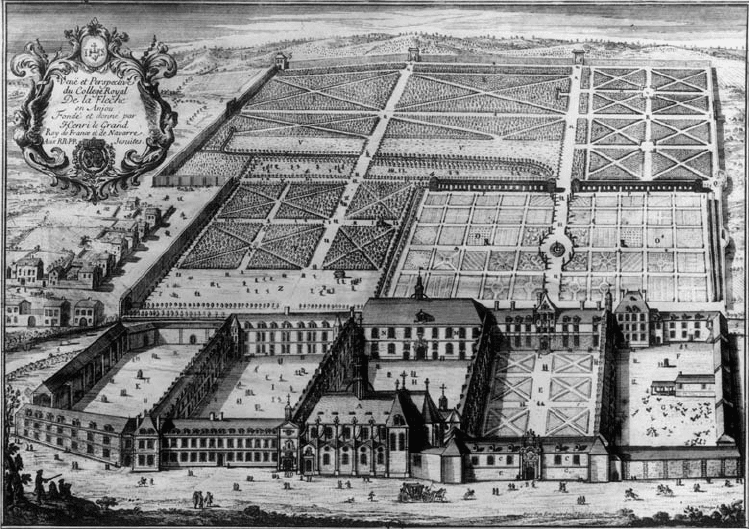
expensive. From 1734–7 he lived at La Fle
`
che in Anjou, where Descartes had
been educated at the Jesuit college. Making use of the college library, Hume
wrote his Wrst work, a substantial Treatise of Human Nature.
On returning to England he found some diYculty in getting this work
published, and when it appeared he was disappointed by its reception.
‘Never Literary Attempt was more unfortunate than my Treatise,’ he wrote
in his autobiography. ‘It fell dead-born from the Press.’ After his deat h, how-
ever, it was to achieve enormous fame. German idealists in the eighteenth
century and British idealists in the nineteenth took it as the target of their
criticisms of empiricism: they detested it, but at the same time they revered
it. British empiricists in the twentieth century extolled it as the greatest
work of philosophy in the English language. Certainly the book, along
with Hume’s later more popular presentations of its ideas, came to exercise
a greater inXuence than the work of any philosopher since Descartes. The
town of La Fle
`
che can be proud of its contribution to philosophy.
The Treatise was published in three volumes, the Wrst two (‘Of the
Understanding’ and ‘Of the Passions’) in 1739, and the third (‘Of Morals’)
in 1740. The aim of the work was stated in the subtitle of the Wrst edition,
An Attempt to introduce the experimental method of reasoning into Moral Subjects.Hume
saw himself as doing for psychology what Newton had done for physics,
by applying the experimental method to moral subjects. He set out to
provide an account of the relationships between ideas which would be a
counterpart of the gravitational a ttraction between bodies. Notions like
causation and obligation, which had been obfuscated by the metaphys-
icians, would for the Wrst time be brought into clear light. All the sciences
A seventeenth-century engraving of the college of La Fle
`
che
HUME TO HEGEL
81
would beneWt: instead of taking small forts on the frontiers of knowledge,
we would now be able to ‘march up directly to the capital or centre of
these sciences, to human nature itself ’ (T ).
The Wrst book of the Treatise begins by setting out an empiricist classiWca-
tion of the contents of the mind (‘perceptions’). This covers much of the
same ground as Locke and Berkeley’s epistemology, but Hume divides
perceptions into two classes, impressions and ideas. Impressions are more
forceful, more vivid, than ideas. Impressions include sensations and emo-
tions; ideas are perceptions involved in thinking and reasoning. Hume
treats in detail ideas of memory and imagination, and the association
between them. He endorses and reinforces Berkeley’s criticism of Locke’s
abstract ideas.
After a second part devoted to the ideas of space and time1 Hume
presents, in a section entitled ‘Of Knowledge and Probabilty’, his most
original and inXuential thoughts. All knowledge which extends beyond
the immediate deliveries of the senses, Hume argues, depends upon the
notions of cause and eVect: it is through those ideas that we discover what
happened in the past and conjecture what will happen in the future. We
must therefore examine closely the origin of these ideas.
The idea of causation, he says, cannot arise from any inherent quality of
object, because objects of the most diVerent kinds can be causes and eVects.
We must look, instead, for relationships between objects; and we Wnd
that causes and eVects must be contiguous to each other, and that causes
must be prior to their eVects. Moreover, contiguity and succession are not
enough for us to pronounce two objects to be cause and eVect, unless we
see that objects of the two kinds are found in constant conjunction. But
that is not enough: if we are to infer an eVect from its cause, we feel, there
must be a necessary connection between a cause and its eVect.
After many pages of artful argument, Hume leads us to an astonishing
conclusion: it is not our inference that depends on the necessary connec-
tion between cause and eVect, but the necessary connection that depends
on the inference we draw from one to the other. Our belief in necessary
connection is not a matter of reasoning, but of custom; and to wean
us from the contrary doctrine Hume presents his own analysis of the
relationship between reason and belief. He rounds oV the book on
1 See Ch. 4 below.
HUME TO HEGEL
82
understanding with a Part that places his novel scepticism in the context of
other versions of scepticism, ancient and modern. The Part ends with a
celebrated section in which Hume denies the existence of the self as
conceived by philosophers.2
In devoting the second book of the Treatise to a disquisition on the
passions or emotions, Hume was following in the footsteps of Descartes
and Spinoza. But the topic is much more important for him than it was
for those rationalist thinkers, since his philosophy of mind attributes to
the passions many of the operations which they regarded as activities of
reason—causal inference being only the most striking example of many.
Passions, Hume tells us, are a special kind of impression. Having divided
perceptions into impressions and ideas, he makes a further division between
original and secondary impressions: sense impressions and physical pains
and pleasures are the original impressions, and the secondary impressions
are the passions which form the topic of the book. Particular passions, such
as pride and humility, or love and hatred, are discussed in quaint detail. The
book’s most striking conclusion is that the much discussed conXict between
passion and reason is a metaphysician’s myth. Reason itself, we are told, is
impotent to produce any action: all voluntary behaviour is motivated by
passion. Passion can never be overcome by reason, but only by a contrary
passion. This thesis should not perturb us: ‘reason is and ought only to be
the slave of the passions, and can never pretend to any other oYce than to
serve and obey them’ (T II. 3. 3).
By the end of Book Two it is already clear that Hume’s ethical system is
going to be something rather diVerent from any traditional moral phil-
osophy. Since reason cannot move us to action, moral judgements cannot
be the product of reason because the whole purpose of such judgements is
to guide our behaviour. Reason is concerned either with relations of ideas
or with matters of fact, but neither of these leads on to action. Only the
passions can do that, and reason can neither cause nor judge our passions.
‘Tis not contrary to reason to prefer the destruction of the whole world to
the scratching of my Wnger.’ All that reason can do its to determine the
feasibility of the objects sought by the passions and the best methods of
achieving them. Hume concludes his remarks on reason and passion with a
famous paragraph:
2 Hume’s treatment of causation is discussed in detail in Ch. 6 and his treatment of the self
in Ch. 7.
HUME TO HEGEL
83
In every system of morality, which I have hitherto met with, I have always remark’d
that the author proceeds for some time in the ordinary way of reasoning, and
establishes the being of a God, or makes observations concerning human aVairs;
when of a sudden I am surpriz’d to Wnd, that instead of the usual copulations of
propositions, is, and is not, I meet with no proposition that is not connected with an
ought or ought not. The change is imperceptible; but is, however, of the last conse-
quence. (T III.1.1)
An ‘ought’ cannot be derived from an ‘is’ and the conclusion we must draw
is that distinctions between good and evil, right and wrong, are the product
not of reason but of a moral sense.
From this basis Hume goes on in the second part of the book to discus s
justice and injustice, and in the third book other natural virtues such
as benevolence and greatness of mind. He concludes that the chief source
of moral distinctions is the feeling of sympathy with others. Justice is
approved of because it tends to the public good; and the public good
is indiVerent to us, except in so far as sympathy interests us in it. ‘Virtue
is consider’d as a means to an end. Means to an end are only valued so far as
the end is valued. But the happiness of strangers aVects us by sympathy
alone’ (T III. 3.6).
The Treatise of Human Nature is a very remarkable achievement for a man in
his twenties, and it was no wonder that Hume was disappointed by its
reception. He recovered from his initial depression, and decided that the
faults in the book were a matter of presentation rather than substance.
Accordingly, in 1740 he published anony mously a brief abstract of the work,
especially its theory of causation. After two further anonymous volumes,
Essays Moral and Political (1741–2), which were well received, he rewrote in
popular form much of the content of the Treatise. An Enquiry Concerning
Human Understanding, corresponding to the Wrst volume, appeared (under a
slightly diVerent title) in 1748 and (in a deWnitive edition) in 1751.
This omitted the earlier consideration of space and time, but included a
chapter on miracles which gave great oVence to orthodox readers of
the Bible. Also in 1751 Hume published An Enquiry Concerning the Principles of
Morals, which was an abr idged and revised version of the third part of
the Treatise.
In 1745 Hume had applied for a philosophy professorship at Edinburgh.
He was unsuccessful, but he did obtain a post as tutor to the young Marquis
of Annandale. Next he was taken into the entourage of a distant cousin,
HUME TO HEGEL
84
General St Clair, under whom he served on a naval expedition to Brittany
during the War of the Austrian Succession. Towards the end of that war,
in 1747, he accompanied the general on diplomatic missions to Vienna
and Turin. At last he began to taste prosperity: he boasted that he had
amassed savings of £1,000 and he was described by a contemporary as
resembling ‘A Turtle Eating Alderman’. In 1751 he was made librarian to
the Faculty of Advocates in Edinburgh, and set up house in the city with
his sister.
In the 1750s Hume’s philosophical works began to sell well and to
achieve fame or at least notoriety. ‘Answers by Reverends and Right
Reverends’, he tells us, ‘came out two or three in a year.’ But his own
work took a new turn. Between 1754 and 1761 he wrote a six-volume
history of England with a strong Tory bias. During his lifetime, indeed, he
was much better known as a historian than as a philosopher.
In 1763, at the end of the Seven Years War, Hume became secretary to
the British Embassy in Paris, and during a six-month period between one
ambassador and another he served as charge
´
d’aVaires. He found the envir-
onment most congenial, consorting with philosophers such as Diderot and
d’Alembert, and engaging in an elegant Xirtation with the Comtesse de
BouZers, continued in a series of love letters after his return to Britain. He
brought back with him to London the Swiss philosopher, Jean-Jacques
Rousseau, who feared persecution on the continent. Rousseau’s diYcult
temperament was proof against Hume’s kindly eVorts to befriend and
protect him, and in 1767 the two philosophers parted after a well -publi-
cized quarrel.
Hume’s career in government service ended with two years as under-
secretary for the northern department from 1767–9 in the administration
of the Duke of Grafton. He retired to Edinburgh where he lived until
his death in 1776. He spent some time revising a set of Dialogues Concerning
Natural Religion, a philosophical attack on natural theology, which was
published posthumously in 1779. To the disappointmen t of James Boswell
(who recorded his Wnal illness in detail) he died serenel y, having declined
the consolations of religion. He left a brief autobiography which was
brought out in 1777 by his friend Adam Smith, the economist. Smith
himself wrote of Hume: ‘Upon the whole, I have always considered him,
both in his life-time and since his death, as approaching as nearly to the
HUME TO HEGEL
85