
Kenny Anthony. The Rise of Modern Philosophy: A New History of Western Philosophy. Volume 3
Подождите немного. Документ загружается.

conclusions (a thesis and an antithesis). The W rst of the four antinomies has
as its thesis ‘The world has a beginning in time and is limited in space,’ and
as antithesis ‘The world has no beginning in time and no limits in space.’
Kant oVers proofs of both these propositions. He does not, of course, mean
us to conclude that both contradictories are true: the moral is that reason
has no right to talk at all about ‘the world’ as a whole.
In each of the antinomies the thesis states that a certain series comes to a
full stop and the antithesis states that it continues for ever. The second
antinomy concerns divisibility, the third concerns causation, and the fourth
concerns contingency. In each case Kant presents the series as a series of
entities that are conditioned by something else—an eVect, for instance, is in
his terms ‘conditioned’ by its cause. In each of the antinomies, the thesis
of the argumen t concludes to an unconditioned absolute. Both sides of
each antinomy, Kant believes, are in error: the thesis is the error of
dogmatism and the antithesis the error of empiricism. The point of con-
structing the antinomies is to exhibit the mismatch between the scope of
empirical inquiry and the pretensions of pure reason. The thesis represents
the world as smaller than thought (we can think beyond it); the antithesis
represents it as larger than thought (we cannot think to the end of it). We
must match thought and the world by trimming our cosmic ideas to Wt the
empirical inquiry.8
In his fourth antinomy Kant proposes arguments for and against the
existence of a necessary being, and then in a later section of the Critique he
goes on to consider the concept of God as held out by natural theology. He
classiWes arguments for God’s existence into three fundamental types, and
shows how arguments of every type must fail. If God is to have a place in
our thought and life, he believed, it is not as an entity whose existence is
established by rational proof.
The Critique of Pure Reason is not an easy book to read, and not all the
diYculty is due to the profundity of its subject matter or the originality of
its thought. Kant (as must already be apparent) was excessively fond of
inventing technical terms and (as will appear elsewhere in this book) was
too anxious to force ideas into rigid schematisms. But any reader who
perseveres through the diYcult text will enjoy a rich philosophical rewar d.
8 A further account of the antinomies will be found in Ch. 5.
HUME TO HEGEL
106
In his sixties, Kant turned his attention to ethics and aesthetics in
three seminal works: Fundamental Principles of the Metaphysics of Morals (1785);
The Critique of Practical Reason (1788); and The Critique of Judgement (1790). In the
Wrst two of these he aimed to set out critically the synthetic a priori principles
of practical reason just as he had, in his Wrst Critique, set out the synthetic
a priori principles of theoretical reason.
The starting point of Kant’s moral theory is that the only thing that is
good without qualiWcation is a good will. Talents, character, and fortune
can be used to bad ends and even happiness can be corrupting. It is not
what a good will achieves that matters; good will, even if frustrated in its
eVorts, is good in itself alone. What makes a will good is that it is motivated
by duty: to act from duty is to exhibit good will in the face of diYculty.
Some people may enjoy doing good, or proWt from doing good, but worth
of character is shown only when someone does good not from inclination,
but for duty’s sake.
To act from duty is to act out of reverence for the moral law, to act in
obedience to a moral imperative. There are two sorts of imperative, hypo-
thetical and categorical. A hypothetical imperative says: if you wish to
achieve a certain end, act in such-and-such a way. The categorical impera-
tive says: no matter what end you wish to achieve, act in such-and-such
a way. There are as many sets of hypothetical imperatives as there are
diVerent ends that human beings may set themselves, but there is only
one categorical imperative which is this: ‘Act only according to a maxim by
which you can at the same time will that it shall become a univer sal law.’
Whenever you are inclined to act in a certain way—for instance, to borrow
money without any intention of paying it back—you must always ask
yourself what it would be like if everyone acted in that way.
Kant oVers another formulation of the categorical imperative: ‘Act in
such a way that you always treat humanity, whether in your own person
or in the person of any other, never simply as a means, but always at the
same time as an end.’ As a human being, Kant says, I am not only an end in
myself, I am a member of a kingdom of ends, a union of rational beings
under common laws. In the kingdom of ends, we are all both legislators
and subjects. A rational being ‘is subject only to laws which are made by
himself and yet are universal’.9
9 Kants’s moral philosophy is discussed at length in Ch. 8.
HUME TO HEGEL
107
In his third critique, the Critique of Judgement, Kant sought to apply to
aesthetic notions such as beauty and sublimity the kind of analysis that in
the earlier critiques he had applied to scientiWc and ethical concepts.
Judgements of aesthetic taste rest on feeling, and yet they claim universal
validity. But it is a mistake to think that they concern some objective
universal, Kant argues: what can be universally shared is rather the par-
ticular internal relationship between the imagination and the understand-
ing which is characteristic of a contemplative judgement of taste.
In the 1890s, with his critical philosophy Wrmly established, Kant ven-
tured into areas that were not just philosophically adventurous. In 1793 he
published a semi-theological work, entitled Religion within the Bounds of Reason
Alone, which oVered a reinterpretation of several Christian doctrines, and in
1795, in the midst of the French revolutionary wars, he wrote a pamphle t
On Perpetual Peace. The Wrst of these works gave oVence to the new King of
Prussia, Frederick II, who saw it as an unjustiWed attack on the authority
of the Bible. Kant refused to recant his views, but agreed not to write or
lecture further on religious topics. He kept this promise until 1798, after
the king’s death, when he published The ConXict of the Faculties on the
relationship between theology and philosophy. In 1797 he ampliWed his
moral system in The Metaphysic of Morals. This was divided into two parts,
one treating of individual virtue and the other of legal theory. It was a
more substantial but much less inXuential treatise than the earlier
Groundwork.
Kant died in 1804. On his tombstone was inscribed a sentence from the
conclusion of his Critique of Practical Reason. ‘Two things Wll the mind with
ever new and increasing admiration and awe, the more often and steadily
we reXect upon them: the starry heavens above me and the moral law
within me.’
Fichte and Schelling
Until his last days Kant was working on an ambitious philosophical project
that was published only after his death (the Opus Postumum). This shows that
in his last days he had begun to have some misgivings about some aspects of
the system of the Wrst Critique. These were occasioned by criticisms aired by
some of his own most devoted admirers and pupils. Foremost among these
HUME TO HEGEL
108
was Johann Gottlieb Fichte, who was forty-two in the year of Kant’s death,
and at the apogee of his own philosophical career.
Fichte was born into a poor family and was employed at an early age to
herd geese. His intellectual gifts caught the attention of a philanthropic
baron, and he was able to study theology at the University of Jena, where he
came to admire Lessing, Spinoza, and Kant. His Wrst publication was a Critique
of All Revelations (1792), written in the style of Kant so successfully that for a
while it passed as the ma ster’s own composition. Kant denied authorship,
but reviewed the work very favourably. Partly through the inXuence of
Goethe, Fichte was appointed to a professorship at Jena in 1794, where the
great poet and dramatist Friedrich Schiller was among his colleagues.
Fichte’s lectures were initially popular, but soon they were criticized
by the students for being too puritanical and by the faculty for being
insuYciently religious. He was forced to leave the university in 1799, and
was without a tenured academic post until in 1810 he became dean of the
philosophy faculty in the new University of Berlin. He was much involved
in the resurgence of German nationalism during Napoleon’s European
hegemony. His Addresse s to the German Nation, in 1808, rebuked the Germans
for the disunity that led to their defeat by Napoleon at the battle of
Waterloo, and he served as a volunteer in the army of resistance in 1812.
He died of typhus in 1814, caught from his wife who was a military nurse.
Fichte’s philosophical reputation rests on his Wissenschaftslehre of 1804. He
saw the task of philosophy in Kantian terms as providing a transcendental
account of the possibility of experience. Such an account could start either
from pure objectivity (the thing in itself) or free subjectivity (‘the I’). The
former would be the path of dogmatism, and the latter the path of idealism.
Fichte rejected the Kantian solution to the Kantian problem, and aban-
doned any notion of a thing-in-itself. He sought to derive the whole of
consciousness from the free experience of the thinking subject. Thus he
made himself the uncompromising originator of German idealism.
What is this I from which all things Xow? Is it revealed by introspection?
‘I cannot take a pace, I cannot move hand or foot, without the intellectual
intuition of my self-consciousness in these actions,’ Fichte said. If the
theory is that the individual self can create the whole material world, we
seem to be faced with an unconvincing and unappetizing solipsism. But
this, Fichte insisted, is a misinterpretation. ‘It is not the individual but the
one immediate spiritual Life which is the creator of all phenomena,
HUME TO HEGEL
109
including phenomenal individuals’ (Sa
¨
mmtliche Werke, ed. I. H. Fichte (Berlin,
1845–6), II. 607).
This sounds rather like God, and in his later, popular works Fichte went
so far as to say: ‘It is not the Wnite self that exists, it is the divine Idea that
is the foundation of all philosophy; everything that man does of him-
self is null and void. All existence is living and active in itself, and there is
no other life than Being, and no other Being than God.’ But elsewhere he
said that it was superstitious to believe in any divine being that was
anything more than a moral order. Clearly, he was more of a pantheist
than a theist.
Fichte’s philosophy of religion resembles that of Spinoza, as was pointed
out by the most devoted of his disciples, F. W. J. Schelling, who had become
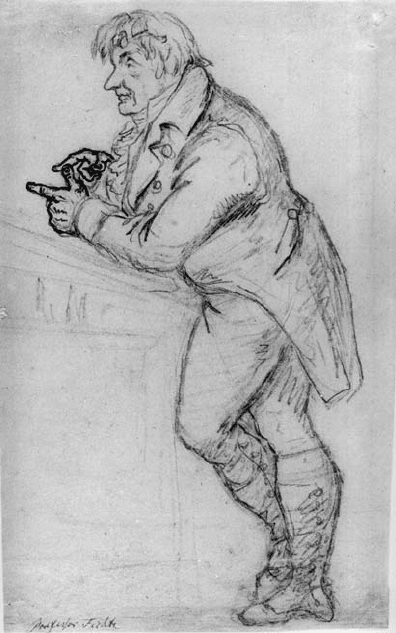
Fichte’s relaxed lecturing style
marks a contrast with the
dense nature of his prose
HUME TO HEGEL
110
his colleague on appointment to a professorship in Jena in 1798, at the
age of twenty-three. Fichte’s philosophy was the critical form, Schelling
maintained, of the teaching that Spinoza had presented in dogmatic form.
Schelling went on to develop his own less uncompromising form of idealism,
a ‘Nature Philosophy’, according to which an initial absolute gives rise to two
co-equal principles existing side by side: a spiritual conscious ness and a
physical nature. Here too we meet the ghost of Spinoza: the initial absolute
is Natura Naturans, the system of material nature is Natura Natu rata.
Schelling’s system is rich but diYcult, and his works are not much read
nowadays in anglophone countries. He is perhaps best known in England
because of the inXuence he exercised on Samuel Taylor Coleridge, who
admired and imitated him to the extent of being accused of plagiarizing his
works.10 In most histories of philosophy Schelling is presented as a bridge
between the idealism of Fichte and that of G. W. F. Hegel, who collaborated
with him as editor of a philosophical journal at Jena in 1802–3.
Hegel
Hegel’s Wrst book, indeed, had been a comparison between the philosophies
of Fichte and Schelling (1801). Born in 1770, he had studied theology at the
University of Tu
¨
bingen; he became a colleague of the two philosophers
when he obtained a post at the University of Jena in 1801. He taught there
until Jena’s university was closed down after Napoleon’s crushing victory
over the Prussian army there in 1806. Shortly afterwards Hegel, now almost
10 Coleridge was not, however, an admirer of Fichte, whose idealism he burlesqued in a poem
containing the following lines:
I, I! I, itself I!
The form and the substance, the what and the why
The when and the where, and the low and the high,
The inside and outside, the earth and the sky,
I, you, and he, and he, you and I,
All souls and all bodies are I itself I!
All I itself I!
(Fools! A truce with this starting!)
All my I! all my I!
He’s a heretic dog who but adds Betty Martin!
(Biographia Literaria, Ch. 9)
HUME TO HEGEL
111
destitute, published his monumental Phenomenology of Spirit (Die Phanomenologie
des Geistes).
It was not until 1816 that Hegel became a professor, at the University
of Heidelberg; by that time he had published his major work, The Science
of Logic. A year later he published an encyclopedia of the philosophical
sciences—logic, philosophy of natu re, and philosophy of spirit. In 1818 he
was called to a chair in Berlin, which he held until his death from cholera
in 1831. During these years he published little, but his lecture courses were
published posthumously. In addition to covering the history of philosophy,
they treat of aesthetics, philosophy of religion, and philosophy of history.
More readable than his diYcult oYcial publications, they exhibit an enor-
mously original and capacious mind at work.
Hegel’s greatest contribution to thought was his introduction of a his-
torical element into philosophy. He was not the Wrst historian of philosophy:
that honour is Aristotle’s. Nor was he the Wrst philosopher of history: when
he wrote there were already two classic contributions to that discipline, the
Scienza Nuova of Giambattista Vico (1725) and the Ideen zur Philosophie der
Geschichte der Menscheit of J. G. Herder (1784), both of which reXected on
historical method and emphasized the developmental evolution of human
institutions. But it was Hegel who gave history a special place in philosophy,
and the philosopher a special place in historiography.
Hegel believed that the philosopher had a special insight into history
that ordinary historians lacked. Only the philosopher really understands
that reason is the sovereign of the world, and that the history of the world
is a rational process. There are two ways of reaching this understanding:
either by the investigation of a metaphysical system, or by induction from
the study of history itself. The belief that history is the unfolding of reason
corresponds to the religious faith in divine providence; but the metaphys-
ical understanding is deeper than the theological one, because a general
providence is inadequate to account for the concrete nature of history.
Only the philosopher knows the ultimate destiny of the world, and how it
is to be realized.
Cosmic history, according to Hegel, consists in the life story of spirit
(Geist). The internal development of spirit manifests itself in concrete reality.
‘Everything that from eternity has happened in heaven and earth, the life
of God and all the deeds of time are simply the struggles of Spirit to know
itself and to Wnd itself ’ (LHP I. 23). Spirit is not something given in advance in
HUME TO HEGEL
112
all its fullness: it proceeds from potentiality to actuality, and the motive force
of history is spirit’s drive to actualize its potential. Universal history is ‘the
exhibition of Spirit in the process of working out the knowledge of that
which it is potentially.’
Hegel claims that the existence of spirit is a matter of logic, but he uses
the word ‘logic’ in a special sense of his own. Just as he sees history as a
manifestation of logic, so he tends to see logic in historical, indeed martial,
terms. If two propo sitions are contradictories, Hegel will describe this as a
conXict between them: propositions do battle with one another and will
emerge victorious or suVer defeat. This is called ‘dialectic’, the process by
which one proposition (the ‘thesis’) Wghts with another (the ‘antithesis’)
and both are Wnally overcome by a third (‘the synthesis’).
We pass through two stages of dialectic in order to reach spirit. We begin
with the absolute, the totality of reality, akin to the Being of earlier philo-
sophers. Our Wrst thesis is that the absolute is pure Being. But pure Being
without any qualities is nothing, so we are led to the antithesis, ‘The absolute
is Nothing’. Thesis and antithesis are overcome by synthesis: the union of
Being and Unbeing is Becoming, and so we say ‘The absolute is Becoming’.
The becoming, the life, of the absolute provides the second stage of
dialectic. We begin by considering the absolute as a subject of thought, a
universal thinker: Hegel calls this ‘The Concept’, by which he means the
totality of the concepts that the intellect brings to bear in thinking. We then
consider the absolute as an object of thought: Hegel calls this ‘Nature’, by
which he means the totality of the objects that can be studied by the
intellect. Concept and nature are brought together when the absolute
becomes conscious of itself, being thus both subject and object of thought.
This synthesis of self-consciousness is spirit.
Hegel’s notion of spirit is baZing on Wrst acquaintance. An attempt at an
explanation will be given in later chapters, but we must try to get an initial
feel for what he means. We may wonder whether the spirit is perhaps
God—identiWed perhaps with Nature, a
`
la Spinoza. Or we may guess that
‘Spirit’ is a misleadingly grand way of talking about individual human
minds, in the way in which m edical textbooks speak of ‘the liver’ rather
than of individual livers. Neither suggestion is quite right.
A better place to start is by reXection on the way we all talk about the
human race. Without any particular metaphysical theory in mind, we are
happy to say such things as that the human race has progressed, or is in
HUME TO HEGEL
113
decline, or has learnt much of which it was once ignorant. When Hegel
uses the word ‘Spirit’ he is using the same kind of language, but he is
adding two layers of metaphysical commitment. First, he is talking not just
about human history, but about the history of the whole universe; and,
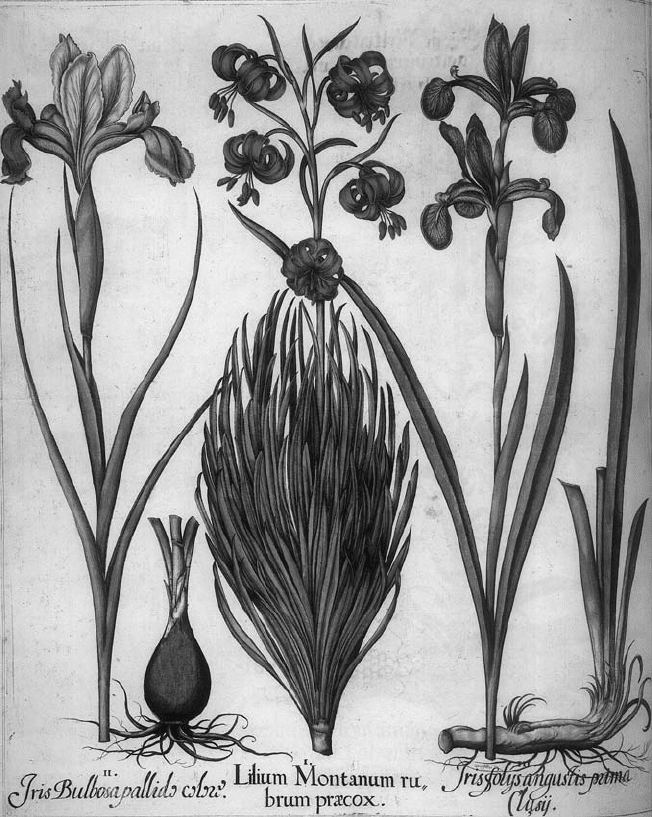
Hegel’s Idea of a plant resembles botanical illustrations that show simultaneously
various stages of development
HUME TO HEGEL
114
second, he is viewing that universe as an organic whole which has a life
cycle mapped out for it.
Hegel invites us to look on the universe as we look on speciWc organisms
in nature. A plant passes through stages of development, producing twigs,
leaves, blossom, and fruit; it does so in accordance with a pattern speciWcto
its own kind. Hegel, with a deliberate bow to Plato, calls this the Idea of the
plant. A plant, of course, is not conscious of its own Idea. But a human
child, as its bodily powers develop, and as its intellectual skills emerge,
gradually grows into consciousness of itself and its nature or Idea (LHP
I. 29). The progress of spirit reproduces this development on a cosmic scale:
Spirit is not to be considered only as individual, Wnite, consciousness, but as that
Spirit which is universal and concrete within itself . . . Spirit’s intelligent compre-
hension of itself is at the same time the progression of the total evolving reality.
This progression is not one that takes its course through the thought of an
individual and exhibits itself in a single consciousness, for it shows itself to be
universal Spirit presenting itself in the history of the world in all the richness of its
form. (LHP I. 33)
Thus the history of the world is the history of the ever-growing self-
consciousness of spirit. Di Verent stages in the cosmic Idea presen t them-
selves at diVerent times to diVerent races. Spirit progresses in consciousness
of freedom pari passu with the growth of awareness of freedom among
human beings. Tho se who lived under oriental despots did not know
that they were free beings. The Greeks and Romans knew that they
themselves were free, but their acceptance of slavery showed that they
did not know that man as such was free. ‘The German nations, under the
inXuence of Christianity, were the Wrst to attain the consciousness that
man, as man, is free: that it is the freedom of Spirit that constitutes its
essence.’
The freedom of spirit is what marks it oV from matter, which is bound
by the necessity of laws such as that of universal attraction. The destiny of
the world is spirit’s expansion of its freedom and of its consciousness of its
freedom. Self-interested individuals and nations are the unconscious in-
struments of spirit working out its destiny: they become conscious of their
role in the cosmic drama at the point at which they are formed into a
national state. The state is ‘the realization of Freedom, i.e. of the absolute
Wnal aim, and it exists for its own sake.’ The state does not exist for the
sake of its citizens; on the contrary, the citizen possesses worth only as a
HUME TO HEGEL
115