
Masters G.M. Renewable and Efficient Electric Power Systems
Подождите немного. Документ загружается.

358 WIND POWER SYSTEMS
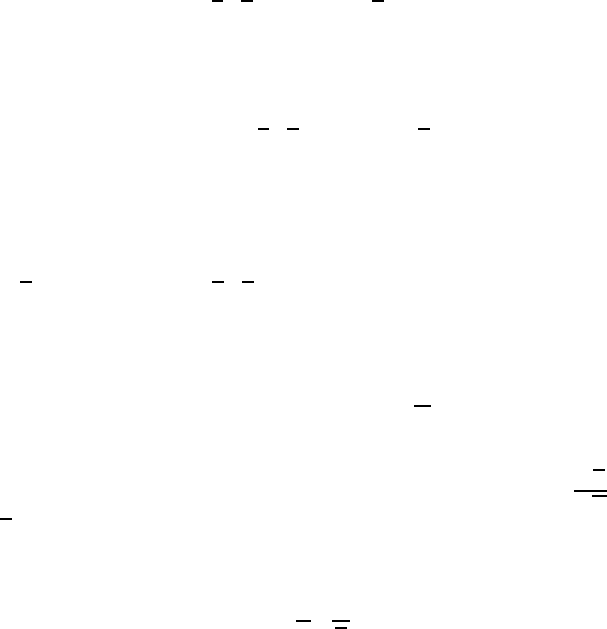
and the area between any two windspeeds is the probability that the wind is
between those speeds. Therefore, the probability that the wind is less than some
specified windspeed V is given by
prob(v ≤ V)= F(V) =
V
0
f(v) dv (6.49)
The integral F(V) in (6.49) is given a special name: the cumulative distribution
function. The probability that the wind V is less than 0 is 0, and the probability
that the wind is less than infinity is 1, so F(V) has the following constraints:
F(V) = probability v ≤ V, F(0) = 0, and F(∞) = 1 (6.50)
In the field of wind energy, the most important p.d.f. is the Weibull function
given before as (6.41):
f(v) =
k
c
v
c
k−1
exp
−
v
c
k
(6.41)
The cumulative distribution function for Weibull statistics is therefore
F(V) = prob(v ≤ V)=
V
0
k
c
v
c
k−1
exp
−
v
c
k
dv (6.51)
This integral looks pretty imposing. The trick to the integration is to make the
change of variable:
x =
v
c
k
so that dx =
k
c
v
c
k−1
dv and F(V) =
x
0
e
−x
dx
(6.52)
which results in
F(V) = prob(v ≤ V) = 1 − exp
−
V
c
k
(6.53)
For the special case of Rayleigh statistics, k = 2, and from (6.44) c =
2
v
√
π
,
where v is the average windspeed, the probability that the wind is less than V is
given by
F(V) = prob(v ≤ V)= 1 − exp
−
π
4
V
v
2
(Rayleigh) (6.54)
SPECIFIC WIND TURBINE PERFORMANCE CALCULATIONS 359
Probability
f
(
v
)
Windspeed
v
(m/s)
Windspeed (mph)
1614121086420
0.00
0.02
0.04
0.06
0.08
0.10
0.12
0.14
0.16
0102030
(a)
0102030
(b)
F
(
V
) = prob (
v
≤
V
)
Windspeed
V
(m/s)
Windspeed (mph)
1614121086420
0.0
0.2
0.4
0.6
0.8
1.0
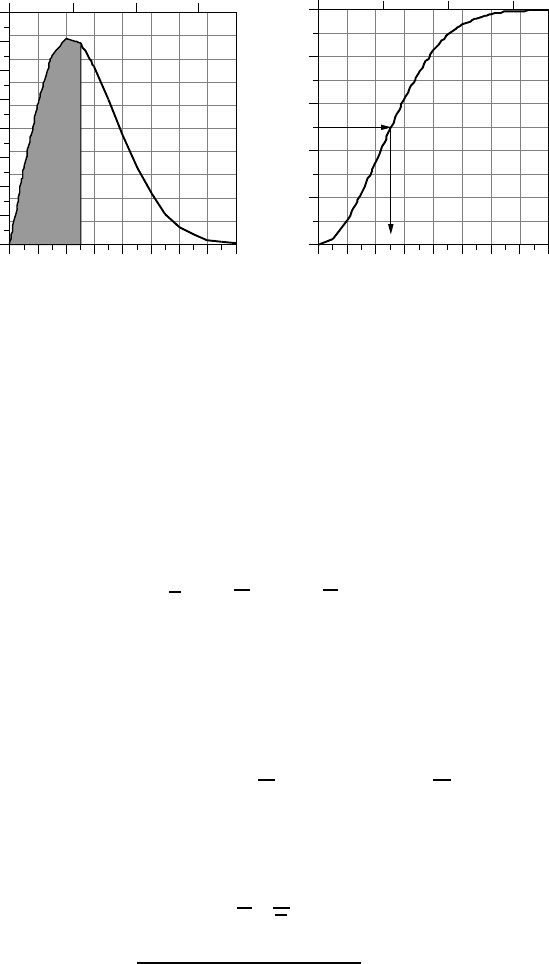
Figure 6.34 An example p.d.f. (a) and cumulative distribution function (b) for k = 2,
c = 6 Weibull statistics. In this case, half the time the wind is less than or equal to 5 m/s;
that is, half the area under the p.d.f. is to the left of v = 5m/s.
A graph of a Weibull p.d.f. f(v) and its cumulative distribution function,
F(V), is given in Fig. 6.34. The example shown there has k = 2andc = 6, so
it is actually a Rayleigh p.d.f. The figure shows that half of the time the wind
is less than or equal to 5 m/s; that is, half the area under the f(v) curve falls
to the left of 5 m/s, and F(5) = 0.5. Note that this does not mean the average
windspeed is 5 m/s. In fact, since this example is a Rayleigh p.d.f., the average
windspeed is given by (6.44):
v = c
√
π/2 = 6
√
π/2 = 5.32 m/s.
Also of interest is the probability that the wind is greater than a certain value
prob(v ≥ V)= 1 − prob(v ≤ V)= 1 − F(V) (6.55)
For Weibull statistics, (6.55) becomes
prob(v ≥ V)= 1 −
1 − exp
−
V
c
k
= exp
−
V
c
k
(6.56)
and for Rayleigh statistics,
prob(v ≥ V)= exp
−
π
4
V
v
2
(Rayleigh) (6.57)
Example 6.13 Idealized Power Curve with Rayleigh Statistics. ANEG
Micon 1000/54 wind turbine (1000-kW rated power, 54-m-diameter rotor) has a
360 WIND POWER SYSTEMS
cut-in windspeed V
C
= 4 m/s, rated windspeed V
R
= 14 m/s, and a furling wind
speed of V
F
= 25 m/s. If this machine is located in Rayleigh winds with an
average speed of 10 m/s, find the following:
a. How many h/yr is the wind below the cut-in wind speed?
b. How many h/yr will the turbine be shut down due to excessive winds?
c. How many kWh/yr will be generated when the machine is running at
rated power?
Solution
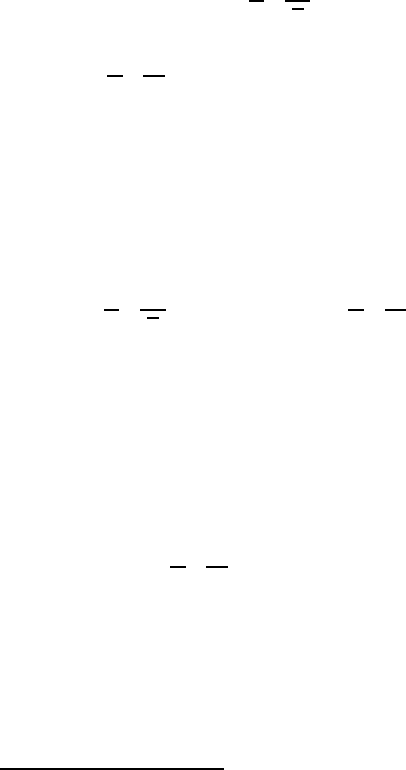
a. Using (6.54), the probability that the windspeed is below cut-in 4 m/s is
F(V
C
) = prob(v ≤ V
C
) = 1 − exp
−
π
4
V
C
v
2
= 1 − exp
−
π
4
4
10
2
= 0.1181
In a year with 8760 hours (365 ×24), the number of hours the wind will
be less than 4 m/s is
Hours (v ≤ 4m/s) = 8760 h/yr × 0.1181 = 1034 h/yr
b. Using (6.57), the hours when the wind is higher than V
F
= 25 m/s will be
Hours(v ≥ V
F
) = 8760 · exp
−
π
4
V
F
v
2
= 8760 · exp
−
π
4
25
10
2
= 65 h/yr
that is, about 2.5 days per year the turbine will be shut down due to exces-
sively high speed winds.
c. The wind turbine will deliver its rated power of 1000 kW any time the
wind is between V
R
= 14 m/s and V
F
= 25 m/s. The number of hours that
the wind is higher than 14 m/s is
Hours(v ≥ 14) = 8760 · exp
−
π
4
14
10
2
= 1879 h/yr
So, the number of hours per year that the winds blow between 14 m/s and
25 m/s is 1879 − 65 = 1814 h/yr. The energy the turbine delivers from
those winds will be
Energy (V
R
≤ v ≤ V
F
) = 1000 kW × 1814 h/yr = 1.814 × 10
6
kWh/yr
SPECIFIC WIND TURBINE PERFORMANCE CALCULATIONS 361
6.10.5 Using Real Power Curves with Weibull Statistics
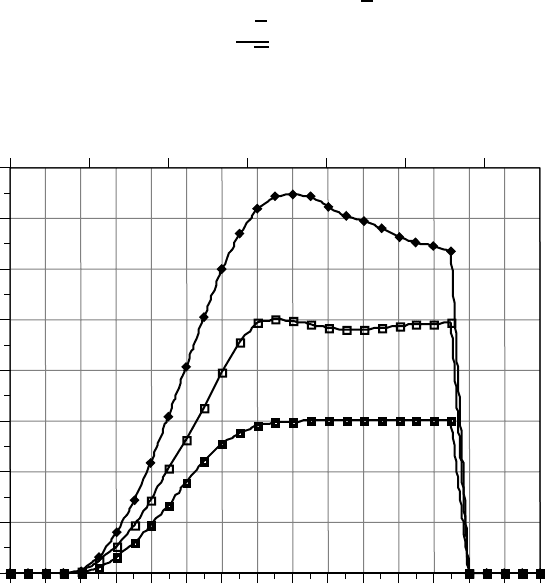
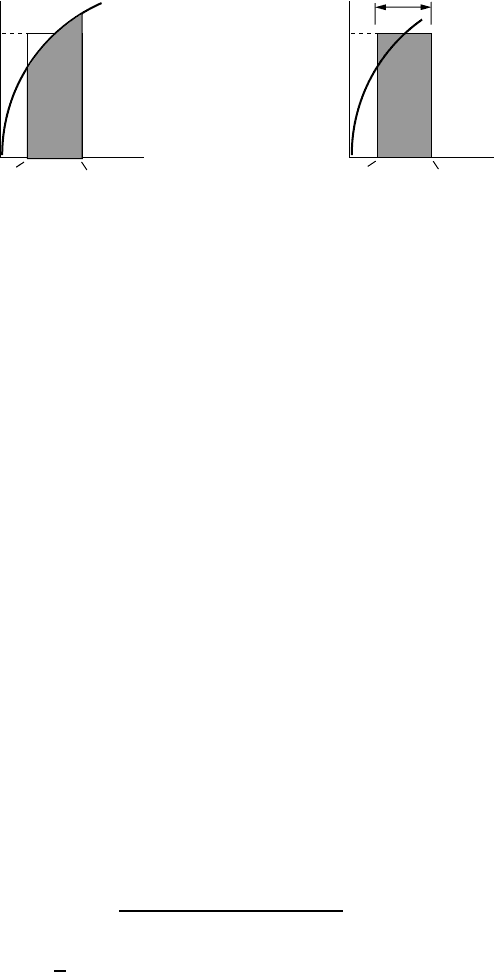
Figure 6.35 shows power curves for three wind turbines: the NEG Micon 1500/64
(rated power is 1500 kW; rotor diameter is 64 m), the NEG Micon 1000/54,
and the Vestas V42 600/42. Their resemblance to the idealized power curve
is apparent, with most of the discrepancy resulting from the inability of wind-
shedding techniques to precisely control output when winds exceed the rated
windspeed. This is most pronounced in passive stall-controlled rotors. Notice how
the rounding of the curve in the vicinity of the rated power makes it difficult
to determine what an appropriate value of the rated windspeed V
R
should be.
As a result, rated windspeed is used less often these days as part of turbine
product literature.
With the power curve in hand, we know the power delivered at any given
wind speed. If we combine the power at any wind speed with the hours the
wind blows at that speed, we can sum up total kWh of energy produced. If the
site has data for hours at each wind speed, those would be used to calculate the
energy delivered. Alternatively, when wind data are incomplete, it is customary
to assume Weibull statistics with an appropriate shape parameter k,andscale
parameter c. If only the average wind speed is known
v, we can use the simpler
Rayleigh statistics with k = 2andc =
2
v
√
π
.
302826242220181614121086420
0
200
400
600
800
1000
1200
1400
1600
Power delivered (kW)
NEG Micon 1000/54
Vestas V42 600/42
NEG Micon 1500/64
Wind speed (m/s)
Wind speed (mph)
0 102030405060
Figure 6.35 Power curves for three large wind turbines.
362 WIND POWER SYSTEMS
v
f
(
v
)
v
−∆
v
/2
v
+∆
v
/2
v
−∆
v
/2
v
+∆
v
/2
Area =
∫
f
(
v
)
dv
≈ f (
v
)∆
v
Actual probability
(a)
Approximation
f
(
v
)
v
v
−∆
v
/2
v
+∆
v
/2
(b)
∆
v
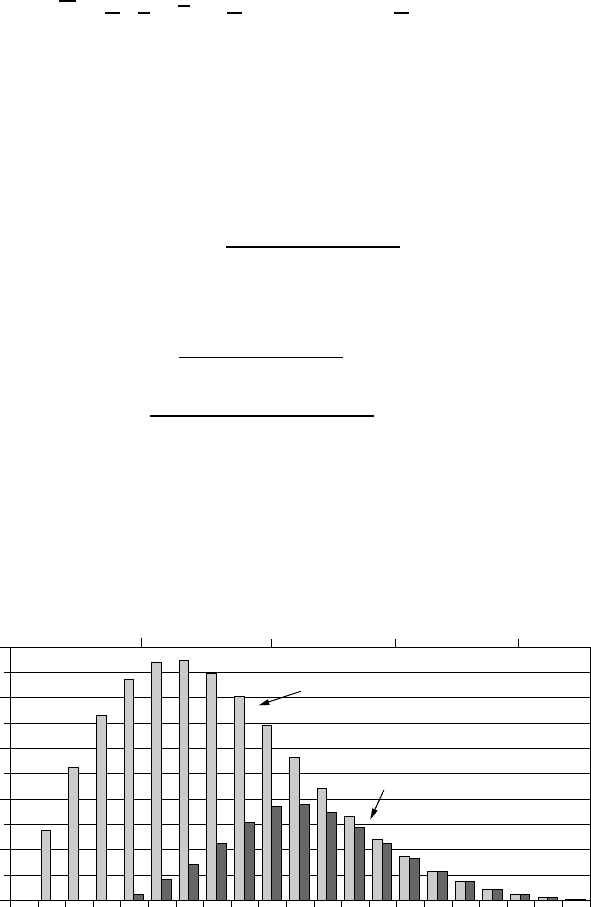
Figure 6.36 The probability that v is within v ±v/2 is t he shaded area in (a). A rea-
sonable approximation is the shaded area in (b) f(v)v, as long as v is relatively small.
We started the description of wind statistics using discrete values of wind
speed and hours per year at that wind speed, then moved on to continuous
probability density functions. It is time to take a step backwards and modify the
continuous p.d.f. to estimate hours at discrete wind speeds. With hours at any
given speed and turbine power at that speed, we can easily do a summation to
find energy produced.
Suppose we ask: What is the probability that the wind blows at some speci-
fied speed v? A statistician will tell you that the correct answer is zero. It never
blows at exactly v m/s. The legitimate question is, What is the probability that
the wind blows between v − v/2andv + v/2? On a p.d.f., this probabil-
ity is the area under the curve between v − v/2andv + v/2 as shown in
Fig. 6.36a. If v is small enough, then a reasonable approximation is the rect-
angular area shown in Fig. 6.36b. This suggests we can make the following
approximation:
prob(v − v/2 ≤ V ≤ v + v/2) =
v+v/2
v−v/2
f(v) dv ≈ f(v)v (6.58)
While this may look complicated, it really makes life very simple. It says we
can conveniently discretize a continuous p.d.f. by saying the probability that the
wind blows at some windspeed V is just f(V), and let the statisticians squirm.
Let’s us check the following example to see if this seems reasonable.
Example 6.14 Discretizing f (v). For a wind site with Rayleigh winds hav-
ing average speed
v = 8 m/s, what is the probability that the wind would blow
between 6.5 and 7.5 m/s? How does this compare to the p.d.f. evaluated at 7 m/s?

SPECIFIC WIND TURBINE PERFORMANCE CALCULATIONS 363
Solution. Using (6.57), we obtain
prob(v ≥ 6.5) = exp
−
π
4
6.5
8
2
= 0.59542
prob(v ≥ 7.5) = exp
−
π
4
7.5
8
2
= 0.50143
So, the probability that the wind is between 6.5 and 7.5 m/s is
prob(6.5 ≤ v ≤ 7.5) = 0.59542 − 0.50143 = 0.09400
From (6.45), we will approximate the probability that the wind is at 7 m/s to be
f(v) =
πv
2v
2
exp
−
π
4
v
v
2
so,
f(7m/s) =
π · 7
2 · 8
2
exp
−
π
4
7
8
2
= 0.09416
The approximation 0.09416 is only 0.2% higher than the correct value of 0.09400.
The above example is reassuring. It suggests that we can use the p.d.f. eval-
uated at integer values of windspeed to represent the probability that the wind
blows at that speed. Combining power curve data supplied by the turbine manu-
facturer (examples are given in Table 6.7), with appropriate wind statistics, gives
us a straightforward way to estimate annual energy production. This is most
easily done using a spreadsheet. Example 6.15 demonstrates the process.
Example 6.15 Annual Energy Delivered Using a Spreadsheet. Suppose that
a NEG Micon 60-m diameter wind turbine having a rated power of 1000 kW is
installed at a site having Rayleigh wind statistics with an average windspeed of
7 m/s at the hub height.
a. Find the annual energy generated.
b. From the result, find the overall average efficiency of this turbine in these
winds.
c. Find the productivity in terms of kWh/yr delivered per m
2
of swept area.

364 WIND POWER SYSTEMS
TA BLE 6.7 Examples of Wind Turbine Power Specifications
Manufacturer:
NEG
Micon
NEG
Micon
NEG
Micon Vestas Whisper
Wind
World Nordex Bonus
Rated Power (kW): 1000 1000 1500 600 0.9 250 1300 300
Diameter (m): 60 54 64 42 2.13 29.2 60 33.4
Avg. Windspeed
v (m/s) v(mph) kW kW kW kW kW kW kW kW
0000000.00000
12.200000.00000
24.500000.00000
36.700000.03004
4 8.9 33 10 9 0 0.08 0 25 15
5 11.2 865163220.17 12 7832
6 13.4 150 104 159 65 0.25 33 150 52
7 15.7 248 186 285 120 0.35 60 234 87
8 17.9 385 291 438 188 0.45 92 381 129
9 20.1 535 412 615 268 0.62 124 557 172
10 22.4 670 529 812 356 0.78 153 752 212
11 24.6 780 655 1012 440 0.90 180 926 251
12 26.8 864 794 1197 510 1.02 205 1050 281
13 29.1 924 911 1340 556 1.05 224 1159 297
14 31.3 964 986 1437 582 1.08 238 1249 305
15 33.6 989 1006 1490 594 1.04 247 1301 300
16 35.8 1000 998 1497 598 1.01 253 1306 281
17 38.0 998 984 1491 600 1.00 258 1292 271
18 40.3 987 971 1449 600 0.99 260 1283 259
19 42.5 968 960 1413 600 0.97 259 1282 255
20 44.7 944 962 1389 600 0.95 256 1288 253
21 47.0 917 967 1359 600 0.00 250 1292 254
22 49.2 889 974 1329 600 0.00 243 1300 255
23 51.5 863 980 1307 600 0.00 236 1313 256
24 53.7 840 985 1288 600 0.00 230 1328 257
25 55.9 822 991 1271 600 0.00 224 1344 258
26 58.2 0 0 0 0 0.00 0 0 0
Source: Mostly based on data in www.windpower.dk.
Solution
a. To find the annual energy delivered, a spreadsheet solution is called for.
Let’s do a sample calculation for a 6-m/s windspeed to see how it goes,
and then present the spreadsheet results.
From Table 6.7, at 6 m/s the NEG Micon 1000/60 generates 150 kW.
From (6.45), the Rayleigh p.d.f. at 6 m/s in a regime with 7-m/s average
windspeed is
f(v) =
πv
2v
2
exp
−
π
4
v
v
2
=
π · 6
2 · 7
2
exp
−
π
4
6
7
2
= 0.10801

SPECIFIC WIND TURBINE PERFORMANCE CALCULATIONS 365
In a year with 8760 h, our estimate of the hours the wind blows at 6 m/s is
Hours @6 m/s = 8760 h/yr × 0.10801 = 946 h/yr
So the energy delivered by 6-m/s winds is
Energy (@6 m/s) = 150 kW × 946 h/yr = 141, 929 kWh/yr
The rest of the spreadsheet is given below. The total energy produced is
2.85 × 10
6
kWh/yr.
Windspeed
(m/s)
Power
(kW)
Probability
f(v)
Hrs/yr
at v
Energy
(kWh/yr)
0 0 0.000 0 0
1 0 0.032 276 0
2 0 0.060 527 0
3 0 0.083 729 0
4 33 0.099 869 28,683
5 86 0.107 941 80,885
6 150 0.108 946 141,929
7 248 0.102 896 222,271
8 385 0.092 805 310,076
9 535 0.079 690 369,126
10 670 0.065 565 378,785
11 780 0.051 444 346,435
12 864 0.038 335 289,551
13 924 0.028 243 224,707
14 964 0.019 170 163,779
15 989 0.013 114 113,101
16 1000 0.008 74 74,218
17 998 0.005 46 46,371
18 987 0.003 28 27,709
19 968 0.002 16 15,853
20 944 0.001 9 8,709
21 917 0.001 5 4,604
22 889 0.000 3 2,347
23 863 0.000 1 1,158
24 840 0.000 1 554
25 822 0.000 0 257
26 0 0.000 0 0
Total: 2,851,109
b. The average efficiency is the fraction of the wind’s energy that is actually
converted into electrical energy. Since R ayleigh statistics are assumed, we
366 WIND POWER SYSTEMS
can use (6.48) to find average power in the wind for a 60-m rotor diameter
(assuming the standard value of air density equal to 1.225 kg/m
3
):
P =
6
π
·
1
2
ρA
v
3
=
6
π
× 0.5 × 1.225 ×
π
4
(60)
2
× (7)
3
= 1.134 × 10
6
W = 1134 kW
In a year with 8760 h, the energy in the wind is
Energy in wind = 8760 h/yr × 1134 kW = 9.938 × 10
6
kWh
So the average efficiency of this machine in these winds is
Average efficiency =
2.85 × 10
6
kWh/yr
9.938 × 10
6
kWh/yr
= 0.29 = 29%
c. The productivity (annual energy per swept area) of this machine is
Productivity =
2.85 × 10
6
kWh/yr
(π/4) · 60
2
m
2
= 1008 kWh/m
2
· yr
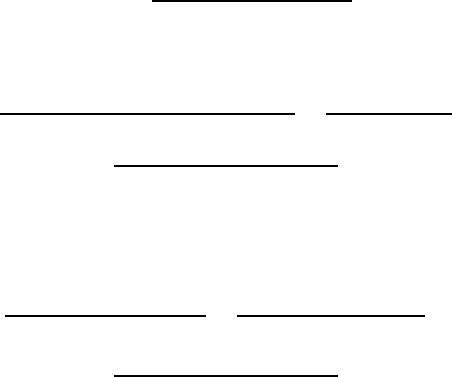
A histogram of hours per year and MWh per year at each windspeed for the
above example is presented in Fig. 6.37. Notice how little energy is delivered at
lower windspeeds in spite of the large number of hours of wind at those speeds.
This is, of course, another example of the importance of the cubic relationship
between power in the wind and wind speed.
200
400
600
800
1000
Windspeed (m/s)
Hours @
v
or MWh/yr @
v
0
(mph)
Hours per year at
v
MWh/yr at
v
01234567891011121314151617181920
010203040
Figure 6.37 Hours per year and MWh per year at each windspeed for the NEG Micon
(1000/60) turbine and Rayleigh winds with average speed 7 m/s.
SPECIFIC WIND TURBINE PERFORMANCE CALCULATIONS 367
6.10.6 Using Capacity Factor to Estimate Energy Produced
One of the most important characteristics of any electrical power system is its
rated power; that is, how many kW it can produce on a continuous, full-power
basis. If the system has a generator, the rated power is dictated by the rated output
of the generator. If the generator were to deliver rated power for a full year, then
the energy delivered would be the product of rated power times 8760 h/yr. Since
power systems—especially wind turbines—don’t run at full power all year, they
put out something less than that maximum amount. The capacity factor CF is a
convenient, dimensionless quantity between 0 and 1 that connects rated power
to energy delivered:
Annual energy (kWh/yr) = P
R
(kW) × 8760 (h/yr) ×CF (6.59)
where P
R
is the rated power (kW) and CF is the capacity factor. That is, the
capacity factor is
CF =
Actual energy delivered
P
R
× 8760
(6.60)
Or, another way to express it is
CF =
Actual energy delivered/8760 h/yr
P
R
=
Average power
Rated power
(6.61)
Example 6.16 Capacity Factor for the NEG Micon 1000/60. What is the
capacity factor for the NEG Micon 1000/60 in Example 6.14?
Solution
CF =
Actual energy delivered
P
R
× 8760
=
2.851 × 10
6
kWh/yr
1000 kW × 8760 h/yr
= 0.325
Example 6.16 is quite artificial, in that a careful calculation of energy delivered
was used to find capacity factor. The real purpose of introducing the capacity
factor is to do just the opposite—that is, to use it to estimate energy delivered.
The goal here is to find a simple way to estimate capacity factor when very little
is known about a site and wind turbine.
Suppose we use the procedure just demonstrated in Examples 6.15 and 6.16
to work out the capacity factor for the above wind turbine while we vary the
average wind speed. Figure 6.38 shows the result. For mid-range winds averaging
from about 4 to 10 m/s (9 to 22 mph), the capacity factor for this machine is
quite linear. These winds cover all the way from Class 2 to Class 7 winds, and so
they are quite typical of sites for which wind power is attractive. For winds with
higher averages, more and more of the wind is above the rated windspeed and