
Takadoum J. Materials and Surface Engineering in Tribology
Подождите немного. Документ загружается.


Materials for Tribology 115
PEhd Polyamide 6 Polyamide 11 POM PTFE PEEK Polyimide
Melting
point (°C)
130 220 185 175 330 335 388
Transitional
vitrous
temperature
Tg (°C)
–110 55 30 –50 125 145 250
Maximum
usability
temperature
(°C)
80 100 80 110 250 250 260
Young’s
modulus
(MPa)
500–
1200
2000 1000 3700 500 3700 2500
Resistance
to traction
(MPa)
18–35 70–85 56 62–70 25-36 100 75–100
Table 3.2. Some characteristics of polymers used in tribology
3.2.2.1. High-density polyethylene
It is usual to distinguish low-density polyethylene (LDPE), which is strongly
ramified with little crystalline structure, and high-density polyethylene (HDPE),
which is somewhat more crystalline, weakly ramified and has a larger elastic
modulus. The terminology ultra-high molecular weight polyethylene (UHMWPE) is
used when the average molecular weight is of the order 1 to 10 million. This type of
polyethylene is widely used in tribology, particularly in applications such as:
– ski soles: UHMWPE combines high mechanical and anti-wear characteristics
with remarkable hydrophobic properties and a low friction coefficient against snow
(ranging from 0.10 and 0.01); and
– rubbing surfaces in joint prostheses for hips and knees (see Figure 3.24).
3.2.2.2. Fluorinated polymers
The most common fluorinated polymer is polytetrafluoroethylene (PTFE) or
Teflon (the commercial name used by Dupont de Nemours). It is characterized by
remarkable chemical inertness, making it resistant to corrosive substances such as
hydrofluoric acid, nitric acid and caustic soda. It is therefore widely used in the
chemical industry. PTFE is a non-stick material which behaves outstandingly under
friction. However, its resistance to abrasion is limited and it is very susceptible to
116 Materials and Surface Engineering in Tribology
creep, which limits its use in mechanics. As an anti-stick material, PTFE is widely
used as a coating for pots and frying pans, in molding devices (from shoe moulds to
cake tins) or even as a coating on metallic parts used under friction. It is also used as
a lubricant additive for many polymers and sintered materials.
3.2.2.3. Polyacetal (polyoxymethylene: POM) and polyamide
These materials combine a wide range of characteristics making them
particularly well-suited for use in mechanical parts.
The main advantages of these materials are:
– their mechanical properties (high toughness, hardness and stiffness);
– their resistance to creep (for POM);
– their good frictional properties (low friction coefficient and excellent
resistance to abrasive wear);
– their chemical stability in the presence of oils or greases;
– their good resistance to solvents (for POM); and
– their good resistance to fatigue.
In contrast to fluorinated polymers, however, POM and polyamide can be
corroded by acids.
POM and polyamide are among the most commonly used polymers in
mechanical manufacturing and they provide an attractive alternative to the use of
metals. POM is therefore used to manufacture derailleur gears on bicycles, fixation
clamps, zips or ski bindings. Polyamide material is used in precision gearings,
mallet heads, pump parts or as spikes or soles for sports shoes.
3.2.2.4. Polyimide
Polyimide is an expensive material characterized by its excellent mechanical
properties (which it retains to 250°C). Polyimide is characterized by a very low
friction coefficient against most materials (0.01 to 0.1), presents excellent resistance
to wear and exhibits very low creep. When bound to reinforcement agents, it can be
used in high temperature tribological applications and under relatively heavy loads.
It is routinely used for brake linings or gearings subject to intensive use.
3.2.2.5. Polyetheretherketone (PEEK)
PEEK is a material that combines remarkable mechanical characteristics with
excellent high temperature behavior. Its melting point is 335°C and it can be used at
up to 250°C. It has good tribological properties and exhibits good resistance to
Materials for Tribology 117
hydrolysis and to chemical products. PEEK can withstand most solvents, acids and
bases and, as a result, is often used as a cladding material for electric cables placed
in aggressive environments such as on oil rigs, in nuclear plants or in space. It is also
used as anti-wear coating or for the manufacturing of high-quality components. On
the downside, PEEK is much more costly than most common polymers.
3.2.2.6. Friction and wear of polymers
The dominant wear mechanisms are adhesive wear, abrasive wear and fatigue
wear. In the case of metal/polymer pairs, several different types of behavior can be
observed depending on the surface state of the metal. When the metallic surface is
smooth, polymer wear mainly results from adhesion (soft polymers) or surface
fatigue (hard polymers) [OMA 86]. Initially, fatigue wear induces the elastic
deformation of asperities, and this is then followed by the appearance of cracks on
the surface. As the network of cracks becomes larger, wear particles are generated
which separate from the surface and are subsequently eliminated from the
tribological circuit. Adhesive wear is characterized by a significant transfer of
material from the polymer to the metal, which is in turn followed by a stationary
state when the friction coefficient remains stable and wear is limited.
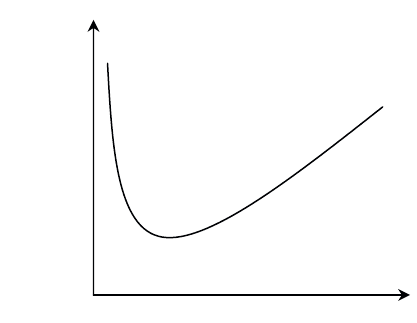
When the opposing surface is very rough, polymer wear occurs as a result of
abrasion. As a rule, polymer wear is a function of the surface state of the opposing
metal, as shown in Figure 3.2. Smooth surfaces undergo significant wear due to
adhesion between the contacting surfaces. As roughness increases, the true contact
area decreases and, consequently, so does the friction coefficient and the wear.
However, when the roughness is too high, wear increases again due to abrasion against
the metal asperities. Between these two extremes of surfaces that are smooth or very
rough, an optimum value of roughness has been determined that minimizes the wear.
In the case of friction of polyethylene against steel, two optimum roughness values
corresponding to minimum wear have been reported: Ra = 0.1 μm [DOW 76] and
Rq = 10 μm [BUC 81].
In contrast to metals, the resistance of polymers to abrasive wear does not
depend on their hardness. Indeed, when placed in frictional contact with an abrasive
surface, their rate of wear has been shown to be inversely proportional to the product
AR
m
, where A is the elongation at break and R
m
the ultimate tensile strength
[BRI 81, EVA 79].
118 Materials and Surface Engineering in Tribology
Figure 3.2. Variations of polyethylene wear as a function of the roughness of the opposing
surface. Wear minimum corresponds to a roughness of approximately Ra = 0.1 μm
[DOW 76] or Rq = 10 μm [BUC 81]
3.2.2.7. Surface treatment of polymers
There exist many types of surface treatments that can modify the physico-
chemical properties of polymer surfaces. For example, flame or corona treatments
activate the surface of a polymer by increasing the surface energy and so make the
surface more receptive to the application of glue or paint. The mechanical and
tribological properties of polymer surfaces can also be significantly improved
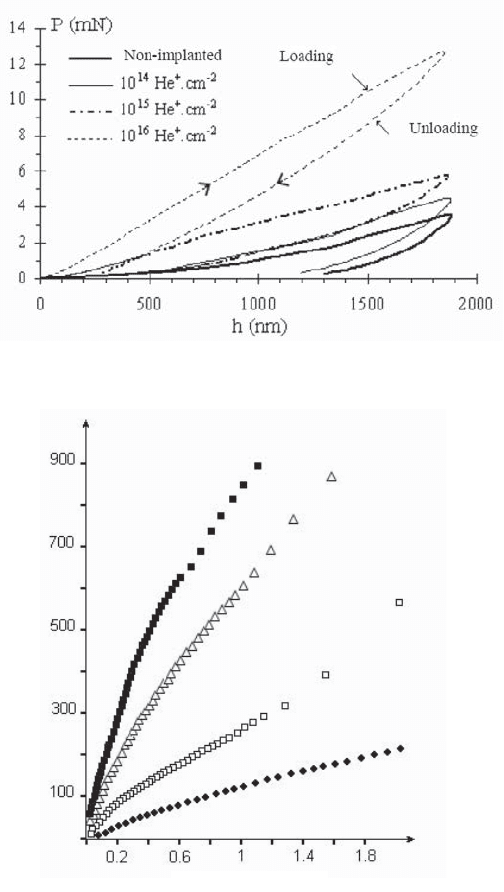
through ion implantation. Figure 3.3 shows results of nano-indentation tests carried
out on helium-implanted polypropylene/ethylene-propylene (PP/EPR) where
significant hardening of the surface is observed. Measurements carried out at an
indentation depth of 50 nm (for loading/unloading cycles recorded at a maximum
depth of indentation of 50 nm) following an implantation of 10
16
He
+
cm
–2
yielded
Young’s modulus and hardness of 26.7 GPa and 6,720 MPa, respectively, to be
compared with values of 1.9 GPa and 125 MPa for the non-implanted material.
When indentation tests were carried out at greater penetration depths, the ion
implantation effect decreased but remained significant, as seen in Figure 3.3. This
improvement of the mechanical characteristics of the surface was accompanied by a
significant decrease in friction against 100Cr6 steel. A friction coefficient of 0.16
was obtained for the 10
16
He
+
cm
–2
dose implanted sample as opposed to 0.30 for the
non-implanted sample [BRU 03].
The benefits of ion implantation on the surface mechanical characteristics of
polymers have also been noted in the case of polyamide implanted with various
elements such as Ne, C, N, O and Si. Figure 3.4 clearly shows that following neon
Rou
g
hness
Wear
Materials for Tribology 119
implantation, the hardening of the polyamide surface increases proportionally to the
amount of implanted ions [PIV 94].
Figure 3.3. Loading/unloading curve obtained by nano-indentation
on PP/EPR implanted with varying helium doses [BRU 03]
Figure 3.4. Variation of the plastic deformation under indentation as a function of the applied
load for neon-implanted polyamide (300 keV): untreated material or treated material with a
dose of 10
13
Ne cm
–2
(), 10
14
Ne cm
–2
(U), 5.10
14
Ne cm
–2
(), 5.10
15
Ne cm
–2
(¡) [PIV 94]
Penetration depth (nm)
Load (mN)
120 Materials and Surface Engineering in Tribology
3.2.3. Composites
Polymers are rarely used for tribological applications on their own: they are
usually combined with either reinforcing agents (such as glass, carbon or aramide
fibers or ceramic particles) and/or lubricating agents (such as PTFE, MoS
2
or
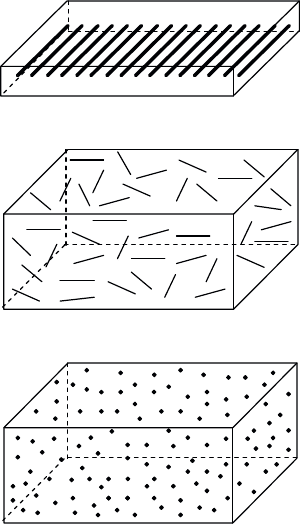
graphite) to form composite materials as shown in Figure 3.5. The goal of the
composite is to improve the mechanical characteristics of the end material, as well
as its friction coefficient and resistance to wear.
a)
b)
c)
Figure 3.5. Examples of composite materials in a polymer matrix.
The reinforcing agents are: a) long fibers; b) short fibers; c) particles
The addition of 30% glass fibers to a polyamide (PA6) can increase its resistance
to traction from 80 to 150 MPa, its elasticity from 1,500 to 8,000 MPa and its
resistance to compression from 60 to 150 MPa [ZYG 89]. The enhancement of these
mechanical properties results in better resistance to wear, and this has been observed
for a number of materials such as PEEK, polyamide, polycarbonate, PTFE and
Materials for Tribology 121
poly-acetal [FRI 95, FRI 98, LUZ 95, ZHANGS 97]. The wear resistance typically
improves by a factor of 5–10.
In another study, volumes of PTFE from 5 to 85% were added to PEEK and the
resulting composites were subjected to several friction tests. These showed that wear
was minimized for a PTFE content of 15% [LUZ 95]. Other studies have determined
an optimum fraction of added reinforcement in order to reduce wear [WANG 06]. A
significant improvement to wear resistance at high temperatures (up to 260 °C) was
also noted in the case of the PEEK/carbon fiber composite following addition of
PTFE and graphite [PAU 96]. Other reinforcements such as silicon carbide can
significantly improve PEEK’s resistance to wear [ZHANGG 06]. In the case of
polyetherimide (PEI), the friction coefficient against 100Cr6 steel was halved, while
wear was reduced by between 60 and 80% with the addition of 5 to 20% carbon
fibers [GUI 05].
It is important to note, however, that the tribological behavior of composites can
be greatly affected by the presence of water and that it can be improved or degraded
depending on the nature of the materials in question and of the stress they are
subjected to. Water can corrode and increase the fragility of the base material-
reinforcement interface but, on the other hand, it can also decrease the contact
temperature and evacuate wear debris, which can be abrasive and contribute to
material wear [HAN 87, YAM 04].
3.2.3.1. Friction materials
Friction materials are usually metal-matrix composites designed to transform
kinetic energy into heat. The thermal conductivity of the elements of the metal-
matrix (generally iron, copper or zinc) ensures heat dissipation, while the
reinforcements (usually ceramics) give the material a high friction coefficient. These
materials are used in brake pads and torque limiters.
3.2.4. Ceramics
The remarkable properties of ceramic materials make them particularly well-
suited for tribological applications. These characteristics include:
– high values of hardness (thus high resistance to abrasion);
– a low coefficient of expansion (thus high dimensional stability);
– low reactivity (good resistance to chemicals); and
– an ability to withstand high temperatures.

122 Materials and Surface Engineering in Tribology
Ceramics can be classified into two categories: oxides (Al
2
O
3
, MgO, ZrO
2
,
etc.) and non-oxides. Among the non-oxides, two broad classes of ceramics are
particularly important in the fields of mechanics and tribology:
– nitrides (TiN, CrN, Si
3
N
4
, etc.); and
– carbides (TiC, SiC, ZrC, etc.).
Two other ceramic materials are particularly important as a result of their very high
hardness: cubic Boron Nitride (cBN) and diamond.
Table 3.3 presents the characteristics of the main ceramics used in the field of
tribology.
Table 3.3. Some characteristics of ceramics used in tribology
Al
2
O
3
ZrO
2
/
Y
2
O
3
ZrO
2
/
MgO
SiC Si
3
N
4
SiAlON BNC Diamond
Melting point
(°C)
2050 2590 – 2500 1900 3200 3825
Maximum use
temperature (°C)
1800–
1850
1500 – 1550
1400–
1500
1500 – –
Vickers hardness
1800–
2000
1200 1200 2300
1450–
1550
1500 4700
7000–
10 000
Young’s
modulus (GPa)
300–
400
200 200 420
290–
315
290 660 1054
Poisson’s
coefficient
0.25–
0.27
0.29 0.29 0.15
0.26–
0.27
0.26 – 0.07–0.1
Fracture
toughness
(MPa m
1/2
)
3–5 8–13 6–10 3.5–4 4–5 5.4 – –
Linear dilation (u
10
–6
)
8–9 9–11 8–13 4–5 3.2 3
2.5–
4.7
0.8
20°C
29–32 1.9 1.9 180 18–20 20 60 2000
500°C
12 2.1 2 68 18–20 20 – –
Thermal
conductivity
(W m
–1
K
–1
)
1000°C
9–10 2.2 2.2 40 18–20 20 – –
Materials for Tribology 123
Alumina-based ceramics are essentially used in the manufacturing of cutting
tools, wear parts, sealing rings, grinding wheels or as electronic or heating appliance
supports.
Zirconia ZrO
2
is characterized by its exceptional fracture toughness which is two
to three times higher than that of alumina (see Table 3.3), making it a material very
resistant to impacts. It can therefore be used in tribological applications requiring
material ductility for which alumina would not be suitable.
At ambient temperature and under normal atmospheric pressure, zirconia
crystallizes in a monoclinical structure which remains stable to 1,100°C, becomes
tetragonal between 1,100 and 2,300°C and becomes cubic beyond 2,300°C.
The different phase changes of zirconia are reversible but they are accompanied
by significant volumic variations. For example, because the tetragonal state is denser
than the monoclinical state, the tetragonal to monoclinical transformation during
cooling is accompanied by a volumic expansion of around 4%.
This phenomenon makes it problematic to design and manufacture engineering
parts based on pure zirconia. Indeed, during cooling, such parts tend to crack and
lose their mechanical resistance. In order to overcome this drawback, tetragonal (or
cubic) zirconia is stabilized at low temperatures by doping it with 3 to 20% (molar
percentage) of one of the following oxides: CeO
2
, CaO, MgO or Y
2
O
3
. Once doped,
this “partially stabilized zirconia” (PSZ) is then in a metastable state, and can
recover its thermo-dynamically favorable (i.e. monoclinical) structure under the
effect of temperature or mechanical stress.
Silicon and aluminum oxynitride (SiAlON) is another ceramic with remarkable
properties: great hardness and fracture toughness, high thermal conductivity and
very good resistance to wear. It is used in the fabrication of high-speed cutting tools,
extruders and wire die plates.
Silicon carbide and silicon nitride offer excellent resistance to thermal shocks
due to their low linear expansion coefficients and their high thermal conductivities.
These characteristics make them particularly suitable for high-temperature
mechanical and tribological applications. In an oxidizing environment, they become
coated with a layer of partially hydrated SiO
2
which protects the surface from wear.
Because of its superior mechanical properties when compared to steel (excellent
resistance to corrosion and good behavior at high temperatures), silicon nitride is
widely used to manufacture ball bearings for aeronautical applications, machine-
tools and metrology. It is also found in other applications such as engine valves and
in the manufacture of cutting tools.
124 Materials and Surface Engineering in Tribology
Cubic boron nitride and diamond are characterized by their outstanding hardness
and high fracture toughness. They are widely used in high-speed machining,
particularly for hard and abrasive materials. Diamond is generally reserved for the
machining of non-ferrous materials because of its oxidation at 700°C when in
contact with iron and iron-based alloys. High-speed machining of steels is mostly
carried out using cubic boron nitride because of its more stable chemical
composition.
At the atomic level, ceramics are characterized by strong ionic-covalent bonds
which yield good mechanical properties and excellent chemical stability.
Conversely, the strength of these inter-atomic bonds is also the origin of their
fragility. In order to overcome this weakness, a second phase is often used. The
materials thus obtained are called ceramic composites. An example of such
materials is alumina reinforced with other ceramics such as titanium carbide or
silicon carbide monocrystalline fibers called whiskers. These fibers, which are less
than a micron in diameter and range between 5 and 20 microns in length, can
significantly improve the mechanical properties of the material by preventing
propagation of cracks (see Figure 3.6b).
Alumina can also be reinforced through the addition of tetragonal zirconia.
When a crack appears within the material, the tetragonal zirconia grains in the
vicinity of the crack are subjected to significant mechanical stress which triggers
the tetragonal-monoclinical transition (see Figure 3.6c).
As noted above, this transformation is accompanied by an increase of the
material volume of the order of 4%. As they expand, the zirconia grains impose
additional compression stress on the crack, which retards its propagation (Figure
3.6c).
Another technique is based on the introduction of microcracks and voids in the
ceramic during its manufacture, which leads to arrest crack propagation in a material
[BOWE 86].