
Takadoum J. Materials and Surface Engineering in Tribology
Подождите немного. Документ загружается.

Materials for Tribology 125
Tetragonal zirconia
ı
Fi
ı
a)
ı
Fibre céramique
b)
ı
c)
M
o
n
oc
lini
ca
l zir
co
ni
a
Ce
r
a
mi
c
fi
b
e
r
C
r
ack
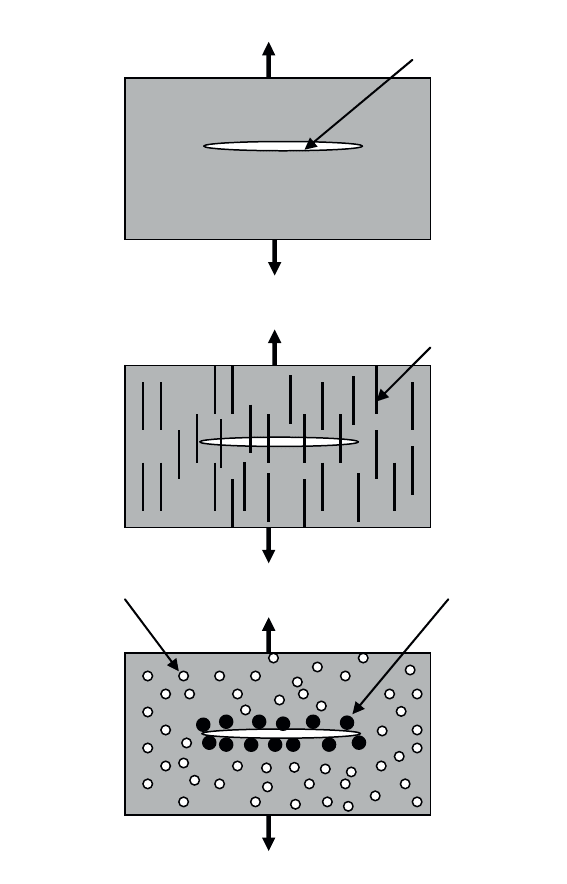
Figure 3.6. Schematic representation of an alumina sample comprising a crack, subjected to
stress ı: a) standard, non-reinforced alumina: the crack propagates as a result of stress; b)
alumina reinforced with ceramic fibers preventing crack propagation; c) alumina reinforced
with tetragonal zircone grains: the tetragonal to monoclinical transition of zirconia occurs as
a result of the applied stress. This transformation is concurrent with a significant dilation of
the material which prevents the propagation of the crack. Figure adapted from [BOWE 86]

126 Materials and Surface Engineering in Tribology
3.2.4.1. Friction and wear of ceramics
In order to understand the mechanisms of crack propagation and wear in
ceramics, we consider the case of sliding contact between a sphere of radius R and a
ceramic plane. If C is the length of a crack in the contact area and F the normal load
applied to the sphere, it can be shown that crack propagation occurs when the
normal applied load reaches the critical value F
c
[ZUM 96]:
34/3
7/2
3*33/22/34/3
1.1
(1 2 ) (1 )
C
c
KR
F
C μ CFE
S
Q
[3.1]
where
*
34
81 2
C
SQ
Q
[3.2]
and Ȟ and E are Poisson’s coefficient and Young’s modulus, respectively, μ is the
friction coefficient between the sphere and plane and K
c
is the fracture toughness of
the ceramic.
By introducing two new terms (H and ȕ, the hardness and the ratio of apparent
and real contact area, respectively), equation [3.2] becomes:
* 1/2 1/2 1/2
2
1.12 (1 2 ) (1 )
C
c
KRH
F
C μ CF E
S
EQ
When the applied load is equal to or greater than the critical value F
c
, crack
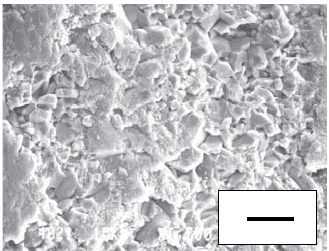
propagation occurs, which is generally followed by grain pull-out and rapid wear of
the surface (see Figure 3.7).
[3.3]
Materials for Tribology 127
10 μ
m
Figure 3.7. Alumina surface showing significant wear of the material
characterized by grain pull-out
The mechanical surface characteristics of ceramics can also be significantly
improved by treatments such as ion implantation or laser surface melting [POS 05,
ZUM 00]. Laser surface melting involves depositing a layer of a given material onto
the surface of a ceramic before irradiation by a high-energy laser beam, capable of
melting it to form a new alloy or to precipitate new phases over a depth of a few
hundred microns. Thus, starting from a suspension of powdered ceramics, HFO
2
,
TiN and ZrO
2
films have been deposited onto the surface of alumina samples with
the addition of tungsten powder. After drying, these layers were heated to 1,500°C
before being irradiated with a CO
2
laser beam. Friction tests carried out with an
alumina sphere showed that the performed surface treatment resulted in a reduction
in the wear by a factor of 4–8 and a reduction in the friction coefficient by a factor
of 2 [ZUM 00].
As a general rule, the tribological behavior of ceramics is susceptible to humidity
which can impact in two ways:
– the acceleration of crack propagation and, consequently, of material wear (in
this case, the underlying physical mechanism is the breaking of inter-atomic bonds
following their interaction with water molecules); and
– the tribochemical formation of a film (generally oxide/hydroxide) that is able
to lubricate the contact and protect the surface.
Depending on the nature of the ceramic, the applied stress conditions and the
level of humidity, these two phenomena can either occur simultaneously and
compete, or occur independently. This potentially complex interaction accounts for
the often contradictory results found in work published on the tribological behavior
of oxide ceramics such as alumina and zirconia [CHENY 91, FIS 98, LAN 90,
TAK 93b, TAK 93c].
128 Materials and Surface Engineering in Tribology
For non-oxide ceramics, and more specifically silicon nitride and silicon carbide,
all results point to a systematic reduction of the friction coefficient when the level of
residual humidity increases.
The tribological behavior of these ceramics in the presence of humidity is
governed by the following tribochemical reactions:
Si
3
N
4
+ 6H
2
O o 3 SiO
2
+ 4NH
3
[3.4]
SiC + O
2
+ H
2
O o SiO
2
+ CO + H
2
[3.5]
SiO
2
+ 2H
2
O o Si(OH)
4
[3.6]
These reactions lead to the formation of a film consisting of a silicon
oxide/hydroxide compound, which protects the surface and acts as a lubricant
[LAN 90, TAK 94a, TAK 94b].
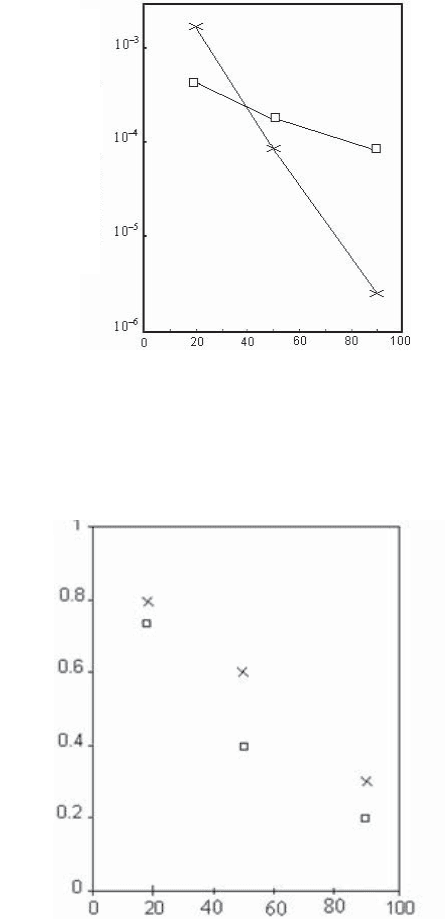
Figures 3.8 and 3.9 show the results of friction tests illustrating the beneficial
effect of humidity on friction and on the wear of the Al
2
O
3
/Al
2
O
3
and SiC/SiC pairs
[TAK 94b]. The results of the tests presented in these figures characterize friction
between a ceramic sphere of 5 mm in diameter and a plane sample at residual
humidity levels of 20, 50 and 90%.
The figures show that in dry conditions or with low humidity, friction and wear
are both significant. Moreover, when the applied load is increased, the level of wear
occurring in the material becomes catastrophic [GAV 02b] in accordance with
equation [3.3]. Indeed, this equation clearly shows that any increase in the normal
applied load or friction coefficient brings about a reduction in the critical fracture
load F
c
, thus accelerating material wear.
Materials for Tribology 129
Relative humidity content (%)
Wea
r
rate
(
mm
3
m
–
1
N
–
1
)
Figure 3.8. Variations in the rate of wear of Al
2
O
3
/Al
2
O
3
() and Si/SiC(u)
couples/ pairs as a function of residual humidity. Tests were carried out with a
reciprocating tribometer operating in the sphere/plane set-up and using a 5 mm
diameter sphere under a normal applied load of 30 N. The sliding distance is
2 cm and the sliding speed is 2 mm s
–1
[TAK 94b]
Coefficient de frottement
Residual humidity
Figure 3.9. Variations of the friction coefficient as a function of residual humidity:
Al
2
O
3
/Al
2
O
3
(
°
) and SiC/SiC (
) pairs
(see Figure 3.8 for a description of the tests)
Friction coefficient

130 Materials and Surface Engineering in Tribology
Table 3.4 summarizes the data available in the literature in order to provide a
qualitative overview of the influence of the applied load-humidity pair on the
tribological behavior of ceramic materials when a protective and lubricating
oxide/hydroxide film forms in humid conditions.
Light load Moderate load Heavy load
Low humidity level
(< 30%)
Moderate wear
(10
–
4
– 10
–
6
)
Severe wear
(10
–3
– 10
–
4
)
Extensive wear
(> 10
–3
)
Moderate
humidity level
(30–70%)
Low wear
(10
–
6
– 10
–
8
)
Transitional zone
(low to severe wear)
Severe wear
(10
–3
– 10
–
4
)
High humidity level
(> 70%)
Very low wear
(< 10
–8
)
Low wear
(10
–
6
– 10
–
8
)
Moderate wear
(10
–
4
– 10
–
6
)
Table 3.4. Qualitative overview of the extent of ceramic wear as a function of the residual
humidity and contact pressure for ceramic/ceramic pairs. Order-of-magnitude values for
residual humidity (RH) as well as rate of wear (given in mm
3
m
–1
N
–1
) are given in brackets.
The notions of light, moderate or heavy load are defined relative to F
c
(equation [3.3]). The
data presented only applies to ceramics which become coated with a protective, lubricating
oxide/hydroxide film under humid conditions
We also note that ceramics are sintered materials and therefore have varying
degrees of porosity, impurities, agglomerates and vitreous phases at grain
boundaries. These structural or chemical defects are precisely the sites from where
cracks can develop before propagating between and within the ceramic grains.
Materials manufactured under different sintering conditions and from ceramic
powders of varying purity generally exhibit different tribological behavior. This
partly explains certain results which can at times seem contradictory. The significant
role played by these inter-granular vitreous phases needs to be stressed: indeed, at
high temperatures (typically above 800°C), these secondary phases become viscous
and radically alter the mechanical properties and tribological behavior of the ceramic
material.
Concerning metal-ceramic couples, numerous studies have shown that the
chemical reactivity of the metal is a determining factor in the tribological behavior
of the pair under friction [BUC 81, BUC 94, PEP 76, TAK 92, TAK 93a].
Ultra-vacuum studies of friction between alumina and various metals (Ag, Cu, Ni
and Fe, chosen as a function of their oxide stability which increases from Ag to Fe)
were carried out and allowed us to establish that the adhesive contact between
opposing surfaces could be perfectly correlated to the free energy of formation of the
Materials for Tribology 131
metallic oxides. This finding is in perfect agreement with the hypothesis that
interfacial adhesion occurs via the generation of genuine chemical bonds between
the metallic cation and the oxygen anion of alumina. When the metallic surfaces are
exposed to oxygen, dioxides and trioxides such as CuAlO
2
or NiAl
2
O
3
form at the
interface during friction, resulting in an increase of the metal-ceramic adhesion and a
subsequent increase of the friction coefficient [PEP 76].
In the case of transition metals, many authors have reported a strong correlation
between the filling of the valence band (d-state) and the metal’s reactivity. The
surface is less reactive as the valence band is increasingly filled, leading to lower
measured friction coefficients between the metals and various ceramics [BUC 94,
MIY 82].
3.2.5. Cermets
A cermet is a composite composed of ceramic and metallic materials. Cermets
possess both hardness and ductility as they combine a hard phase (the ceramics) and
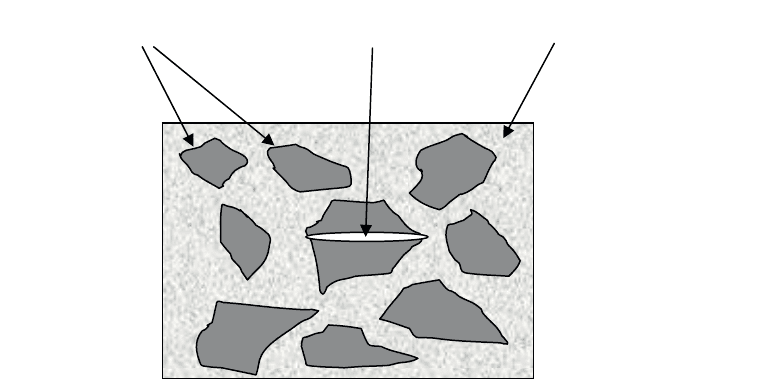
a soft phase (the metallic binding). When a crack forms within the ceramic, its
propagation to adjacent grains is arrested by contact with the more ductile metallic
phase (see Figure 3.10).
Figure 3.10. Crack propagation through the ceramic grain
is stopped by the metallic phase
Ceramic grains Crack Metallic binding phase
132 Materials and Surface Engineering in Tribology
Cermets can be divided into two classes: tungsten-carbide (WC)-based cermets and
other carbide-based cermets.
3.2.5.1. Tungsten-carbide (WC)-based cermets
These materials are produced from WC powders mixed into a cobalt binding
agent, subsequently sintered at a temperature of about 1,500°C. At this temperature,
the cobalt powder melts and the molten metal fills in the voids and thus binds the
carbide grains together (see Figure 3.10).
The percentage of cobalt used is 5–20% by weight and the WC grains are
generally 1–10 μm in diameter. The use of nanograins with diameters in the range of
0.1–1 μm makes it possible to generate materials presenting elevated hardness and
improved wear resistance.
When the WC-Co carbide is subjected to friction, we initially see preferential
wear of the binding phase (Co) followed by cracking and the subsequent loosening
of the carbide grains [PIR 06, SHI 05].
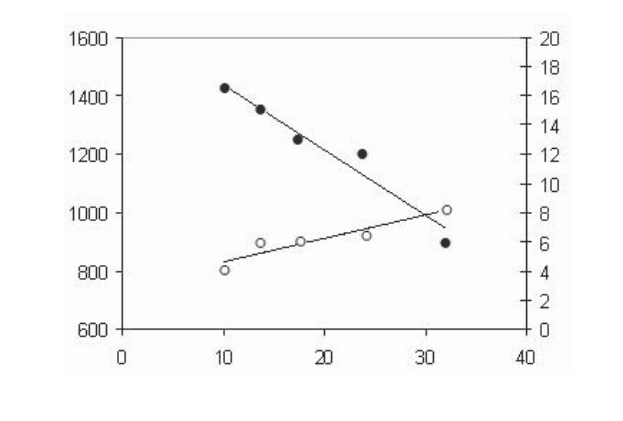
The hardness and wear of the material strongly depend on the concentration of
the binding phase. This is clearly shown in Figure 3.11 where we see an increase in
wear and a decrease in hardness as a function of cobalt concentration. In contrast to
the hardness, the fracture toughness increases with cobalt concentration from 8 to
14 MPa m
1/2
as the percentage of cobalt increases from 3 to 14% [PAST 87].
Figure 3.11. Variation of the hardness and volume wear of the WC-Co cermet
as a function of the binding phase concentration. The tribometer used is of
the pin-on-cylinder type and the applied load is 40 N [PAST 87]
Cobalt content (vol. %)
Hardness HV (Ɣ)
Wear volume mm³ (o)
Materials for Tribology 133
Finally, we note that the wear resistance of tungsten carbide is improved through
the addition of other carbides such as TiC, TaC and NbC or through the use of
mixed carbides such as (W,Mo)C, (W,Ti)C or WC-(W,Ti)C-TaC.
3.2.5.2. Other carbide-based cermets
Examples of such composites may include TiCN-Ni, TiC-Ni, WC-TiN-TiC-Co,
(Ti,Mo)CN-Ni, TiC-NiMo or TiCN-WC-Ni.
These materials are generally harder than WC-based cemented carbides and their
resistance to wear is greater. When applied to cutting tools, they can significantly
extend their lifespan and provide improved cutting quality [CEL 06, NIN 05,
WAL 06].
As well as their application to cutting tools (for wood, metal or ceramics),
cermets are also widely used as coatings on drilling heads, as well as hammering
and shaping tools used in stamping, embossing and forging.
3.3. Surface treatments and coatings [BHU 91, CART 00]
There are many different techniques for surface treatments and coatings: they
differ in their basic principles, their ease of practical implementation and the precise
way in which they modify the surface of the treated materials.
Depending on the target application and its particular requirements, we can
select techniques to modify the hardness, surface energy, friction coefficient,
residual stresses, appearance or indeed any other mechanical, physico-chemical or
aesthetic property of the surface.
Surface treatment and coating techniques can be classified into two categories:
– conversion techniques which modify the composition and/or structure of the
surface to be treated; and
– deposition techniques which coat the surface to be treated with a thin layer of a
given material.
134 Materials and Surface Engineering in Tribology
3.3.1. Conversion techniques
3.3.1.1. Anodic oxidation [BRA 91]
Anodic oxidation or anodization is a surface treatment procedure mainly used for
aluminum, titanium, niobium, magnesium, zinc and their alloys.
This treatment aims to develop a film on the surface of the material that is hard (to
resist abrasive wear), refractive (to act as a heat screen) and chemically stable (to resist
corrosion). Anodization is also often used as preliminary treatment before gluing or
painting in order to improve the adhesion of the glue or paint to the substrate.
The material to be treated is immersed in the electrolyte which is usually a
solution of sulfuric, chromic or phosphoric acid (although treatment in a basic
solution is also possible) and it is connected to the positive terminal (anode) of a
current source. Three types of reactions can occur at its surface (see Figure 3.12):
– dissolution: the metal is converted into metal ions in the solution;
– passivation: a thin film (generally a few nanometers thick) forms on the
surface of the metal and arrests dissolution; and
– anodic oxidation (or anodization): the metal becomes coated with a porous film
(generally an oxide/hydroxide combination) across which oxygen ions can diffuse and
oxidize the substrate, increasing the thickness of the film (which can reach several tens of
microns).
In order to predict which of the three reactions described above is likely to take
place, Pourbaix diagrams (also known as potential/pH diagrams) are used as they
allow the most thermodynamically favorable reaction to be identified (see Figure
3.13).