
Vaccari D.A., Strom P.F., Alleman J.E. Environmental Biology for Engineers and Scientists
Подождите немного. Документ загружается.

ants that ‘‘herd’’ so-called ‘‘ant-cattle’’ stocks of aphid and larvae life-forms. One such
exemplary leaf-cutting ant group may be found in Central and South American regions
(e.g., typically associated with the Atta genus), where individual chambers within their
colonies are allocated to carefully managed farming operatio ns. These particular ants nur-
ture, and then feed exclusively from, a form of fungus found only within these unique
subterranean systems. Leaf and grass cuttings gathered by ants on the surface are carried
underground to nurture the fungus growths held in chambers inside the colony, even to the
point of using protease-rich anal secretions to ‘‘fertilize’’ the cuttings. Multiple fungal
growths are raised on staggered 3- to 4-week cycles, with the ants living off the cloned,
reproductive fruiting buds that grow on the fungus surface.
Whether their mode of sustenance were that of farming, herding, or just grazing, how-
ever, ant cultures have also adopted remarkably advanced measures for applied waste
management. Ants routinely remove residues generated by farming or herding, along
with dead members of the colony and other debris, to remote dumping sites located either
deep within the underground colony or on external surface spoil sites carefully chosen to
provide a downhill, easy-discharge location. Furthermore, most ants exhibit a fastid ious
disdain for contact with their wastes and garbage, and in some colonies there are even
special ant groupings solely assigned the task of policing waste.
At least when measured within a historical timeframe, ants appear to have far sur-
passed humans in terms of waste management concerns, extending back millions of
years instead of a few centuries. In our own case, large-scale organized efforts to collect
and remove wastes were not implemented until after the Industrial Revolution, roughly
three centuries ago, and controlled use of biological waste treatment as an environmental
management tool extends back barely half that time.
Of course, although humans may have been beaten by ants on a time scale, we have
now advanced the sophistication of our applied biology efforts to a far higher level, and
this book’s environmental management theme certainly demonstrates this progress.
Whereas ants have long been content with just collecting and discarding wastes, human-
kind’s modern approach to environmental engineering and science has developed and
adopted far more advanced measures.
Developing an appreciation for, and understanding of, the biological processes now
used for treatment of contaminated air, water, soil or solid wastes involves the basic prin-
ciples of biology that we discussed earlier. Basic biology, especially biochemistry, gov-
erns all the processes involved. Microbiology is critical, since microorganisms dominate
these processes, but there are also processes that depend on higher plan ts and even trees to
degrade various wastes and/or to remediate the land on which they live. Finally, an under-
standing of ecology is necessary, since all of these processes involve mixtures of numer-
ous interacting populations of organisms, and in some cases the consortia of organisms
are able to achieve treatment goals that could not have been achieved by individual popu-
lations (Atlas and Bartha, 1987).
In whatever fashion the various mechanisms of applied biology might be used, though,
the resulting benefits of preserving and protecting our natural assets are readily obvious.
Biological systems inherently qualify as environmentally friendly, and as a naturally
renewable resource they tend to offer significant economic advantages. At the same
time, backed by eons of evolutionary adaptation, biological mechanisms commonly pro-
vide a highly effective, and metabolically diverse, strategy for effectively transforming
waste residuals into innocuous by-products. Should it be necessary, most of these systems
can even self-adjust (i.e., acclimate) to their circumstances (environmental conditions,
578 BIOLOGICAL APPLICATIONS FOR ENVIRONMENTAL CO NTROL

competitive pressures, etc.), in an attempt to maintain optimal performance while hand-
ling metabolically an increasingly complex array of industrial chemicals, which may be
anthropogenic (human-made) or xenobiotic (foreign to living things).
The following seven sections (Table 16.1) will provide brief introductions to several of
these engineered applications with biology and their associated technical features. In each
case, these summaries explore the backgrounds of the applied technologies and present
overlapping views of the biological and engineering principles involved. Upon reviewing
these sectio ns, and again in keeping with the critical role of microbiology, it will be read-
ily apparent that the major ity of these ‘‘biological’’ mechanisms operate largely at the
‘‘microbi al’’ end of the spectrum of life. Indeed, bacterial biomass commonly represents
the driving force behind the success of most engineered processes, both in terms of the
shear numbers of cells involved and their metabolic contributions.
Granted, there are usually a number of complementary roles played by higher life-
forms in a number of these systems, but the true backbone of these operations typically
hinges on the performance of the bacteria involved. Indeed, even in the case of wetland
and phytoremediation systems, these plant-based processes depend heavily on microbial
(and largely bacterial) mechanisms that operate on the surfaces or in the immediate vici-
nity of their root systems.
Although the following sections were written with heuristic confidence about the pro-
cess of designing and operating these biological systems, a fair and honest acknowledg-
ment of our inherent limits is warranted. Whether wastewater microbes or constructed
wetland plants are to be used, it is rather rare that we can select and sustain the exact
group of organisms that we might feel can best accomplish a desired treatment goal, par-
ticularly when more often than not, these systems are open to the influence of opportu-
nistic biota living within the natural environment. Instead, we identify desired goals,
establish the environmental conditions involved, and design an appropriately engineered
system, at which point nature will play a significant, if not the dominant, role in selecting
TABLE 16.1 Biological Applications for Environmental Control
Biological Level
Applied Realm of Specific Process
Environmental Management Application Micro-scale
a
Macro-scale
b
Wastewater Attached growth
Suspended growth
Stabilization lagoons
Constructed wetlands
Sludge Anaerobic digestion
Aerobic digestion
Composting
Water Potable water
Disinfection Water and wastewater
Solid waste Landfill degradation
Air Biofiltration
Soil and groundwater Phytoremediation
Bioremediation
a
Microscale applications involve various combinations of bacteria, protozoms, rotifers, fungi, algae, etc.
b
Macroscale applications involve higher plants.
BIOLOGICAL APPLICATIONS FOR ENVIRONMENTAL CONTROL
579
the resulting mix of operative species working within our processes. Even then, however,
the most rewarding aspect of applied environmental biology is that by merging our scien-
tific and engineering skills with the formative power of natural life forces, we can secure
synergistic outcomes with truly global benefits.
16.1 WASTEWATER TREATMENT
Historically, wastewater processing qualifies as our first approach to using applied biology
constructively on an environmental basis. Natural biological processes have, in fact, dealt
with the world’s various waste streams from the earliest days of microbial life eons ago,
but our own efforts with respect to waste management were barely better than those of
ants until well beyond the Renaissance, content as we were with pri mitive privies, latrines,
and pits for mere containment rather than complete treatment (Asimov, 1989).
Remarkably, our initial motivation to use applied waste treatment roughly five centu-
ries ago was neither that of resolving serious and escalating health concerns tied to disease
transmission nor that of reducing widespread aesthetic degradation. Instead, our original
goal was actually that of commercial manufacturing, whereby our residuals might be
transformed from disagreeable wastes into truly useful products with monetary value.
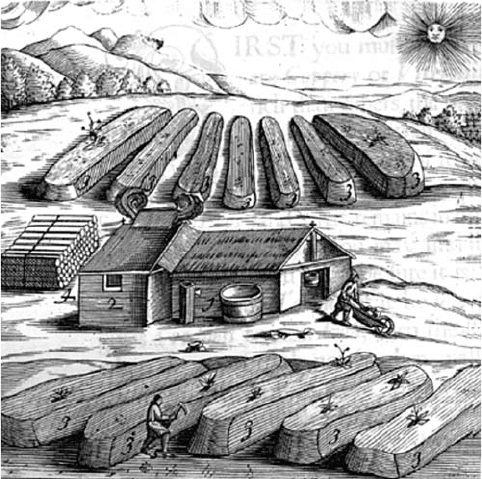
The classic set of sixteenth-century lithograph prints shown in Figures 16.1 and 16.2
depict two such waste processing systems, located in England and Germany, respectively,
both designed in a fashion that we might presently qualify as biological nitrification fil-
ters. Urine and other nitrogen-rich wastes (e.g., slaughterhouse effluents) were pumped or
ladled onto the filters and allowed to trickle over and through the piles. In turn, nitrate-rich
Figure 16.1 Sixteenth-century English nitre farming.
580
BIOLOGICAL APPLICATIONS FOR ENVIRONMENTAL CONTROL
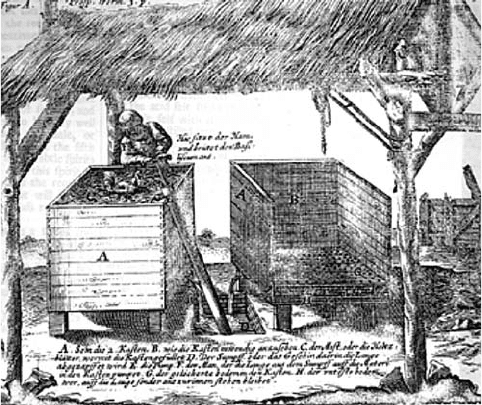
salt crystals (i.e., long know to alchemists as nitre) would then be scraped from these filter
surfaces and sold as a key ingredient for producing gunpowder.
These commercial operations predated the discovery of bacterial life by several centu-
ries. It was not until the late nineteenth century that we finally understood the tru e litho-
trophic basis for reliance on biochemical nitrification to convert reduced ammonia to
oxidized nitrates. Despite this fundamental uncertainty, nitre pile waste processes contin-
ued to represen t a significant chemical manufacturing industry for several centuries and
was even used for critical nitrate production during the Civil War by Confederate states in
the southern United States.
Midway through the nineteenth century, a number of larger English cities began to use
a patented processing scheme to recover waste nitrogen, but in this case the desired pro-
duct was a nutrient-rich fertilizer. These so-called ‘‘ABC’’ systems used an altogether
unusual set of chemical additives, including alum, blood, and clay (i.e., hence the unique
acronym) to clot and sorb a wastewater’s unwholesome contaminants while generating a
nitrogen-bearing agricultural fertilizer sold under the promotional trade name ‘‘native
guano.’’
At about the same time, securing complementary environmental benefits with waste-
water treatment began to reach beyond the product-oriented stage, catalyzed both by the
latest discoveries in microbiology and medicine and a belated recognition of the inherent
necessity for sanitary and environmental improvements. These early years in the field of
wastewater treatment were exciting times for this fledgling niche of applied environmen-
tal biology.
Land application opera tions were the earliest large-scale systems used for wastewater
treatment, with several such operations being in use in Europe. The first land-application
‘‘filters’’ were remote tracts of land onto which wastewater would be spread, being
cleansed as it passed through the soil. As our understanding of, and appreciation for,
the underlying microbial mechanisms evolved during the middle to late nineteenth cen-
tury, simple in-groun d filters were soon followed by a steady progression of ever more
Figure 16.2 Sixteenth-century German nitre farming.
WASTEWATER TREATMENT 581
advanced, and more heavily loaded, intermittent soil filter, contact bed, and trickling filter
wastewater systems. In each case, the soil, gravel, rock, slate, and slag media surfaces
involved were found to be densely covered with an attached biofilm rich in waste-degrad-
ing biomass, following a wastewater processing mode now classified as attached-growth
treatment.
Early in the twentieth century, another seminal discovery was made that coagulated
and se ttled biomass suspens ion s s u ch as thos e derived fro m either settled dis ch a rge s
taken from the early attached- growth biofilm reactors or from even newer suspended-
growth (as opposed to attached-growth) biomass tanks, could actually be recycled
back to an aeration chamber for subsequent reuse, thereby accelerating the overall
metabolic efficacy of these biological wastewater processing systems. Largely developed
at Manchester, England, by Sir Gilbert John Fowler in the period 1912–1915, with several
large full-scale facilities being built around the world within a period of just a few years,
this newly devised activated sludge concept rapidly evolved into yet another parallel
mode of suspended-growth system, further escalating the sophistication and effectiveness
of wastewater treatment (Horan, 1 990).
In the twenty-first century, the applied science of biological wastewater treatment con-
tinues to evolve in terms of the level of technical sophistication employed. Attached- and
suspended-growth options still comprise the two major options for biological treatment,
but in either case these older technologies have been upgraded in technical complexity
and hardware, including all manner of internal pumping schemes, advanced aerators,
online instrumentation, and computer-based control and automation. Whatever the
approach, these wastewater processing systems now arguably represent the largest con-
trolled application of microbiology in the world, at a scale far outstripping that of com-
mercial and industrial fermentation and pharmaceutical production.
Whether based on attached- or suspended-growth processing methods, the overall tech-
nology of wastewater treatment (i.e., as applied in large-scale fashion by cities and indus-
tries rather than that of small-scale septic tanks, etc.) includes an integrated collection of
processing steps encompassing not only biological processes, but also a complementary
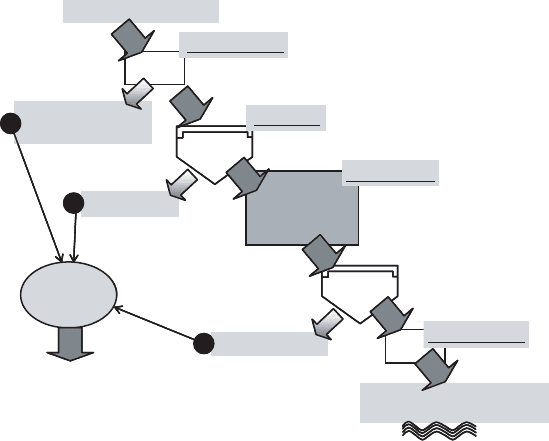
set of physical and chem ical mechanisms. Figure 16.3 depicts the processing steps used
with these types of conventional four-step systems. The initial preliminary treatment
step screens, settles, and separates coarse solids, and a primary treatment step provides
further solids separation, either by floating or settling. Primary treatment may remove
onehalf to two-thirds of the incoming suspended solids and perhaps half as much of
the biochemical oxygen demand (BOD), but neither preliminary nor primary treatment
is able to remove colloidal or dissolved contaminants.
A subsequent secondary treatment step is used to remove the remaining biodegrad-
able contaminants and suspended solids. As reviewed in the following sections, secondary
treatment is typically completed using one of four typi cal processing options, including
attached-growth (e.g., trickling filters) and suspended-growth (e.g., activated sludge) sys-
tems, stabilization lagoons, and constructed wetlands.
16.1.1 Process Fundamentals
It is common to view biological treatments basically as biodegradation processes, but this
is only partially true. To a great extent, they are contaminant-separation processes. In the
case of domestic wastewater treatment, they convert colloidal and dissolved solids to a
form that can be removed by gravity sedimenta tion into a concentrated by-product cal led
582 BIOLOGICAL APPLICATIONS FOR ENVIRONMENTAL CO NTROL
sludge or biosolids. They typically yield about 0.5 to 0.7 kg of biosolids (dry weight) per
kilogram of BOD removed. Thus, they convert a large problem (the volume of wastewater
to be treat ed) into a much smaller problem, but one that still needs an ultimate solution.
The dominant biochemical mechanism in the vast majority of secondary wastewater
treatment processes is that of respiration, which is distinctly different from that of the fer-
mentation reactions that come into play more often in the sludge processing systems (e.g.,
anaerobic dige stion) used to process wastewater residuals. Both respiration and fermenta-
tion depend on a balanced set of redox reactions (i.e., coupling oxidation plus reduction
steps), which are li nked, respectively, to electron donor and acceptor compound conver-
sions.
With respiration, both reduced biodegradable organics (i.e., carbonaceous BOD) and
reduced, energy-rich inorganics (e.g., ammonia, nitrite, sulfide, ferrous iron) in the raw
wastewater may be oxidized to secure energetic electrons, compounds referred to as elec-
tron donors. Conversely, the electrons will then be ‘‘respired’’ or consumed by an elec-
tron acceptor compound. In most conventional wastewater treatment, dissolved oxygen is
preferred as the electron acceptor, so that the zero-valence gas-phase diatomic oxygen
(O
2
) species is reduced to water.
From a thermodynamic point of view, oxygen is the most favorable electron acceptor,
and aerobic or facultative cells always opt for this aerobic respiration pathway if sufficient
oxygen (i.e., greater than a few tenths of a milligram per liter) is present, largely ignoring
other electron acceptors that might be available. Even in the absence of oxygen, respira-
tion may be continued, following a pathway referred to as anoxic respiration, using a
variety of alternative electron acceptors, such as nitrate, nitrite, sulfate, and oxidized
iron and manganese. Whether aerobic or anoxic, the fact that respiration relies solely
on inorganic electron acceptors is a notable feature for respiration and a key reason
that fermentation is not used widely for was tewater treatment. Indeed, using anaerobic
P
Settling
tank
PRELIMINARY
PRIMARY
Biological
Treatment
System
SECONDARY
Preliminary
A
B
C
Wastewater
residuals
processing
and disposal
suspended-growth,-
constructed wetland,
stabilization lagoon)
Settling
tank
Secondary sludge
Primary sludge
Raw wastewater influent
PRELIMINARY
PRIMARY
DISINFECTION
Biological
Treatment
System
SECONDARY
Clean wastewater effluent
discharge to receiving waters
Preliminary residuals
(i.e., grit, rags, etc.)
A
B
C
Wastewater
Treatment
Residuals
(e.g., Attached
-
constructed wetland,
stabilization lagoon)
Figure 16.3 Conventional wastewater treatment processing scheme.
WASTEWATER TREATMENT 583
reactors rather than aerobic reactors would incu r a far higher level of odor emission in
these plants, brought about by volatile organic emissions generated reduc tively through
fermentation.
Although characterized as biological processes, secon dary treatment systems also
involve a complex array of chemical transformations (e.g., acid–base, redox, chelation,
sorption) and physical transfers (e.g., gas-liquid exchange, heat transfer). Furthermore,
secondary biological operations involve biochemical mechanisms that couple removal
and production pathways. Contaminants are removed via catabolic oxidization and ana-
bolic assimilat ion while producing a concentrated waste product calle d sludge or bioso-
lids, contain ing residual particulate solids at concentrations on the order of 1% or higher
(i.e., 10,000 ppm).
Notwithstanding their mutual reliance on aerobic respiration, there are considerable
differences between the four main options for secondary wastewater processing in
terms of their involved engineering and biological details, and there are also dramatic var-
iations in their necessary footprint areas relative to high vs. low waste loading rates. Of
course, the more heavily loaded, mechanically intensive attached- and suspended-growth
systems would commensurately require the smallest land areas; the more natural slow-rate
and lowly loaded design options (i.e., constructed wetlands and lagoons) would require far
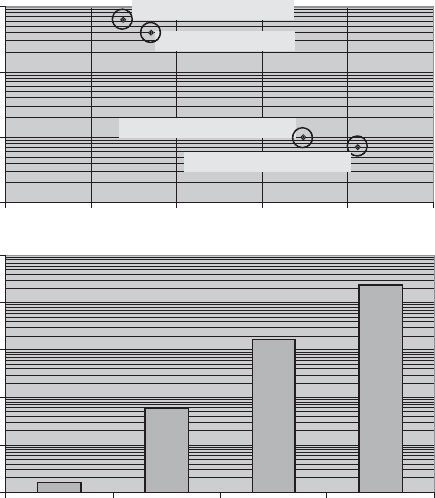
larger land areas. Figure 16.4 compares the typical organic loading rates (i.e., representing
Footprint Surface Area (m
0.001
0.01
0.1
1
1 10 100 1000 10000 100000
Organic Loading (kg/m -day)
3
0.1
1
10
100
1000
10000
Suspended
Growth
Attached
Growth
Constructed
Wetland
Stabilization
La
g
oon
Hydraulic Retention Time (hrs)
Suspended Growth
Attached Growth
Constructed Wetland
Stabilization Lagoon
Footprint Surface Area (m
2
)
Suspended Growth
Attached Growth
Constructed Wetland
Stabilization Lagoon
Figure 16.4 Comparative engineering features with four alternative 1000-person municipal
wastewater design options.
584
BIOLOGICAL APPLICATIONS FOR ENVIRONMENTAL CONTROL
the daily mass of applied organics per unit volume of tower, tank, wetland, or lagoon) that
might be emp loyed with each such design option, together with an estimate of the land
areas (i.e., footprint) required to process the daily wastewater flow for an imaginary city
of 1000 residents (assuming a daily per capita flow of 400 L and a BOD strength of
150 mg/L). As can be seen, there is a dramatic difference in the footprint size linked
to these four alternatives, based on their varied loadings.
Two parameters can be used to compare wastewater treatment processes: hydraulic
residence time and solids residence time. Hydr aulic residence time (HRT) is the volume
of the process divided by the flow rate through the process, and conce ptually is equal to
the average amount of time that a parcel of water spends in the process. This basic para-
meter relates the size of the process to the volume of material to be treated, and therefore
is a key parameter describing the economics of the process. The smaller the HRT, the
more economical the process is to construct.
Solids residence time (SRT), also known as the mean cell residence time (MCRT) or
sludge age, is the average amount of time that the biomass resides in the process from
when it is produced by microbial growth to when it is removed by deliberate wasting
or by loss with the effluent. SRT is computed as the ratio of the mass of biomass within
the process divided by the mass wasted or lost from the process per unit time. The SRT is
basically the replacement growth rate of the biomass. For example, an SRT of 10 days
means that one-tenth of the biomass is replaced by growth each day. Therefore, a low
SRT implies a high growth rate, and vice versa. In terms of microbial kinetics, the SRT
for a steady-state process is the same as the net growth rate described in Chapter 11.
Because setting the SRT controls the net growth rate, it is the key parameter that controls
the biology of the process.
Under optimum growth conditions (in particular, high substra te concentrations) micro-
organisms can reproduce as fast as once every 20 minutes. A common misconception
among wastewater treatment plant operators is that high growth rate (being in the log
growth phase in terms of the batch microbial growth curve) is a desirable operating
goal. However, this is false for several reasons. One is that high growth rate implies
high substrate concentration, and therefore high effluent BOD. On the contrary, it is essen-
tial to operate in the declining growth phase, which implies low substrate concentration.
Under this condition the microbes are ‘‘starved’’ for substrate. This causes low growth and
high SRT. The second reason for low growth rates is that the suspended or attached
growth biological wastewater treatme nt processes depend on the ability of the microbes
to produce exocellular polysaccharides which enable them to stick together (to form
‘‘flocs’’) or to solid surfaces (to form ‘‘biofilms’’), making it possible to separate the solids
from the wastewater and thus to decouple HRT from SRT.
The floc- or biofilm-forming behavior is important because it makes it easy to retain
the biomass in the wastewater treatment process much longer than the wastewater itself.
For example, consider a process operated with an SRT of about 10 days, to achieve a low
enough effluent BOD. If this process were operated in a completely mixed reactor, it
would have to also have an HRT of 10 days. That is, to treat 1 million gallons of waste-
water per day would require a tank with a volume of 10 million gallons. However, if it
were possible to keep the biomass in the reactor longer than the wastewater, it would be
possible to build a muc h smaller tank. The attached-growth processes accomplish this by
growing the biomass attached to a solid material as a biofilm. Suspended growth processes
retain the biomass by using a sedimentation tank to trap the solids and then pump them
back to the reactor. The biomass in the reactor requires only a matter of hours to absorb or
WASTEWATER TREATMENT 585
otherwise remove the substrate from the wastewater. The purified wastewater can then
be discharged as effluent. By separating the biomas s it is possibl e to have an HRT on
the order of several hours and an SRT of days. As a result, the treatment process can be
made to be a small fraction of the size it would otherwise have to be. In the example
just given, if the HRT were about 6 hours, the volume needed to treat 1 million gallons
per day would be just 250,000 gallons instead of 10 million gallons.
The microorganisms that make up the floc or biofilm structure in biological wastewater
treatment produce the exocellular polysaccharide only under conditions of ‘‘starvation’’
and low net growth rate, corresponding to the low substrate concentrations that go with
high SRT. If the process is operated close to the minimum SRT, the substrate concentr a-
tion in the process will increase toward the influent concentration. At high substrate con-
centrations, the microbes will show less tendency to form flocs or biofilm. Without the
polysaccharide to help the bacteria to agglomerate into flocs, they will grow dispers ed
in the wastewater, increasing effluent turbidity, suspended solids, and BOD.
Flocculation behavior makes sense for bacterial survival. When an organism emits
some substance outside its boundaries, there is a cost that must be accompanied by a
return. Only under conditions of scarcity is this investment worthwhile for the microbe.
The benefits are: (1) Entrapment of particulate substrate is enhanced; and (2) secretion of
exocellular digestive enzymes by a single cell could result in most of that enzyme diffus-
ing uselessly away from the cell, and a large fraction of any dissolved substrate formed by
digestion of the particle would also diffuse away. Within a floc or biofilm, the bacteria are
cooperating by releasing enzymes that benefit them collectively.
16.1.2 Attached-Growth Systems
The first large-scale success with biological wastewater treatment was achieved midway
through the nineteenth century using an attached-growth process now referred to as trick-
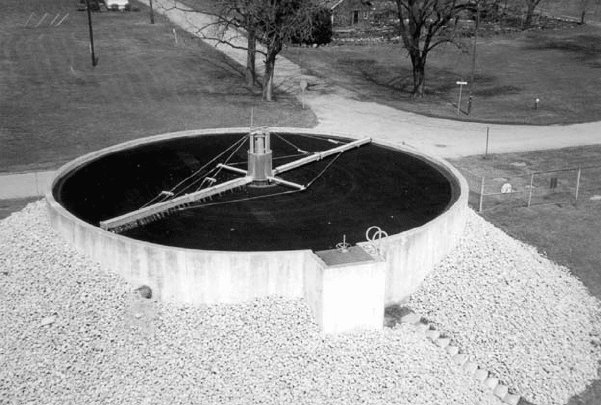
ling filter technology (Figure 16.5). The operative biochemical agent within these
Figure 16.5 Attached-growth wastewater treatment system.
586
BIOLOGICAL APPLICATIONS FOR ENVIRONMENTAL CONTROL
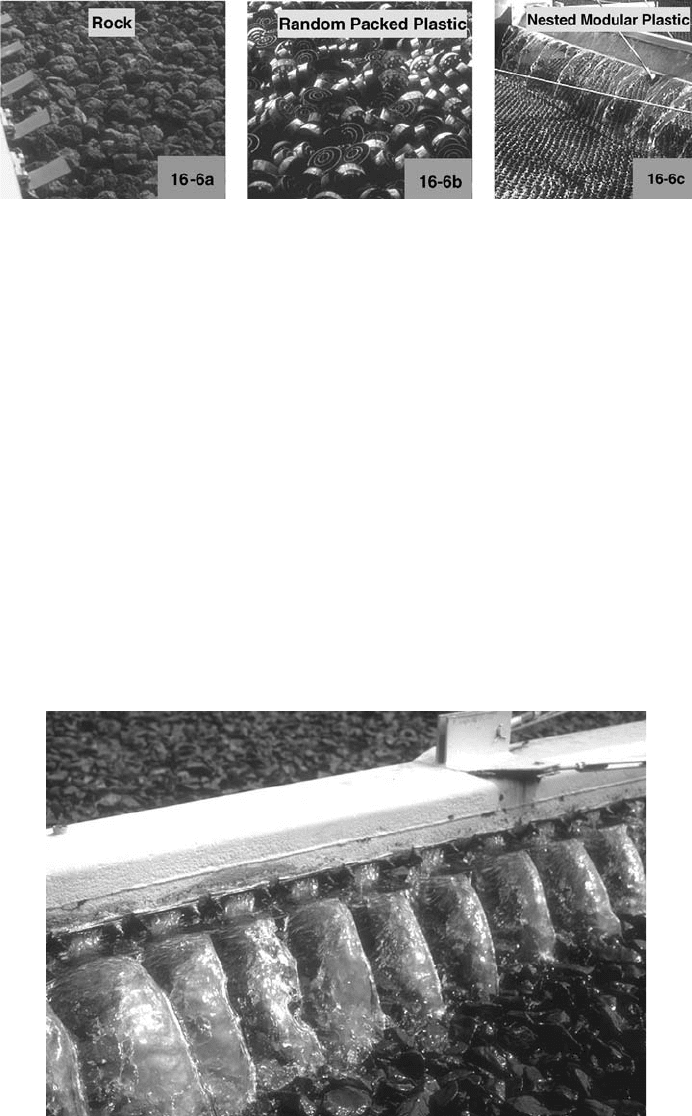
systems develops as a thin microbial layer, commonly known as a biofilm, which grows in
an attached fashion on the surface of stationary support media (see the media shown in
Figure 16.6) and over which the incoming wastewater is then continuously distributed and
streamed (see Figure 16.7). In turn, these attached-growth biofilters will then sorb, filter,
and degrade waste contaminants as they trickle across their extensive attached-growth
surface.
Compared with mos t other waste-processing strategies, trickling filters are fairly sim-
ple in design and operation, and as a result they still find considerable use (Water Envir-
onment Fe deration, 1991). While their overall effectiveness may be somewhat lower than
that of other processing strategies (e.g., suspended-growth systems), the attached nature of
these biofilms does provide several complementary benefits. Since the attached biofilm
stays inside the reactor, there is less need to provide any sort of recycling process to return
solids from the clarifier (as must be done in suspended-growth systems). Trickling filter
systems also encounter fewer problems retaining their attached biomass during high-flow
periods, whereas a suspended-growth reactor might overload the settler hydraulically,
resulting in solids loss in the effluent. In many instances, and particularly in nitrifying
Figure 16.6 Attached growth biofilm media options: (a) rock, (b) random packed plastic, and (c)
nested modular plastic bundle.
Figure 16.7 Attached growth wastewater treatment distributor.
WASTEWATER TREATMENT 587