
Vaccari D.A., Strom P.F., Alleman J.E. Environmental Biology for Engineers and Scientists
Подождите немного. Документ загружается.

of the consequent biological response. For example, it is quite rare for 100% of the
exposed cells to actually be killed following high-level UV exposure, and we now
know that certain microbes have an inherent degree of disinfection insensitivity or resis-
tance. One such microorganism that exhibits a definite tolerance for this ionizing impact,
Micrococcus radiodurans, was named to reflect this remarkable resistance to UV irradia-
tion, thereby offering yet another demonstration of the facile nature of bacterial cells.
Furthermore, and although presently not well understand, there is evidence that some
microbes are able to rehabilitate themselves following disinfection events. One such
occurrence involves a mechanism known as dark-field repair, through which cells pre-
viously exposed to UV light are able to autorepair DNA sites affected by thymine
dimer damage.
Balanced against the h ealth benefits derived by the routine use of disinfectant chemi-
cals and measures, significant biological concerns have also been raised regarding the for-
mation and consequent human health-related impacts of potentially carcinogenic
disinfection by-products (DBPs) during disinfection of water and wastewater. DBP com-
pounds can be formed from halogen-based disinfection activities. For example, chlorina-
tion in the presence of natural organic compounds can lead to the formation of
trihalomethane (THM) compounds, including chloroform and bromoform. In such
cases, the desired disinfection benefits of using halogens are offset by problems among
long-term consumers tied to cance r and reproductive effects. After recognizing this
risk, the U.S. EPA identified a maximum contaminant level (MCL) for total THMs within
community water systems serving at least 10,000 people that added a disinfectant to the
drinking water during any part of the treatment process (whether it be for disinfection,
filter cleaning, prechlorination, etc.). Specifically, the U.S. EPA has stipulated the Stage 1
Disinfectants and Disinfection Byproducts Rule (in com pliance with the Safe Drinking
Water Act Amendments) (U.S. EPA, 1998), which limits total THMs to an annual average
value below 0.08 mg/L and total haloacetic acids to values below 0.06 mg/L, as well as
setting additional limits on chlorite (1 mg/L) and bromite (0.01 mg/L) designed to further
reduce carcinogenic risks from halogen-disinfected waters. The inherent irony is that
ozone has been promoted partly in the hope of avoiding the DBPs from chlorination.
Another irony is that some systems have switched to chloramination, which has a
lower tendency to form DBPs. However, this has led to another health effect by increasing
corrosion in plumbing systems, resulting in elevated lead concentrations in tap water.
16.5 SOLID WASTE TREATMENT
Biodegradation of dead plan t, animal, and other residues has played an important role on
our planet’s surface since the inception of life eons ago, recycling valuable nutrients back
into our biosphere while negating or at least reducing the shear physical burden of this
never-ending natural debris stream. At least in theory, therefore, nature provides a highly
useful example of a means by which we might manage our own solid waste residuals,
taking full advantage of much the same aerobic and anaerobic degradative mechanisms.
The level of success presently realized in using biology effectively as a management
process for human solid waste residua ls has, however, considerable room for improve-
ment. At the low end of this spectrum of biochemically engineered solid waste manage-
ment strategies, the majority of municipal detritus generated by the world’s current leader
in per-capita solid waste production (i.e., the United States) follows a least-cost disposal
668 BIOLOGICAL APPLICATIONS FOR ENVIRONMENTAL CO NTROL
pathway with little, if any, thought given to promoting, let alone maximizing, its biologi-
cal degradation, resulting in the consequent loss of potential resources, including nutri-
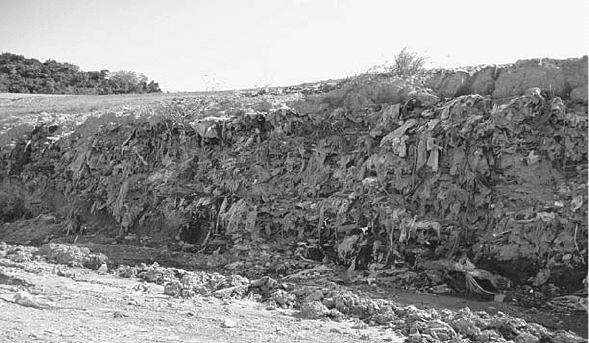
ents, organic material, and energy. Indeed, expedient burial in subsurface landfills
(Figure 16.56) has in this case become the U.S. norm, with emphasis given to prior source
reduction and recycling of various fractions of the origina l waste as a means of reducing
the shear magnitude of the problem.
However, there are areas in the world that exhibit clear and escalating evidence of a
national shift toward biochemically engineered solid waste processing systems involving
controlled biological strategies. Europe and Asia represent two regions where escalating
land constraints that limit landfilling options are matched both by a national motivation to
pursue environmentally friendly disposal strategies and the financial wherewithal and
willingness to accept technical solutions considerably more expensive than mere burial.
Commensurate with the cont inuing escalation of our world’s population and its atten-
dant increase in human solid waste production, future generations will no doubt be
aggressively challenged to pursu e a better universal means of managing their solid
waste problems. Although biology may, at best, be presently considered a minor, hidden
aspect of solid waste processing, at least for much of the world, the opportunity at hand to
employ renewable metabolic strategies beneficially will proba bly continue to attract
increased attention (Palmisano and Barlaz, 1996).
One of the fundamental issues with solid waste residues is that of characterizing its
nature and source, principally in terms of how degradable or recalcitrant it might be.
The term solid waste truly covers a wide range of high-volume residues, including not
only municipal waste s of the sort that might be generated in your own home to industrial
(e.g., food-processing residues, spent foundry sands, slag), agricultural (e.g., manure, bed-
ding, plant residues), power (e.g., fly ash, bottom ash), and even mining (e.g., overburden)
wastes. Only two of these fractions, the municipal and agricultural groups, include putres-
cible materials, and even in the latter case, a large segment of these wastes (e.g., manures)
are already being biochemically recycled for the beneficial purpose of rejuvenating farm-
land productivity.
The municipal solid waste (MSW) segment itself is composed of many different frac-
tions whose putrescibility varies widely. At one end of this spectrum, food scraps have the
Figure 16.56 Solid waste landfill operation.
SOLID WASTE TREATMENT 669
highest level of potential degradability, due to both their organic makeup and their high
water content. Cellulose-rich residues, whether discarded as lawn clippings or paper pro-
ducts, would also be amenable to biochemical degradation, although perhaps at a some-
what slower rate. Extending beyond these two segments, though, municipal solid waste
includes many other materials whose composition will not be ame nable, and possibly
even antagonistic or inhibitory, to biochemical degradation. For example, MSW generated
within affluent countries includes a sizable proportion of plastic, for which the vast major-
ity will have no susceptibility to biochemical breakdown. Similarly, affluent countries
generate municipal solid wastes with a proportionately higher percentage of metals
(e.g., cans, batteries, used appliances) whose presence may actually lead to the release
via leaching of soluble heavy (e.g., cadmium, chromium, nickel, lead) and transition
(e.g., arsenic, selenium) metal ions that are detrimental to desired biochemical activity.
Yet another key issue is that of available moisture, sinc e there must be adequate water
present to facilitate and sustain the growth of biological populations. Contrasted against
this necessity, though, modern landfills are provided with overlying physical caps (i.e.,
built with impervious clay and/or plastic liners) that intentionally limit the influx of
water into their buried wastes, such that limited moisture presence within the subsurface
waste matrix could well become a constraining factor. Indeed, solid waste materials exca-
vated from decades-old landfills have in many instanc es proven to contain a remarkable
amount of undegraded putrescible residuals (e.g., corncobs, newspapers) whose lingering
structural integrity reflects what appears to be a desiccating condition within the waste vs.
a moisture-bearing environment conducive to microbial degradation.
Extending beyond water presence, a number of additional ambient environmental con-
ditions come into play. Nutrient availability will certainly be an issue, not only in regard
to the macroscale distribution of carbon and nitrogen (i.e., for which a C/N ratio of
20 : 1 is typically considered optimal), but also in terms of the available presence of
lower-level essential elements (e.g., phosphorus, sulfur, potassium, iron, calcium).
While the pH of the constitutive moisture must also be suitably conducive to microbial
activity, fermentative metabolism will progressively release weak organic acids that could
well shift the pH to a more acidic, and less optimal, state. In fact, a downward shift in pH
of this sort might accordingly escalate the undesired rate of trace metals leaching from the
waste matrix, thereby leading to inhibitory metal toxicity.
Finally, the relative combination of high solids and low moisture found in solid waste
streams effectively yields a high-level specific energy content (i.e., cal/kg) that is higher
than that of most other biodegraded waste (e.g., greater than wastewater and sludge), with
the sole exception of agricultural manures. Commensurate with effective biodegradation
of these wastes, therefore, the heat release per mass of degraded solids would not only be
considerably higher, but also apt to be trapped inside the high-density waste, due to its
insulating nature. On the one hand, this heat release and temperature increase could
help to accelerate the ongoing biochemical process. However, as is the case with compost-
ing, this thermal buildup could accelerate evaporative water loss to a degree that even-
tually retards the desired activity.
There are several engineering and operational aspects of the current design and man-
agement of MSW landfills that are frankly contrary to a goal of optimizing their biological
degradation. For example, restricting water egress into and out of this buried waste is rou-
tinely considered a beneficial environmental goal for landfill operations, even though this
effort could well end up slowing down biochemical degradation. By reducing the hydrau-
lic pressure gradient that might accrue with an interior water buildup, the transport of
670 BIOLOGICAL APPLICATIONS FOR ENVIRONMENTAL CO NTROL
waterborne contaminants into the adjacent groundwater table can subsequently be
reduced or obviated. At no point during this process, either during active filling of the
landfill or after final closure, will the moisture content of the material ever come anywhere
close to an optimal value relative to maximal microbial activity. Unlike composting,
therefore, where moisture control is addressed routinely, landfills have no management
plans that involve steps to proactively increase moisture content. Fu rthermore, efforts
taken to heavily compress the waste to minimize its bulk volume, or of using a daily
cover of 15 cm soil to restrict rodent and other vector access, work against desired
microbial degradation, as these measures impose physical constraints that degrade process
homogeneity. In fact, the mere circumstance of allowing homeowners to isolate much of
their daily MSW within plastic bags contributes yet another complication, further exacer-
bating the waste’s isolation into discrete, semi-isolated packets.
Given these inherent shortcomings with landfills in the context of biological MSW
degradation, several alternative engineering strategies have been developed to secure
higher levels of success. These systems are typically charged with a presorted waste
stream whose degradable content has been enhanced by way of separating out a large
fraction of the relatively nondegradable content (e.g., plastics, glass, metal). The engineer-
ing features of these systems subsequently vary in relation to operational solids content.
In-vessel digester reactors are maintained with the lowest solids content and the highest
water contents, including both low-solids units at 4 to 8% solids and high-solids units with
solids values in the low- to mid-20% range. MSW is shredded and slurried before intro-
duction to these reac tors. These digeste rs include both aerobic and anaerobic options,
much like sludge digestion vessels.
A second MSW processing option, composting systems, is again quite similar to the
equivalent strategies used for sludge treatment, with waste solids levels approximately
double that of high-solids MSW digesters (i.e., 40 to 50%). Both aerobic and anaerobic
composting strategies are available, maintained in static and windrowed piles held either
in open or in-vessel configurations. Yet another option is that of codisposal systems, treat-
ing a blended mixture of MSW and sludge. As compared to MSW digestion options,
though, and their relative focus on volatile solids destruction, MSW composting reactors
provide an overall volume reduction tied both to volatiles destruction and moisture loss
allowed to accelerate at the end of the processing cycle during a final curing phase.
Volume reductions on the order of 50 % have been observed with both aerobic and anae-
robic composting systems at processing times on the order to 3 to 4 weeks.
Finally, it is worth mentioning a process in which animals are the basic organism.
Vermic ulture (raising of earthworms) or vermicomposting uses earthworms to help
decompose organic material, especially food- processing wastes (Datar et al., 1997).
Vermic omposting produces stabilized waste similar to ordinary composting, although
the process must be maintained at lower temperatures. The process has been applied
mostly at small scale, including household use, although large-scale facilities exist that
process up to 20,000 metric tons of organic was te per year.
16.6 AIR TREATMENT
Several abiotic engineering methods are commonly used to treat contaminated air-
streams, including those of incineration, carbon absorption, condensation, and scrubbing
(i.e., either with water, chemicals, or combinations thereof). However, within the past
few decades the idea of using biofiltration columns has proven to be a highly attractive,
AIR TREATMENT 671
complementary treatment strategy for air quality remediation. Biofiltration consist s of a
closed vessel containing a porous support medium with an attached biofilm through which
a contaminated gas is passe d. The attached biofilm will first sorb, and then degrade, the
incoming contaminants. This technology first gained significant attention in Europe dur-
ing the late 1970s, and there are now a number of relatively recent applications in the
United States. However, as with constructed wetlands and phytoremediation systems,
the involved technology is still in the process of being clarified and optimized.
Biofiltration technology is, in fact, rather similar to that of the attac hed-growth media-
filled biofilters (e.g., trickling filters) described earlier, although in this case the stream to
be treated is that of contaminated air rather than wastewater. Similarly, the mode of con-
struction and operation used for biofiltration columns is also comparable to that of bioso-
lids composting using aerated piles, although with a goal of treating the incoming gas
rather than a solid-phase (sludge) material blended into the pile.
In some cases, the main objective of gas-phase biofiltration processing may simply be
that of remediating a malodorous gas stream by removing the chemicals responsible (e.g.,
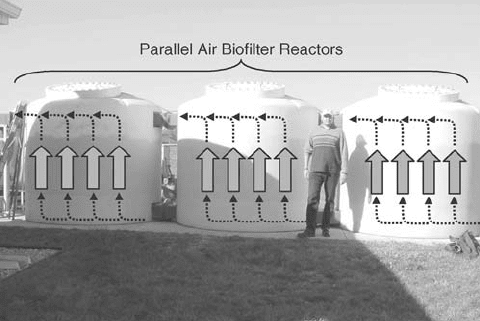
hydrogen sulfide, mercaptans, free ammonia). Figure 16.57 depicts one such full-scale
application used to effectively cle anse these types of cont aminants from the off-gas
discharge generated by an aerobic thermophilic biosolids digester. Several comparable
wastewater-related applications exist for handling contam inated, odor-bearing off-gas
streams, including those released by attached-growth wastewater treatment towers,
activated-sludge reactors, biosolids digesters, and even sewer force mains.
However, biofiltration may also be used to biochemically degrade one or more regu-
lated volatile organic compound air contaminants such as thos e generated within a speci-
fic industrial airstream. High-level removals have, in fact, been obser ved with a number of
industrial organic contaminants, including phenol, styrene, formaldehyde, BTEX, and
methanol as well as various aldehydes and ketones. Many of these biofiltration applica-
tions have been tested within industrial applications in which the current abiotic off-gas
treatment procedures are too mechanically complex, too expensive, or simply too
inefficient.
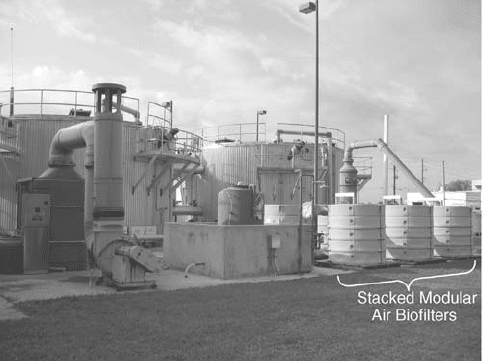
Figure 16.58 depicts a typical biofiltration system. The various design strategies for
biofiltration systems cover a wide range of options, some of which depend solely on
Figure 16.57 Air biofilter system.
672
BIOLOGICAL APPLICATIONS FOR ENVIRONMENTAL CONTROL
the biofilter for contaminant removal (e.g., typically involving low-level contaminant con-
centrations), while in other instances the process train will include a pretreatment abiotic
scrubber. Abiotic scrubbers are, in fact, often included as an integral part of many sys-
tems, helping to moderate influent gas temperatures and ensuring full humidification as
well as securing preliminary sorption and partial removal of highly soluble contaminants
such as ammonia. Four options are typically seen with these scrubbers: (1) water-only
scrubbing, to humidify and cool an incoming gas stream as well as to initiate desired
gas-to-liquid sorption; (2) acid spray scrubbing, to adjust pH in a downward fashion
that shifts gaseous ammonia to ionic, liquid-phase NH
þ
4
; (3) caustic spray scrubbing, to
adjust pH upward both to shift gaseous hydrogen sulfide to ionic, liquid-phase HS
and to
buffer both the scrubber water and gas-phase moisture against the acidity of incoming
gaseous CO
2
; and (4) oxidant (i.e., typically bleach) spray scrubbing, to oxidatively attack
any chemically amenable contaminants.
Once this prescrubbed gas stream reaches the biofiltration zone, the targeted contami-
nants must be readily transferable from the gas phase to the water phase within which the
biomass is growing. The success of this sorptive phenomenon depends on several factors,
including the Henry’s constant (K
H
) of the involved contaminant species, ambient tem-
perature, media-film pH, and the media-biofilm surface area available for interfacial
gas–liquid exchange. Biofiltration-based degradation of contaminants with high K
H
values
may therefore be difficult, since it is likely that these species will remain in the gas phase
rather than being sorbed and degraded.
Media temperatures between 20 and 40
C appea r to work best, avoiding low or high
extremes that would retard the desired metabolic activity of the biofilm or escalate water
evaporation to an unacceptably high level. For cold incoming gas streams, steam might be
used to raise a reactor’s operating temperature, and hot incoming gases can be cooled by
means of the initial water scrubbing.
In terms of flow schemes and design retention times, both up- and down-flow regimes
have been used, although the up-flow option is probably the most common. The contact
time for gas throughput also represents another key factor, with most units sized to
Figure 16.58 Air biofilter system.
AIR TREATMENT 673
provide 45 seconds. Pile moisture levels in the neighborhood of 50% are considered
optimal, and at the same time, the relative humidity in the gas stream will need to be
above 95þ% to avoid excessive levels of water evaporation from the pile. Many biofil-
tration vessels are fitted with internal humidifying spray misters as a means of ensuring
desired wetting and moisturization of the biofilm, and if necessary, supplemental nutrient
or buffering chemicals may be blended into these wetting streams to enhance biological
activity.
Extending beyond these heuristic details, though, there are at present relat ively few
specific criteria for designing or operating biofilter units, such that their design and con-
struction represents, more a heuristic art than a codified engineering science. Indeed, the
state of the art for this technology is still being actively refined, covering a wide range of
design and operational factors (e.g., optimal bed depths and configurations relative to
minimizing undesired short circuiting, airflow per unit volume of media, throughput velo-
cities, necessary rates of water addition and scrubbing, nutrient and buffer requirements,
bed media longevity and replacement practices, tolerance levels with loading variations,
microbial seeding and startup requirements).
Undoubtedly, though, one of the most important variables with any biofiltration system
is that of its media form and composition. In general, three different type s of media are
used in biofiltration reactors: (1) synthetic random-packed plastic media, (2) inorganic
rock-type media (e.g., lava rock, limestone, clay, shale), and (3) organic plant- or tree-
derived media (e.g., shredded or chipped roots and stems, as well as bark). The issue
of media packing itself can impose a considerable resistance to the passage of the gas
stream, such that it will have to be effectively p ushed through the bed using a mecha-
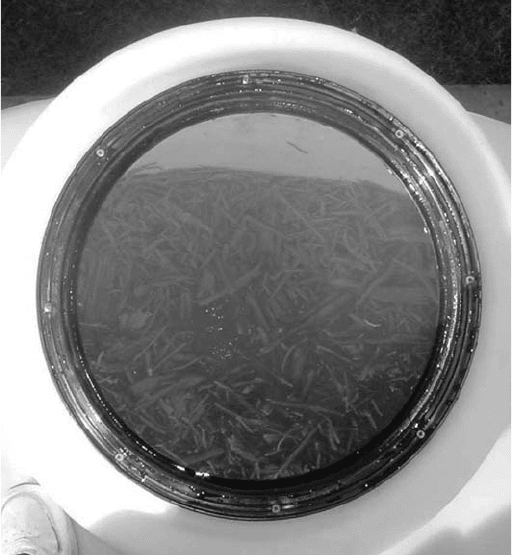
nical air pump or rotary blower. In many instances, though, coblended columns (see
Figure 16.59) have been constructed successfully with various blends of organic and inor-
ganic materials (e.g., shredded roots, stems, and bark plus limestone and clay admixtures),
with the overall goal of providing an enhanced surface area conducive to biofilm growth,
as well as a higher moisture retention capability and enhanced buffering capacity. In addi-
tion, these blended natural ingredients may contribute secondary benefits that further
enhance metabolic efficiency. For example, the concomitant breakdown of plant- and
tree-based suppor t materials may beneficially serve as secondary organic substrates that
promote complementary micro bial (e.g., fungal) growth as well as potentially supplying a
fraction of the metabo lic nutrients required. Hardwood materials passed through shred-
ders and grinders probably appear to represent one of the more desirable natural options,
given their perceived durability and resistance to rotting associated with prolonged
wetting while favoring biofilm attachment and retention. In addition, inorganic media
additives, such as limestone and clay, may also provide a beneficial buffering capacity,
which in the case of ammonia or sulfide hydrolysis may comprise a particularly import-
ant benefit.
With time, though, the historical pattern observed with all of these natural media is that
they tend to degrade in terms of media depth and overall performance, at which point they
would have to be supplemented with fre sh media to rejuvenate the bed. During large-scale
bed replacement with new media, partial blending with some of the older media would
help to secure beneficial recycling of microbial seed. Here again, the science behind
media replacement is still in a research stage, but 5 years is generally believed to be a
reasonable time frame.
Yet another aspect that has not yet been fully explored is that of the presence and role of
microscale metabolic niches that develop inside the biomass contained within biofilters. It
674 BIOLOGICAL APPLICATIONS FOR ENVIRONMENTAL CO NTROL
is highly likely that metabolically complementary anaerobic–aerobic mechanisms will
develop in these sites, whereby special biodegradation pathways could be developed to
attack normally recalcitrant chemicals (e.g., reductive dehalogenation of TCE) , fol lowed
by aerobic degradation of the partially dehalogenated products).
16.7 SOIL AND GROUNDWATER TREATMENT
16.7.1 Phytoremediation
Phytoremediation is the use of plants to remove and/or biotransform contaminants. The
process of phytoremediation is comparable to that of constructed wetlands. Both applica-
tions make use of macro- and microscale biology, and both concepts have captured con-
siderable attention, even though they each still qualify as evolving technologies given
their relatively short histories. However, phytoremediation also has several important dis-
tinctions (Schnoor et al., 1995). First, the focus of phytoremediation is that of biologically
remediating contaminated soils, sedime nts, and waters (both surface and ground water) as
opposed to wetland applications focused solely on wastewater treat ment. Second, phytor-
emediation systems may employ trees as well as smaller plants as the pri mary biological
agent. Indeed, for those applications in which they are suitable, phytoremediation systems
may offer a highly attractive ‘‘green’’ means of decontaminating lands and waters.
Figure 16.59 Natural shredded root and stem mass used for biofilter support media.
SOIL AND GROUNDWATER TREATMENT 675
Successful applications have been achieved experimentally with a wide range of inorganic
(e.g., metals, ammonia) and organic [e.g., petroleum hydrocarbon, BTEX, creosote wood
preservative, polycyclic aromatic hydrocarbon (PAH), refinery waste, organophosphate
insecticide, chlorinated pesticide, chlorinated solvent, explosive, cyanate] contaminants
(Jackson, 1997).
The potential benefits are again much the same as those of constructed wetlands,
including that of an apparently simple, solar-driven, aesthetically pleasing, in situ
‘‘green’’ technology with few, if any, complex or energy-intensive hardware or opera-
tional requirements (i.e., as compared to conventional treatment operations that employ
pumps, mixers, aerators, etc. that routinely use energy and require careful operator atten-
tion). These systems can also be self-sustaining in terms of procuring nutrients, they can
make a beneficial contribution to the balance of water in their soils, they can establish a
highly evolved complement of degradative enzymes, and they tend to be inexpensive both
in their initial startup and in subsequent maintenance. Granted, this remediation approach
will not work in all situations, and in even when it is successful, the remediation process
will operate on a time-scale measured in years rather than in hours or days. The public
perception of phytoremediation is extremely high, though, as a natural means of promot-
ing the restoration of chemically contaminated sites.
However, the seemingly simplistic notion of using plants and trees to clean up these
contaminated sites actually involves a far more sophist icated process than what is appar-
ent to the eye. As was the case with constructed wetlands, the visibly ‘‘green’’ above
ground portions of these systems are but a part, and in some cases perhaps even a lesser
part, of an integrated remediation scheme that encom passes a complex array of physical,
chemical, and certainly biological treatment factors. The type, density, and nurt uring of
the plants and trees is important as well as the nature of the soils (e.g., soil type, conduc-
tivity, depth to groundwater, nutrient availability) and climate (e.g., rainfall frequency and
duration, radiation, seasonal climate, windspeed, humidity) in which they are grown.
Finally, the character, concentration, location, and form (e.g., whether it is sorbed, solu-
ble, solid) of the contaminating materials are also important factors.
Before delving into the underlying sophistication of these phytoremediation systems,
though, one must develop a background understanding and appreciation of the vertical
layering of the soils in which these bioremediating plants and trees grow, and their cor-
responding physical and chemical characteristics. Figure 15.2 provides a schematic over-
view of a representative soil–plant system and its associated horizontal layers. There are
two major regions shown in this schematic, situated above and below the groundwater
table, respectively, and known as the unsaturated and saturated zones. Within the unsa-
turated zone the soil water volume does not entirely fill the pore space in the soil. The
unsaturated zone is also called the vadose zone. The remaining (partially or fully) open
void space, however, will also facilitate better levels of aeration and oxygen transfer,
which will then promote more aerobic microbia l activity. The saturated zone is where
the pores are completely filled with water. The groundwater table is the point in the satu-
rated zone where the hydraulic head is equal to zero. Water is drawn by capillary action
into the capillary fringe slightly above the groundwater table. The top of the capillary
fringe marks the division between the saturated and unsaturated zones.
The level of the groundwater table may vary considerably from one location to another,
and also according to temporal changes in precipitation and climate, but in most instances
it lies many meters below the surface and at a level not usually reached by plant root
systems. As a result, phytoremediation was developed with systems whose remediating
676 BIOLOGICAL APPLICATIONS FOR ENVIRONMENTAL CO NTROL
activity took place almost totally within the uppermost layer of the unsaturated zone (i.e.,
at shallow depths). However, subsequent developments with the nurturing and use of
deep-rooting plants and trees have now expanded this technology down to the saturated
region, at which point phytoremediation could then deal with contaminants extending
fully down to the groundwater table.
With most soil columns there will also be considerable variation in the horizontal and
vertical homogeneity of the top and bottom layers. The top, unsaturated zone may be
further divided into another series of layers vertically from top to bottom:
O horizon: consisting mostly of leaf litter and othe r dead organic matter
A horizon: the topsoil, with a high content of mostly degraded organic matt er, well
populated by microorganisms and invertebrates, often coincident with the root zone
B horizon: less weathered mineral matter plus organic and inorganic matter leached
from the A horizon
C horizon: partially weathered material from the bedrock below, very low in organic
matter and living organisms
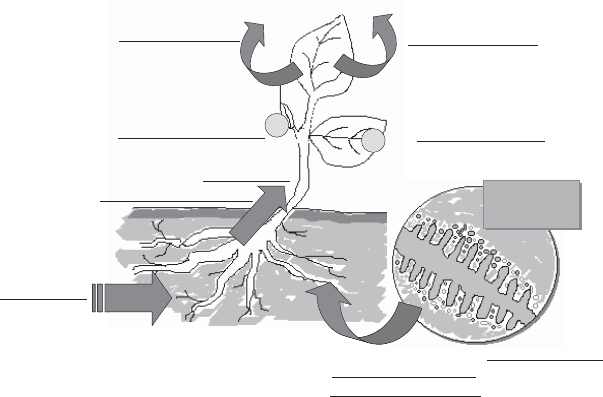
Once the remediating plants and/or trees have been introduced successfully into a
site, the means by which they can attempt to degrade or remove a group of involved conta-
minants can be quite diverse. An important, yet all too easily overlooked aspect of phyto-
remediation is that the plants are generally not the sole means of contaminant treatment.
Granted, the plants themselves may contribute many different and important remediating
effects (e.g., phytovolatilization), as discussed below, but in most instances their remedia-
tion role is metabolically complemented, perhaps even dominated by that of the microbes
that are motivated correspondingly to live within the same soils. Figure 16.60 provides an
overall synopsis of these prospective plant and microbial mechanisms, and in the follow-
ing synopsis we examine each of these metabolic contributions relative to the overall
process of phytoremediation.
Water release
evapotranspiration
Contaminant release via
phytovolatilization
rhizofiltration
Contaminant degradation
viaphytodegradation
Contaminant accumulation
via phytoaccumulation
Phytouptake
andphytotranslocation
Root Zone
Root Zone
Metabolism
- Microbial stimulation
- Organic enrichment
- Microbial degradation
Rhizosphere root system
Water release via
evapotranspiration
Contaminant release via
phytovolatilization
Contaminant degradation
via phytodegradation
Contaminant accumulation
via phytoaccumulation
Phyto uptake
and phytotranslocation
Root Zone
Root Zone
Metabolism
-
- Organic enrichment via
-
Rhizosphere root system
Contaminant filtration via
rhizoenrichment
Figure 16.60 Phytoremediation mechanisms.
SOIL AND GROUNDWATER TREATMENT 677