
Yam, Kit L. (ed.). The Wiley encyclopedia of packaging technology
Подождите немного. Документ загружается.

possible to develop special pressure-sensitive tapes for
many packaging uses, including combining and tamper
evidence. Tapes are used to attach and protect labels on
packages. Tape pouches often enclose packing lists and
documents for shipment (see also Tape, gummed).
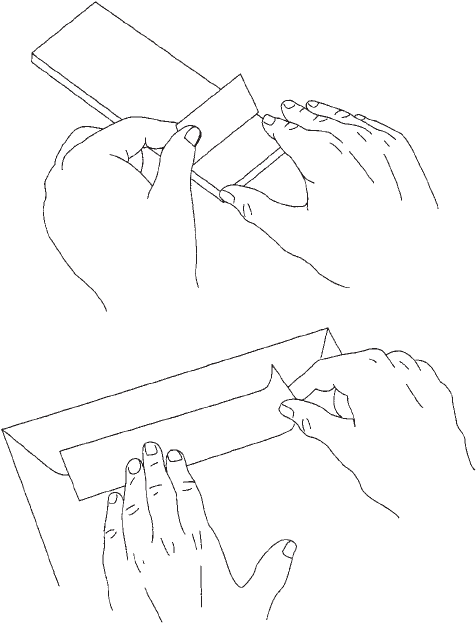
Several tapes are available not only on traditional
rolls but also in precut pads (Figure 4). These pads
provide for the use of presized pieces of tape for covering
labels, attaching documents, and closing packages. They
do not require a dispenser and offer the advantage of
portability.
ENVIRONMENTAL CONSIDERATIONS
The environmental considerations for tapes applied to
boxes are given in ASTM D1974. Pressure-sensitive tapes
are often a good method of source reduction, considered to
be a primary objective in reducing the contribution of
packaging to municipal solid waste. Box-closure tapes
often use less materials than alternative closures. Small
L-clips of tape can close folding cartons, replacing a shrink
overwrap and reducing material usage.
Compatibility with recycling operations for larger
package components is important. For box recycling,
pressure-sensitive tapes do not have to be removed from
corrugated boxes prior to recycling operations. When a
tape has a water-resistant tape backing, the adhesive
stays with the backing in the hydropulper. The tape is
easily removed intact by normal pulp-cleaning processes;
neither the recycling paper nor recycling water is con-
taminated by the tape. When corrugated boxes are re-
cycled, film-backed box sealing tapes do not hinder box
recycling: The PSA tape stays with backing and is easily
removed (4).
Stretchable LLDPE tapes are available for pallet uni-
tizing, offering source reduction from full stretch wraps.
When the tape is used in conjunction with stretch wrap, it
is compatible with the stretch-wrap recycling operations
(see also Recycling; Environmental laws, International
and North America).
Pressure-sensitive tape is a versatile packaging mate-
rial that can offer cost savings, productivity improve-
ments, and source reductions. Innovations beneficial to
packagers will continue.
BIBLIOGRAPHY
R. L. Sheehan, ‘‘Tape, Pressure-Sensitive’’ in The Wiley Encyclo-
pedia of Packaging, 2nd edition, John Wiley & Sons, New York,
1997, pp. 883–887.
Cited Publications
1. Pressue Sensitive Adhesive Tape, Pressure Sensitive Tape
Council, Chicago, May 2008.
2. Test Methods for Pressure Sensitive Adhesive Tapes, 15th
edition, Pressure Sensitive Tape Council, Chicago, 2007.
3. D. W. Aubrey, ‘‘Pressure-sensitive Adhesives’’ in D. E. Pack-
ham, Handbook of Adhesion, John Wiley & Sons, Chichester,
2005.
4. T. Jensen, Packaging Tapes: To Recycle or Not, Adhesives and
Sealants Council, April 1999.
TESTING CONSUMER PACKAGES FOR
MARKETING EFFECTIVENESS
LORNA OPATOW
Opatow Associates, New York,
New York
Primary and secondary packaging techniques are the key
to marketing success in bringing brands from production,
through distribution and selection by end users, and in
generating the levels of satisfaction that warrant repeat
purchase. Survey research is used to help those involved
in package development make the informed choices that
result in a marketing success.
Many package-performance dimensions can be mea-
sured in the laboratory. Characteristics related to market-
ing effectiveness need to be evaluated by users and
potential users of a brand—preferably before the package
is put into production. A variety of marketing research
methods is used for this evaluation.
Figure 4. Use of a pressure-sensitive tape from a pad to close a
mailing envelope.
1198 TESTING CONSUMER PACKAGES FOR MARKETING EFFECTIVENESS
MARKETING RESEARCH OPTIONS
Most research options fall into three broad categories:
Analysis of existing information
Original qualitative research
Original quantitative research
Analysis of Existing Information. An analysis of existing
information is often undertaken at the start of a package
development program. It can be an important first step
because it assures that subsequent surveys will add to,
rather than duplicate, information.
The information is drawn from public sources such as
government, trade groups, and publications; from past
studies completed within the organization (especially
tracking studies which reveal changes in consumer beha-
vior); from syndicated surveys (sponsored and conducted
by a research company that sells the results to any
company willing to pay for the information); and from
customer- and consumer-contact records. (In large pack-
aged-goods companies, consumer-contact information is
available daily, and it is often the first clue to product and
packaging problems, changing consumer concerns, defi-
ciencies in instructions for use, etc.).
The information obtained is summarized and analyzed
in a report that contains conclusions about the nature of
the market and recommended packaging objectives—cri-
teria or goals that the package must satisfy. The objectives
guide the development program and are used as standards
for judging packaging effectiveness.
Qualitative Research. When people talk about ‘‘qualita-
tive research,’’ they are referring to studies among small
samples of current and/or prospective users of the brand.
These people are interviewed in depth, either individually
or in a group. The research is diagnostic, that is, explora-
tory or directional, and its purpose is to obtain early
indications of packaging problems and opportunities.
In the individual interviews, one person is questioned
at a time using a predetermined question guide (list of
subjects to be covered), or a questionnaire that includes
mostly open-ended, rather than closed-ended, questions.
(‘‘How do you feel about the New York subway system?’’ is
an open-ended question. An example of a closed-ended
question is ‘‘Compared with other forms of public trans-
portation, do you think the New York subway system is
better, about the same or not as good?’’).
The group interview is called a ‘‘focus-group session’’
and is conducted with 8 to 10 people. Questioning is in the
form of a discussion that is led by a trained leader or
moderator who covers subjects listed in a predetermined
discussion guide. Each of these qualitative research tech-
niques has certain advantages:
During individual-depth interviews, information is ob-
tained, and feelings are explored in detail. Each
person expresses his/her opinions and interpreta-
tions without reference to the ideas of others so
there are clear indications of individual preferences
and understanding.
Participant interaction in focus group interviews pro-
vides a rich, multilayered accumulation of informa-
tion and feelings about the subject being discussed.
Comments made by one person may remind others
of points they had not thought of. Each idea ex-
pressed suggests other ideas. Normally, the discus-
sion results in a group consensus.
Both approaches are helpful in the early stages of an
investigation, or as an aid to informed judgment. Indivi-
dual-depth interviews are recommended for early trial, or
where there are questions about consumer understanding
of how a package works, packaging copy, or communica-
tion of ideas. Group interviews are recommended to gain
insights about a broad range of feelings and opinions, as
well as to identify the language or terminology consumers
use to talk about the package and product.
Qualitative research is usually used to develop instruc-
tions for use, create hypotheses and questionnaires
for larger studies, or get initial indications of opinions
and ideas about products, packages, or product/package
combinations.
Quantitative Research. ‘‘Quantitative studies’’ are con-
ducted to obtain definitive information for decisionmak-
ing. This type of research can take many forms but is
characterized by sample sizes where enough people are
interviewed, so results can be analyzed using statistical
techniques. The interviews may be conducted in person,
by mail, online, by computer, or via video. Certain kinds of
packaging studies are conducted by telephone, for exam-
ple, surveys to determine how and where products are
stored and used, or to define the target market (the
intended buyer/user).
Questionnaires for quantitative studies usually include
more closed-ended, than open-ended, questions. The ques-
tions are structured to permit various kinds of statistical
analyses that will aid in interpreting the results.
PACKAGING EVALUATION
In considering its marketing effectiveness, management is
most likely to question the degree to which a package
meets three types of goals, and these are the ones most
often subjected to some kind of survey research evalua-
tion: functional effectiveness, visual impact (visibility and
shelf attention), and communications effectiveness (brand
and product identification, and imagery).
Testing Functional Effectiveness. Functional effective-
ness is easier to evaluate than the other marketing
dimensions. Some aspects can be handled in the labora-
tory;
others, through
product-testing techniques such as
one-time or multiple-use tests; others, through individual-
depth or focus-group sessions, depending on the nature of
the product and the package.
With few exceptions, product users can be questioned
directly about whether a package is easy to handle, open,
close, store, and use, and whether it might protect the
contents over a period of time. The sample of potential
TESTING CONSUMER PACKAGES FOR MARKETING EFFECTIVENESS 1199
brand users interviewed should include people who use
the product in different ways, those in a mix of age groups
(from children through seniors depending on use), people
of various ethnic backgrounds, as well as those with a
variety of physical characteristics (left or right handed,
have smaller or larger hands, etc.).
It is a given that packages must protect the contents.
But it is also true that the user must believe that the
package really does this. The inner, outer and overwrap
for many over-the-counter (OTC) remedies, as well as
premium food and beauty-aids products are technically
unnecessary. However, proposed substitutes intended to
reduce packaging costs are often rejected by consumers,
primarily because of perceived differences in product
protection.
Depending on the nature of the product and package
involved, an in-home or at-work trial study may be con-
ducted among people in several geographic areas. Where a
totally new packaging concept is being tested, such as the
early versions of aseptic containers for foods, the study
may be restricted to people in areas closest to manufactur-
ing facilities because the samples have a short storage life.
Those people who agree to try the product are inter-
viewed to obtain their initial reactions about its appear-
ance, anticipated benefits and drawbacks, and general
expectations. The product may be tried at that time, or
left for use later, with an evaluation sheet to be completed
immediately after trial. If needed, follow-up interviews
can be conducted by telephone the next day.
Testing the Effectiveness of Graphic Design. Although,
the physical package can be evaluated using product-
testing techniques such as the ones described above,
different approaches are needed to determine the effec-
tiveness of packaging graphics.
Extensive evidence suggests that overall surface de-
signs including words are primary contributors to the
marketing effectiveness of a package. If you think of
packaging as the environment for a product, it is easier
to understand its effect. The tray used for a frozen entre
´
e,
the baking pan included in a mix, a plastic or glass bottle,
a composite or metal can, a see-through or foil pack;
words, colors, illustrations and over-all design of the
container or label; all of these factors influence consumer
expectations of, and satisfaction with a brand.
In all studies that involve packaging graphics, the
physical appearance of the test and competitive packages
must be equal. An apparently unfinished mockup or one
that is custom finished should not be shown with printed
competitive packages. The difference flags the package in a
way that biases results. In addition, if the test versions are
potential alternatives for an existing package, the sample
of people interviewed should include enough current users
of the brand to analyze their reactions separately.
In general, graphic design can be evaluated in regard to
the following three aspects: visual or shelf impact, com-
munications effectiveness, and aesthetic appeal.
Visual or Shelf Impact. The most elusive and difficult
packaging aspect to measure is visual or shelf impact. The
questions to be answered include the following:
1. When people shop the product category, does the
package call attention to the brand?
2. As people shop for other types of product, is the
package creating an in-store presence that will
enhance familiarity with the brand?
3. When the buying decision has been made before the
store visit, does the package make the brand easy to
find?
To date, there are no research techniques that fully
answer these questions, primarily because visual percep-
tion involves a complex relationship between the structure
of the eye and the functioning of the mind. For example,
seeing is selective. Regardless of where or how the eye
moves, people ‘‘screen out’’ elements they consider irrele-
vant and focus on the familiar. In a visibility test, this
familiarity bias usually produces a higher score for the
current package than for a new package, and for an
established brand than for a new one.
In addition, the effects of demonstrated visual ‘‘enhan-
cers’’ such as high contrast, size, and color density are
predictable. This makes it possible to design for the test,
which produces an apparent ‘‘winner.’’ The most commonly
used methods for testing some aspects of visual impact are
a shopping test, a T-scope (tachistoscope) or controlled-
exposure test, and an eye-movement test of single or multi-
ple packages in a competitive environment. To some degree,
all of these techniques are deficient, but the shopping test
comes closest to indicating what might happen in a store.
In a shopping test, a rough approximation of the in-
store environment is reproduced with actual packages on
shelves in a central interviewing facility, on a videotape, or
on a computer screen. The product arrangement is delib-
erately structured to give all the test brands an equal
opportunity to be noticed, and study participants are free
to look at what interests them and to ignore what does not.
Where an actual product display is used, people can
‘‘shop’’ the shelves and view the packages in motion at
their own pace. They can pick up and examine packages to
gain more information about the brand. Whereas shop-
ping
tests using videotape
and computer simulations are
easier to administer, they have some drawbacks: people
are seated in a quiet room and concentrating, there may
be color and copy distortion due to the limitations of
photography, and the product display is ‘‘framed’’ so that
some of the normal in-store confusion is reduced.
In the controlled-exposure test, the length of time
people can view a picture of a package or shelf display is
limited. A device called a tachistoscope or T-scope is
attached to the lens of a projector. Operating like the
shutter of a camera, it controls the amount of time that a
picture is shown (in fractions of a second). Each exposure
is shown at an increasing amount of time. After each one,
people are asked what they saw.
The controlled-exposure method of testing visual as-
pects of packaging is a speed test. It measures how quickly
something is seen, and it has several drawbacks: People
are concentrating on a stationary picture that organizes
1200 TESTING CONSUMER PACKAGES FOR MARKETING EFFECTIVENESS
the display, and there may be photographic distortion. For
new brands, the interpretation of results is strictly limited
to how easily the brand name is read. For established
brands the test offers a measure of recognition as well as
readability.
T-scope test scores have limited application but can be
helpful in cases where pictures must be used. Some exam-
ples are as follows: to develop indications of differentiation
within a line of products, to test custom-designed containers
where several alternative models are being considered, and
to provide indications of recognition elements when a rede-
sign is being considered for an established brand.
In an eye-movement test, the respondent controls the
length of time the picture will be viewed. A device records
where the eye moves and where it stops over the surface of
the picture. The results are evaluated on the basis of this
record. In addition to drawbacks related to the test
environment and possible photographic distortion, this
method provides information about where the eye travels
but not about what the brain absorbs.
Regardless of the method used, visual-impact scores are
rarely used as a basis for accepting or rejecting a package.
Packages that score well in a visibility test but do not meet
communications objectives are not usually adopted. How-
ever, when communications objectives are met but the
visibility score is low, a package is often selected, although
graphics may be modified to enhance visual impact.
Communications Measurements. Most packaging tests
include communications measurements. Designers can
predict the visual effectiveness of a package based on
their knowledge of the physiology and psychology of
seeing. However, they find it more difficult to determine
the package’s communications effectiveness (the ideas the
package suggests about the brand).
Packages have a substantial impact on people’s ideas
about products and brands. To measure this impact,
research methods and exhibit materials used need to be
appropriate for the product and the particular packaging
design problem, as well as economically feasible. There
are many options for testing package communications,
and no standard techniques or series of techniques.
Most package communications studies evaluate the
brand in relation to competition, and measure several
packaging aspects. Some of the more popular approaches
are as follows:
1. Experimental design matched samples of potential
users are interviewed about one or two competitive
brands, as well as the test brand in one of the
package designs. Questioning and test procedures
are identical so that differences in results can be
attributed to the different packages. Within this
framework, the most often used approaches are as
follows:
a. Brand expectation study, which measures im-
pressions of the brand on the basis of package
appearance
b. Brand trial study, which measures brand and
package performance on the basis of a single trial
c. Location use test which measures brand and
package performance in-home or in the work-
place on a one-time or multiple-use basis.
2. Product formulation/structure study, which treats
each package as a separate formulation or struc-
tural version of the brand and determines perceived
differences.
Aesthetic Appeal. If the purpose of the study is to
measure aesthetic appeal, consumers are asked to rank
proposed packages in regard to how attractive they are.
CONCLUSION
In addition to standard specifications for conducting use-
ful surveys, the following are the primary requirements
for conducting research to evaluate the marketing effec-
tiveness of packaging:
1. The packaging dimensions of interest need to be
measurable. Subtle differences in graphic design
and some packaging objectives (such as ‘‘generate
trade excitement’’) cannot be measured.
2. Study objectives should be stated clearly in writing,
related to the packaging objectives, and indicate the
kind of information to be obtained and how it will be
used.
3. The study plan must be capable of yielding the
information specified in the objectives.
4. Action standards should be established in advance.
These standards provide a common framework for
judging study results by indicating the order of
importance of each measurement used and the
research criteria to be met.
5. The people interviewed need to be capable of provid-
ing meaningful information.
6. Alternative test packages must be equally accepta-
ble to management. If, for any reason, a package
cannot be adopted, then it should not be included in
the test.
7. Exhibit materials need to be appropriate and
equivalent to avoid biasing results.
8. When developing packaging communications infor-
mation, the tester is measuring how the package
influences ideas about the brand. This means people
must be asked about the product and brand before
any direct questions about
the package.
9. Package designers and developers should be in-
volved in the research to be sure that the study
plan is compatible with the packaging objectives, to
control the appearance of exhibit materials and to
add valuable insights in explaining or interpreting
test results.
In conclusion, the package is an integral part of most
brands and can provide a competitive marketing edge.
Successful package development is the result of careful
consideration of alternatives. As each packaging decision
TESTING CONSUMER PACKAGES FOR MARKETING EFFECTIVENESS 1201
is made, it narrows the options to be considered at the next
step. Survey research assures that choices will result in a
package with maximum marketing effectiveness.
TESTING, PACKAGING MATERIALS
PATRICIA D. GUERRA
MARCONDES
DUNCAN O. DARBY
Clemson University, Clemson,
South Carolina
INTRODUCTION
The need to test packaging materials and components
may arise for a variety of reasons. Maintaining production
standards is the most common one. Verifying that the
material will perform in a new application might be
another. When a problem is identified and the source is
unknown, investigative tests, both qualitative and quan-
titative, are often needed.
It is helpful to think of packaging materials testing as a
function of factors such as packaged product class, pack-
age component, and package function, as these factors
may determine the types of tests necessary. Product
protection is a package function that leads to tests such
as drop and vibration. Certain package components need
to comply with industry-defined dimensional standards.
Products such as food, drugs, medical devices, and hazar-
dous materials are highly regulated, so the packages that
contain these products are also regulated.
This article is organized by material: plastic, paper
(including paperboard and corrugated), metals, glass, and
wood. Many other materials are used in packaging, and
many containers, which are available, include components
made of different materials. An effort was made to include
these components and their related testing under the
materials discussion.
REGULATORY AGENCIES AND STANDARDS
ORGANIZATIONS
In the United States, the Food and Drug Administration
(FDA) is charged with safeguarding the quality of pro-
ducts destined for human consumption. There are many
ways in which the quality of foods, pharmaceuticals and
medical devices can be adversely affected by packaging
issues. Packages may not be correctly closed. Tears, holes,
and cracks can occur that allow the product and the
environment to interact. Packaging materials and compo-
nents might be a source of indirect additives through the
migration of chemicals through the package into the
product. The directives guiding packaging of these classes
of products are found in the Code of Federal Regulation,
Title 21 (CFR 21). It is common for the FDA to recognize
standards from consensus-based standards organizations,
such as the International Standards Organization (ISO)
and/or ASTM International, for the measurement of com-
pliance with these objectives.
When the package function is protection from transpor-
tation hazards, the National Motor Freight Classification
Committee (NMFC), the Department of Transportation
(DOT), and the International Civil Aviation Organization
(ICAO) regulate the types of materials that may be used for
different product classes and the standards that these
materials must meet. The International Safe Transit Asso-
ciation (ISTA) in the United States has a set of standard
procedures for testing the performance of shipping contain-
ers for a variety of shipping environments and products.
ASTM International has developed test procedures that
prescribe how testing should be conducted for a variety of
properties of a variety of materials used for packaging,
including performance during transport. The ASTM tech-
nical committee D10 deals specifically with developing
standard procedures for testing packaging materials and
components. Other ASTM International technical commit-
tees also have jurisdiction over areas of interest to packa-
ging professionals in terms of testing, such as committee
F02 on flexible barrier packaging and committee D06 on
paper and paper products. The Technical Association of the
Pulp and Paper Industry (TAPPI) also offers standard
procedures for testing pulp and paper materials, including
paperboard and corrugated. In some cases, there is some
overlapping in standards from ASTM, TAPPI, and ISO. It is
up to the packaging professional to identify the one that is
mostly accepted by his or her sector of the industry.
In addition to the already mentioned federal regulatory
agencies, packaging professionals must also be aware of
state and even local regulations. Because regulations
change over time and from state to state and country to
country, it would be impractical to cover every one in an
encyclopedia. This article attempts to make the reader
aware that these exist and that every packaging profes-
sional should be familiar with the ones that pertain to his
or her sector of the industry and distribution cycle.
PLASTICS
Plastics are widely used in flexible, semirigid, and rigid
packages. Polymer films are used alone or in multilayer
structures in the form of bags, pouches, and overwrap
films to name a few. Rigid plastic containers are also
common in the form of jars, drums, pails, jugs, bottles,
trays, and others. Foamed polymers may be used for
protection against drops and vibration and for tempera-
ture control. Woven plastic fibers are used in large
packages of relatively heavy products, such as dry pet
foods and industrial goods. Nonwoven fibers are a common
component of medical device packaging.
Several fundamental plastics properties are used to
characterize and compare plastic materials used in packa-
ging applications. This includes thermal transition proper-
ties, such as the glass transition temperature (for
amorphous and semicrystalline plastics), and the melt
point (for semicrystalline plastics). For semicrystalline
plastics, the percent crystallinity may also be estimated.
1202 TESTING, PACKAGING MATERIALS

Measurement of these properties is best conducted with
thermal analysis equipment such as differential scanning
calorimetry (DSC). Other thermal analyses, including
thermo-gravimetric analysis (TGA), thermo-mechanical
analysis (TMA), and dynamic mechanical analysis
(DMA), may also be used to characterize how plastic
behavior changes with temperature. Melt flow properties,
such as melt flow indices, melt flow rates, melt viscosities,
melt strength, and so on, are predictors of performance on
package-manufacturing equipment, as well as of perfor-
mance in the field.
Datasheets that include the basic characteristics of
films and other flexible plastics are available from suppli-
ers and include basic information such as yield, gas-
barrier properties, gauge, tensile strength, optical proper-
ties, and dimensional stability. Table 1 lists some of the
more common properties of flexible plastic materials. Most
of these properties are discussed in detail in other sections
of this encyclopedia. Properties of multilayer materials
are also included in Table 1.
It is important to test the properties in Table 1, because
they have a direct influence on how the individual materi-
als will perform as part of a package system. This includes
how a material will work on the machinery that converts
it into a package, and how it will interact with the product
it contains.
The weights of substrates, coatings, inks, adhesives,
and sealants are usually measured on a certain size
specimen, and the overall weight is extrapolated from
that. Weight is often measured per area of flexible
substrates, and the term used for this is basis weight.
The basis weight is usually specified for the product to
perform the desired function.
The uniformity of a substrate’s thickness is important. A
lack of uniformity may lead to variations in other test
results, such as permeation rates and tensile strength, and
it may interfere with performance on the packaging line or
in the field. A certain amount of variation may be accepted.
Several measurements are taken and values are averaged.
For multilayer applications, the strength of the adhesion
between layers is evaluated to make sure that the layers
will hold together for the intended applications. The force
necessary to separate the layers is measured and compared
with the minimum specification for the application.
Knowledge about the strength properties such as ten-
sile, puncture, tear, and so on are helpful in selecting
materials for flexible packaging. This selection is based on
application and hazards that the product is likely to
encounter in its lifecycle. Actual data from these tests
doesn’t always apply directly to an application, but it may
still prove helpful in comparison of materials.
Surface properties impact the ability of materials to
stick together and flow over machinery. For finished
packages, these properties impact the stacking stability.
Minimum treatment levels are specified for materials
used in printing and laminating applications. Films may
not track well on packaging machines when the coefficient
is too low or too high. Large bags of products such as pet
food or industrial products must meet a coefficient of
friction range to prevent sliding when stacked.
The outside of packages is often part of the marketing
effort for a product. Therefore, the aesthetic appearance of
materials is important. Visual properties such as gloss can
add value from a marketing perspective. Print quality is
another important factor that is measured and tracked in
various ways all the way from the printing plant to the
store shelf. There are regulations on type size and legibility
for certain information communicated to the consumer in
industry sectors such as food and drugs. Colors can also be
measured. Many of these properties are measured using
the naked eye, or instrumentation, or both.
Opacity is also a visual property of materials. The
amount of light transmitted through a packaging material
may accelerate deteriorative reactions in food products,
for example. There is more than one way to express
opacity. It may be done in terms of optical density or light
transmittance. Metalized materials are often compared
based on these parameters.
It is often necessary to control the atmosphere within a
package. For example, too much or too little oxygen
impacts the shelf life of many perishable products. Thus,
the tendency of gases to move through the package
materials must be understood and measured. The most
common permeants are listed in Table 1. Please see the
permeability section of this encyclopedia.
Organoleptic tests involve qualitative and quantitative
tests to verify that packaging materials or their additives
do not adversely affect the flavor of products. Panels of
humans trained to detect solvent odors are routinely used
to evaluate packaging materials as they are made. Food
companies often use sensory panels to study product/
Table 1. Flexible Plastic Material Properties
Weight (coatings, adhesives, and sealants)
Thickness (gauge)
Adhesion (adhesive to substrate, inks to substrate, extrudate to
substrate, coextruded layers)
Strength
. Tensile
. Puncture
. Tear resistance
. Burst resistance
. Impact resistance
. Flex resistance
Surface
. Surface energy (contact angle)
. Friction [coefficient of friction (COF), film to film, and film to
steel]
. Abrasion
Visual/optical
Gas barrier (transmission rates)
. Oxygen
. Water vapor
. Carbon dioxide
. Nitrogen
. Flavors/aromas
Organoleptic (retained solvents and other volatiles)
Shock and vibration Transmission (foams)
TESTING, PACKAGING MATERIALS 1203

package flavor interactions. These activities are typically
combined with analytical instrumentation such as gas
chromatography, microbial analysis, color measurement,
and so on.
Foams placed inside or outside of primary packages
protect by absorbing part of the energy of an impact.
Different densities of foam and different materials (poly-
styrene vs polyethylene, for example) offer different levels
of protection (see Cushioning, design section for more
information).
Table 2 includes a selection of tests that are commonly
performed on packages to evaluate their performance. In
addition to these, some properties of the resins such as
melt index and flow rates are also measured.
In most plastic packages, the closure system is essen-
tial to the package’s performance. Closing the package
assures that the package is allowed to perform its func-
tions, by keeping the product within the package and also
preventing exchange of the package’s atmosphere with
that of the outside environment. In many plastic packa-
ging applications, closure is achieved by creating a ther-
moplastic seal. The seal strength can be measured to help
predict the ability of the package to survive its lifecycle
and to assess the force or energy required to open the
package. In the hot tack test, the seal strength is mea-
sured immediately after the seal is made to predict the
ability of the packaging material to contain the product
when it is hot. This property is useful in predicting
performance on the packaging machine or in cases where
the product is filled at an elevated temperature. See
section Seal, heat for more detailed information.
Other tests may be needed to verify that the package
was successfully sealed throughout the seal perimeter and
that it will not leak or open prematurely in the distribu-
tion cycle. Tests used for seal integrity include burst tests,
dye leak tests, pressure or vacuum decay tests, and many
others. Simulated or actual shipping tests may also be
run, either as a standalone method to check the package
integrity or to verify that the seal integrity tests chosen
correlate to reality.
Burst tests on packages may be run not only for seal
integrity testing but also to verify that the package has
the strength to be stacked and dropped in the distribution
system.
Dimensions, dimensional consistency, and dimensional
stability of packages are important for space usage, pro-
cessibility on packaging machines, and for aesthetic con-
siderations. Packages must consume the correct amount of
space when stored, shipped, and on the shelf in the
marketplace. Internal dimensions must be consistent to
assure that the net weights or volumes on packages are
correct. Automated packaging machines often require
specific tolerances on the package dimensions to facilitate
the desired productivity. Dimensional stability must be
maintained during thermal processes, such as retorting
and autoclaving. Packages must resist deforming dimen-
sionally to assure that the packages remain closed and
present an attractive marketing message to the consumer.
Chemical resistance is an important consideration and
is one of the reasons that we find chemicals packaged in
several different packaging materials. The packaging
materials must offer chemical resistance to the compo-
nents of the product as well as from any outside elements
that might come in contact with the package.
When a package is designed with the expectation that
it will bear some or the entire load in a stacking situation,
that package must be evaluated for its stacking strength.
In many cases, the products can bear the load.
PAPER, PAPERBOARD, AND FIBERBOARD
Paper is used as a layer in multilayer structures (some of
these are various layers of paper, others include coatings,
films, and foils) and it is also used on its own. Paperboard
is converted into cartons and boxes that can function as
primary, secondary, or tertiary packages.
Corrugated fiberboard is made of linerboards and a
corrugated medium. Once it is converted into boxes, it is
required to carry a box manufacturer certificate listing the
burst strength or the edge crush test (ECT). Both certifi-
cates also list the size limit and gross weight limit.
Another common use for corrugated in packaging is trays
(Table 3).
Table 2. Container Properties (Rigid and Flexible)
Sea
. Hot tack
. Seal strength
. Integrity (cracks, tamper evidence, child-resistant features)
. Burst
Barrier
. Oxygen
. Water vapor
. Carbon dioxide
. Nitrogen
Dimensional consistency and stability
Chemical resistance
Stacking strength
Table 3. Materials and Container Properties
Basis weight
Strength
. Tensile
. Tear resistance
. Puncture resistance
. Burst (mullen)
. Edge crush (corrugated fiberboard)
. Flat crush (corrugated fiberboard)
. Folding endurance
. Structural design performance (finished containers)
Moisture resistance
Permeability (body of composite cans)
. Oxygen
. Water vapor
1204 TESTING, PACKAGING MATERIALS

Like plastic materials, paper and paperboard are often
specified and ordered in terms of basis weight, so this test
can confirm that the material at hand conforms with the
order, for example.
As with other packaging materials, the strength proper-
ties of paper, paperboard, and corrugated are important for
matching the materials to the packaging application being
considered. For example, the results of a tear resistance test
are an indication of how a material might perform in an
application that requires windows or other cutouts.
The burst resistance test is done to find a board’s ability
to withstand external and internal pressures. It is not
considered the best way to evaluate double- or triple- wall
corrugated boards. Flat crush is used to evaluate those
boards.
Structural design performance tests evaluate the ability
of the erected container to perform from the time it is put
together to when it reaches the ultimate user. These tests
are designed to simulate various shipping and distribution
cycles in terms of shock, vibration, and compression A
container might be exposed to moisture in several ways.
It may come from the outside as rain, or it may come from
the packing environment in the case of washed vegetables
for example. Depending on the application, it is important
to measure the impact of moisture on paperboard and
corrugated fiberboard properties to assure that they will
perform correctly for the packaged product and distribution
environment.
METALS
Steel and aluminum are used to make containers and
components, such as cans, drums, trays, and caps. Steel
cans are widely used in applications such as processed
foods, chemicals, and paint. Steel containers and con-
tainer components such as caps are also found in packa-
ging systems for foods, cosmetics, consumer goods, and
industrial goods. Aluminum is used in the form of foil (less
than 0.006 in. thick), as a layer in multi-layer structures,
and as trays in frozen foods and preserves. It is also
converted into cans and bottles used for beverages, food,
and cosmetics. Metalized materials are produced by va-
cuum deposition to create a thin light and gas barrier onto
substrates or formed packages.
Metal for packaging uses often begins in the molten
form. Then, it is cast into either ingots or thick sheets.
Ingots will subsequently be rolled into thinner strip
metals in the hot rolling process and wound into coils.
Cast metal sheets are rolled into coils as a part of pro-
cessing. More reductions in thickness are achieved by cold
rolling. In the case of foils, the rolling will continue down
to thicknesses around 6 microns. Rigid metal packaging
such as cans are made from either coils or cut sheets.
Although steel packaging is mostly iron and aluminum
packaging is mostly aluminum, other alloying metals at
varying concentration actually provide many properties
we depend on for packaging applications (Table 4). Addi-
tionally, processing has a significant effect on the grain
structure of metals, which also have a significant effect on
the final package properties. Thus, effective measurement
of metal properties may include the measurement of
concentration and of grain size measurement.
As in all packaging materials, cost is a key factor. Thus,
basis weight and thickness are monitored in the produc-
tion of sheets, coils, and finished metal packages.
The substrate materials may endure processing, such
as washing coating and printing, in the sheet form before
being formed into packages. In other cases, some of these
processes may occur on the shaped package rather than on
sheet form. Plating with another metal may also be used
for corrosion resistance or for other properties. In each
case, it is important to measure the adhesion and basis
weights of coatings or platings.
The mechanical properties of these metallic materials,
such as tensile/compression strength, are routinely mea-
sured in the production and use of metals. As in plastics,
these properties can serve as either direct measures of
predicted performance, or as relative measures for compar-
ison. Most metal packaging is formed at temperatures that
are relatively low compared with the metal’s melting point.
Thus, it is important to understand the ductile properties
of the metals used. Measurement of formability and ducti-
lity properties, beyond those found in the tensile test, may
be required. For example, Rockwell hardness testing can be
used with evaluate the temper of steel cans. Denting of
cans is considered to be a defect in some cultures, and it can
reduce the can’s axial strength, so denting resistance may
also be measured. Many cans are subjected to significant
pressure ‘‘events,’’ such as sterilization for canned foods or
the pressure effects of containing carbonated beverages.
Pressure testing is required to assure that the package can
withstand these events.
Some cans are rolled pieces of sheet that are welded
together at the overlap of the metal, which is called the
seam. Cans are inspected to make sure that the seams are
hermetic to ensure the sterility of the product. For a
variety of reasons, the casting and rolling processes can
Table 4. Materials and Container Properties
Chemical makeup of alloy
Grain size
Basis weights
Thicknesses
Coating/plating basis weights
Adhesion of coatings/platings
Strength
. Tensile
. Stacking strength
. Hydraulic pressure strength
Package integrity
. Pinholes
. Weld quality
. Leak testing
. Permeability
Visual/optical
. Surface reflectance
. Aesthetics
Dimensions
TESTING, PACKAGING MATERIALS 1205

result in tiny holes in the aluminum sheets or foil. These
holes, which are referred to as pinholes, can be viewed by
the naked eye or by using automated optical comparator
systems. Leak testing systems are also used to verify the
integrity of cans. Most metals are largely impenetrable by
most common permeants. Thus, metals are used in cases
where absolute barrier is needed. However, thin-gauge
aluminum foils (below 20–25 micron) may have pinholes
present, and metalized films seldom have sufficient metal
for an absolute barrier to exist. In these cases, gas barrier
permeability evaluations can be conducted.
As with other packaging materials, the visual appear-
ance of metallic packaging is sometimes an important
factor. Because metals can be highly reflective, reflectance
values are sometimes specified. Metallic packaging is
often printed, so print quality is also an important prop-
erty. Metalized films are tested for optical density and/or
light transmission to ensure the needed opacity has been
achieved during the metallization process.
Dimensions for metal cans and bottles are important to
assure proper space consumption, proper filling capacity,
and processibility on high-speed filling lines. Metal caps
for bottles, jars and cans also have to conform to dimen-
sional requirements for the filling and capping process to
occur at the speeds required by the production equipment,
as well as to assure that the package is hermetic.
GLASS
Bottles, jars, and jugs and ampoules made of glass are
used in the industry for food and pharmaceutical packa-
ging. Glass packaging is usually formed directly from the
molten raw materials into the package. This means that
material testing generally must be conducted on the
package itself rather than on a sheet or resin pellet as is
an option in papers, metals, and plastics. Most standards
have to do with maintaining production quality and
dimensional consistency (Table 5).
Glass properties are dependent on the composition.
Appropriately equipped analytical laboratories can deter-
mine this, but in glass manufacturing plants, density and
softening point can be substituted for a full analysis.
Strength in glass is not typically measured using a
tensile strength as in most other materials, because it is
extremely strong but extremely brittle. Compressive
strength measurements of glass result in much higher
strength values than tensile strength measurements.
Glass packages generally break at lower values than
the theoretical expectations because of small cracks on
the surface that serve as stress concentration points.
Online application of pressure, at squeezing stations on
glass package-making lines, is used to prevent cracked,
broken, or weak packages from advancing into the pro-
cess. Internal pressure resistance is an important prop-
erty of glass containers, which will endure pressures
such as sterilizing in the package and carbonation. The
compressive strength of glass packages reflects their
ability to support the load in stacking systems and
when closures are applied. It is generally addressed
during the design stage by selecting appropriate neck
and body diameters and shoulder radius. The heel design
of containers can also improve strength.
Thermal shock is a measure of glass’ tendency to crack
under heat. This is important for hot fill, retorting, and
applications in which the product is heated in glass by the
consumer to be served. Finite-element analysis is used to
model this.
Glass is often used for its superior optical properties.
Thus, measurement of these properties is important. On
glass production lines, automated inspection stations are
used to verify that the containers are free of sand, dirt,
stones, and other visual defects. Clarity and color, and the
consistency of both, are important in glass manufacture
and use. When printed or when graphics are formed into
the glass surface, the appearance of these aesthetics also
needs to be measured.
The containment capability of a glass container is
dependent not only on the properties of the particular
glass formula but also on the thickness of the container
walls. Additionally, the total weight of each container
must be measured and controlled to assure consistency
of cost, performance, and fill weights. The finish dimen-
sions must be consistent to assure that the cap/closure
system fits properly, offers correct opening strength, and
provides an appropriate seal of the package.
Glass offers excellent water vapor and gas-barrier prop-
erties. When pigmented, it provides light control as well.
WOOD
Wood is an important packaging material that is specifi-
cally used for pallets, crates, and boxes used in transport
packaging. A limited amount of testing is conducted on the
wood materials themselves, but in the construction of wood
packaging, moisture content and shrinkage properties are
specified. In the case of pallets, tensile properties are
seldom measured, but compression and flexural properties
(strength and moduli) are both important for the
Table 5. Materials and Container Properties
Composition
. Composition
. Density
. Softening point
Strength
. Compressive
. Stacking strength
. Hydraulic pressure strength
. Impact strength
Thermal shock
Visual/optical
. General visual quality
. Clarity
. Color
Dimensions
. Container weight
. Wall thickness
. Finish dimensions
. General dimensions
Permeability
1206 TESTING, PACKAGING MATERIALS
application. These are generally controlled through selec-
tion of woods that deliver the desired performance at the
best cost.
CONCLUSION
Entire books could be written about testing systems for
each of the packaging materials/package types outlined
above. This article has been written to attempt to briefly
describe that what and the why involved in packaging
material testing. The reader is encouraged to review the
references as well as the individual sections elsewhere in
this encyclopedia.
Ideally, the package is developed along with the pro-
duct and adjustments are made along the design and
development stages to provide the best fit between pack-
age and product. Packaging is usually a system, so even
though testing the individual components is a good start-
ing point, it does not exclude the need to test the package
system as whole at every stage of the product cycle from
the time it is packaged to its ultimate use.
BIBLIOGRAPHY
ASTM International.
Brockway Glass School, Brockway, Inc., New York, 1987.
A. L. Brody and K. S. Marsh, eds., The Wiley Encyclopedia of
Packaging Technology, 2nd edition, John Wiley & Sons, Inc.,
New York, 1997.
W. D. Calister, Jr., Materials Science and Engineering An Introduc-
tion, John Wiley & Sons, Inc., New York, 1940; 7th ed., 2007.
J. Cavanagh, ‘‘Glass Container Design,’’ in A. L. Brody, K. S.
Marsh, eds., The Wiley Encyclopedia of Packaging Technology,
2nd edition, John Wiley & Sons, Inc., New York, 1997.
J. Cavanagh, ‘‘Glass Container Manufacturing,’’ in A. L. Brody,
K. S. Marsh, eds., The Wiley Encyclopedia of Packaging Tech-
nology, 2nd edition, John Wiley & Sons, Inc., New York, 1997.
Code of Federal Regulations, Title 21. Office of the Federal
Register National Archives and Records Administration, S.
S. Government Printing Office. Washington, DC, 1992.
D. Darby, PKGSC 430 Converting for Flexible Packaging –
Spring, 2009. Clemson University, Clemson, SC. 2009.
National Wooden Pallet and Container Association. Uniform
Standards for Wood Pallets.
Fibre Box Handbook, Fibre Box Association, 2850 Golf Road,
Rolling Meadows, IL.
C. Gaynes, ‘‘Packaging Materials Packaging,’’ in A. L. Brody and
K. S. Marsh, eds ., T he Wiley Encyclopedia of Packaging Technol-
ogy, 2nd edition, John W iley & Sons, Inc., New York, 1997.
Glass Packaging Institute.
J. F. Hanlon, Handbook of Package Engineering, McGraw-Hill,
New York, 1971; 3rd edition, 1998.
O. L. Heck, ‘‘Can Seamers,’’ in A. L. Brody and K. S. Marsh, eds.,
The Wiley Encyclopedia of Packaging Technology, 2nd edition,
John Wiley & Sons, Inc., New York, 1997.
R. J. Hernandez, ‘‘Polymer Properties,’’ in A. L. Brody and K. S.
Marsh, eds., The Wiley Encyclopedia of Packaging Technology,
2nd edition, John Wiley & Sons, Inc., New York, 1997.
B. Johnson and R. Demorest, ‘‘Permeation and Leakage Testing,’’
in A. L. Brody, K. S. Marsh, eds., The Wiley Encyclopedia of
Packaging Technology, 2nd edition, John Wiley & Sons, Inc.,
New York, 1997.
B. Page, Metal Packaging, Pira International, UK, 2001.
G. C. Phillips, A Concise Introduction to Ceramics, Van Nostrand
Reinhold, New York, 1991.
J. E. Shelby, Introduction to Glass Science and Technology, The
Royal Society of Chemistry, UK, 2005.
G. L. Robertson, Food Packaging, Principles and Practice, Marcel
Dekker, Inc., New York, 1993.
Steel University.
D. Twede and R. Goddard, ‘‘Packaging Materials,’’ Pira Interna-
tional, UK, 1998.
S. E. M. Selke, J. D. Culter, and R. J. Hernandez, Plastics
Packaging: Properties, Processing, Applications and Regula-
tions, 2nd edition, Hanser, Munich, Germany, 2004.
TESTING, PERMEATION AND LEAKAGE
BERT JOHNSON
ROBERT DEMOREST
MOCON,
Minneapolis, Minnesota
These two factors, permeation and leakage, can have
similar effects on packaged goods, but they are totally
different processes. When oxygen (O
2
), water vapor (H
2
O),
carbon dioxide (CO
2
), odors, and flavors move out of
packages or into other packages, quality is lost, and shelf
life is shortened.
Great strides have been made in permeation, which is a
science relatively unknown to the average citizen, but
leakage, a subject familiar to many, seems to be slower in
developing a universally accepted testing technology.
Testing methods for both permeation and leakage are
discussed here.
PERMEATION
In general, three separate phenomena occur simulta-
neously.
Solubility—penetration into polymer
Diffusion—penetration through polymer
Desorption—evaporation from polymer
The total permeation through the barrier is made up of the
sum total of all three parameters, and it is referred to
metrically as
Permeation rate—(mL mm)/(m
2
24 h atm), dry, at
(temperature, 01)
Transmission rate—(mL/(m
2
24 h), dry, at (tempera-
ture, 01)
Note that the transmission rate (TR) has not been normal-
ized for atmospheric pressure or thickness. The laboratory
must decide the best units. However, if the instrument is
equipped with a pressure transducer, so that results are
adjusted to sea level, then it is common to state the TR
TESTING, PERMEATION AND LEAKAGE 1207