
Zhang K., Li D. Electromagnetic Theory for Microwaves and Optoelectronics
Подождите немного. Документ загружается.

3.7 Impedance Transducers 171
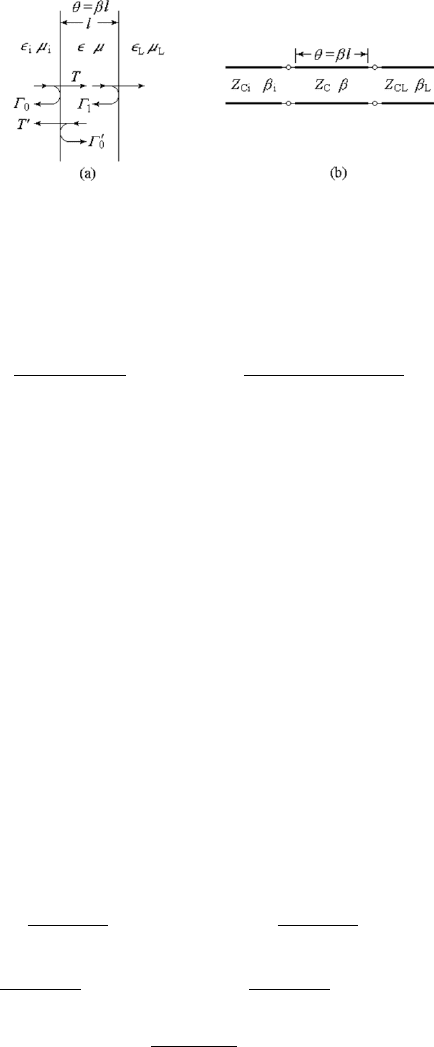
Figure 3.25: Reflection of wave at two reflection points.
characteristic impedance of each section is determined by (3.179), (3.177),
and (3.180). The length of each section is obtained from (3.191) or (3.192):
l =
λ
max
arccos p
2π
, or l =
λ
max
(π − arccos p)
2π
. (3.197)
Note that the wavelength in the above equations is the wavelength in the
medium of the given layer or the guided wavelength in the waveguide.
The calculation in the design of a multi-section transducer or a multi-layer
anti-reflection coating is quite complicated, and it can be done by means of
design tables [36, 118], or computers.
3.7.4 The Small-Reflection Approach
If the difference between the wave impedances of the two adjacent media
or two adjacent waveguides is small enough, the reflection at each reflection
point must be small too. In this case, a small-reflection approach is developed
to simplify the design of a multi-section transducer.
We begin with two reflection planes, as shown in Fig. 3.25. This means
that between the input and output waveguides there is only one section of
intermediate waveguide.
Suppose that the reflection coefficient at the first reflection plane is Γ
0
and the transmission coefficient is T
0
, the reflection coefficient and the trans-
mission coefficient at the first plane in the reverse direction are Γ
0
0
and T
0
0
,
respectively, and the reflection coefficient at the second reflection plane is Γ
1
.
The expressions for them are as follows:
Γ
0
=
Z
C
− Z
Ci
Z
C
+ Z
Ci
, T
0
=
2Z
C
Z
C
+ Z
Ci
= 1 + Γ
0
,
Γ
0
0
=
Z
Ci
− Z
C
Z
Ci
+ Z
C
= −Γ
0
, T
0
0
=
2Z
Ci
Z
Ci
+ Z
C
= 1 + Γ
0
0
= 1 − Γ
0
,
Γ
1
=
Z
CL
− Z
C
Z
CL
+ Z
C
,
172 3. Transmission-Line and Network Theory for Electromagnetic Waves
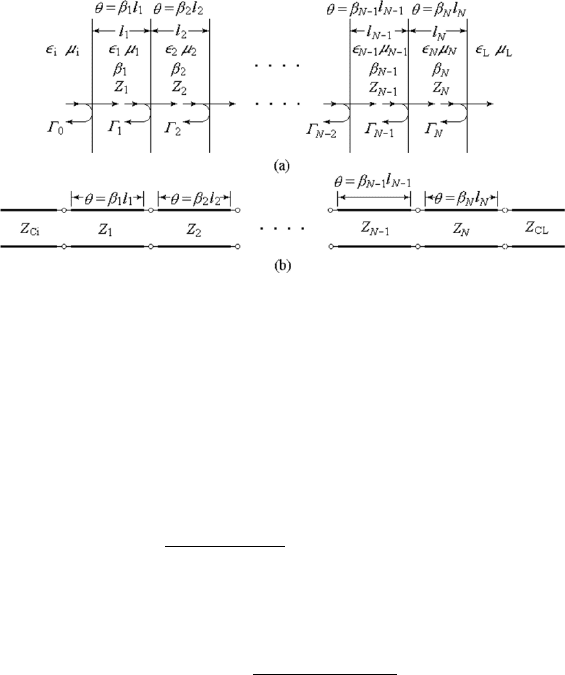
Figure 3.26: Reflection of wave at a number of reflection points.
where Z
Ci
, Z
CL
and Z
C
denote the characteristic impedances of the input
section, the output section, and the intermediate section.
The total reflection at the first plane is given by
Γ = Γ
0
+ T
0
Γ
1
T
0
0
e
−j2θ
+ T
0
Γ
1
Γ
0
0
Γ
1
T
0
0
e
−j4θ
+ T
0
Γ
1
Γ
0
0
Γ
1
Γ
0
0
Γ
1
T
0
0
e
−j6θ
+ ···
= Γ
0
+ T
0
T
0
0
Γ
1
e
−j2θ
¡
1 + Γ
0
0
Γ
1
e
−j2θ
+ Γ
02
0
Γ
2
1
e
−j4θ
+ Γ
03
0
Γ
3
1
e
−j6θ
+ ···
¢
= Γ
0
+ T
0
T
0
0
Γ
1
e
−j2θ
1
1 − Γ
0
0
Γ
1
e
−j2θ
.
Substituting the above relations among the reflection coefficients and the
transmission coefficients into this expression yields
Γ = Γ
0
+
¡
1 − Γ
2
0
¢
Γ
1
e
−j2θ
1 + Γ
0
Γ
1
e
−j2θ
. (3.198)
Under the small-reflection condition, |Γ
0
| ¿ 1 and |Γ
1
| ¿ 1, the terms of
the product of the reflection coefficients may be neglected, then the above
expression becomes
Γ ≈ Γ
0
+ Γ
1
e
−j2θ
. (3.199)
For an N-section transducer, there are N intermediate waveguides with
characteristic impedance Z
1
to Z
N
, and with the same electrical lengths
θ = β
n
l. There are N + 1 reflection planes between the input and output
waveguides. The reflection coefficients are denoted by Γ
0
to Γ
N
. See Fig. 3.26.
If each reflection plane satisfies the small-reflection condition, the expression
for the total reflection at the first reflection plane is given by
Γ =Γ
0
+Γ
1
e
−j2θ
+Γ
2
e
−j4θ
+ ···Γ
N−1
e
−j2(N−1)θ
+Γ
N
e
−j2Nθ
=
N
X
n=0
Γ
n
e
−j2nθ
,
(3.200)

3.7 Impedance Transducers 173
where Γ
n
denotes the reflection coefficient at the nth reflection plane,
Γ
n
=
Z
n+1
− Z
n
Z
n+1
+ Z
n
, n 6= 0, n 6= N, (3.201)
Γ
0
=
Z
1
− Z
Ci
Z
1
+ Z
Ci
, Γ
N
=
Z
CL
− Z
N
Z
CL
+ Z
N
. (3.202)
If the reflection coefficients are symmetric with respect to the center of
the transducer, i.e., Γ
0
= Γ
N
, Γ
1
= Γ
N−1
, Γ
2
= Γ
N−2
, ······, then (3.200)
becomes
Γ = e
−jNθ
n
Γ
0
£
e
jNθ
+ e
−jNθ
¤
+ Γ
1
h
e
j(N−2)θ
+ e
−j(N−2)θ
i
+ ···
··· + Γ
(N−1)/2
£
e
jθ
+ e
−jθ
¤
o
, n odd, (3.203)
Γ = e
−jNθ
n
Γ
0
£
e
jNθ
+ e
−jNθ
¤
+ Γ
1
h
e
j(N−2)θ
+ e
−j(N−2)θ
i
+ ···
··· + Γ
N/2
o
, n even. (3.204)
By applying the Eulerian formula, the above two expressions become:
Γ = 2e
−jNθ
[Γ
0
cos N θ + Γ
1
cos(N − 2)θ + ··· + Γ
n
cos(N − 2n)θ + ···
+
½
Γ
(N−1)/2
cos θ], n odd,
1
2
Γ
N/2
], n even.
(3.205)
This is the expression of the reflection coefficient of the multi-section trans-
ducer in the small-reflection approach. For the fitting of the frequency re-
sponse of the transducer, there are two design approaches, the Chebyshev
approach of an equal ripple response and the binomial approach of a flatness
response.
(1) The Binomial Transducer, The Flattest Response
Take the following binomial as the fitting function of an N-section transducer
Γ = A
¡
1 + e
−j2θ
¢
N
, i.e., Γ = A2
N
e
−jNθ
cos
N
θ. (3.206)
At the center of the band, cos θ = 0, θ = π/2, we have
∂
n
|Γ |
∂θ
n
¯
¯
¯
¯
θ=π/2
= 2
N
A
N!
(N − n − 1)!
sin θ cos
(N−n)
θ
¯
¯
¯
¯
θ=π/2
= 0, n = 0 to N − 1.
The reflection coefficient of the transducer at the center of the band will be
zero and the response will be most flat.

174 3. Transmission-Line and Network Theory for Electromagnetic Waves
When θ = 0, the intermediate sections do not exist and Γ will be the
reflection coefficient of the connector of a waveguide with Z
Ci
and a waveguide
with Z
CL
, so the constant A can be determined
Γ |
θ=0
= A2
N
=
Z
CL
− Z
Ci
Z
CL
+ Z
Ci
, A = 2
−N
Z
CL
− Z
Ci
Z
CL
+ Z
Ci
. (3.207)
Substituting it into (3.206) yields
Γ = 2
−N
Z
CL
− Z
Ci
Z
CL
+ Z
Ci
¡
1 + e
−j2θ
¢
N
. (3.208)
The expansion of the binomial
¡
1 + e
−j2θ
¢
N
is as follows:
¡
1 + e
−j2θ
¢
N
= C
N,0
+ C
N,1
e
−j2θ
+ C
N,2
e
−j4θ
+ ··· + C
N,n
e
−j2nθ
+ ···
+C
N,N−1
e
−j2(N−1)θ
+ C
N,N
e
−j2Nθ
,
where
C
N,n
=
n(N − 1) ···(N − n + 1)
n!
=
N!
(N − n)!n!
and C
N,n
= C
N,N−n
.
Then, we have
¡
1 + e
−j2θ
¢
N
= 2e
−jNθ
[C
N,0
cos N θ + C
N,1
cos(N − 2)θ + ···
+C
N,n
cos(N − 2n)θ + ···
+
½
C
N,(N−1)/2
cos θ], N odd,
1
2
C
N,N/2
], N even.
(3.209)
Substituting (3.209) into (3.208), and fitting the expression for Γ in the
small-reflection approach (3.205), we have
Γ = 2e
−jNθ
[Γ
0
cos N θ + Γ
1
cos(N − 2) θ + ··· + Γ
n
cos(N − 2n) θ + ···
+
½
Γ
(N−1)/2
cos θ ], n odd
1
2
Γ
N/2
], n even
=
Z
CL
− Z
Ci
Z
CL
+ Z
Ci
2
−N+1
e
−jNθ
[C
N,0
cos N θ + C
N,1
cos(N − 2)θ + ···
+C
N,n
cos(N − 2n)θ + ··· +
½
C
N,(N−1)/2
cos θ], N odd,
1
2
C
N,N/2
], N even.
(3.210)
Comparing the coefficients of the above equation, we have the reflection co-
efficient of each reflection plane Γ
n
,
Γ
n
=
Z
CL
− Z
Ci
Z
CL
+ Z
Ci
2
−N
C
N,n
=
Z
CL
− Z
Ci
Z
CL
+ Z
Ci
2
−N
N!
(N − n)!n!
. (3.211)
Then the characteristic impedance of each section can be determined by
means of (3.201)–(3.202).
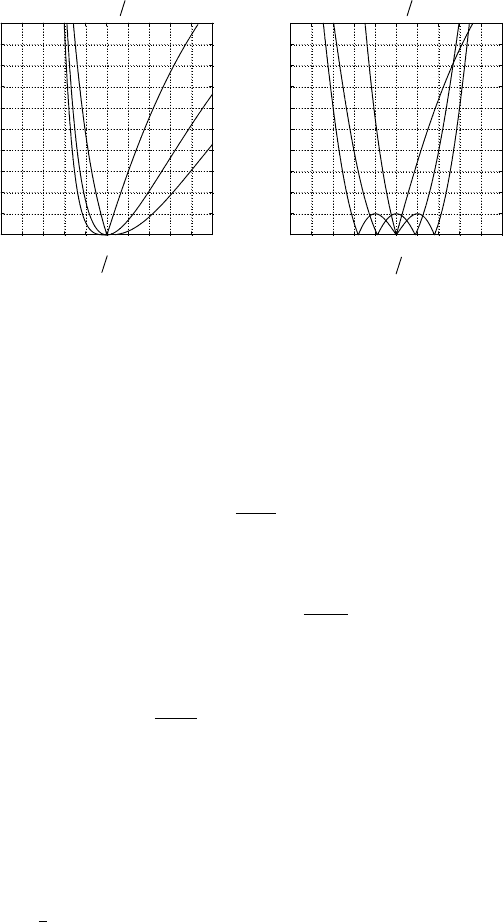
The frequency responses of binomial transducers with flat responses are
shown in Fig. 3.27(a). The bandwidth becomes wider when the number of
sections increases, and the flatness of the response remains unchanged.
3.7 Impedance Transducers 175
0.0 .2 .4 .6 .8 1.0 1.2 1.4 1.6 1.8 2.0
1.0
1.1
1.2
1.3
1.4
1.5
1.6
1.7
1.8
1.9
2.0
N = 1
U
(VSWR)
3
(a)
2
0
OO
3
C1C2
ZZ
0.0 .2 .4 .6 .8 1.0 1.2 1.4 1.6 1.8 2.0
1.0
1.1
1.2
1.3
1.4
1.5
1.6
1.7
1.8
1.9
2.0
2
3
(VSWR)
U
N = 1
0
OO
3
C1C2
ZZ
(b)
Figure 3.27: Frequency responses of binomial (a) and Chebyshev (b) trans-
ducers.
(2) The Chebyshev Transducer, The Equal-Ripple Response
For a Chebyshev design, the fitting function is given by
hT
N
µ
cos θ
p

,
where p is given in (3.194) and may be expressed as
p = cos φ, φ =
π
1 + q
. (3.212)
Then the fitting function becomes
hT
N
µ
cos θ
cos φ

= hT
N
(secφ cos θ).
Chebyshev polynomials include the terms in cos
n
θ, which can be expanded
into a series of cos nθ by means of the expansion given in (3.209):
cos
n
θ = 2
−n
e
−jnθ
(1 + e
j2θ
)
n
= 2
−n+1
[c
n0
cos nθ + c
n1
cos(n − 2) θ + ··· + c
nm
cos(n − m) θ + ···
+
½
C
n,(n−1)/2
cos θ], n odd,
1
2
C
n,n/2
], n even.
(3.213)
Therefor, the Chebyshev polynomials T
N
(secφ cos θ) can also be expanded
into a series of cos nθ, for example
T
1
(sec φ cos θ) = sec φ cos θ,
T
2
(sec φ cos θ) = 2 (sec φ cos θ)
2
− 1 = sec
2
φ cos 2 θ + tan
2
φ,

176 3. Transmission-Line and Network Theory for Electromagnetic Waves
T
3
(sec φ cos θ) = 4 (sec φ cos θ)
3
− 3 sec φ cos θ
= sec
3
φ cos 3 θ + 3 sec φ tan
2
φ cos θ,
T
4
(sec φ cos θ) = 8 (sec φ cos θ)
4
− 8 (sec φ cos θ)
2
+ 1
= sec
4
φ cos 4 θ + 4 sec
2
φ tan
2
φ cos 2 θ + tan
2
φ(3 sec
2
φ − 1),
······.
These expressions are used as the fitting functions of the reflection coefficient
expressed in (3.205). Let h = Ae
−jNθ
. This yields
Γ = Ae
−jNθ
T
N
(sec φ cos θ). (3.214)
When θ = 0, the intermediate sections do not exist and Γ will be the reflection
coefficient of the connector of a waveguide with Z
Ci
and a waveguide with
Z
CL
, so the constant A can be determined by
Γ |
θ=0
= AT
N
(sec φ) =
Z
CL
− Z
Ci
Z
CL
+ Z
Ci
, A =
Z
CL
− Z
Ci
Z
CL
+ Z
Ci
1
T
N
(sec φ)
. (3.215)
Substituting (3.205) into (3.214) and considering (3.215), we have the fitting
equation
Γ = 2e
−jNθ
[Γ
0
cos N θ + Γ
1
cos(N − 2) θ + ··· + Γ
n
cos(N − 2n) θ + ···
+
½
Γ
(N−1)/2
cos θ ], n odd
1
2
Γ
N/2
], n even
=
Z
CL
− Z
Ci
Z
CL
+ Z
Ci
1
T
N
(sec φ)
e
−jNθ
T
N
(sec φ cos θ). (3.216)
Comparing the coefficients of the above equation, we can have Γ
n
, the reflec-
tion coefficients of each reflection plane, then the characteristic impedance of
each section can be determined by means of (3.201)–(3.202).
The reflection coefficient reaches a maximum when T
N
(sec φ cos θ) = 1:
|Γ |
max
=
¯
¯
¯
¯
Z
CL
− Z
Ci
Z
CL
+ Z
Ci
¯
¯
¯
¯
1
T
N
(sec φ)
, i.e., T
N
(sec φ) =
¯
¯
¯
¯
Z
CL
− Z
Ci
Z
CL
+ Z
Ci
¯
¯
¯
¯
1
|Γ |
max
.
(3.217)
According to the definition of the Chebyshev polynomial (3.183), we have
T
N
(sec φ) = cos [N arccos(sec φ)].
Since sec φ ≥ 1, this becomes
T
N
(sec φ) = cosh[N arccosh(sec φ)], i.e., sec φ = cosh
·
1
N
arccoshT
N
(sec φ)
¸
.
Substituting (3.217) into it, yields
sec φ = cosh
·
1
N
arccosh
µ
Z
CL
− Z
Ci
Z
CL
+ Z
Ci
1
|Γ |
max
¶¸
.
Problems 177
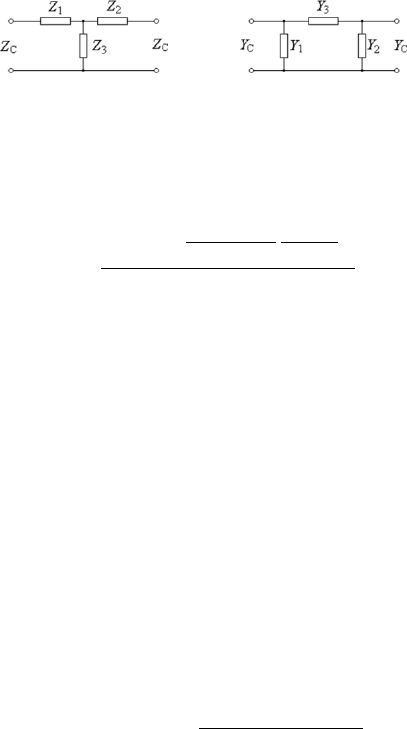
Figure 3.28: Problem 3.3. T and Π networks.
Hence
N =
arccosh
µ
Z
CL
− Z
Ci
Z
CL
+ Z
Ci
1
|Γ |
max

arccosh(sec φ)
. (3.218)
The relation among the bandwidth ratio q = (π − φ)/φ, the maximum re-
flection coefficient |Γ |
max
, and the number of sections or layers N is given
in (3.218). One of them is determined by (3.218) when the other two are
given. The frequency responses of Chebyshev transducers with equal-ripple
response are shown in Fig. 3.27(b).
Problems
3.1 For a lossy transmission line, the voltage and current along the line are
given in (3.8), (3.10) and (3.11). Show that the expression for the
impedance transformation is given by
Z(z
2
) = Z
C
Z(z
1
) + Z
C
tanh γl
Z
C
+ Z(z
1
) tanh γl
.
3.2 Show that the magnitude of the reflection coefficient for a lossy trans-
mission line changes along the line as |Γ (z)| = |Γ (0)|e
−2αz
, where α
denotes the attenuation coefficient of the line.
3.3 Find the (a) and (S) parameters of the T and Π networks given in
Fig. 3.28.
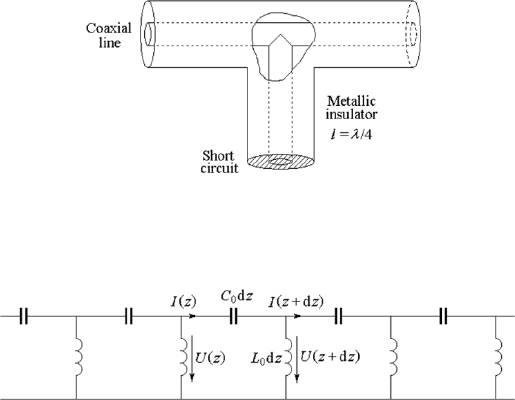
3.4 A metallic insulator for a coaxial line is shown in Fig. 3.29. The short-
circuit branch line does not influence the wave propagation through the
main line when the length of the branch line is just λ/4, and its input
impedance is ∞. Find the relative bandwidth of this structure if the
maximum allowed VSWR is 1.2.
178 3. Transmission-Line and Network Theory for Electromagnetic Waves
Figure 3.29: Problem 3.4. Metallic insulator.
Figure 3.30: Problem 3.7. Backward-wave structure.
3.5 Two equal admittances jB are parallel connected on a transmission line
with a characteristic impedance Z
C
and phase factor β = 2π/λ. The
distance between the two admittances is l. Show that the condition of
zero reflection is given by cot(2πl/λ) = BZ
C
.
3.6 A parallel resonant circuit of L, C, G is connected at the end of a
transmission line.
(1) Plot the loci of the input impedance and admittance at a fixed plane
on the line versus frequency on the Smith chart.
(2) Show how the loci change when the input plane moves.
3.7 Find the propagation coefficient β of a lossless transmission line which
consists of distributed series capacitances and shunt inductances as
shown in Fig. 3.30. Show that, in this structure, β decreases versus
frequency. This means that the wave in this structure is a backward
wave.
3.8 As exercises, try to do the basic applications of the Smith chart given in
Section 3.3.4 by setting up appropriate data,
Chapter 4
Time-Varying
Boundary-Value Problems
Wave equations and Helmholtz’s equations are three-dimensional vector par-
tial differential equations. In Chapter 2, the uniform plane waves are dis-
cussed, where the three-dimensional vector Helmholtz equations are reduced
directly to one-dimensional scalar differential equations. The telegraph equa-
tions given in Chapter 3 are also one-dimensional scalar differential equations.
The solutions of both equations are one-dimensional traveling-waves.
In general, There are three classes of electromagnetic field and wave prob-
lems: mixed problems, i.e., problems with given both boundary values and
initial values; initial-value problems, i.e., problems without boundary val-
ues; and boundary-value problems, i.e., problems without initial values. The
initial-value problem is the problem with boundary far enough from the in-
terested region of the problem, and the influence of the boundary value can
be neglected. The boundary-value problem is the problem with initial time
far enough before the interested time period of the problem, and the influ-
ence of the initial value is damped out and can be neglected. The problems
of steady-state sinusoidal electromagnetic oscillation and wave propagation
in bounded regions, which will be discussed in the next three chapters, are
boundary-value problems of Helmholtz’s equations.
In this chapter, the general solutions of the three-dimensional boundary-
value problems of time-varying fields are formulated. The three-dimensional
vector partial differential equations are to be reduced to three-dimensional
scalar partial differential equations and then, in an appropriate coordinate
system, reduced to three one-dimensional ordinary differential equations by
means of separation of variables. The ordinary differential equations with
given boundary conditions are finally solved. The problems become eigen-
value problems or Sturm–Liouville problems, and the general solution may
be expressed in terms of a set of orthogonal eigenfunctions.
180 4. Time-Varying Boundary-Value Problems
4.1 Uniqueness Theorem for
Time-Varying-Field Problems
For the solution of a boundary-value problem of Helmholtz’s equations,
the question is that what are the boundary conditions appropriate for the
Helmholtz’s equation so that a unique solution exists inside a bounded vol-
ume. If excessive boundary conditions are given, no solution can entirely
fit the conditions, i.e., the solution does not exist. If insufficient boundary
conditions are given, more than one set of solutions can fit the conditions,
i.e., the solution is not unique.
4.1.1 Uniqueness Theorem for the Boundary-Value
Problems of Helmholtz’s Equations
Theorem
In the steady sinusoidal time-varying state, in a volume of interest, V , sur-
rounded by a closed surface, S, refer to Fig. 4.1(a), if the following conditions
are satisfied, the solution of the complex Maxwell equations or Helmholtz’s
equations is unique.
1. The sources, namely the complex amplitude of the electric current den-
sity J and the equivalent magnetic current density J
m
are given every-
where in the given volume V , including the source-free problems, J = 0
and/or J
m
= 0.
2. The complex amplitude of the tangential component of the electric field
n ×E|
S
or the tangential component of the magnetic field n × H|
S
is
given everywhere over the boundary S of the given volume.
Proof
Suppose that two sets of complex vector functions, E
1
, H
1
, and E
2
, H
2
both
are solutions of the given boundary-value problem in a volume V bounded
by a closed surface S, and
∆E = E
1
− E
2
, ∆H = H
1
− H
2
,
denotes the difference functions.
The difference functions ∆E and ∆H must satisfy the complex Maxwell
equations, because both E
1
, H
1
and E
2
, H
2
satisfy Maxwell’s equations and
the Maxwell’s equations are linear equations. Then the difference functions
∆E, ∆H are sure to satisfy the complex Poynting theorem, which is derived