
Zhang K., Li D. Electromagnetic Theory for Microwaves and Optoelectronics
Подождите немного. Документ загружается.

1.2 Boundary Conditions 21
1.2.2 The Short-Circuit Surface
The free charges inside a conductor or on the surface of the conductor are
mobile in that they move when the slightest electric field exerts a force on
them until an electrostatic equilibrium state is reached. In such a state, no
charge remains inside the conductor and all charges reside on its surface.
The surface charges must be distributed so that no electric field exists inside
the conductor or tangentially to it’s surface, and the electric field outside the
conductor is normal to the conducting surface. The state of electrostatic equi-
librium itself is independent of the conductivity, but according to Maxwell’s
equations, the time required for approximate equilibrium, namely the relax-
ation time, is inversely proportional to the conductivity of the medium, as
can be seen in problem 1.2. This is the basis for distinguishing conductors
from insulators. If the conductivity of the medium is sufficiently large and
the relaxation time is sufficiently small that the approximate equilibrium is
achieved in a negligibly small time compared with the period of our experi-
ment, the medium is considered to be a conductor. On the contrary, if the
conductivity is sufficiently small and the relaxation time is sufficiently large
that the charges remain approximately motionless within the period of our
experiment, it is considered to be an insulator.
For time-varying fields, as we will see in Section 2.1.3, there are electric
fields as well as magnetic fields in the form of damping waves inside conductive
media. The time-varying electric and magnetic fields inside the conductor
vanish only when the conductivity of the conductor tends to infinity, σ → ∞,
which means the conductor is considered as a perfect conductor.
Consider a surface with the unit vector n directed outward from a perfect
conductor on one side into a nonconducting medium on the other side of
the boundary, see Fig. 1.4(b). The charges inside the perfect conductor are
assumed to be so mobile or the relaxation time is assumed to be so small that
charges move instantly in response to changes in the fields, no matter how
rapid. Then just as in the static case, there must be neither a time-varying
electric field nor electric charge inside the perfect conductor and the electric
field outside the perfect conductor must always be normal to the surface.
All the charges concentrate in a vanishingly thin layer on the surface of the
perfect conductor and produce the surface charge density ρ
s
. The correct
surface charge density is always produced in order to satisfy the boundary
condition (1.117),
n · D = ρ
s
,
and gives zero electric field inside the perfect conductor.
According to Maxwell’s equations, in isotropic medium it is not possible
to have a time-varying magnetic field alone without an electric field. So there
must be neither a time-varying magnetic field nor an electric current inside
the perfect conductor and the magnetic field outside the conductor must be
tangential to the surface. All the currents flow in a vanishingly thin layer and
become the surface current density J
s
on the surface of the perfect conductor.
22 1. Basic Electromagnetic Theory
The correct surface current density J
s
is always produced in order to satisfy
the boundary condition (1.116)
n × H = J
s
,
and gives zero magnetic field inside the perfect conductor.
Whereas only superconductors have infinite conductivity, it is a very good
approximation in many practical problems to treat good conductors as perfect
conductors in considering the fields outside the conductor.
In conclusion, the fields in medium 1, a perfect conductor, and medium
2, an insulator, are given by
E
1
= H
1
= D
1
= B
1
= 0,
E
2
= E, H
2
= H, D
2
= D, B
2
= B.
The boundary equations (1.115)–(1.118) become
n × E = 0, n ×H = J
s
, n · D = ρ
s
, n · B = 0.
This means
E
t
|
S
= 0, H
t
|
S
6= 0. (1.125)
We see that the tangential component of the electric field on the surface
of a perfect conductor is zero, which means that the tangential component
of the electric field satisfies the Dirichlet homogeneous boundary condition,
and the tangential component of the magnetic field is not zero. In analogy
with the short-circuit condition in circuit theory, this kind of surface is called
a short-circuit surface or electric wall. Any surface on which the tangential
component of the electric field is zero and the tangential component of the
magnetic field is not zero is recognized as an equivalent short-circuit surface.
1.2.3 The Open-Circuit Surface
On the contrary, any surface on which the tangential component of the mag-
netic field is zero and the tangential component of the electric field is not zero
can be considered as an equivalent open-circuit surface or magnetic wall.
In this case, there are equivalent surface magnetic charge %
ms
and equiva-
lent surface magnetic current J
ms
on the surface. The boundary equations
(1.119)–(1.122) become:
n × E = −J
ms
, n × H = 0, n · D = 0, n · B = ρ
ms
.
The boundary conditions for the tangential components of the electric and
magnetic fields on the open-circuit surface are
H
t
|
S
= 0, E
t
|
S
6= 0. (1.126)
1.2 Boundary Conditions 23
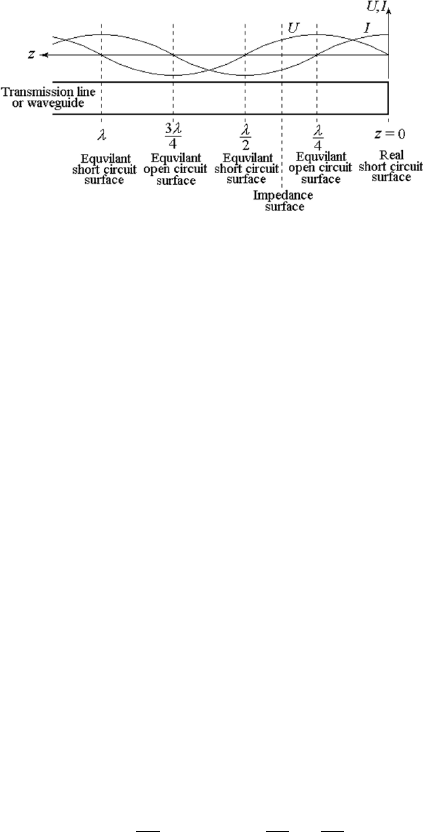
Figure 1.5: Short-circuit surface, open-circuit surface and impedance surface
on the shorted transmission line or waveguide.
The tangential component of the magnetic field on the surface of an open-
circuit surface is zero, but the tangential component of the electric field is
not zero. The open-circuit surface and the short-circuit surface are dual
boundary conditions.
There is no such material that can form a real short-circuit or open-circuit
surface. The good-conductor surface can be considered as an approximate
short-circuit surface. The boundary between vacuum or air and dielectrics
with sufficiently high permittivity can be considered as an approximate short-
circuit surface looking from the vacuum or air, and can be considered as an
approximate open-circuit surface looking from the high permittivity dielec-
tric. See section 6.8.
1.2.4 The Impedance Surface
In the general case, there is both a tangential component of the electric field
and a tangential component of the magnetic field on the surface. The ratio
of these two complex components is defined as the surface impedance Z
S
and
this kind of surface is called an impedance surface. The reciprocal of Z
S
is
the surface admittance Y
S
.
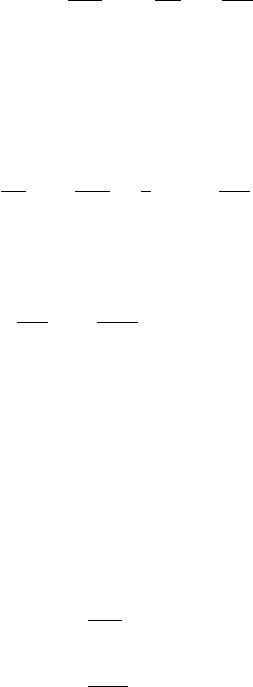
Z
S
=
E
t
H
t
, Y
S
=
1
Z
S
=
H
t
E
t
. (1.127)
As an example, we consider a shorted transmission line shown in Fig. 1.5.
There is a real short-circuit surfaces at the shorted end of the line and there
are equivalent short-circuit surfaces at multiples of λ/2 or even multiples of
λ/4 apart from the shorted end, which are electric field zeros and magnetic
field maximums. The equivalent open-circuit surfaces appear at odd multiples
of λ/4 apart from the shorted end, which are electric field maximums and
magnetic field zeros. Any cross section in between the short-circuit surface
and the open-circuit surface is an impedance surface.
24 1. Basic Electromagnetic Theory
1.3 Wave Equations
Maxwell’s equations are simultaneous vector differential equations of first
order, which describe the interactions between electric fields and magnetic
fields. The wave equations are derived from Maxwell’s equations, which give
the space and time dependence of each field vector and explain the wave
nature of the time-varying electromagnetic fields. The wave equations are
three-dimensional vector partial differential equations of second order.
1.3.1 Time-Domain Wave Equations
In homogeneous, non-dispersive, isotropic and linear media, i.e., simple me-
dia, ² and µ are constants. Taking the curl of (1.35), and substituting ∇×H
from (1.36), we obtain
∇ × ∇ × E = −µ²
∂
2
E
∂t
2
− µσ
∂E
∂t
− µ
∂J
∂t
.
The left-hand side may be expanded by using the following vector identity
(B.45)
∇ × ∇ × A = ∇(∇ · A) − ∇
2
A,
and substituting ∇ · E from (1.37), to give
∇
2
E − µσ
∂E
∂t
− µ²
∂
2
E
∂t
2
=
1
²
∇% + µ
∂J
∂t
. (1.128)
Similarly, by taking the curl of (1.36), using identity (B.45) and substi-
tuting ∇ × E and ∇ · H from (1.35) and (1.38), respectively, we have
∇
2
H − µσ
∂H
∂t
− µ²
∂
2
H
∂t
2
= −∇ × J . (1.129)
Equations (1.128) and (1.129) are the inhomogeneous generalized wave
equations in uniform simple medium. They are time-domain equations. On
the right-hand side, % and J are the true charge density and the true current
density, respectively, which are the sources of the fields. On the left-hand
sides, the second-order time-derivative terms are oscillating terms or wave
terms, and the first-order time-derivative terms are damping terms.
In the source-free region, in a medium with low conductivity, and for fast-
time-varying fields, % = 0, J = 0, and σ ≈ 0, equations (1.128) and (1.129)
become homogeneous wave equations
∇
2
E − µ²
∂
2
E
∂t
2
= 0, (1.130)
∇
2
H − µ²
∂
2
H
∂t
2
= 0. (1.131)

1.3 Wave Equations 25
On the contrary, in a medium with large conductivity, and for slow-time-
varying fields, the second-order derivative terms can be neglected, and (1.128)
and (1.129) become diffusion equations or heat transfer equations,
∇
2
E − µσ
∂E
∂t
= 0, (1.132)
∇
2
H − µσ
∂H
∂t
= 0. (1.133)
The solutions of diffusion equations are damping or decaying fields rather
than waves. They are known as slow-time-varying fields or quasi-stationary
fields. Circuit theory is well developed and applied for a quasi-stationary
state.
We therefore have two independent equations for the field E and for the
field H; however, E and H are inextricably related through Maxwell’s equa-
tions.
For a stationary state, the fields are independent of time. The wave
equations become Poisson’s equations, and the electric field and the magnetic
field are completely independent, without interaction. They can be discussed
separately.
1.3.2 Solution to the Homogeneous Wave Equations
In the following chapters of this book, we are going to explain a great variety
of waves step by step. At the beginning, we deal with the simplest example,
a one-dimensional solution of the time-domain homogeneous wave equation
in a nonconducting simple medium, which reveals the wave nature of the
electromagnetic fields and shows that, in space, the electromagnetic wave is
a transverse wave propagating with the velocity of light in free space, c, fully
consistent with Maxwell’s prophecy made more then one hundred years ago.
We begin with the homogeneous time-domain wave equations (1.130) and
(1.131) and the corresponding source-free Maxwell equations. Assume that
E and H are functions of z, one of the space coordinates, and of the time t
only, being independent of x and y, or constant on the plane of constant z.
This is the condition for a uniform plane wave. So we have that
∂
∂x
= 0,
∂
∂y
= 0,
∂
∂z
6= 0,
∂
∂t
6= 0.
The Maxwell equations (1.35) and (1.36) with σ = 0, % = 0, and J = 0
under the above condition are
∇ × E = −µ
∂H
∂t
−
ˆ
x
∂E
y
∂z
+
ˆ
y
∂E
x
∂z
= −µ
∂
∂t
(
ˆ
xH
x
+
ˆ
yH
y
+
ˆ
zH
z
),
∇ × H = ²
∂E
∂t
−
ˆ
x
∂H
y
∂z
+
ˆ
y
∂H
x
∂z
= ²
∂
∂t
(
ˆ
xE
x
+
ˆ
yE
y
+
ˆ
zE
z
).
26 1. Basic Electromagnetic Theory
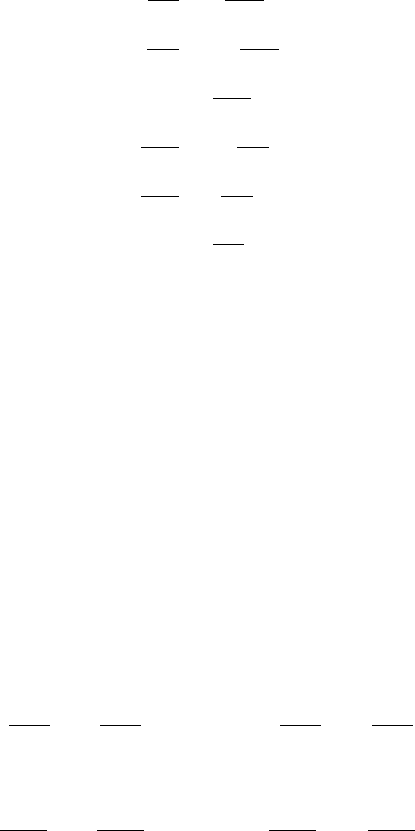
These two vector differential equations may be decomposed into the following
six scalar differential equations
∂E
y
∂z
= µ
∂H
x
∂t
, (1.134)
∂E
x
∂z
= −µ
∂H
y
∂t
, (1.135)
0 =
∂H
z
∂t
, (1.136)
∂H
y
∂z
= −²
∂E
x
∂t
, (1.137)
∂H
x
∂z
= ²
∂E
y
∂t
, (1.138)
0 =
∂E
z
∂t
. (1.139)
We see from (1.136) and (1.139) that E
z
and H
z
must be zero except possibly
for static parts, which are not of interest to us in the wave solution, so that
E
z
= 0, H
z
= 0. (1.140)
This means that the uniform plane wave must be a transverse wave or so-
called TEM wave, both the electric field and the magnetic field have only
transverse components perpendicular to the direction of propagation z. Note
that the electromagnetic wave is not necessarily a transverse wave, they may
have longitudinal field components in a variety cases.
We see that there are only E
x
and H
y
in (1.135) and (1.137), and that there
are only E
y
and H
x
in (1.134) and (1.138). They become two independent
sets of equations. The electric field and the magnetic field are perpendicular
to each other in each set of equations. We can deal with one set, for example,
the equations containing E
x
and H
y
, (1.135) and (1.137).
Take the derivative of (1.135) with respect to z and use (1.137) to elimi-
nate H
y
on the right-hand side and thus obtain
∂
2
E
x
∂z
2
− µ²
∂
2
E
x
∂t
2
= 0 or
∂
2
E
x
∂z
2
= µ²
∂
2
E
x
∂t
2
. (1.141)
Similarly, we can have the equation for H
y
:
∂
2
H
y
∂z
2
− µ²
∂
2
H
y
∂t
2
= 0 or
∂
2
H
y
∂z
2
= µ²
∂
2
H
y
∂t
2
. (1.142)
These equations are one-dimensional scalar homogeneous wave equations.
Equation (1.141) is a partial differential equation of second order. A gen-
eral solution to it must contain two independent solutions. A direct treatment
of the equation to yield a general solution is not easy. We try to give the
solution by investigating the special property of the equation. We find that

1.3 Wave Equations 27
the second-order derivatives with respect to z of the function satisfying this
equation must equal the second-order derivatives with respect to t of the
function multiplied by the constant µ². Suppose that the function E
x
with
respect to t is,
E
x
(t) = Ef (t). (1.143)
Then, the following function will b e the solution of the wave equation for
electric field (1.141):
E
x
(z, t) = Ef(t ∓
√
µ²z).
This may be verified by differentiating it with respect to z and to t:
∂
2
∂z
2
E
x
(z, t) = E
∂
∂z
[∓
√
µ²f
0
(t ∓
√
µ²z)] = µ²Ef
00
(t ∓
√
µ²z),
∂
2
∂t
2
E
x
(z, t) = Ef
00
(t ∓
√
µ²z).
The primes in the formula denote the total derivatives with respect to the
variable t ∓
√
µ²z. It shows that (1.141) is satisfied. Rewrite the solutions in
the form of two independent terms, we have
E
x
(z, t) = E
+
f(t −
√
µ²z) + E
−
(t +
√
µ²z). (1.144)
The meaning of the first term, E
+
f(t −
√
µ²z), is that the value of the
function at position z and time t equals the value at position z + ∆z and time
t +
√
µ²∆z. In other words, at the time t, the function has a particular value
at z, and after a time interval ∆t =
√
µ²∆z, the above-mentioned value of the
function appears at z + ∆z. This is just a wave-propagation phenomenon or
so-called traveling wave, i.e., a disturbance propagates along z, see Fig. 1.6.
The direction of propagation is +z and the velocity of propagation is defined
as
v
p
=
∆z
∆t
=
∆z
√
µ²∆z
=
1
√
µ²
. (1.145)
This velocity is the velocity of propagation of a certain phase of the distur-
bance, and is called the phase velocity. In vacuum,
v
p
=
1
√
µ
0
²
0
= c. (1.146)
The second term of the solution, E
−
f(t +
√
µ²z) represents a wave prop-
agating along −z with the same phase velocity. Constants E
+
and E
−
rep-
resent the amplitudes of the two opposite traveling waves.
Substituting the solution of E
x
, (1.144), into (1.135) we have the solution
of H
y
:
−µ
∂H
y
∂t
=
∂E
x
∂z
= −
√
µ²E
+
f
0
(t −
√
µ²z) +
√
µ²E
−
f
0
(t +
√
µ²z).
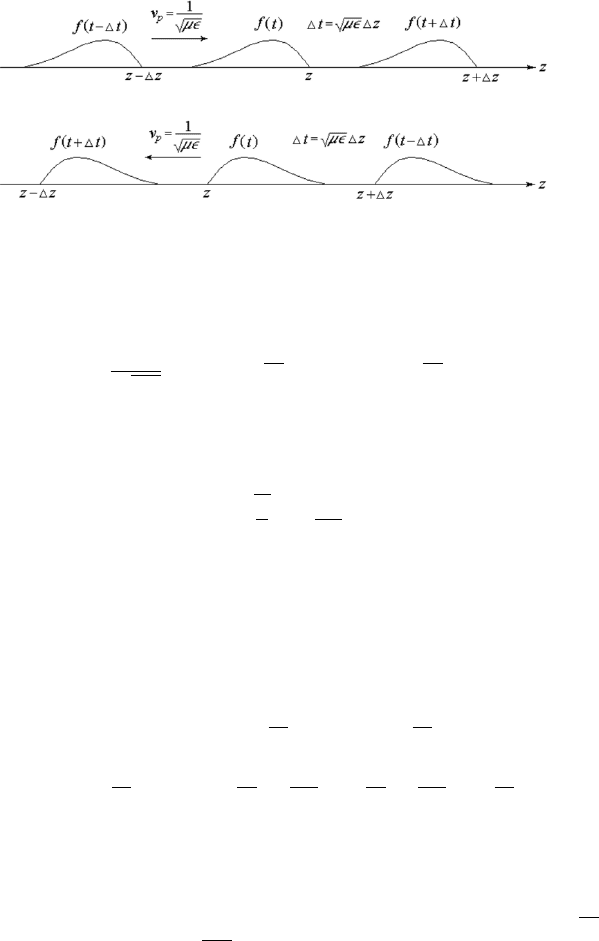
28 1. Basic Electromagnetic Theory
Figure 1.6: Traveling waves propagating along +z and −z.
Integrating this expression with respect to t, gives
H
y
(z, t) =
1
p
µ/²
[E
+
f(t −
√
µ²z) − E
−
f(t +
√
µ²z)]. (1.147)
We are not interested in static solutions, so the constant of integration is
ignored.
The ratio of E
x
to H
y
is
η =
r
µ
²
= ±
E
x
H
y
, (1.148)
where η denotes the wave impedance of plane wave, the unit of which is ohm
(Ω). In the right-hand coordinate system, the ratio of E
x
to H
y
of a wave in
the +z direction is +η, whereas the ratio of E
x
to H
y
of a wave in the −z
direction is −η. It depends upon the relations among the choice of coordinate
system, the positive directions of the fields, and the propagation.
In conclusion, the fields E
x
and H
y
of a uniform plane wave are
E
x
(z, t) = E
+
f
³
t −
z
v
p
´
+ E
−
f
³
t +
z
v
p
´
, (1.149)
H
y
(z, t)=H
+
f
³
t−
z
v
p
´
+H
−
f
³
t+
z
v
p
´
=
E
+
η
f
³
t−
z
v
p
´
−
E
−
η
f
³
t+
z
v
p
´
. (1.150)
This is a linear polarized uniform plane wave with the electric field in the
x direction, called a x-polarized wave. Dealing with (1.134) and (1.138), we
can have another linear polarized uniform plane wave with E
y
and H
x
, called
the y-polarized wave. All of them are TEM waves, with field components
perpendicular to each other. The phase velocity of a TEM wave is 1/
√
µ²,
and the wave impedance is
p
µ/².
In this section, the uniform plane wave of an arbitrary time dependence
is described. The sinusoidal time-dependent plane wave will be introduced
in Chapter 2 by solving frequency-Domain Wave Equations or so called
Helmholtz’s equations given in the next section.
1.3 Wave Equations 29
1.3.3 Frequency-Domain Wave Equations
For steady-state sinusoidal time-dependent fields, the wave equations in com-
plex form are derived from the complex Maxwell equations (1.66)–(1.69).
They can also be obtained by the following substitutions in (1.128)–(1.133),
∂
∂t
→ j ω,
∂
2
∂t
2
→ −ω
2
.
Then we obtain complex equations or frequency-domain equations.
The inhomogeneous generalized complex wave equations in conductive
medium are
∇
2
E − j ωµσE + ω
2
µ²E =
1
²
∇ρ + j ωµJ, (1.151)
∇
2
H − j ωµσH + ω
2
µ²H = −∇ × J. (1.152)
Let
k
2
= ω
2
µ² − j ωµσ, (1.153)
then equations (1.151) and (1.152) become
∇
2
E + k
2
E =
1
²
∇ρ + j ωµJ, (1.154)
∇
2
H + k
2
H = −∇ × J. (1.155)
In the source-free region, ρ = 0 and J = 0, they become homogeneous
generalized complex wave equations
∇
2
E + k
2
E = 0, (1.156)
∇
2
H + k
2
H = 0. (1.157)
In low-conductivity media and in the high-frequency range, σ ¿ ω², we
have
k
2
= ω
2
µ². (1.158)
Equations (1.154)–(1.157) become complex wave equations and equations
(1.156), (1.157) are well known as Helmholtz’s equations.
In high-conductivity media and in the low-frequency range, σ À ω², we
have
k
2
= −j ωµσ. (1.159)
Equations (1.154)–(1.157) become complex diffusion equations.
It should be noted that the time-domain wave equations are suitable only
for vacuum or non-dispersive media, but the frequency-domain complex wave
equations are suitable for dispersive media, while the p ermittivity and the
permeability are functions of frequency. For the media with polarization or
magnetization loss, the permittivity or the permeability are complex, ˙² or ˙µ,
respectively.
The time-domain wave equations and the frequency-domain wave equa-
tions given in this section are only applicable for homogeneous, linear and
isotropic media. The wave equations for anisotropic media will be discussed
in Chapter 8.

30 1. Basic Electromagnetic Theory
1.4 Poynting’s Theorem
The energy conservation relation for electromagnetic fields is derived directly
from Maxwell’s equations and is known as Poynting’s theorem.
1.4.1 Time-Domain Poynting Theorem
The vector identity (B.38) shows that
∇ · (E × H) = H · (∇ × E ) − E · (∇ × H). (1.160)
Substituting the two curl equations (1.107) and (1.108) into the right-hand
side of the above identity and using A · A = A
2
, yields
−∇ · (E × H) = E ·
∂D
∂t
+ H ·
∂B
∂t
+ σE
2
+ E · J + H · J
m
. (1.161)
This may be integrated over a volume V bounded by a closed surface S.
Applying the divergence theorem, we get
−
I
S
(E × H)· dS =
Z
V
µ
E ·
∂D
∂t
+H·
∂B
∂t
+ σE
2
+ E ·J +H·J
m

dV. (1.162)
Equations (1.161) and (1.162) are the instantaneous or time-domain Poynting
theorem in derivative form and in integral form, respectively.
For non-dispersive isotropic media, D = ²E, B = µH, the permittivity
and the permeability are constant scalars, independent of time t, we have
∂
∂t
E · D
2
=
1
2
E ·
∂D
∂t
+
1
2
∂E
∂t
·D =
1
2
E ·
∂²E
∂t
+
1
2
∂E
∂t
·²E = E ·
∂D
∂t
= D ·
∂E
∂t
,
∂
∂t
H·B
2
=
1
2
H·
∂B
∂t
+
1
2
∂H
∂t
·B =
1
2
H·
∂µH
∂t
+
1
2
∂H
∂t
·µH = H·
∂B
∂t
= B·
∂H
∂t
.
For non-dispersive anisotropic media, D = ² · E, B = µ · H, the permit-
tivity and the permeability are constant tensors, also independent of time t,
yields
∂
∂t
E · D
2
=
1
2
E ·
∂D
∂t
+
1
2
∂E
∂t
· D =
1
2
E · ² ·
∂E
∂t
+
1
2
∂E
∂t
· ² · E, (1.163)
∂
∂t
H · B
2
=
1
2
H ·
∂B
∂t
+
1
2
∂H
∂t
· B =
1
2
H · µ ·
∂H
∂t
+
1
2
∂H
∂t
· µ · H. (1.164)
Applying vector and tensor identity A · a · B = B · a
T
· A (E.44) to
the above formulae, and for reciprocal anisotropic media, The constitutional
tensors are symmetric tensors, a = a
T
, we have,
∂
∂t
E · D
2
= E ·
∂D
∂t
= D ·
∂E
∂t
,
∂
∂t
H · B
2
= H ·
∂B
∂t
= B ·
∂H
∂t
.