
Brown R. Society and Economy in Modern Britain 1700-1850
Подождите немного. Документ загружается.

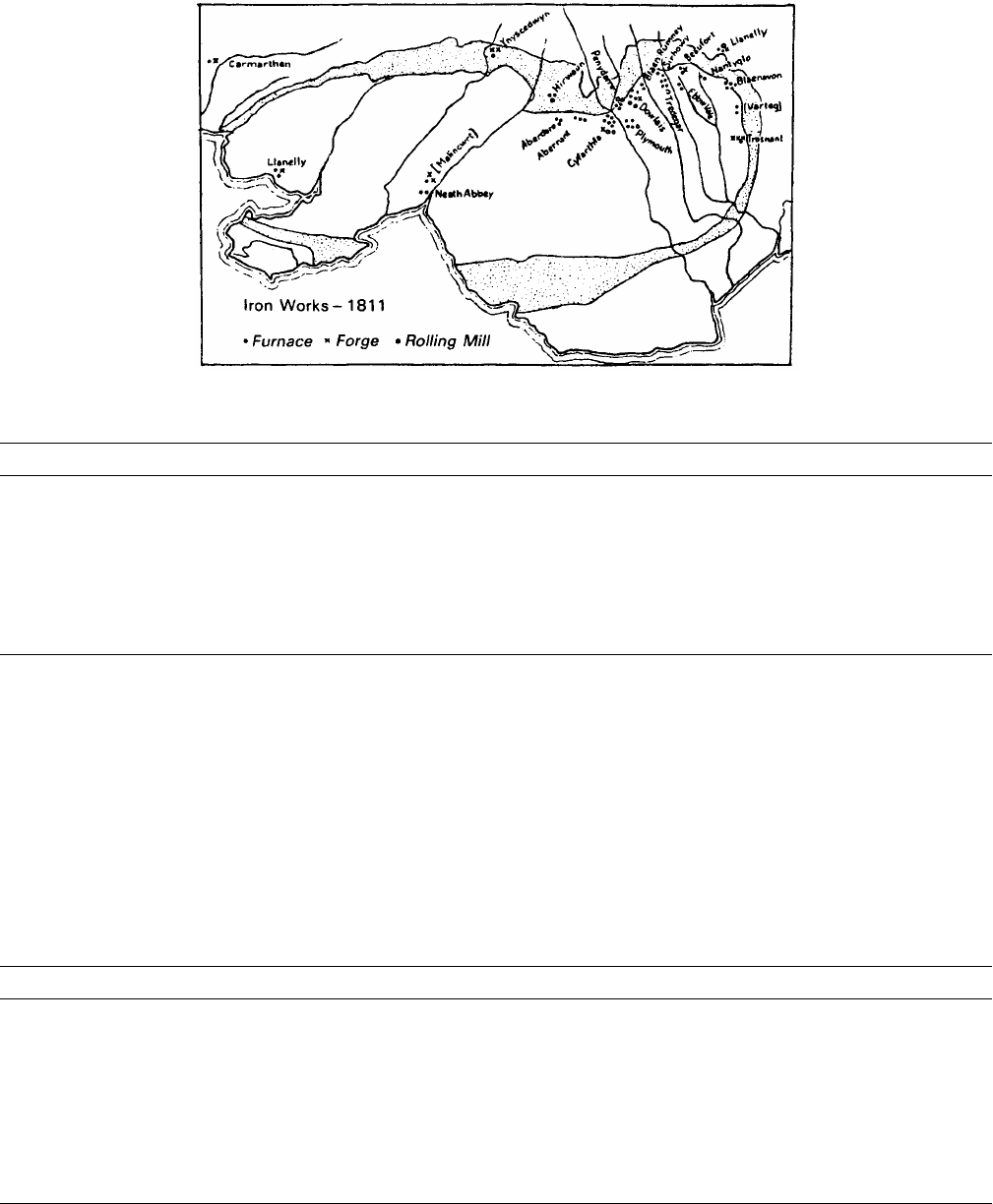
Table 5.7 The growth of the South Wales iron industry
Furnaces Output in tons
1788 8 8,200
1796 23 33,593
1811 53 182,325
1823 72 277,643
1830 113 354,919
1840 134 505,000
1848 192 631,280
Source: A.H.John The Industrial Development of South Wales 1750–1850, Cardiff, 1950, p. 192.
Growth
In 1700 pig-iron production was about 20,000 tons and until the 1760s iron output rose slowly by about 0.6 per cent per year.
144,000 tons of iron was imported between 1700 and 1759 and domestic production came mainly from areas that had been
important in 1700: the Weald, Forest of Dean, the Birmingham area, north Staffordshire, Nottingham and south Yorkshire.
After this growth was more rapid.
War stimulated growth in the late 1770s and early 1780s and between 1793 and 1815. Ninety-two per cent of production
was concentrated in Shropshire, Staffordshire, Yorkshire, South Wales and Scotland in 1806. Even so, in 1812 iron and steel
comprised only 9.2 per cent of total industrial output compared to the 29 per cent of cotton, wool, linen and
Table 5.8 British pig-iron output 1760–1850
000 tons
1760 30
1785 50
1796 125
1806 244
1823 455
1830 677
1840 1,400
1850 2,200
Source: P.Riden ‘The Output of the British Iron Industry before 1870’, Economic History Review, Second Series, 30, pp. 443, 448 and
455.
Figure 5.3 Ironworks in South Wales in 1811
Source: W.Rees An Historical Atlas of Wales, Faber, 1951, plate 66.
56 SOCIETY AND ECONOMY IN MODERN BRITAIN 1700–1850

Table 5.9 Growth in real output in iron—percentage per year
1760–70 1.65
1770–80 4.47
1780–90 3.79
1790–1801 6.48
1801–11 7.45
1811–21 –0.28
1821–31 6.47
Source: As Table 5.8.
silk. Negative growth between 1811 and 1821 can be accounted for by the fall in demand after 1815.
Iron in use
Iron became the basic constructional material for machinery, replacing wood; for example John Smeaton specified it in 1754
for the main shaft of a windmill and Abraham Darby III (1750–89), who continued the Coalbrookdale dynasty, demonstrated
its structural possibilities with his iron bridge in 1779. This applied to agricultural as well as industrial machinery. Iron rails were
first used at Coalbrookdale in 1767. John Wilkinson built an iron boat in the 1780s, used iron pipes for water in Paris and was
buried in an iron coffin. Lord Liverpool even suggested iron pavements to stimulate demand at slack times. The railway
‘manias’ of the 1830s and 1840s increased demand for building lines, stations, bridges and locomotives. An American
commentator wrote in 1835 of the puddled iron of the English and Welsh furnaces that
All countries throughout the world must get their railway iron from
England where it is manufactured so rapidly and so perfectly that it is useless to pretend to compete with this branch of
industry…
The bulk of increased output went into the domestic market before 1830. From the 1830s exports of heavy iron rails went to
Germany, France, Belgium, America, Russia, India and Australasia where British contractors and engineers played a leading
role in developing railways. Iron and steel were exported as finished goods ranging from pins, nails, chains, cutlery and
hardware of all kinds to machinery.
Steel
Sheffield was the centre of British steel production between 1700 and 1850, though there were secondary centres round
Newcastle. Until 1740 ‘blister’ steel was produced using the cementation process in which bar iron was heated with charcoal
in closed clay pots in a coal-fired furnace. To produce fine-edged tools it was reheated and hammered to form shear steel.
This failed to produce steel of reliable quality. In about 1740 Benjamin Huntsman developed the ‘crucible’ process, which
produced a better-quality steel but was very slow. Both blister and crucible steel continued to be produced throughout the
eighteenth century and its cost ensured that it was only used for small articles requiring a high degree of hardness or
sharpness. Cheap steel was a development of the second half of the nineteenth century.
Historians have placed their emphasis upon iron and this obscures the importance of non-ferrous metals. By 1850 Britain was
producing 75 per cent of the world’s copper, 60 per cent of the tin and half the world’s lead. Many of the technological
changes later used in ironmaking had their origins in the mining and smelting of these metals. The use of coal in reverberatory
furnaces was pioneered in the non-ferrous metals. Savery and Newcomen developed their pumping engines to drain the tin
and copper mines of Devon and Cornwall. High-pressure engines were pioneered in Cornwall by Trevithick and Woolf.
COAL
In 1837 J.R.McCulloch wrote in his History of Commerce that
The mineral riches of Great Britain, if not superior, are at least equal to those of any other country. We cannot, it is true,
boast of gold or silver, but we possess that which is of still more importance to a manufacturing nation, an all but
inexhaustible supply of the most excellent coal.
THE REVOLUTION IN TECHNOLOGIES—INDUSTRIAL CHANGE 57
Coal production
33
had been growing throughout the eighteenth century as it replaced charcoal in a range of activities—salt
and sugar refining, brewing, brick, tile and pottery manufacture, soap and glass-making and in the non-ferrous trades as well
as for domestic heating. British coal output was about 2.5 million tons and in 1700 was produced in several areas of Britain in
generally small mines. Around Bristol there were only 123 colliery workers, including carriers, in more than 70 pits at
Kingswood in 1684. The largest mines were found in north-east England and the dominance of this area is reflected in its
shipping of 800,000 tons of coal in 1690, much of it to London.
Technology and growth
During the eighteenth and early nineteenth centuries coal output increased. From under 3 million tons in 1700 output rose to
10 million tons in 1800 and to over 50 million by 1850. This increase reflected increased demand from industry, particularly
after 1760, when canals cut transportation costs and of the resolution of important technical difficulties. Large-scale mining
created problems, particularly with drainage. The Newcomen pumping engine was quickly adopted by mine-owners and, despite
its high fuel consumption which was not a major problem on coalfields, it remained the major steam engine used throughout
Britain until well into the nineteenth century. Only in the bigger collieries were the more reliable Boulton and Watt engines
purchased.
The greater depth of shafts increased the problems of ventilation, lighting, underground transport and of maintaining
tunnels. Accumulations of ‘chokedamp’ and ‘firedamp’ were major problems for miners. Crude furnace ventilation, used to
course fresh air through the workings, was still commonly used until the 1840s. Experiments had been made with airpumps
and fans like that developed by John Buddle in the first decade of the century but costs limited their use to the larger mines.
Candles were generally used for lighting and often ignited the explosive ‘firedamp’. They continued to be used despite the
invention of ‘safety-lamps’ in the mid-1810s by Sir Humphrey Davy, George Stephenson and George Clanny. Maintaining
tunnels was expensive and it was often cheaper to dig a new shaft than to extend old ones. But the chief cost for colliery
owners was moving coal from the coal face to its markets. Horse-gins for winding coal to the surface remained common
though Watt’s rotative engine began to be used from the 1790s. But by 1850 coal was still being raised in most areas either in
free-swinging baskets or on the backs of men and boys— the use of women and children underground had been made illegal
by the Mines Act of 1842. The coal industry was never technically distinguished apart from its limited use of the steam
engine. Coal remained a labour-intensive ‘pick and shovel’ industry where growing demand was satisfied by increasing the
size of the labour force. The number of miners in Great Britain increased from 118,000 to 219,000 between 1841 and 1851 to
allow output to rise from 33.7 to 49.4 million tons—a fall in output from 285 to 225 tons per person per year.
Reducing costs
It was the construction of canals on a nationwide scale that enabled the coal industry to meet growing market demand after
1760. Between 1758 and 1801 Parliament sanctioned 165 canal schemes of which 90 were primarily intended for the
movement of coal. Transport costs were reduced to as little as 0.25 pence per ton per mile
34
. The use of all coalfields was
extended. In central Scotland, the growth of Glasgow led to the construction of the Monksland canal to the Lanarkshire
coalfield in 1793. Large-scale mining in South Wales came with the opening of four great canals into the valleys between
1794 and 1799.
Canals liberated the economy from dependence on water for power since industry could now be built on or adjacent to
coalfields. Arthur Young wrote in 1791 that ‘all the activity and industry of this kingdom is fast concentrating where there are
coal pits’.
Growth and demand
The growth of the coal industry up to 1800 should not be exaggerated. Coal output may have increased fourfold between 1700
and 1800 but it was to multiply twenty times in the next century (Table 5.10).
Table 5.10 Growth in real output in coal—percentage per year
1700–60 0.64
1760–70 2.19
1770–80 2.48
1780–90 2.36
1790–1801 3.21
1801–11 2.53
58 SOCIETY AND ECONOMY IN MODERN BRITAIN 1700–1850
1811–21 2.76
1821–31
3.68
Source: N.Crafts British Economic Growth during the Industrial Revolution, Oxford University Press, 1985, p. 23.
The early nineteenth-century industry was still largely concerned with traditional domestic and industrial markets. South
Wales provided coal for its ironmasters and Durham and Northumberland still provided coal for London. Despite the
development of canals, accessibility was of prime importance and until the mid-nineteenth century the coastal coalfields
maintained their advantage over those inland. Railways opened up these inland areas and brought a measure of unity to an
industry which had previously been distinguished by its diversity.
Demand for coal from domestic users increased after 1800. The iron industry was a large customer but it was the expansion
of the railway network that provided a new and enormous market for steam coal. The continuing growth of the industrial
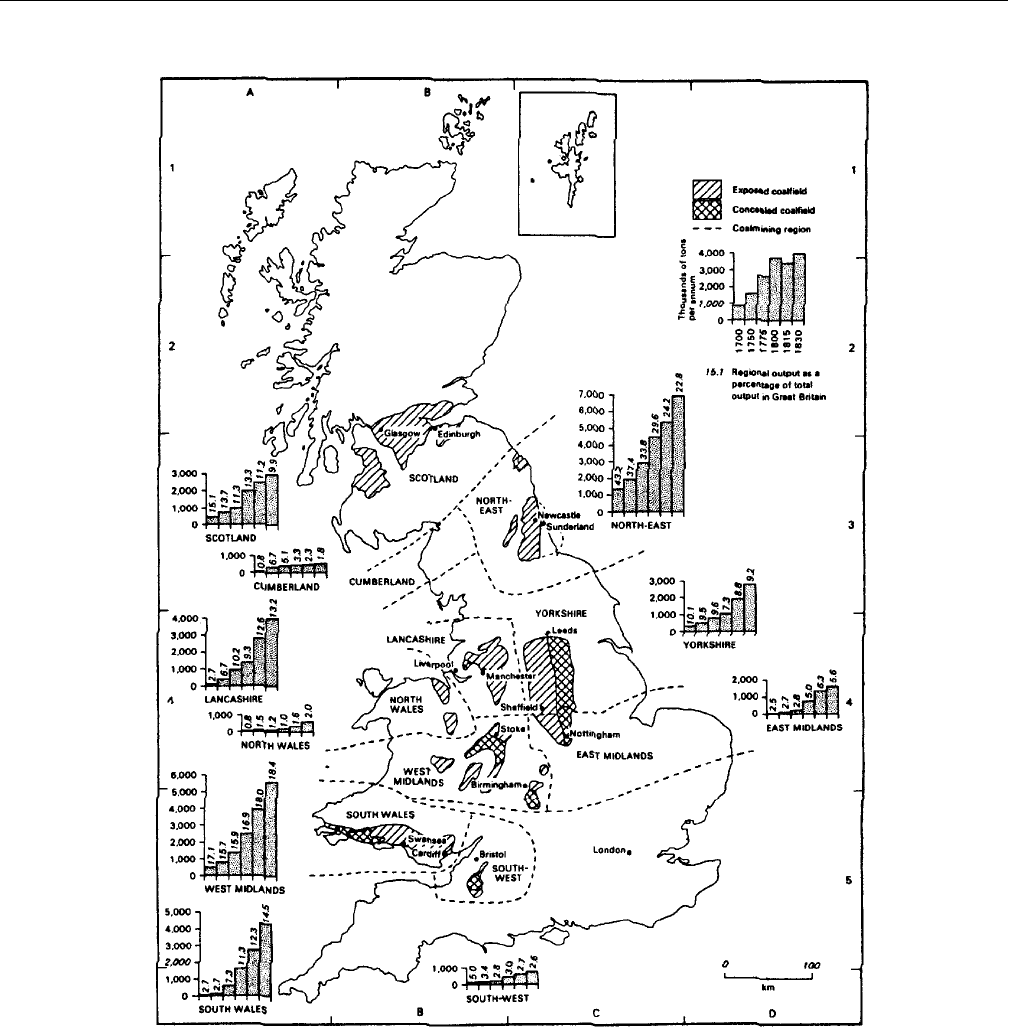
Figure 5.4 The eighteenth-century coal industry
Source: R.Pope (ed.) Atlas of British Social and Economic History since c. 1700, Routledge, 1989, p. 69.
THE REVOLUTION IN TECHNOLOGIES—INDUSTRIAL CHANGE 59

economy, driven by steam, also extended markets and such enterprises as Bute Dock, built in Cardiff in 1839, opened up the
export trade. The north-east coast gradually lost pre-eminence to South Wales, at first in the more accessible Aberdare valleys
and later in the Rhondda. Increasingly the export trade came to dominate production. In 1830, 500,000 tons, about 2 per cent
of output, was exported. This had risen to 4 million tons in 1855, and by 1860 10 per cent of coal output was exported: the
basis of Britain’s mid-century growth and dominance.
POWER—WIND, WATER AND STEAM
The stationary steam engine has often been regarded as the single most important invention underlying British
industrialization. Technically the steam engine was seen as ‘prime mover’; that is, it supplied the energy to work the machines
which in turn produced the consumer goods. An exhaustible energy resource, it could be argued, would hamper
industrialization across many sectors. Historically the concentration by historians like Rostow on the late eighteenth century has
implied a concentration on the steam engine of James Watt which improved on the earlier engines of Thomas Savery and
Thomas Newcomen. This view does, however, neglect the importance of developments in steam before 1780 and technical
improvements to existing power sources.
35
The steam engine was developed when it was no longer possible to cope with expanding needs by traditional means. Deeper
mining led to an enormous increase in the power needed to keep them dry. In 1702 one Warwickshire colliery was using 500
horses for this purpose. The response was the first commercially successful steam-atmospheric engine developed by Thomas
Newcomen between 1708 and 1712. It was quickly adopted by collieries and was too inefficient and too costly in fuel to be
used widely elsewhere though the high value of tin and lead meant it was used in Cornwall and Derbyshire. By the 1750s demand
for power was again seriously straining available resources. This was clearly reflected in the strong interest which arose at
that time in the improvement of prime movers. John Smeaton applied scale-model techniques to improve the design of both
waterwheels and windmills. This marked the beginning of a long series of advances in design and construction that brought
the waterwheel to virtual perfection by 1830. The windmill was improved by the addition of a fantail mechanism in 1745, the
increased use of cast-iron working parts and the development of adjustable sails. Smeaton also brought the Newcomen engine
to about the limit of its potential (75 horsepower in the 1770s). But it was not adaptable to drive machinery directly but was
frequently installed to pump water to supply a waterwheel for that purpose. James Watt improved on the Newcomen engine in
two important respects. In the mid-1760s he developed a ‘separate condenser’ which reduced the fuel consumption of the
pumping engine. Secondly, he designed the first effective rotative engine in which the motion of the engine could be
communicated directly to machinery—he took out a patent on the ‘sun and planet gear’ in 1781, a double-acting engine in
1782, centrifugal governor in 1788 and steam engine indicator in 1796.
Just how dramatic was the impact of the steam engine and how did this compare with other forms of power? The speed of
diffusion of the Boulton and Watt engines was not as great as historians originally believed. In Lancashire and Cornwall,
where steam power was being most rapidly introduced, Boulton and Watt engines accounted for no more than 35 per cent of
the total in 1800. It is possible to explain this in the following ways. First, the Newcomen engine remained the most important
if not most cost-efficient pumping machine on many coalfields until the 1840s. Secondly, the Watt engine was applied to
machines that already existed and which had been driven by water. Mill-owners or ironmasters had to consider whether the
cost of installing a steam engine or replacing their existing Newcomen machine was economically justifiable. Thirdly, most
workshops were small concerns where installing steam could also prove too expensive given Watt’s control of the market
through his patents until 1800. Watt’s engine had made striking advances in powered mule-spinning and also to carding,
printing and bleaching but its impact elsewhere was more limited. Steam engines were vastly outnumbered by waterwheels
and the great majority of manufactures were still handicrafts.
It was only in the long term that industry was freed from its dependence on water power. J.P.Harris has estimated
conservatively that there were about 1,200 steam engines of all kinds in operation in 1800.
36
These produced less than 20,000
horsepower of which Watt’s engines may have contributed 12,500 hp. After 1800 the application of steam engines to textiles,
particularly spinning, accounted for their rapid diffusion. By 1924 there were about 5,000 engines generating 100,000 hp in
industry and mining and by 1850 300,000 hp was generated in industry alone. Factory inspectors’ returns can be used
cautiously to indicate the balance between steam and water power in cotton and woollen and worsted industries. Water power
provided 36 per cent of all power used in the textile industry in 1838 and it was still 19 per cent in 1850.
The quantity of steam power therefore increased after 1800 though as von Tunzelmann argues
Table 5.11 Horsepower used in textile factories
Year Cotton Woollen and Worsted
Steam Water Steam Water
1838 46,826 17,389 17,389 10,405
60 SOCIETY AND ECONOMY IN MODERN BRITAIN 1700–1850

Year Cotton Woollen and Worsted
Steam Water Steam Water
1850 71,005 11,500 23,345 10,314
Source: A.E.Musson The Growth of British Industry, Batsford, 1978, p. 112.
Apart from the application of the steam engine to locomotive and shipping purposes…the most important ‘spin-off’ of
the steam engine so far as manufacturing industry was concerned did not come until forty to sixty years into the
nineteenth century.
37
Concentration on diffusion in cotton has led historians to overestimate the extent to which steam was applied to other
industries. It was not until the diffusion of high-pressure stationary engines after 1840 that there was a substantial reduction in
fuel costs and an increase in the speed at which machines could be run. This was not possible until accurate and reliably
engineered machines had been developed. The fullest application of steam power had to wait until an engineering industry
had evolved. The view that Watt revolutionized industrial production after 1780 is broadly correct but the point at which that
revolution occurred is much later than the classic period of ‘take-off’.
CONCLUSIONS
The traditional emphasis by historians upon technological advances in textiles, iron, coal and the application of steam power
was based upon the contemporary perceptions of where the important changes occurred. Important though they undoubtedly
were, the typical British worker in 1850 was not a machine operator in a factory but still a traditional craftsman or labourer or
domestic servant. Technological innovation and diffusion was concentrated in some sectors of the economy more than others.
The reason for this lay initially in domestic demand. But as W.W.Rostow says,
Invention and innovation at any period of time are marginal activities in society. They engage small numbers of human
beings relative to the population as a whole. Life goes on in familiar ways, with familiar technologies, while the creative
few dream their dreams and struggle…. Only looking backwards, after innovation has led on to large new sectors in the
economy, are the achievements of the inventors and innovators generally understood, appreciated and accorded a grand
place in history.
38
NOTES
1 S.Smiles Lives of the Engineers: Early Engineering, 1904 ed, p. xxiii.
2 J.James History of the Worsted Manufacture in England, 1857, p. 333.
3 See chapter 9.
4 See chapter 15.
5 See chapter 10.
6 Quoted in E.Pawson The Early Industrial Revolution, Batsford, 1979, p. 97.
7 D.Landes The Unbound Prometheus, Cambridge University Press, 1969.
8 N.F.R.Crafts, British Economic Growth during the Industrial Revolution, Oxford University Press, 1985.
9 P.H.Lindert ‘English Occupations 1670–1811’, Journal of Economic History 40 (4), 1980 and ‘Revising England’s Social Tables’,
Explorations in Economic History Vol. 1. XIX, 1982.
10 W.W.Rostow How It All Began, Origins of the Modern Economy, Methuen, 1975, p. 143.
11 M.W.Flinn Origins of the Industrial Revolution, Longman, 1966, p. 102.
12 A notable exception is A.E.Musson and E.Robinson Science and Technology in the Industrial Revolution, Manchester University
Press, 1969 extracts of which are printed in A.E.Musson (ed.) Science, Technology and Economic Growth in the Eighteenth Century,
Methuen, 1972.
13 S.Kuznets Economic Growth and Structure, Oxford University Press, 1965 and Modern Economic Growth, Oxford University Press,
1966 contain references to his earlier work and provide the best statment of his views.
14 W.W.Rostow op. cit. pp. 133 and 144–57.
15 T.S.Ashton The Industrial Revolution, Oxford University Press, 1948, p. 16.
16 The introduction in A.E.Musson (ed.) op. cit. especially pp. 56–68 gives a full, well-referenced discussion of this specific issue.
17 ibid. p. 62
18 Quoted in W.W.Rostow op. cit. p. 156
19 David Landes op. cit. quoted in P.Mathias ‘Science and Technology during the Industrial Revolution’, in P.Mathias The
Transformation of England, Methuen, 1979, p. 77.
THE REVOLUTION IN TECHNOLOGIES—INDUSTRIAL CHANGE 61
20 E.J.Hobsbawm Industry and Empire, Penguin, 1968, p. 25.
21 S.Lilley ‘Technology Progress and the Industrial Revolution’ in C.Cipolla (ed.) The Industrial Revolution, Fontana, 1973, p. 213.
22 P.Deane The First Industrial Revolution, Cambridge University Press, 1965, p. 129.
23 T.S.Ashton op. cit. pp. 13–16.
24 The ecological case put forward in R.Wilkinson Poverty and Progress, Methuen, 1973, pp. 115–18 exemplifies this view.
25 G.N.von Tunzelmann ‘Technical Progress during the Industrial Revolution’ in R.Floud and D.McCloskey (eds) The Economic
History of Britain since 1700, Vol. I, Cambridge University Press, 1981, p. 146.
26 A detailed discussion of changing technology in textiles can be found in M. Berg The Age of Manufactures, Fontana, 1985, pp. 234–
63.
27 S.Lilley op. cit. p. 193.
28 ibid. p. 194.
29 A brief discussion of this and other issues can be found in S.D.Chapman The Cotton Industry in the Industrial Revolution, Macmillan,
1972, 2nd edn, 1988.
30 M.Berg op. cit. pp. 108–28.
31 For the iron industry see T.S.Ashton Iron and Steel in the Industrial Revolution, Manchester University Press, 1963 and A.Birch The
Economic History of the British Iron and Steel Industry 1784–1879, 1967. An important reassessment can be found in the work of
C.K.Hyde ‘The Adoption of Coke-Smelting by the British Iron Industry 1709–1790’, Explorations in Economic History Vol. X,
1972–3, ‘Technological Change in the British Wrought Iron Industry 1750–1815: A Reinterpretation’, Economic History Review,
2nd Series, Vol. XXVII (1974) and Technological Change and the British Iron Industry, Princeton, 1977. J.R.Harris The British Iron
Industry 1700–1880, Macmillan, 1988 is an up-to-date synthesis.
32 C.K.Hyde ‘The Adoption of the Hot-blast by the British Iron Industry—a Reinterpretation’, Explorations in Economic History Vol.
X, 1973.
33 The definitive work on coal is now M.W.Flinn The History of the British Coal Industry Vol. II 1700–1830: The Industrial Revolution,
Oxford University Press, 1984 but see the short summary by B.Lewis Coal Mining in the Eighteenth and Nineteenth Centuries,
Longman, 1971.
34 For a more detailed discussion of canals see chapter 7.
35 On pre-industrial sources of energy see the series of papers, especially on wind and water power, in History Today, March 1980.
R.L.Hills Power in the Industrial Revolution, Manchester University Press, 1970 is a useful introduction to the subject but needs to
be considered in relation to G.N.von Tunzelmann Steam Power and British Industrialization to 1860, Oxford University Press, 1978.
36 J.R.Harris ‘The Employment of Steam Power in the Eighteenth Century’ History, 52 (1967).
37 G.N.von Tunzelmann Technical Progress during the Industrial Revolution’ op. cit. pp. 157–8.
38 W.W.Rostow op. cit. p. 184.
62 SOCIETY AND ECONOMY IN MODERN BRITAIN 1700–1850
6
The revolution in industrial organization
Much, probably most, of the country’s work was carried on in family units: apprentices became part of a family;
the family home—the cottage of the poor weaver; the house-cum-shop of the urban craftsman or retailer, even the
country mansion of the landed gentleman—was also the place of work…for most people the modern distinction
between dwelling-places and work-places was unknown.
1
Time went on in Coketown like its own machinery: so much material wrought up, so much fuel consumed, so
many powers worn out, so much money made…the piston of the steam-engine worked monotonously up and down
like the head of an elephant in a state of melancholy madness…(the complement to the machines were the
workers —human beings reduced to Hands) a race who would have found more favour with some people, if
Providence had seen fit to make them only hands or, like the lower creatures of the seashore, only hands and
stomachs…. A special contrast, as every man was in the forest of looms where Stephen worked, to the crashing,
smashing, tearing piece of mechanism at which he laboured…. So many hundred Hands to this Mill; so many
hundred horse Steam Power.
2
Central to many people’s image of Britain’s industrial revolution stands the dark, satanic mill and its the antithesis, the
domestic method of production. The pace of work changed from being determined by the choice of the worker to the
monotonous movement of the steam-piston. The ceaseless clanking of machines replaced the quieter movements of the hand
machines. Men, women and children were exploited, paid starvation wages, dehumanized. The tyrannical, licentious, grasping
factory master was caricatured by Charles Dickens in the hypocritical and loud-mouthed Mr Bounderby. This image, crude
and exaggerated as it clearly is, depicts the main features of the pattern of production which became widespread in Britain by
the end of the nineteenth century. It highlights the emergence of the factory, stresses the importance of new technology in
production and emphasizes that ownership of the means of production rests with the capitalist who paid wages to his
propertyless workers. Just how accurate is this picture of industrial organization in the eighteenth and early nineteenth
centuries? This chapter will first examine the nature of industrial organization, particularly the notion of ‘proto-
industrialization’, and secondly, through a number of case-studies, show how key industries were organized and how their
organization changed.
A STEREOTYPED VIEW
Why and how has this stereotype emerged?
3
Peoples’ perceptions of the industrial revolution—themselves the result of how
historians and others have presented it—tend to see a stark contrast between the domestic and factory system. There is an
assumption that, in the undisciplined, fulfilling and relatively classless world of cottage industry, ordinary people were happier
and probably better off. Robert Southey wrote about ‘contentment spinning at the cottage door’ and William Radcliffe,
writing in 1828, was even more emphatic about a ‘golden age’.
4
they [the weavers] might be truly said to be placed in a higher state of ‘wealth, peace and godliness’ by the great
demand for, and high price of their labour than they had ever before experienced. Their dwellings and small gardens
clean and neat—all the family well clad…every house well furnished….
Peter Gaskell, in The Manufacturing Population of England (1833), contrasted the horrors of working in the mills with the
alleged idyllic conditions of an earlier age. His views were later taken up uncritically by Friedrich Engels in The Condition of
the Working Class in England (1845) and used as historical justification for a radical critique of proletarian conditions and
capitalist exploitation.
5
This view of a ‘golden age’ just before the industrial revolution was and is a myth. Domestic spinners
and weavers had been exploited by clothiers as ruthlessly as the factory operatives were by manufacturers in the 1840s.
People worked long hours for low wages under the domestic system, as under the factory system. The Children’s
Employment Commission of 1842 showed that those employed in small workshops—the sewing girls and shirt-makers in the
East End of London or the apprentice nail-makers in the Willenhall— were treated far more cruelly than factory piecers in
Lancashire. It was because factories brought many people together under one roof that it became possible to identify bad
conditions which had formerly been hidden in isolated cottages and workshops. But the realities of employment for the
handloom weavers by the 1830s, caught in the vice of changing technology and fashions leading to falling wages, gave the
picture painted by Engels, John Fielden, J.P.Kay and others credence. Investigations concentrated on textile production,
particularly cotton. Factory legislation up to 1850 was, with the exception of the 1842 Mines Act, exclusively concerned with
conditions in the textile trades. Select Parliamentary Committees investigated the weavers but they provided no remedies for
their plight. They were doomed, as Malcolm Thomis says:
The handworkers would eventually have to go, at different speeds in different places, but they would all in time have to
go. But the process of their going was a painful one, and the pain was so widespread because of the enormous buildup
of the hand trades immediately prior to their collapse.
6
The image developed in the 1820s and 1830s was of the contrast, conflict and competition between old and new systems.
Closer examination reveals that this stark contrast is questionable and that there was important continuity between the factory
and pre-factory stages of development and that handworking continued to play a major role in the British economy until after
1850. Thomis again: ‘the factory operative was not the typical industrial worker in 1850, still heavily outnumbered by the
millions of domestic outworkers who were surviving the technological revolution’.
7
‘PROTO-INDUSTRIALIZATION’
Some historians have recently suggested that the existence of domestic systems of production in textile and other industries
distinguished the pre-industrial economies of Europe from the Third World countries of today. They have developed the
concept of ‘proto-industrialization’
8
arguing that industrial revolutions could not have taken place without the prior
development of a form of production which provided key changes in the use of land, labour, capital and entrepreneurship
which made industrialization possible. This concept needs close examination since revisionists emphasize that, as late as the
1840s, over 75 per cent of British manufacturing was in diverse, dispersed and unspectacular industries—neither cotton nor
iron and decidedly not steam-powered.
Characteristics
Proto-industries were marked by four features. First, they produced goods for markets outside the region where the craftsmen
lived. Sometimes these markets were overseas. An example of an export-led expansion of a rurally located textile industry
occurred in Ireland during the eighteenth century. Poor-quality linen for domestic consumption expanded from the late
seventeenth century with the influx of English and continental expertise into Ulster coupled with the opening of the English
market to Irish producers. In 1770 there were perhaps 42,000 weavers in Ulster. In the West Midlands a considerable
proportion of the rural population manufactured nails, knives, scythes, locks etc much of which was destined for the American
market.
Secondly, industrial products were made by workers who combined manufacturing and farming. For example, in 1839
Scottish weavers round Largs derived a small income from fishing and letting out boats in the season and the beneficial
effects of seasonal employment in the fields, a practice common among women, of whom a considerable number put aside
their ‘needles and other implements of manufacture’ in summer and autumn and ‘hire themselves to the farmers in the
neighbourhood at potato-planting, hay-making, hoeing and weaving, and latterly, at reaping, digging potatoes and raising
turnips’. Labour employed in this way was cheap and made minimal demands on fixed capital since no special industrial premises
were required and the machinery used was usually small and inexpensive.
Thirdly, rural manufacturing stimulated commercial farming by creating a market for food. Proto-industrial workers did not
grow enough food for their own needs and were obliged to buy supplies from other producers. In Ulster cultivation was,
according to Arthur Young, often neglected in favour of linen weaving. It has been suggested that rural industry in the
seventeenth century developed in those areas not well suited to grain production.
Finally, towns located in a region were principally centres of trade and commerce. The merchants who provided the raw
materials to producers lived in the towns and some finishing processes were carried out there by skilled workers. The
functions of towns are well illustrated by the example of Ulster where, in the late eighteenth century, there were about sixty
places scattered through the province which acted as weekly linen markets. Most were small and the bulk of trade was
concentrated in the three towns of Armagh, Lisburn and Lurgan. Proto-industrialization draws a clear distinction between
64 SOCIETY AND ECONOMY IN MODERN BRITAIN 1700–1850
countryside and towns: manufacturing was done principally in the former, with the latter as market centres. This distinction
should not be pushed too far since some towns were manufacturing centres as well. Lisburn was a centre for skilled damask
weaving on complex looms too large and expensive for rural cottages.
Mass production: domestic and factory goods
The putting-out system was a method of increasing production. But it was, in a whole variety of ways ‘less’ of a method than
the factory. It already showed a clear distinction between the capitalists, who controlled and financed it, and the wage-
earners, who depended on it for their living. The merchant-manufacturers bought the appropriate raw materials— though not
in a few minor rural trades like straw-plaiting—and hired the wage-labour to convert them into finished products. The
workers generally owned their own tools, though in the case of more elaborate pieces of machinery like knitting-frames they
were often rented. Most workers worked on their own premises but it was not uncommon for the individual knitter or nail-
maker to rent space in another person’s shop. They then dispatched the finished products, not only in textile fabrics but ready-
made clothes, hosiery, boots and shoes and hardware, to domestic and foreign markets. This level of production required
considerable sophistication. The capitalists sometimes deployed considerable numbers of workers: in the 1830s cotton
manufactures in Carlisle employed 3,500 weavers scattered over the Border counties of England and Scotland and in Ulster;
Wards of Helper provided work for some 4,000 knitting-frames in Derbyshire, Nottinghamshire and Leicestershire.
Considerable logistical skills in co-ordinating were needed for such large and scattered workforces. Day-to-day management
was often delegated to agents— variously known as ‘foggers’, ‘putters-out’ and ‘bagmen’. What existed before
industrialization was a three-tier system: capitalists who provided the raw materials and access to widespread markets;
‘middle managers’ who, in large enterprises, dealt with the labour-force; and wage-earners, who happened to own some of the
tools of their trade.
Continuity between systems
Is it possible to show that the firms which set up as the first modern factories were already active on a putting-out basis and
whether the last generation of domestic workers transformed themselves into factory hands? The continuity was not direct or
complete in every single industry or region where the transition from domestic to factory systems occurred. In some regions,
like East Anglia or the Cotswolds, the change-over simply did not take place and once-important industries gradually
declined. Why did deindustrialization take place? The cloth industry of Essex died out between 1700 and 1800. Rural
weaving declined first in the villages and then in the towns. Spinning continued and in the 1740s employed the majority of
women. Coggleshall was in decay by 1720 and in 1733 it unsuccessfully petitioned Parliament for help but had collapsed by
1760. Was this decline a result of the comparative advantage of the new agricultural techniques to the light arable soils of
Essex which made farming a more profitable activity than manufacturing, as E.L.Jones has argued?
9
Certainly both the
profitability and social standing of agriculture improved after 1700 and this may have been sufficient to induce some clothiers
to strengthen their links with farming. Local industrial investment was no longer rewarding enough. There is evidence in the
West Country for the transfer of capital into land by clothiers whose assets were no longer liquid enough to tide them over
trade depressions. Mechanization reinforced this process of decline. Enterprise was inhibited by extensive workers’
opposition to technical change. In Essex conflict was often acute: in 1757 there was a big strike at Colchester; weavers in
Barking fought against the wool mill in 1759; there was also some resistance to the flying shuttle in the 1750s and the use of
jennies was delayed until 1794. In Ireland,
10
with the exception of factory-based linen production in eastern Ulster and the
short-lived cotton industry from the 1780s to the 1830s traditional domestic industries declined in the nineteenth century.
Three interrelated reasons have been put forward to explain this deindustrialization. From a socio-political point of view Irish
industry was exposed to competition from the technologically superior industries of mainland Britain, especially after the Act
of Union in 1801. Secondly, markets for Irish goods were generally small, restricting the possibility of more efficient
organizational patterns despite low labour costs. Finally Irish industry lacked capital, itself a result of poor profits from low
productivity. One common feature of all areas that underwent deindustrialization was that they experienced competition from
other areas to which they could not respond and which caused them to lose markets. Norfolk, for example, suffered from
Yorkshire competition. It produced higher-quality cloth, demand for which fluctuated with changing fashions, the disruptions
of foreign wars and the removal of tariff duties in 1826, which allowed cheaper French worsteds to undercut the market. East
Anglia could have responded by following Yorkshire into the cheaper textile market using new technology but it lacked coal
supplies. Competition was a necessary explanation of decline but it was not a sufficient one.
THE REVOLUTION IN INDUSTRIAL ORGANIZATION 65