
Francoise J.-P., Naber G.L., Tsun T.S. (editors) Encyclopedia of Mathematical Physics
Подождите немного. Документ загружается.


Here g(x) = 1 on the boundary circle S
1
= @D,and
thus can be viewed as a function S
2
!G.The
three-dimensional unit ball B has S
2
as a boundary
and g is extended in an arbitrary way from the
boundary to the ball B. The extension is possible
since
2
(G) = 0 for any finite-dimensional Lie
group. The value of C(g) depends on the extension
only modulo an integer and therefore e
2iC(g)
is
well defined.
The central extension is then defined as
d
LG ¼ðMapðD; GÞS
1
Þ=N
One can show easily that the Lie algebra of
d
LG
is indeed given through the cocycle [17].
When G = SU(n) in the defining representation,
this central extension is the basic extension:
The cohomology class is the generator of
H
2
(LG, Z). In general, to obtain the basic exten-
sion one has to correct [23] and [24] by a
normalization factor.
This construction generalizes to the higher loop
groups Map(S, G) for compact odd-dimensional
manifolds S. For example, in the case of a
3-manifold, one starts from an extension of
Map(D, G), where D is a 4-manifold with bound-
ary S. The extension is defined by a 2-cocycle ,
but now for given g, g
0
the cocycle is a real-
valued function of a point g
0
2 Map(S, G), which is
a certain differential polynomial in the Maurer–
Cartan 1-forms g
1
0
dg
0
, g
1
dg, g
1
dg. The normal
subgroup N is defined in a similar way; now C(g)is
the integral of the 5-form !
5
over a 5-manifold
B with boundary @B identified as D=,the
equivalence shrinking the boundary of D to one
point. This gives the extension only over the
connected component of identity in Map(S, G), but
it can be generalized to the whole group. For
example, when S = S
3
and G is simple, the con-
nected components are labeled by elements of the
third homotopy group
3
G = Z.
In some cases, the de Rham cohomology class of
the extension vanishes but the extension still
contains interesting torsion information. In quan-
tum field theory this comes from Hamiltonian
formulation of global anomalies. A typical example
of this phenomenon is the Witten SU(2) anomaly in
four spacetime dimensions. In the Hamiltonian
formulation, we take S
3
as the physical space, the
gauge group G = SU(2). In this case, the second
cohomology of Map(S
3
, G) becomes pure torsion,
related to the fact that the 5-form !
5
on SU(2)
vanishes for dimensional reasons. Here the homo-
topy group
4
(G) = Z
2
leads the nontrivial funda-
mental group Z
2
in each connected component of
Map(S
3
, G). Using this fact, one can show that
there is a nontrivial Z
2
extension of the group
Map(S
3
, G).
See also: Anomalies; Bosons and Fermions in External
Fields; Characteristic Classes; Dirac Operator and Dirac
Field; Index Theorems; K-Theory.
Further Reading
Araki H (1987) Bogoliubov automorphisms and Fockrepresentations
of canonical anticommutation relations. Contemporary Mathe-
matics, vol. 62. Providence: American Mathematical Society.
Berline N, Getzler E, and Vergne M (1992) Heat Kernels and
Dirac Operators, Die Grundlehren der mathematischen
Wissenschaften, vol. 298. Berlin: Springer.
Brylinski J-L Loop Spaces, Characteristic Classes, and Geometric
Quantization, Progress in Mathematics, vol. 107. Boston:
Birkha¨user.
Carey AL, Mickelsson J, and Murray M (2000) Bundle gerbes
applied to quantum field theory. Reviews in Mathematical
Physics 12: 65–90.
Gawedzki K and Reis N (2002) WZW branes and gerbes.
Reviews in Mathematical Physics 14: 1281–1334.
Giraud J (1971) Cohomologie Non Abelienne, (French) Die
Grundlehren der Mathematischen Wissenschaften, vol. 179.
Berlin: Springer.
Hitchin N (2001) Lectures on special Lagrangian submanifolds.
In: Winter School on Mirror Symmetry, Vector Bundles and
Lagrangian Submanifolds (Cambridge, MA, 1999), AMS/IP
Stud. Adv. Math., vol. 23, pp. 151–182. Providence, RI:
American Mathematical Society.
Mickelsson J (1989) Current Algebras and Groups. London:
Plenum.
Treiman SB, Jackiw R, Zumino B, and Witten E (1985) Current
Algebra and Anomalies, Princeton Series in Physics. Princeton,
NJ: Princeton University Press.
546 Gerbes in Quantum Field Theory
Ginzburg–Landau Equation
Y Morita, Ryukoku University, Otsu, Japan
ª 2006 Elsevier Ltd. All rights reserved.
Introduction
In the Ginzburg–Landau theory of superconduc-
tivity, a complex order parameter characterizes
a macroscopic/mesoscopic superconducting state
in a bulk superconductor. The square of the
magnitude jj
2
expresses the density of super-
conducting electrons and is regarded as a
macroscopic wav e function. With a magne tic
vector potential A and the order parameter ,
the Helmholtz free energy density in a super-
conducting material near the critical temperature
is given by
F ¼F
n
þ jj
2
þ
2
jj
4
þ
1
2m
s
ihr
e
s
c
A
2
þ
jHj
2
8
where F
n
denotes the energy density of the normal
state, c is the light speed, H = curl A,andm
s
and e
s
are mass and charge of a superconducting electron,
respectively. The parameters and depend on
temperature an d are determined by the material.
Moreover, below the criti cal temperature T
c
,
= (T) and = (T) take negative and positive
values, respectively. In the presence of an applied
magnetic field H
ap
, we have to consider the Gibbs
free energy density, G = F H H
ap
=4.
Introduce the following physical parameters:
0
¼
ffiffiffiffiffiffiffiffiffiffiffiffi
=
p
; H
c
¼
ffiffiffiffiffiffiffiffiffiffiffiffiffiffiffiffi
4
2
=
q
¼
ffiffiffiffiffiffiffiffiffiffiffiffiffiffiffiffiffiffiffiffiffiffiffiffiffiffiffiffiffiffiffiffi
m
s
c
2
=4e
2
s
q
;¼
ffiffiffiffiffiffiffiffiffiffiffiffiffiffiffiffiffiffiffiffiffiffiffi
h
2
=2m
s
q
¼ =
½1
The value
2
0
implies the equilibrium density and H
c
is the thermodynamic critical field, which is
obtained by equating G = F
n
jH
ap
j
2
=8 (for the
normal state =0, H = H
ap
) with G = F
n
2
=2
(for the perfect superconductivity jj
2
=
2
0
, A = 0).
The parameters and stand for penetration depth
and coherence length, respectively. The ratio of
these characteristic lengths is called the Ginzburg–
Landau parameter, which determines the type of
superconducting material: type I for <1=
ffiffiffi
2
p
and
type II for >1=
ffiffiffi
2
p
.
We use the nondimensional variables x
0
,
0
, A
0
,
H
ap
0
, and
~
G:
x ¼x
0
; ¼
0
0
A ¼
ffiffiffi
2
p
H
c
A
0
ðH
0
¼ curl
0
A
0
Þ;
H
ap
¼
ffiffiffi
2
p
H
c
H
ap
0
=
F ¼F
n
þð
~
G=
2
1=2
þ 2H
0
H
ap
0
=
2
jH
ap
0
j
2
=
2
ÞH
2
c
=4
½2
Dropping the primes after the change of variables
and integrating
~
G over a domain R
n
(n = 2, 3),
which is occupied by a superconducting sample,
yields a functional of and A , called the Ginzburg–
Landau energy in a nondimensional form,
Eð; AÞ¼
Z
riAðÞ
jj
2
þ
2
2
ð1 jj
2
Þ
2
þjcurl A H
ap
j
2
dx ½3
The Ginzburg–Landau equations are the Euler–
Lagrange equations of this energy, which are given
by
riAðÞ
2
¼
2
ðjj
2
1Þ in ½4
curl
2
A ¼ J þ curl H
ap
in ½5
where
J :¼
1
2i
ð
r r
Þjj
2
A ½6
stands for the complex conjugate of . In a two-
dimensional domain , the differential operator
‘‘curl’’ acts on A = (A
1
, A
2
):R
2
! R
2
such that
curl A ¼@
x
1
A
2
@
x
2
A
1
curl H ¼ð@
x
2
H; @
x
1
HÞ
H :¼curl A
and H
ap
is replaced by a scalar-valued function.
Note that J represents a supercurrent in the
material. Every critical point of the energy is
obtained by solving the Ginzburg– Landau equations
with appropriate boundary conditions and, thus, a
physical state in the superconducting sample is
realized by a solution of the equations. A minimizer
of [3] is a solution of [4]–[5] that minimizes the
energy [3] in an appropriate function space, whereas
a local minimizer is a solution minimizing the energy
locally in the space. A solution is called a stable
solution if it is a local minimizer of the energy.
A physically stable phenomenon could be realized
by a minimizer or at least a local minimizer.
Ginzburg–Landau Equation 547

The Ginzburg–Landau energy and the equations
are gauge invariant under the transformation
ð; AÞ7!ðe
i
; A þrÞ½7
for a smooth scalar function (x). Therefore, we can
identify two solutions which have the correspon-
dence through the transformation [7]. The following
London (Coulomb) gauge is often chosen:
div A ¼ 0in ½8
(with a boundary condition if necessary).
Let (, A) be a smooth solution of [4]–[5].Inaregion
for j(x)j > 0, the expression =w(x)exp(i(x))
(w = j(x)j)leadsto
r
2
w ¼jr Aj
2
w þ
2
ðw
2
1Þw ½9
divðw
2
ðr AÞÞ ¼ 0 ½10
curl
2
A ¼ J ¼ w
2
ðr AÞ½11
where the gauge [8] is fixed and curl H
ap
= 0is
assumed. Let S be a surface in bounded by a
closed curve @S. Suppose w (x) > 0on@S. Then
from [11],
:¼
Z
@S
ðJ=w
2
þ AÞds
¼
Z
@S
1
w
2
J ds þ
Z
S
curl A dS
¼
Z
@S
r ds ¼ 2d ½12
where d is an integer; in fact, d = deg(, @S) is the
winding number of (@S) in the complex plane.
Thus, the identity [12] relates the magnetic field to a
topological degree of the order parameter. The
quantity , multiplied by an appropriate constant,
is called the fluxoid. A connected component of
vanishing points of generally has codimension 2 in
the domain, and it is called a vortex.
From the expression [9], the asymptotic behavior
w ! 1as !1 is expected under a suitable
condition. Then, by [11], H = curl A enjoys the
property curl
2
H þ curl H = 0, which is known as the
London equation. However, this is valid for jj > 0.
Otherwise, a singularity appears around zeros of .
There are several characteristic phenomena
observed in a bulk superconductor. Typical phenom-
ena are: perfect conductivity (persistent current),
perfect diamagnetism (Meissner effect), nucleation
of superconductivity, and vortices (quantization of a
penetrating magnetic field). These phenomena can be
expressed by solutions of the Ginzburg–Landau
equations in various settings.
Ginzburg–Landau Equations in R
2
A standard model of the Ginzburg–La ndau energy is
considered in the whole space R
2
. Let A = (A
1
, A
2
)
and assume H
ap
= 0in[3]. Consider then the energy
functional
Eð; AÞ¼
Z
R
2
jD
A
j
2
þjcurl Aj
2
þ
2
2
ð1 jj
2
Þ
2
dx ½13
where D
A
:= riA. Then the Ginzburg–Landau
equations are
D
2
A
¼
2
ðjj
2
1Þ in R
2
½14
curl
2
A ¼ Imð
D
A
Þ in R
2
½15
In the gauge theory, this model can be regarded as a
two-dimensional abelian (U(1)) Higgs model. In that
context, is a scalar (Higgs) field, A is a connection
on the U(1) bundle R
2
U(1), and D
A
is the
covariant derivative.
Equations [14]–[15] are useful in observing quan-
tization of the magnetic field, although it is an ideal
model for superconductivity. By the natural condition
that the right-hand side of [13] is finite, we may
assume that jD
A
j, jcurl Aj!0andjj!1as
jxj!1.From[12], the flux quantization follows:
Z
R
2
curl A dx ¼ 2d ½16
If has a finite number of zeros {a
j
}
N
j=1
, [16] implies
Z
R
2
curl A dx ¼ 2
X
N
j¼1
degð;@Bða
j
;ÞÞ
for a small positive number , where B(a
j
, ) stands
for the disk with the center a
j
and the radius .
A zero of represents a vortex, at which the
magnetic field is quantized, and a supercurrent
moves around the field.
To characterize the configuration analytically, we
find a solution (, A) expressed by the polar
coordinate in the form
¼ f ðrÞexpðidÞ; AðrÞ¼ðrÞðsin ; cos Þ
Substituting these into [14]–[15], one obtains
1
r
ðrf
0
Þ
0
d
r
2
f ¼
2
ðf
2
1Þf
1
r
ðrÞ
0
0
¼ f
2
d
r
(
0
= d=dr) with the boundary conditions
f ð0Þ¼0; f ð1Þ ¼ 1;ð1Þ ¼ 0
548 Ginzburg–Landau Equation

This system of the equations has a solution for >0.
In addition to these types of solutions, when
= 1=
ffiffiffi
2
p
, a special transformation reduces the
system of [14]–[15] to a scalar nonlinear equation
with a singular term. Then, it is proved that for an
arbitrary d 2 Z, under the constraint of [16] there
exists a minimizer of [13] with zeros of prescribed
points {a
j
}
jdj
j¼1
(Jaffe and Taubes 1980).
Solutions for Persistent Current
A current flowing in a superconducting ring with no
decay even in the absence of an applied magnetic
field is called a persistent current. Assume that a
superconducting sample in R
3
is surrounded by
vacuum and adopt the energy functional as
Eð; AÞ¼
Z
jD
A
j
2
þ
2
2
ð1 jj
2
Þ
2
dx
þ
Z
R
3
jcurl Aj
2
½17
Although the functional [17] is minimized by a
trivial solution (, A) = (exp (ic), 0)(c 2 R), which is
the case for perfect diamagnetism, this is not the
solution describing a persistent current since J = 0
everywhere. We have to look for a nontrivial
solution that locally minimizes the energy, that is,
a local minimizer of [17]. To characterize a solution
representing the persistent current, we define a
mapping from to S
1
C by x 2 ! (x)=j(x)j
for a solution (, A) of the corresponding
Ginzburg–Landau equations to [17]. Consider a domain
having infinitely many homotopy classes in the
space of continuous functions C
0
(
, S
1
)(e.g.,a
solid torus). If (, A) is a local minimizer and
=jj is not homotopic to a constant map of
C
0
(
, S
1
), then it is a solution describing a
persistent current. The existence of such a solution
has been established mathematically for large
(Jimbo and Morita 1996, Rubinstein and Sternberg
1996).
Configuration of Solutions under an
Applied Magnetic Field
In the presence of an applied magnetic field,
according to the magnitude of the field, a sample
exhibits the transition from the superconducting
state to the normal state and vice versa. This
transition can be considered mathematically as a
bifurcation of solutions to the Ginzburg– Landau
equations with a parameter measuring the magni-
tude of the applied magnetic field. In fact, let H
ap
be
an applied magnetic field perpendicular to the
horizontal plane and assume that it is constant
along the vertical axis, that is, H
ap
= (0, 0, H
a
).
Then a rich bifurcation structure is suggested by
numerical and analytical studies in the parameter
space of (H
a
, ). Mathematical developments for
variational methods and nonlinear analysis reveal
the configuration of the solutions and provide
rigorous estimates for critical fields in a parameter
regime for a two-dimensional model, pr edicted by
physicists.
Throughout this section, we consider the Ginzburg–
Landau model in an infinite cylinder =D R
(D R
2
) with a constant applied magnetic field
H
ap
= H
a
e
3
= (0, 0, H
a
), H
a
> 0. Assuming the uni-
formity along the vertical axis, we may write
A = (A
1
, A
2
) and H = curl A = @
x
1
A
2
@
x
2
A
1
as in
the previous section. Then the Ginzburg–Landau
energy on D is
Eð; AÞ¼
Z
D
jD
A
j
2
þ
2
2
ð1 jj
2
Þ
2
þjcurl A H
a
j
2
dx ½18
With the London gauge
div A ¼ 0inD; A n ¼ 0on@D
the Ginzburg–Landau equations in the prese nt
setting are written as
D
2
A
¼ðjj
2
1Þ in D ½19
r
2
A ¼ Imð
D
A
Þ in D ½ 20
n r ¼ 0on@D ½21
curl A ¼ H
a
on @D ½ 22
where n denotes the outer unit normal.
Meissner Solutions
As seen in the case of no applied magnetic field, the
trivial solution (, A) = (exp(ic), 0) is a minimizer of
[18]. This solution expresses no magnetic field in the
sample. In a superconducting sample, the diamag-
netism holds even in the presence of an applied
magnetic field if the field is weak. Namely, the
sample is shielded so that penetration of the field is
only allowed near the surface of the sample. This
phenomenon is called the Meissner effect. A solution
expressing Meissner effect is called a Meissner
solution. Mathematically, it is understood that as
H
a
increases, such a Meissner solution continues
from the trivial solution. Then the solution preserves
the configuration 0 < j(x)j < 1. A study of the
asymptotic behavior of the Meissner solution as
tends to 1 shows that the Meissner solution is a
Ginzburg–Landau Equation 549
minimizer up to H
a
= O( log ) for sufficiently large
(Serfaty 1999).
Nucleation of Superconductivity
In an experiment, the Meissner state breaks down by
a stronger applied magnetic field. Then the sample
turns to be the nor mal state (in a type I conductor)
or it allows a mixed state of superconductivity and
normal state (in a type II cond uctor). In the former
case, the critical magnitude of the field is denoted by
H
c
, which corresponds to the one of [1], while it is
denoted by H
c
1
in the latter case. Moreover, the
mixed state eventually breaks down to be normal
state by further increasing the applied field up to
another critical field H
c
2
. To characterize these
two types mathematically, we consider a transition
from the normal state to the superconducting state
by reducing the magnitude of the field.
Let A
ap
satisfy curl A
ap
= H
a
(x 2 D)andA
ap
n =
0(x 2 @D). Then eqns [19]–[22] have a trivial
solution (, A) = (0, A
ap
), which stands for the
normal state. Consider the second variation of the
energy functional [18] at this trivial solution
1
2
d
2
ds
2
Eðs ; A
ap
þ sBÞ
s¼0
¼
Z
D
jðr iA
ap
Þ j
2
2
j j
2
þjcurl Bj
2
dx
If the minimum of this second variation for nonzero
( , B) is positive (or negative), then the trivial
solution is stable (or unstable). The minimum gives
the least eigenvalue of the linearized problem of
[19]–[20] around the trivial solution. Seeking such a
least eigenvalue is reduced to studying an
eigenvalue problem of the Schro¨ dinger operator
L[ ]:= (riA
ap
)
2
.
If the domain D is the whole space R
2
,itis
proved that = H
a
. Back to the original variable of
[2], we can define a critical field H
c
2
=
ffiffiffi
2
p
H
c
;
= 1=
ffiffiffi
2
p
separates a class of superconductors into
type I by <1=
ffiffiffi
2
p
(H
c
2
< H
c
) and type II by
>1=
ffiffiffi
2
p
(H
c
2
> H
c
).
In the bounded domain D, however, the critical
field at which superconductivity nucleates in the
interior of a sample is larger than H
c
2
(it is denoted
by H
c
3
), since the eigenvalue problem of L is
considered in the domain with the Neumann
boundary condition. A study of the least eigenvalue
shows that the critical field has the asymptotics as
H
c
3
=
ffiffiffi
2
p
H
c
¼
þ Oð1Þ;!1
where 0 <<1. If the applied field is very close to
H
c
3
and is sufficiently large, the amplitude of the
eigenfunction associated with the leas t eigenvalue of
L (with the Neumann boundary condition) is very
small except for a 1= neighborhood of the
boundary. This implies that the nucleation of super-
conductivity takes place at the boundary. This
phenomenon is called surface nucleation (Del Pino
et al. 2000, Lu and Pan 1999).
Solutions of Vortices
In a type II superconductor, it is well known that
there exists a mixed state of superconductivity and
normal state in a parameter regime H
c
1
< H
a
< H
c
2
.
In the mixed state, the magnetic field penetrating in
the sample is quantized such that it delivers a finite
number of lines or curves in the sample. This
configuration (called vortex) is characterized by
zero sets of the order parameter of the Ginzburg–
Landau equations. In a two-dimensional domain,
isolating vanishing points of the order parameter are
called vortices. Thus, it is quite an interesting
problem how such a vortex configuration can be
described mathematically by a minimizer of the
energy funct ional. In the sect ion ‘‘Ginz burg–Lan dau
equati ons in R
2
,’’ a specific configurat ion for vorte x
solutions is stated under very special conditions,
= 1=
ffiffiffi
2
p
, on the whole space and no applied
magnetic field. However, this result is not general-
ized in the present setting.
A standard approach to a solution with the vortex
configuration is using a bifurcation analysis near the
critical field H
c
2
(or H
c
3
) by expanding a solution and
the difference H
a
H
c
2
in a small parameter. Then the
leading term is given by an eigenfunction of the least
eigenvalue of the Schro¨ dinger operator coming from the
linearization. Under the doubly periodic conditions in
the whole space R
2
, the spatial pattern of vortices, called
Abrikosov’s vortex lattice, is studied by a local bifurca-
tion theory.
However, this kind of bifurcation analysis only
works near the critical field and the trivial solution
(, A) = (0, A
ap
), which implies that only a small-
amplitude solution can be found. To realize a sharp
configuration of vortices, we need to consider a
parameter regime far from the bifurcation point. As
a matter of fact, mat hematical and numerical studies
for sufficiently large exhibit nice configurations of
vortex solutions. In this case, in a neighborhood of
each vortex, with radius O(1=), a sharp layer
arises, and there exists a solution with multivortices
in an appropriate parameter region for H
a
.In
addition, as H
a
increases (up to H
c
2
), the number
of vortices also increases. This implies that the
minimizer of the energy functional [18] admits a
larger number of zeros for a higher magnitude of
applied magnetic field. However, it is a puzzle since
550 Ginzburg–Landau Equation
a solution with a smaller number of vortices seems
to have less energy. Thus, there is some balance
mechanism between contributions of the vortices
and the applied magnetic field to the total energy.
Mathematically, it is possible to estimate
E(, A) for the vortex solution to [19]–[22] as
follows: consider a family of square tiles K
j
with
side-length which are periodically arranged over
the whole space. Assume each square in the
domain D has a single vortex. For an appropriate
test function, the energy over K
j
is estimate d as
O(log()). Since the number of vortices in the
domain is O(jDj=
2
)(jDj: the measure of D), we
obtain an upper bound O((jDj=
2
)log()). This
bound is less than E(0, A
ap
) = jDj
2
=2forH
a
=
2
=
o(1) and = 1=
ffiffiffiffiffiffi
H
a
p
. Although in a general case it is
difficult to estimate the energy of the minimizer from
below, the leading order can be precisely determined in
some range of the interval (H
c
1
, H
c2
)if is sufficiently
large (Sandier and Serfaty 2000).
A Simplified Model
Since the Ginzburg–Landau equations [4]–[5] are
coupled equations for and A, we often encounter
mathematical difficulty in realizing a solution with
the configuration shown by a numerical experiment.
To look at a specific configuration, we may use a
simpler model equation. A typical simplification is
to neglect the magnetic field, which leads to the
equation for the order parameter :
r
2
þ
2
ð1 j j
2
Þ ¼ 0in ½23
This equation is also called the Ginzburg–Landau
equation and it is the Euler–Lagrange equation of
the energy
Gð Þ¼
Z
jr j
2
þ
2
2
ð1 j j
2
Þ
2
dx ½24
in an appropriate function space. Under no constraint,
a constant solution with j j= 1 is a minimizer. If a
domain is topologically nontrivial, eqn [23] also
allows local minimizers of [24] for large as seen in
the section ‘‘Solutions for Persistent Current.’’
On the other hand, [23] in a simply connected
domain D R
2
with a boundary condition
= g(x)(x 2 @D) is used for a study of a vortex
solution for large .Let = 1=. Under the constraint
deg(g, @D) = d, a minimizer
must have at least jdj
zeros. The leading order of the energy around each
vortex is estimated as 2 log (1=). The result of Bethuel
et al. (1994) describes the energy for a minimizer
Gð
Þ¼2jdj logð1=Þþ þ Wða
1
; ...; a
jdj
Þþoð1Þ
where {a
j
} are zeros of
and is a universal
constant. The function W is explicitly given as
Wða
1
; ...; a
jdj
Þ¼2
X
1j;kjdj;j6¼k
log ja
j
a
k
jþR
where R is derived from a Green function satisfying
some boundary condition depending on g. More-
over, as ! 0, the zeros converge to a minimizer of
W, which implies that the asymptotic position of
every zero (vortex) is determined by the explicit
function W. The first term of W shows that vortices
with the same sign of the degree are repulsive to one
another and the optimal arrangement of vortices
never allows the superposition of multivortices.
Although the boundary condition is rather artificial,
their mathematical formulation promoted the devel-
opment of variational methods applied to the
Ginzburg–Landau equatio n.
Time-Dependent Ginzburg–Landau
Equations
The Ginzburg–Landau equations in the preceding
sections are static models. We consider time evolu-
tion models called the time-dependent Ginzburg–
Landau equations. The evolut ion equati ons serve
various numerical simulations exhibiting dynamical
properties of solutions. They also provide mathe-
matical pro blems on global time behaviors of
solutions, stability of stationary solutions, dynami-
cal laws of vortices, etc. The Ginzburg–Landau
energy is denoted by E(u), u = (, A). The simplest
model for the time-dependent problem is the
gradient flow for E(u)
@
t
u ¼
E
u
where E=u is the first variation of the energy.
A more standard evolution equation in a nondimen-
sional form is given by
ð@
t
þ iÞ D
2
A
¼
2
ð1 jj
2
Þ ½25
ð@
t
A þrÞþcurl
2
A ¼ Imð
D
A
Þþcurl H
ap
½26
where (x, t) is the electric (scalar) potential and is
a positive parameter with a physical quantity. In
fact, this equation was derived by Gor’kov and
Eliashberg from the Bardeen, Cooper, and Schrieffer
(BCS) theory.
The system of the equations [25]–[26] is invariant
under the following time-dependent gauge
transformation:
ð;;AÞ7!ð expðiÞ; @
t
; A þrÞ
Ginzburg–Landau Equation 551
The equations in the bounded domain D R
2
are
considered subject to boundary and initial
conditions
D
A
n ¼ 0on@ ð0; TÞ
curl A ¼ H
a
on @ ð0; TÞ
ðx; 0Þ¼
0
in
Aðx; 0Þ¼A
0
ðxÞ in
½27
Then, besides the Coulomb gauge [8], we can
choose the Lorentz gauge as follows:
div A þ ¼ 0inD;
Z
D
dx ¼ 0
A n ¼ 0on@D
For a smooth solution u(x, t)to[25]–[26] with [27],
d
dt
EðuÞ¼2
Z
jð@
t
þ iÞj
2
þ j@
t
A þrj
2
dx 0
holds if H
ap
is time independent. This is also true in
the case of the whole space R
2
with a condition for
the asymptotic behavior as jxj!1.
Suppose that a domain R
3
is occupied by a
superconducting sample and it is surrounded by a
medium (or vacuum). Then the electromagnetic
behavior in the outside domain, caused by the
induced magnetic field of a supercurrent in and
an applied magnetic field, should be expressed
by the Maxwell equations. With the electric field
E = (@
t
A þr), we obtain
@
t
E E þ curl
2
A ¼ curl H
ap
in R
3
n
where , , and are physical parameters (e.g., = 0
in the vacuum). To match the inside and the outside
of , appropriate boundary conditions are required.
From a point of the gauge theory as in the section
‘‘Ginz burg–Lan dau equation s in R
2
,’’ the following
time-dependent equations in the whole space are
also considered:
ð@
t
þ iÞ
2
D
2
A
¼
2
ð1 jj
2
Þ
@
t
E þ curl
2
A ¼ Imð
D
A
Þ
r E ¼ Imð
ð@
t
þ iÞÞ
Other Topics
In realistic problems, a superconducting sample
contains impurities. This inhomogeneity is usually
expressed by putting a variable coefficient into the
Ginzburg–Landau energy and the equations. Such a
model with a variable coefficient is useful in studies
for pinning of vortices, Josephson effect through an
inhomogeneous media, etc. A model in a thin film
with variable thickness is also described by the
Ginzburg–Landau equations with a variable coeffi-
cient. Since the Ginzburg–Landau equations (or a
modified model) can be considered in various settings,
more applications to realistic problems would be
treated by the development of nonlinear analysis.
See also: Abelian Higgs Vortices; Bifurcation Theory;
Evolution Equations: Linear and Nonlinear; High T
c
Superconductor Theory; Image Processing:
Mathematics; Integrable Systems: Overview; Interacting
Stochastic Particle Systems; Ljusternik–Schnirelman
Theory; Nonlinear Schro
¨
dinger Equations; Quantum
Phase Transitions; Variational Techniques for
Ginzburg–Landau Energies.
Further Reading
Bethuel F, Brezis H, and He´lein F (1994) Ginzburg–Landau
Vortices. Boston: Birkha¨ user.
Chapman SJ, Howison SD, and Ockendon JR (1992) Macro-
scopic models for superconductivity. SIAM Review 34:
529–560.
Del Pino M, Felmer PL, and Sternberg P (2000) Boundary
concentration for the eigenvalue problems related to the onset
of superconductivity. Communications in Mathematical Phy-
sics 210: 413–446.
Du Q, Gunzberger MD, and Peterson JS (1992) Analysis and
approximation of the Ginzburg–Landau model of super-
conductivity. SIAM Review 34: 54–81.
Helffer B and Morame A (2001) Magnetic bottles in connection
with superconductivity. Journal of Functional Analysis 185:
604–680.
Hoffmann K-H and Tang Q (2001) Ginzburg–Landau Phase
Transition Theory and Superconductivity. Basel: Birkha¨user.
Jaffe A and Taubes C (1980) Vortices and Monopoles. Boston:
Birkha¨user.
Jimbo S and Morita Y (1996) Ginzburg–Landau equations and
stable solutions in a rotational domain. SIAM Journal of
Mathematical Analysis 27: 1360–1385.
Lin FH and Du Q (1997) Ginzburg–Landau vortices: dynamics,
pinning and hysteresis. SIAM Journal of Mathematical
Analysis 28: 1265–1293.
Lu K and Pan X-B (1999) Estimates of the upper critical field for
the Ginzburg–Landau equations of superconductivity. Physica D
127: 73–104.
Rubinstein J and Sternberg P (1996) Homotopy classification of
minimizers of the Ginzburg–Landau energy and the existence
of permanent currents. Communications in Mathematical
Physics 179: 257–263.
Sandier E and Serfaty S (2000) On the energy of type-II
superconductors in the mixed phase. Reviews in Mathematical
Physics 12: 1219–1257.
Serfaty S (1999) Stable configurations in superconductivity:
uniqueness, multiplicity, and vortex-nucleation. Archives for
Rational and Mechanical Analysis 149: 329–365.
Tinkham M (1996) Introduction to Superconductivity, 2nd edn.
New York: McGraw-Hill.
552 Ginzburg–Landau Equation

Glassy Disordered Systems: Dynamical Evolution
S Franz, The Abdus Salam ICTP, Trieste, Italy
ª 2006 Elsevier Ltd. All rights reserved.
Introduction
Many macroscopic systems if left to evolve in
isolation or in contact with a bath, are able to
relax, after a finite time, to history-independent
equilibrium states characterized by time-independent
values of the state variables and time-translation
invariance correlations. In glassy systems, the relaxa-
tion time becomes so large that equilibrium behavior
is never observed. On short timescales, the micro-
scopic degrees of freedom appear to be frozen in
far-from-equilibrium disordered states. On longer
timescales slow, history-dependent, off-equilibrium
relaxation phenomena become detectable.
The list of physical systems falling in disordered
glassy states at low temperature is long, just to mention
a few examples one can cite the canonical case of simple
and complex liquid systems undergoing a glass transi-
tion, polymeric glasses, dipolar glasses, spin glasses,
charge density wave systems, vortex systems in type II
superconductors, and many other systems.
Experimental and theoretical research has pointed
out the existence of dynamical scaling laws char-
acterizing the off-equilibrium evolution of glassy
systems. These laws, in turn, reflect the statisti cal
properties of the regions of configuration space
explored during relaxation.
The goal of a theory of glassy systems is the
comprehension of the mechanisms that lead to the
growth of relaxation time and the nature of
the scaling laws in off-equilibrium relaxation.
A well-developed description of glassy phenomena
is provided by mean-field theory based on spin glass
models, which gives a coherent framework that is
able to describe the dynamics of glassy systems and
provides a statistical interpretation of glassy relaxa-
tion. Despite important limitations of the mean-field
description for finite-dimensional systems, it allows
precise discussions of general concepts such as
effective temperatures and configurational entropies
that have been successfully applied to the descrip-
tion of glassy systems.
In the following, examples of two different ways of
freezing will be discussed: spin glasses, where
disorder is built in the random nature of the coupling
between the dynamical variables, and structural
glasses, where the disordered nature of the frozen
state has a self-induced character. These systems are
examples of two different ways of freezing.
A Glimpse of Freezing Phenomenology
Spin Glasses
The archetypical example of systems undergoing the
complex dynamical phenomena described in this
article is the case of spin glasses (Fischer and Hertz
1991, Young 1997). Spin glass materials are
magnetic systems where the magnetic atoms occupy
random position in lattices formed by nonmagnetic
matrices fixed at the moment of the preparation of
the material. The exchange interaction between the
spin of the magnetic impurities in these materials is
an oscillating function, taking positive and negative
values according to the distance between the atoms.
Spin glass models (see Spin Glasses, Mean Field
Spin Glasses and Neural Networks, and Short-
Range Spin Glasses: The Metastate Approach) are
defined by giving the form of the exchange
Hamiltonian, describing the interaction between
the spins S
i
of the magnetic atom s. In the presence
of an external magnetic field h, the exchange
Hamiltonian can be written as
H ¼
X
i; j2
J
ij
S
i
S
j
h
X
i2
S
i
½1
The spin variable can have classical or quantum
nature. This article will be limited to the physics of
classical systems. The most common choice in
models is to use Ising variables S
i
= 1. The
couplings J
ij
, which in real material depend on the
distance, are most commonly chosen to be indepen-
dent random variables with a distribu tion with
support on both positive and negative values. Most
commonly, one considers either a symmetric bimo-
dal distribution on {1, 1} or a symmetric Gaussian.
The sums are restricted to lattices of various types.
The most common choices are =Z
d
for the
Edwards–Anderson model, the complete graph
={(i, j)ji < j; i, j = 1, ..., N} for the Sherrington–
Kirkpatrick (SK) model, and the Erdos–Renyi ran-
dom graph for the Viana–Bray (VB) model.
The presence of interactions of both signs induces
frustration in the system: the impossibility of
minimizing all the terms of the Hamiltonian at the
same time. One then has a complex energy land-
scape, where relaxation to equilibrium is hampered
by barriers of energetic and entropic nature.
Spin glass materials, which have a paramagnetic
behavior at high temperature, show glassy behavior
at low temperature, where magnetic degrees of
freedom appear to be frozen for long times in
apparently random dire ctions. There is quite a
Glassy Disordered Systems: Dynamical Evolution 553
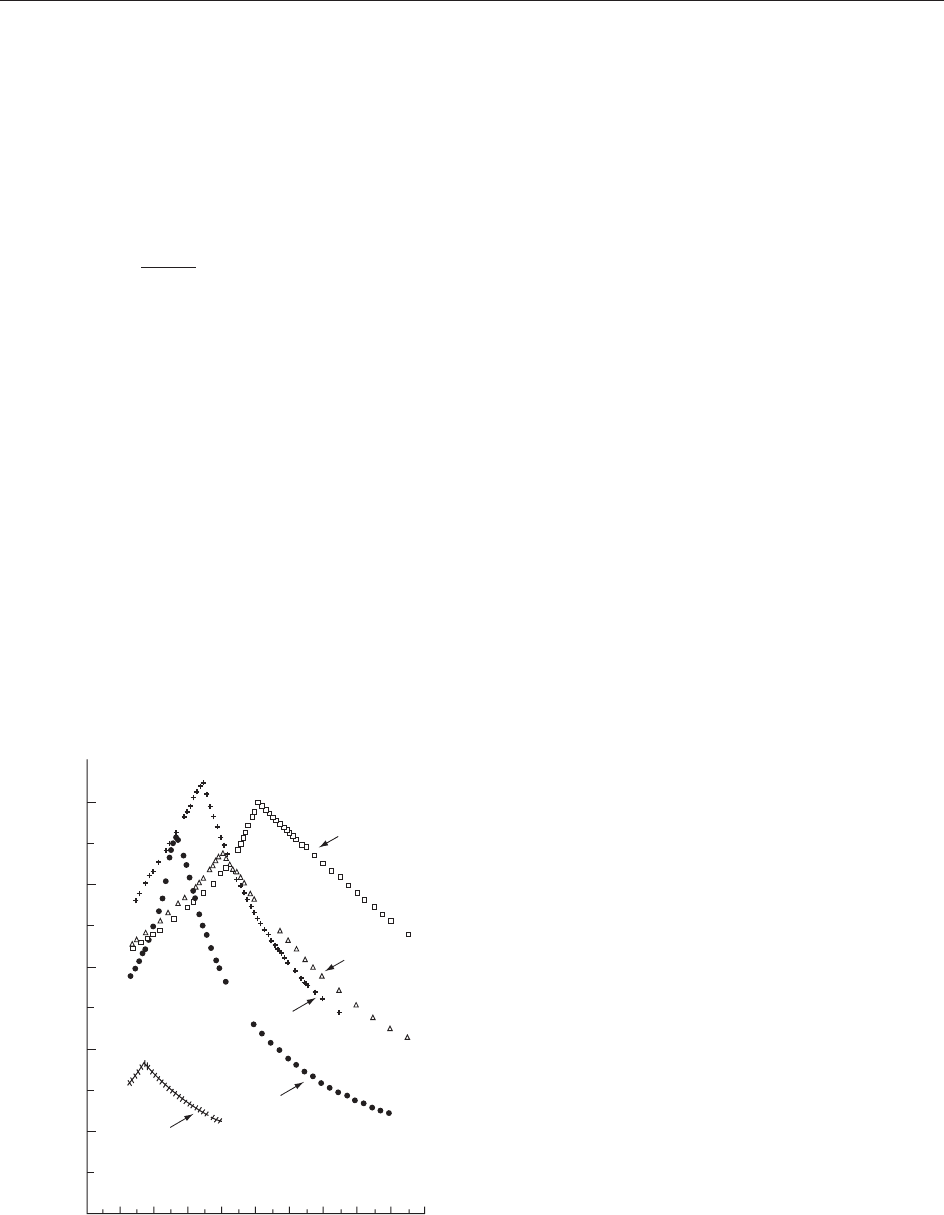
general consensus, based on the analysis of the
experimental data and the numerical simulations,
that in three dimensions and in the absence of a
magnetic field, the two regimes are separated by a
thermodynamic phase transition at a temperature T
c
where the magnetic response exhibits a cusp (see
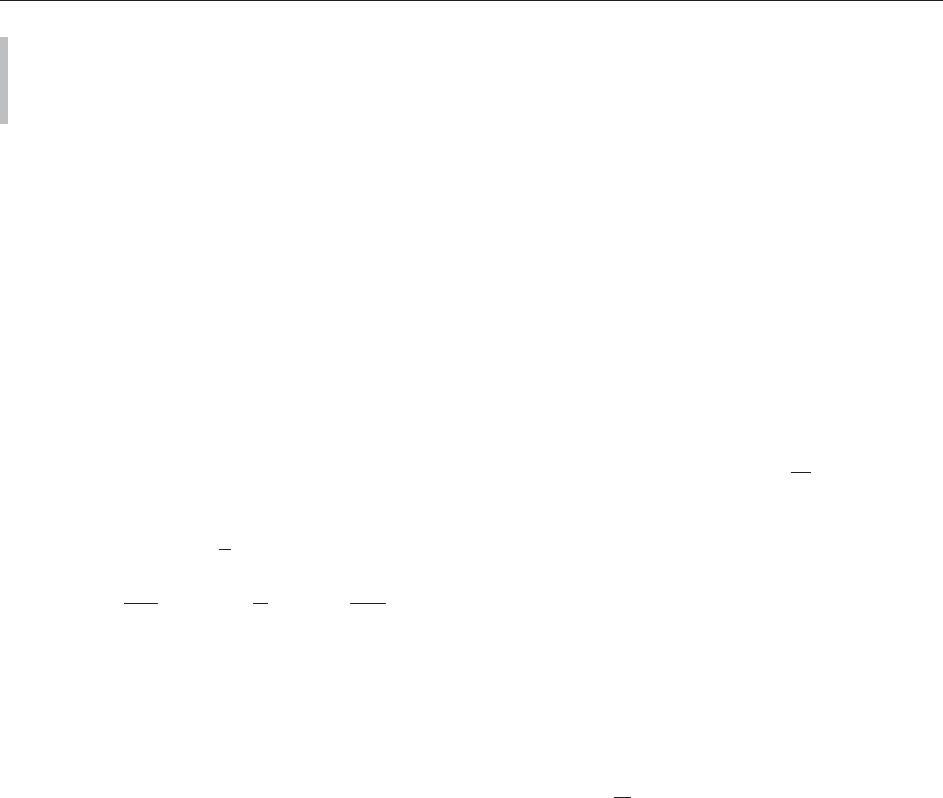
Figure 1). By linear response, is related to the
equilibrium spin correlation function
¼
1
K
B
TN
X
i
S
2
i
hS
i
i
2
having denoted by hi the Boltzmann–Gibbs aver-
age. A cusp in indicates a second-order transition
where the so-called Edwards–Anderson parameter
q = (1=N)
P
i
hS
i
i
2
becomes different from zero,
indicating freezing of the spins in ran dom directions.
In the presence of a magnetic field, although the
low-temperature phenomenology is similar to
the one at zero field, the thermodynamic nature of
the freezing transition is more controversial. Theo-
retically, mean-field theory, based on the SK model,
predicts a phase transition with a cusp in the
susceptibility both in the absence and in the
presence of a magnetic field. Unfortunately, no
firm theoretical result is available on the existence
and the nature of phase transitions in finite-
dimensional spin glass models which is a completely
open problem.
Structural Glasses
Analogous freezing of dynamical variables is
observed in a variety of systems. Some of them
share with the spin glasses the presence of quenched
disorder; in many others, this feature is absent. This
is the case of structural glasses (Debenedetti 1996).
Many liquids under fast enough cooling, instead
of crystallizing, as dictated by equilibrium thermo-
dynamics, form glasses. Simple liquids can be
modeled as classical systems of particles with
pairwise interactions. In the simplest example of a
monoatomic liquid, the potential energy of a
configuration is then written as
Vðr
1
; ...; r
N
Þ¼
X
i<j
ðr
i
r
j
Þ½2
In the case of atomic mixtures, the potential
acquires a dependence on the species of the inter-
acting atoms.
Liquids can be characterized as good or bad glass
formers depending on the facility by which they
form glasses. In good glass formers, in order to
avoid crystallization, it is in general sufficient to
cross the region around the liquid–crystal transition
point fast enough, so that the systems can set in a
supercooled liquid metastable equilibrium. On low-
ering the temperature, the sup ercooled liquid
becomes denser and more viscous while the relaxa-
tion time of the system, related to the viscosity
through the Maxwell relation = =G (G is the
instantaneous shear modulus of the liquid), under-
goes a rapid growth. One defines a con ventional
glass transition temperature T
g
as the point where
takes the solid-like value = 10
13
Poise, correspond-
ing to a relaxation time 100 s. After that point,
the system falls out of equilibrium; under usual
experimental conditions, it does not have the time to
adjust to external solicitations and behaves mechani-
cally like a solid. The glass transition temperature is
then characterized as the point where the liquid goes
out of equilibrium, the relaxation time becomes
larger than the external timescale and the positions
of the atoms appear as frozen on that scale.
A great effort has been devoted to understand the
behavior of the temperature dependence of the
relaxation time and the nature of the dynamical
processes in supercooled liquids. In deeply super-
cooled liquids, the empirical behavior of the relaxa-
tion time ranges from the Arrhenius form for
‘‘strong glasses’’ exp(=T) to the Vogel–Fulcher
form (T) exp(D=(T T
0
)) for ‘‘fragile glasses.’’
The Vogel–Fulcher law predicts a finite-temperature
divergence of the relaxation time at the temperature
T
0
. Unfortunately, in typical cases, the T
0
results are
χ (10
–5
emu/g)
0
1.0
2.0
3.0
4.0
5.0
12345
T(K)
678910
Cu – 0.1% Mn
Ag – 0.5% Mn
Au – 0.5% Mn
Ag – 1.0% Mn
Au – 0.2% Cr
(×10)
Figure 1 Magnetic susceptibility as a function of temperature
in spin glass materials. Reproduced from Fischer KH and
Hertz JA (1991) Spin Glasses. Cambridge, UK: Cambridge
University Press.
554 Glassy Disordered Systems: Dynamical Evolution
estimated to be 10–15% lower then T
g
so that it is
not possible to verify the law close enough to T
0
to
support the divergent behavior.
As a consequence of freezing, one observes
important qualitative changes in the behavior of
thermodynamic quantities similar to those encoun-
tered in equilibrium phase transitions. In a narrow
interval around T
g
, specific heat and compressibility
undergo jumps from liquid-like values to much
lower solid-like values.
Aging and Slow Dynamics
While the crudest picture of the glass transition
describes freezing as complete structural arrest, both
for the cases where the glass transition is a gen-
uine off-equilibrium phenomenon, as in structural
glasses, and in the case where it has a thermo-
dynamical character as in spin glasses, the study of
dynamical quantities reveals the existence of persist-
ing, history-dependent, slow relax ation processes in
the frozen phase (Norblad and Svendlidh 1997).
This is the phenomenon of aging, which is a
constitutive feature of the glassy state. Its theoreti cal
analysis occupies a central theoretical role in the
comprehension of the way glassy systems explore
configuration space. A first characterization of
relaxation is given by the behavior of ‘‘one-time
quantities’’ like internal energy, density, etc., which
slowly evolve in the course of time towards values
corresponding to states of lower free energy. More
interesting is the behavior of ‘‘two-time quantities,’’
time-dependent correlation functions and responses,
which reveal the deep off-equilibrium nature of
glassy relaxation. In experimental, numerical, and
theoretical studies, a special position is occupied by
the linear response function. Using the language of
magnetic systems , apt to the spin glasses, one
considers the response of the magnetization to an
applied magnetic field. To deal with other systems,
different conjugated couples of variables are con-
sidered and simple changes of language are needed.
Linear perturbations allow to reveal the dynamics of
the systems without affecting its evolution. Denoting
by M(t) the magnetization at a time t and by h(t
0
)
the magnetic field at time t
0
, the instantaneous linear
response function is defined as
Rðt; t
0
Þ¼
MðtÞ
hð t
0
Þ
h¼0
½3
Measures of the time integral of R(t, t
0
) are com-
monly performed to reveal the presence of aging in
glassy systems. Aging is usually studied observing the
dynamics that follows a rapid quench from high
temperature, at an instant that marks the origin of
time. One can reconstruct the response function
measuring the zero-field-cooled (ZFC) magnetization
as the response to a magnetic field acting from a
waiting time t
w
to the measuring time t,
ZFC
ðt; t
w
Þ¼
Z
t
t
w
dt
0
Rðt; t
0
Þ½4
or its complement, the thermoremanent magnetization
(TRM) corresponding to the response to a magnetic
field acting from the time of the quench up to t
w
TRM
ðt; t
w
Þ¼
Z
t
w
0
dt
0
Rðt; t
0
Þ½5
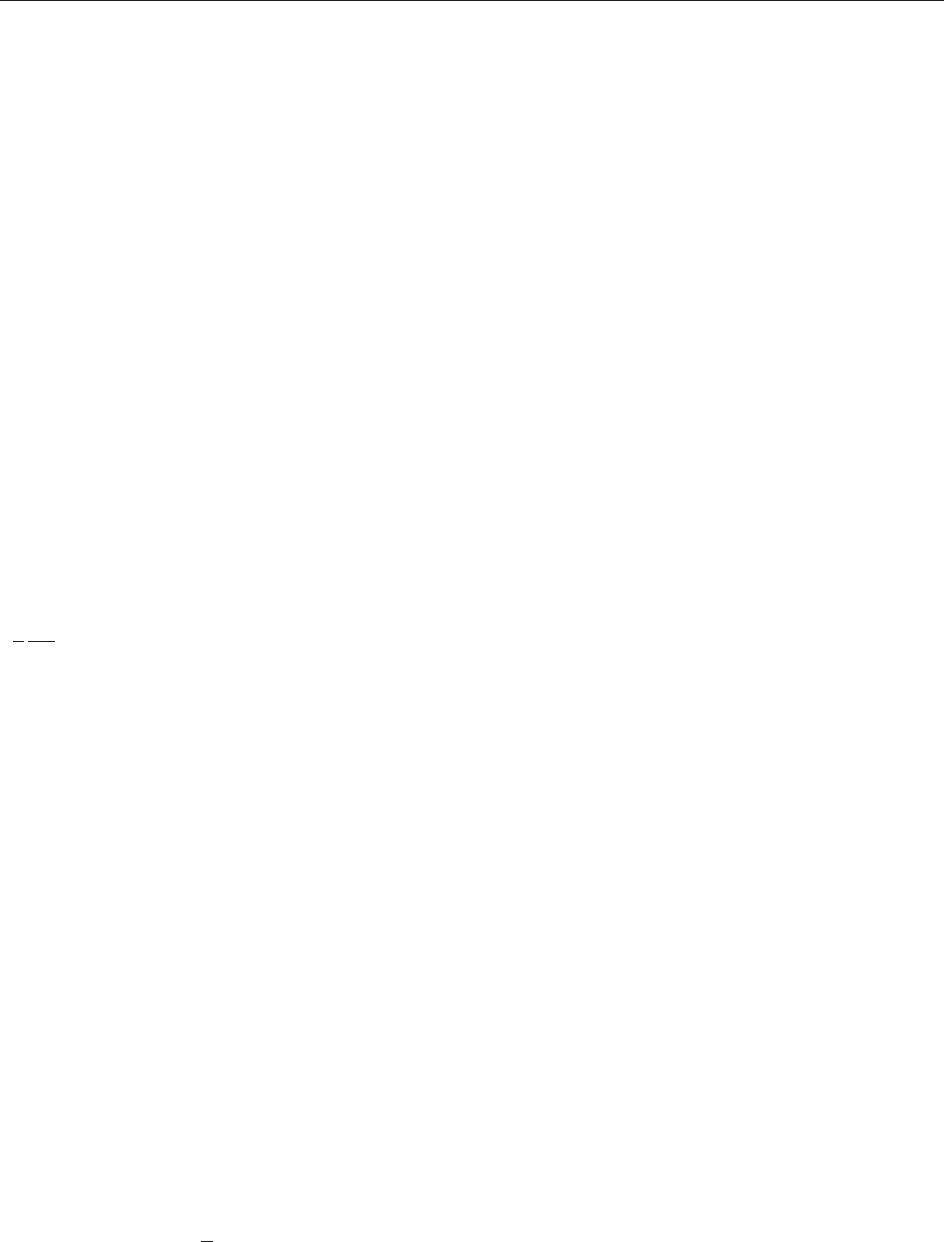
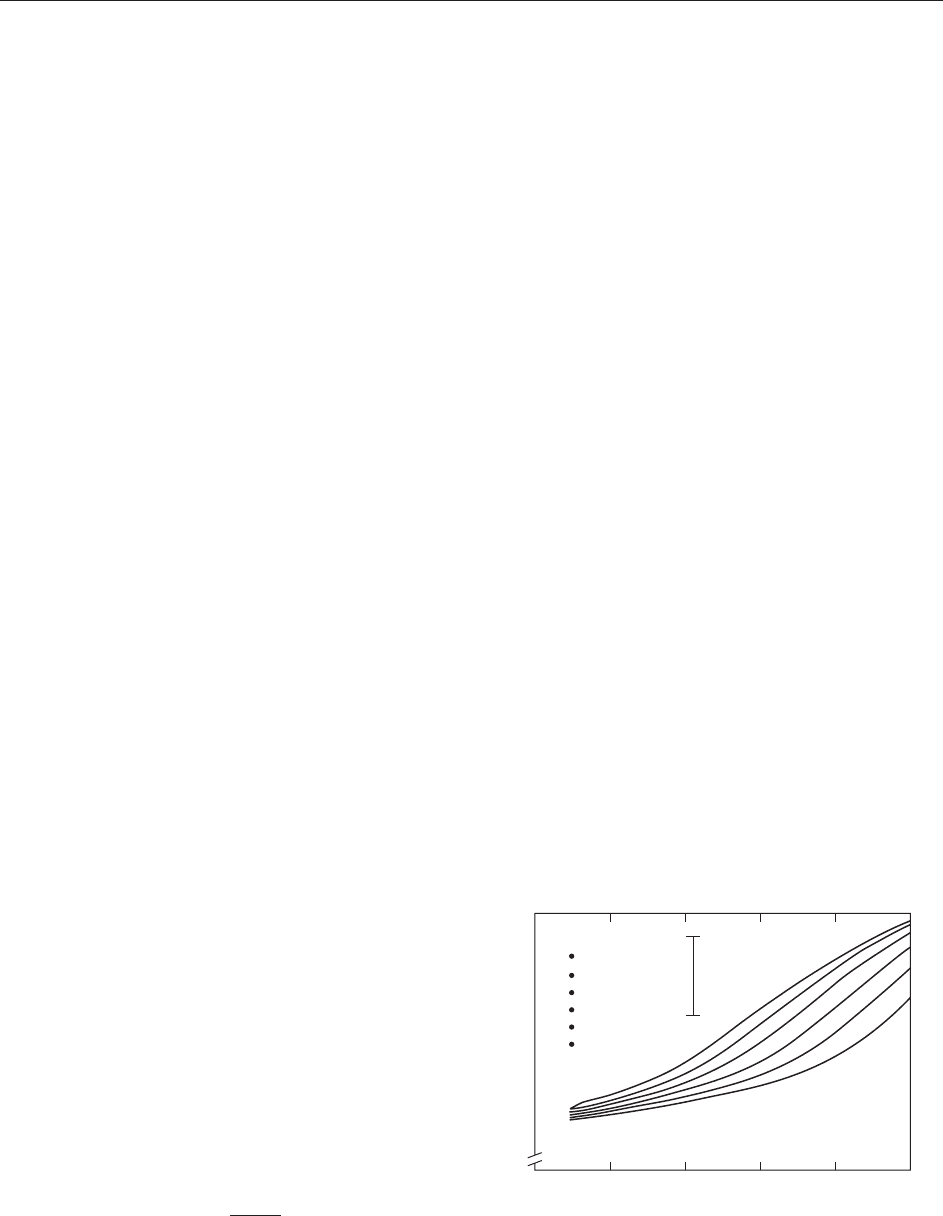
In Figure 2, the behavior of the susceptibility
ZFC
is
shown as a function of t t
w
in a typical example
of aging experiment at low temperature. Out-of-
equilibrium behavior is manifest in the dependence
of the curves on the waiting time t
w
. The relaxation
appears slower and slower for larger waiting times,
and the t
w
dependence does not disappear even for
very large times. Two nontrivial dynamical regimes
can be identified: a first regime for small t t
w
, that
is, t t
w
<< t
w
where the relaxation is independent
of t
w
and a second regime roughly valid for t t
w
t
w
where time-translation invariance is manifestly vio-
lated. The analysis of experimental and simulation data
shows a scale-invariant behavior according to which
curves corresponding to different waiting times can be
superimposed rescaling the time difference t t
w
with a
suitable t
w
-dependent relaxation time (t
w
). This is a
growing function of t
w
whichseemstodivergeforlarge
t
w
. Up to the waiting times where it has been possible to
test the relation, (t
w
) behaves as a power (t
w
) t
w
where in different materials and models, = 0.8–0.9.
t
w
= 30 s
100 s
300 s
1000 s
3000 s
10000 s
10% M
FC
/h
T = 0.85 T
g
10
–1
10
0
10
1
M(t)/h
10
2
10
3
10
4
t [s]
Figure 2 ZFC magnetization in an aging experiment. The
curves, from bottom to top, correspond to increasing waiting
times. Reproduced from Norblad P and Svendlidh P (1997)
Experiments in spin glasses. In: Young AP (ed.) Spin Glasses
and Random Fields. Singapore: World Scientific, with permission
from World Scientific Publishing Co. Pte Ltd.
Glassy Disordered Systems: Dynamical Evolution 555