
Hunefeldt C., Harris B. A Brief History of Peru
Подождите немного. Документ загружается.


institution whose existence long preceded Spain’s conquest of the
Americas. The Holy Inquisition was established in 1233 by Pope
Gregory IX, and in 1238 in Spain by the Aragonese Crown, and was
controlled by the Dominican order, which deferred to Rome for final
decisions. The Spanish Inquisition was put in place in 1478 by King
Ferdinand and Queen Isabella to suppress clandestine Jewish and
Muslim worship, in addition to cults, magic, witchcraft, and sodomy.
According to Peruvian 19th-century essayist, Ricardo Palma, the
Inquisition in Lima sentenced 44 people to death by burning at the
stake (1983, 199–325). The main victims of persecution were Jewish
merchants from Portugal, who apparently were condemned more on
the grounds of their economic power and the subsequent envy of rivals
than on real religious transgressions. Indians escaped the grip of the
Inquisition because they were deemed “minors” who rather than
burned should be converted and their traditional idols destroyed.
From the very beginnings of its colonial presence, the church’s main
goal was the conversion to Catholicism of the native Indians, though this
evangelical commitment weakened somewhat after the 1570s. In this
endeavor the church undertook the spiritual conquest of the new domin-
ions. It was not an easy conquest; the Indians clung to their ancestral
beliefs, and the indigenous populations spoke different languages and
were dispersed in wide settlement patterns. Many Indians came to prac-
tice a syncretic form of religion that blended elements of their traditional
beliefs and practices with selected parts of Catholicism. This produced a
multilayered belief system and a great variety of combined rituals.
Several religious orders, whose members were organized outside the
usual hierarchy of the church, were present at the very beginning of
Pizarro’s adventures in Peru. Franciscans and Mercedarians arrived
prior to Atahualpa’s execution, and Augustinians first stepped on
Peruvian soil in 1551. In Peru—unlike Mexico—efforts at conversion
of the Indians were hampered by the civil war between the early con-
querors. It was the mid-16th century before the Catholic Church in
Peru launched a massive campaign against traditional indigenous
beliefs. Huacas (sacred shrines) and reverence of ancestors (that is,
mummies) wer
e banned, and the shrines and mummies themselves
were destroyed by the Spaniards. In response an apocalyptic movement
known as Taqui Onkoy appeared in the central Andes in 1560 and
lasted until about 1570. Religious leaders of the Taqui Onkoy move-
ment asked Indians to return to their huacas. The huacas were angry,
they said, because Indians had neglected them; because they felt angr
y
and abandoned, the huacas had in revenge caused epidemics to kill
A BRIEF HISTORY OF PERU
74
75
COLONIAL INSTITUTIONS AND THE BOURBON REFORMS
thousands of Indians. This was how indigenous religious leaders inter-
preted population decline.
In the early 17th century, however, in Jesuit historian Antonine
Tibesar’s interpretation, the church became an important social and
economic player in the colonies; it had more American-born than
peninsular priests and identified itself with the needs of colonial soci-
ety. The ultimate control over church activities, nevertheless, remained
with the Crown. The Crown maintained control over tithe collection (a
10 percent tax levied on agricultural production and livestock belong-
ing to non-Indians) to feed the priests and nuns, and it also decided on
church activities, buildings, and nominations, all the way to the arch-
bishop. The Crown’s right to make ecclesiastical appointments was
called the royal patronato.
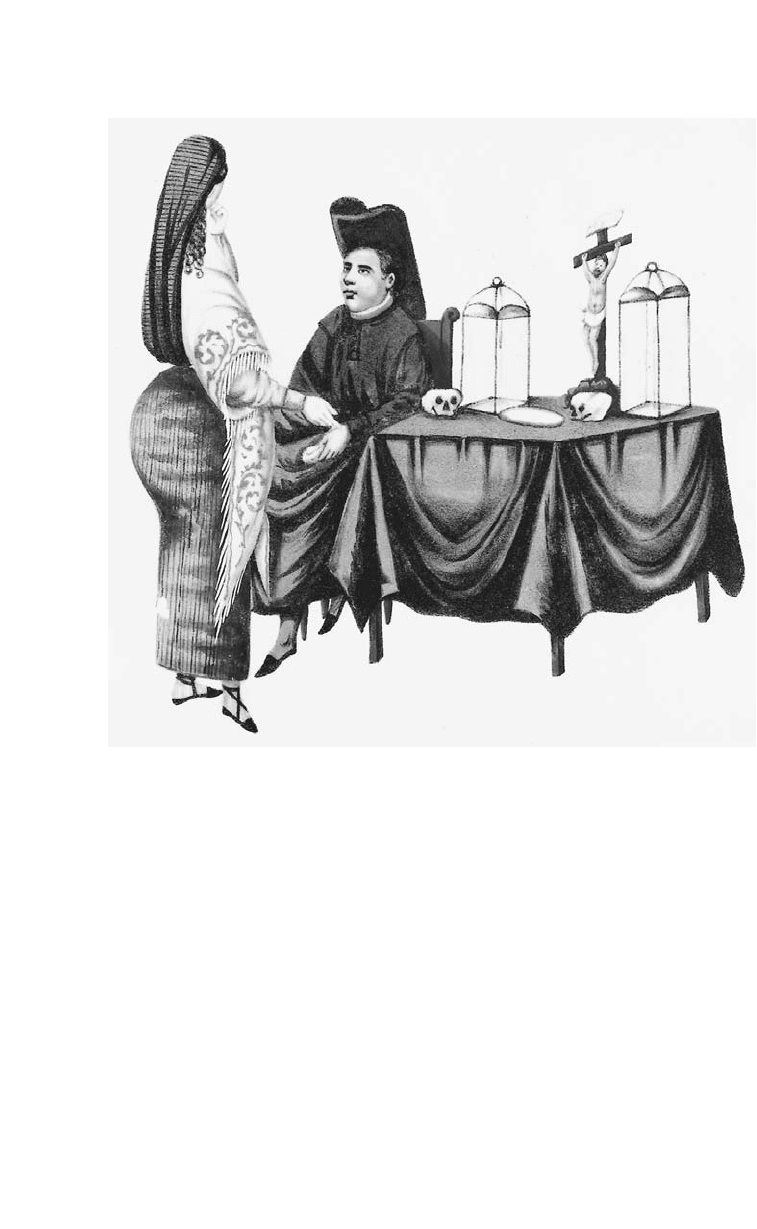
A Peruvian Creole woman consults a Roman Catholic animero, a priest who solicited charity
for souls caught in purgatory.
(Library of Congress)

Throughout the colonial period tense relationships existed between
the secular clergy, who were members of separate orders, such as the
Jesuits or the Franciscans, and the regular clergy, who answered to the
usual church hierarchy, headed by bishops and archbishops. Frequently,
the Crown had to intervene to separate their spheres of responsibility
in the colonies. Sometimes mutual antagonisms led to physical con-
frontations and the plunder of churches. In the long run the regular
clergy in the orders were kept on the fringes of the colonial territory,
preferably doing mission work among tribes in the Amazon basin.
The period’s tensest moment of state-church relationships came with
the expulsion of the Jesuit order by the Spanish Crown in 1767.
Underlying this decision to oust the Jesuits were longstanding tensions
between Rome and the European states. In Spain the king held the
patronato right to appoint high ecclesiastical authorities, yet the Jesuits,
since their founding as an order by Ignatius Loyola (1491–1586),
pledged obedience to the pope. (Pope Paul III appr
oved the order’s
statutes in 1540.) The Jesuits stood at the crossroads between two pow-
ers, the state and the church, and their ejection from the Spanish colonies
had much to do with their questioning of the king’s absolute power.
In Peru Jesuits had a long-standing history of rebellion against state
direction and orders. The first eight members of the Jesuit order arrived
in Lima during Francisco Toledo’s viceroyalty. Toledo wanted them to
take care of Indians living in Lima, in a district called Cercado. The
Jesuits resisted and instead founded a school that soon came to compete
with the University of San Marcos, founded in 1551 by royal decree. The
viceroy allowed the Jesuit school, San Pablo, to keep its doors open, but
only San Marcos could grant academic degrees. However, the Jesuits’ edu-
cational prestige grew, and many Jesuits became the cultural and political
leaders throughout the colonies. In their library at San Pablo in Lima, one
could find books on how to build houses, construct water fountains, pave
streets, plant vegetables, or raise cattle, as well as books on commerce,
navigation, astronomy, and the French language. The Jesuits were a mod-
ernizing element in an otherwise very conservative society. The compo-
sition of their library also reflected the order’s interests. They were
owners of large-scale, very successful rural enterprises, often using
Indian and even slave labor. The value of their properties in Peru, mainly
their 97 haciendas, has been estimated at 5,700,000 pesos, and they
owned 5,224 slaves (Macera 1966, in Klarén 2000, 103). Jesuit property
reverted to the Spanish Crown after the expulsion.
There were schisms throughout the ecclesiastical hierarchies that were
pervasive and often loudly outspoken. Aside from the rifts between regu-
A BRIEF HISTORY OF PERU
76

lar and secular clergy and the antagonisms between Spanish-born and
American-born priests, all parties involved competed for Indian labor and
land. The Catholic Church became a major property owner of both landed
estates and urban property and the main source of loans, for which the
church lenders obtained a 7 percent interest in the 16th century. Priests
also participated actively in market production and commerce. Other
income for the church came from private donations, bequests, and the
dowries that women were required to pay to enter a convent.
In Lima many women sought to enter convents. During the 17th
century, the 13 convents in Lima housed more than 20 percent of the
women living in the city. Of these some were nuns of the black veil
(that is, fully voting members in the convent), and others were nuns of
the white veil (their servants and maids, or legas and donadas), who
wer
e often Indians, mestizas, and slave women (Millones 1995, 177).
Slaves and Slavery
Of a total of about 9.5 million people forcibly brought from Africa to
the Americas between 1500 and 1800, about 17 percent, or more than
1.6 million, were brought to the Spanish colonies. The total number of
slaves brought to Peru is difficult to determine, but the first African
slaves accompanied Pizarro on his earliest ventures into Inca territory.
Many conquistadores spent their first gold and silver booty to buy
slaves, in part to give themselves status as property owners.
Slaves played an important role in colonial Peru as laborers in all
kinds of enterprises, but they were especially vital during the earliest
years as agricultural workers on haciendas and plantations. Black slaves
produced most of the crops to feed the growing cities, especially after
the decline of the indigenous population due to disease and war
reduced the available supply of Indian workers.
Slaves also made up a large percentage of the urban workforce. In
Lima and other coastal cities they became valued house servants and
manual laborers, and a crucial class of skilled urban artisans was largely
made up of slaves. They filled many occupations, from concubine to
sailor, in a society where white masters viewed manual labor as
demeaning. Over the course of the colonial period black slaves and
their descendants (often of mixed race) changed from being mere prop-
erty that conferred status on the owners to an essential part of Spanish-
American colonial society.
The slaves were tenacious in holding on to at least parts of their
African heritage, despite repeated and vigorous attempts by white slave
77
COLONIAL INSTITUTIONS AND THE BOURBON REFORMS

owners to eradicate what they perceived as threatening aspects of slave
culture. The music, dance, and religious practices of the slaves showed
remarkable cultural persistence. Religious brotherhoods, known as
cofradías, were formed to promulgate Christianity among the slave pop-
ulation, but they often ser
ved to promote and preserve distinctive
African slave culture, especially when neighborhood cofradías were
made up of slaves fr
om the same African tribe. For example, the reli-
gious brotherhoods encouraged the development of various dance
forms (some of which persist today) such as the zamacueca and its bet-
ter
-known derivative the marinera.
Urban slaves also filled distinctive roles as healers parallel to white
doctors. Black slave sor
cerers and faith healers found many adherents,
but black barbers were also important, even to white society. Barbers
were the only practitioners who could administer medicinal bloodlet-
ting, which was thought to be the cure for many maladies and diseases,
and blacks had almost a monopoly on the trade.
Slavery was an ingrained part of Peru’s social and economic structure
well into the 19th century. In spite of growing pressure from interna-
tional antislavery forces, especially Great Britain, Peru kept importing
slaves—mostly from other parts of the American continent—until the
beginning of the 19th century. The Spanish colonial financial adminis-
tration fostered the trade by eliminating the import duty on slaves in
1796. Peruvian slave traders lobbied Spanish officials in Madrid for
even more lenient treatment, claiming that at least 1,500 new slaves
were needed each year. As a result almost 66,000 slaves were brought
to Peru between 1790 and 1802, increasing the slave population in this
short period by approximately 25 percent.
Despite the vitality of the slave trade and the high demand for slaves,
the institution of slavery in colonial Peru was undermined by the slaves
themselves, who were able to take advantage of official Spanish domes-
tic policy on slaves. In 1789 the Spanish Crown promulgated a code for
white colonial slave owners that enjoined them to treat their slaves as
“human beings” and to provide adequate food, clothes, housing, med-
ical care, rest days, and religious instruction for their slaves. Many slaves
in the cities used this code to petition through the colonial legal system
against ill treatment by their masters. They claimed that they were mis-
treated and that their masters had failed to provide sound Christian
examples of behavior, especially in the case of sexual abuse of slaves.
Even more effectively, many slaves learned to manipulate the hiring-
out system that was typical of slavery in the cities. Because urban slaves
were valued artisans, their masters profited by hiring out their services to
A BRIEF HISTORY OF PERU
78
79
COLONIAL INSTITUTIONS AND THE BOURBON REFORMS
others in the community. Slaves were allowed to find their own paying
jobs, and after returning a stipulated “salary” called a jornal to their own-
ers, they wer
e allowed to keep a portion for themselves. They used this
money to fund their lawsuits against mistreatment and, even more
important, to gradually purchase their freedom. They made installment
payments to their owners over time, thereby incrementally reducing their
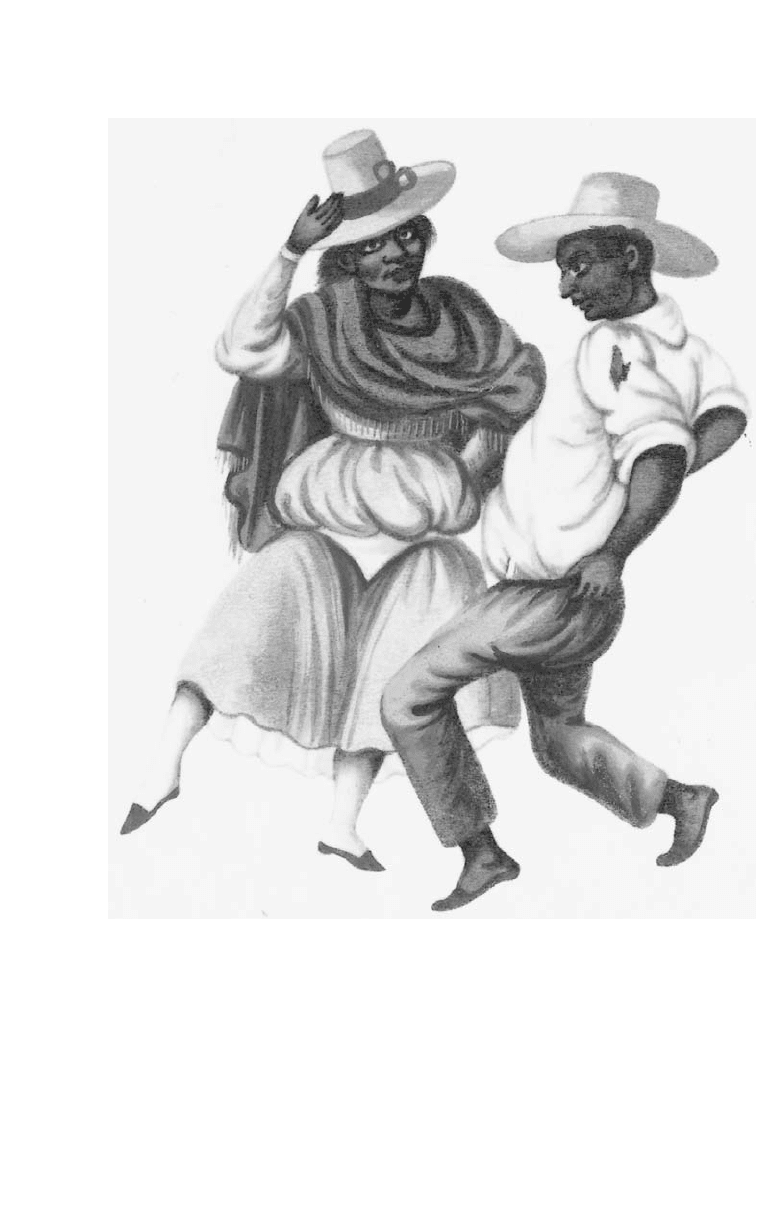
Black slaves and increasing numbers of free blacks (the latter primarily in the cities) fostered and
maintained a lively culture, including dance forms originating in Africa.
(Library of Congress)

purchase price. The accounts were recorded on handwritten documents
called conques, and with each recorded installment, the slave moved
closer to fr
eedom. In some cases dissatisfied slaves bargained themselves
to new masters, based on the reduced purchase price they themselves had
paid for. The spread of such strategies among the urban slave population
gradually but persistently undermined the institution of slavery, making
the slaves themselves the agents of their own freedom.
The institution of slavery outlived the Spanish colonial administra-
tion, despite some efforts to the contrary. When General José de San
Martín arrived in Peru and took control of the government in Lima, he
promised freedom to black slaves and their descendants who enlisted in
the armies fighting for independence. Simón Bolívar assumed the role
of liberator of Peru in 1823 after San Martín had withdrawn. Peruvian
slaves may have expected to see soon the end of slavery, but Bolívar
shared with San Martín a fear of free blacks, fostered by the bloody
example of the successful slave rebellion of 1804 in Haiti. His govern-
ment only reiterated the terms of the Spanish colonial code of 1789.
Slavery continued in independent Peru for three more decades, albeit
with reduced numbers of slaves. Around 1825 slaves accounted for about
3.8 percent of the total population of Peru, or 50,000 of 1.3 million, and
there were also approximately 40,000 free blacks, including mixed-race
descendants of former slaves. By 1845 only 20,000 slaves were counted,
including pockets of black slavery in rural areas (where a black popula-
tion persists to this day). The decrease in numbers was due in part to the
social and economic chaos of the period of independence and the years
immediately following, when many Spanish owners fled the country, but
in general, the growth in the free black population was due to the efforts
of slaves themselves as they gradually purchased their own freedom.
Slavery was officially abolished in republican Peru in 1854.
Increasingly Complex Race Relations
The attempt by the Spanish Crown immediately after the conquest to
establish separate “republics” for Indians and for Spaniards faded in
the face of ethnic, racial, and social reality. The scarcity of Spanish
women and the availability of Indian women led to the rapid growth
of a mixed-blood population, the mestizos. Pregnancies had more far-
reaching consequences in Peruvian history than battles; Lima, for
example, witnessed rising illegitimacy rates during the colonial era in
spite of the fact that some Spanish fathers recognized their mestizo off-
spring and in some cases even sent them to study in Spain. Such was
A BRIEF HISTORY OF PERU
80
81
COLONIAL INSTITUTIONS AND THE BOURBON REFORMS
the case of chronicler Garcilaso de la Vega. More often than not, bio-
logically mestizo descendants became cultural Indians when growing
up with their indigenous mothers. After black slaves were added to the
mix, most prominently through expanded slave trade in the 17th and
18th centuries, there formed a complex socioracial pyramid and a vis-
ible defeat of the notion of “purity of blood” that formed part of the
ideological climate at the time of the Spanish conquest.
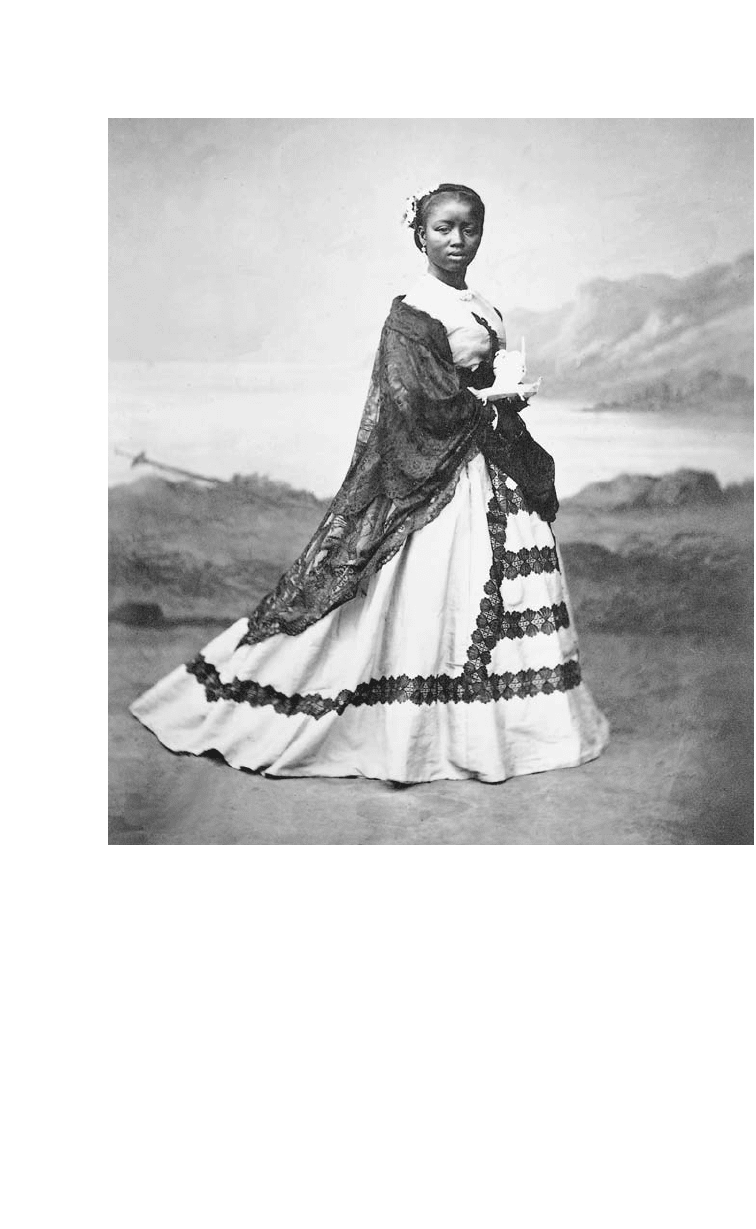
By the early 19th century, when slavery was in theory abolished in Peru, there were tens of
thousands of black slaves and free blacks living in the country. This young woman’s occupation
was listed as “incense burner,” which would have made her one of the many black service
workers and skilled artisans who kept Peruvian cities running.
(Library of Congress)

In the wake of racial mixing, different groups of people produced
distinctive and enduring popular cultures. From very early on, black
slaves and their drums and dances in the city streets drew notice and
severe regulations from Lima’s city council, but without much success.
Indians in the highlands sang and developed their own musical instru-
ments; best known and still widespread today are the Andean pan
flutes (the quena and zampoña), a sort of small guitar (the charango),
and a native harp. Elites and intellectuals at the same time, founded
fr
ee-standing theaters and in some of their writings exalted and
encouraged a growing national pride. Lima’s Corral de Comedias the-
ater opened its doors in 1604, and the reconstructed (after the 1746
earthquake) Coliseo de Comedias was quite popular. Two pieces of
writing had an especially long-lasting and decisive impact; they were
La Araucana (1569), an epic poem by Alonso de Ercilla, and
Comentarios reales de los Incas (1609), a chronicle by mestizo Gar
cilaso
de la Vega. Priests also had an impact on nonreligious cultural life by
translating Christian texts into native languages, which helped pre-
serve native languages.
Race mixing occurred most prominently in the cities of the viceroy-
alty, and most notably in the capital city, Lima, in spite of what seemed
to be rigid racial segregation. Lima had concentrated indigenous and
black (slave and free) sections; the European and Creole elites lived in
and around the central plaza. Segregation, however, did not prevent
people from interacting. Many Indians and blacks worked as house ser-
vants or service providers for the white elite. As such they were deeply
enmeshed in city life. The genetic mixing of races tended to dissolve
physical boundaries and by the late 18th century was beyond reversal,
in spite of insistent attempts to restore racial purity. The baroque mul-
tiplication of complex names for racial combinations was soon replaced
by a broader distinction between “respectable folk” (gente decente) and
the populace (plebe). A flood of immigrants to the city, most coming
from the immediate rural hinterlands of the city
, further changed the
faces of the crowd toward the end of the colonial period.
People interacted on various occasions and in different settings.
Large social gatherings were an opportunity to disseminate information
before newspapers came into being by the late 18th century. During
holidays, everyone in the city could watch the viceroy and the arch-
bishop in their carriages hauled by six mules. (Six mules carried the
highest social standing and prestige. Lesser nobles or merchants only
had four or fewer mules, and black water-carriers used one mule.) The
pulperías were noisy, popular bars owned by women where men would
A BRIEF HISTORY OF PERU
82
83
COLONIAL INSTITUTIONS AND THE BOURBON REFORMS
drink and gamble. Overall, the city was, according to U.S. historians
Louise Hoberman and Susan N. Socolow, “the place where local elites—
landowners, merchants, bureaucrats—came into contact with artisans,
street vendors, beggars, and vagrants; where Spaniards and Portuguese
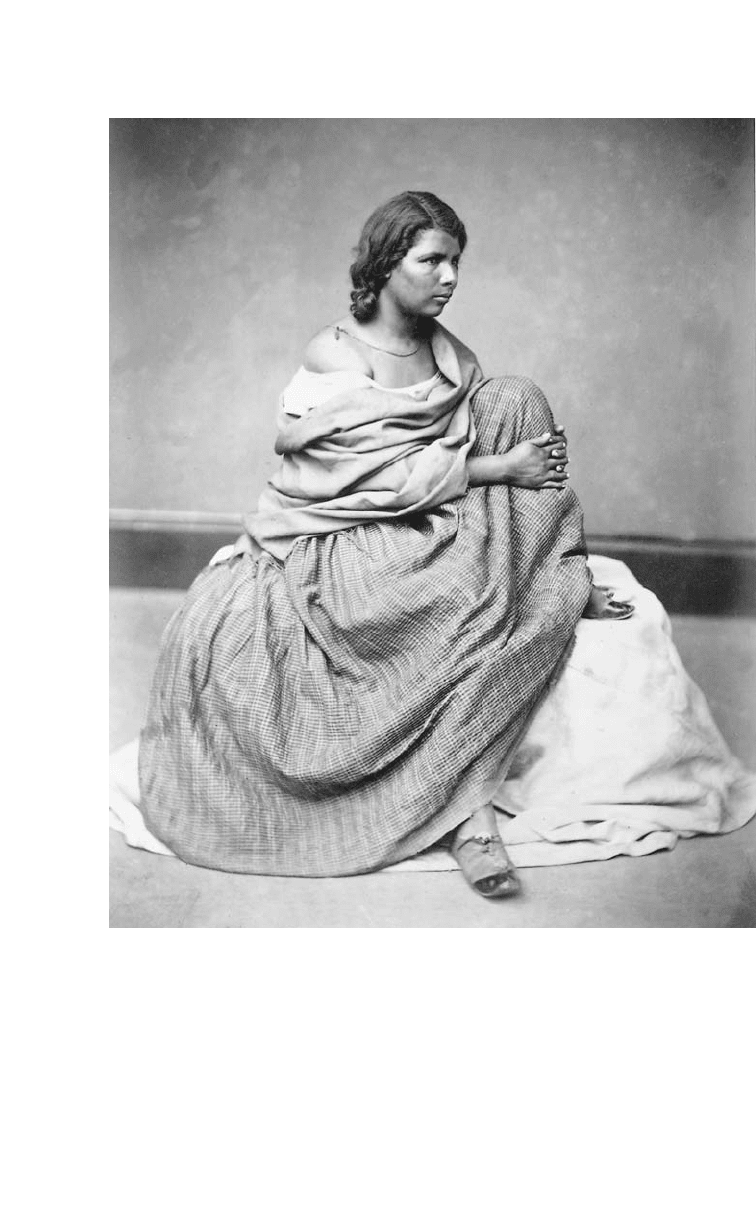
A young woman of mixed race sat for this photographic portrait around the mid-19th century,
when Peru (especially the city of Lima) was a “panorama” of mixed racial inhabitants, blending
white European, indigenous South American, and black African genes in various patterns.
(Library of Congress)