
Masters G.M. Renewable and Efficient Electric Power Systems
Подождите немного. Документ загружается.

68 FUNDAMENTALS OF ELECTRIC POWER
Utility pole
transformer
Circuit
breaker
panel
Electric
meter
Three-wire
drop
Circuit breaker panel
Three-wire
drop
1
2
3
4
7
5
6
8
4 kV
+120 V
−120 V
Transformer
on pole
120-V
Circuits
240-V circuits
0 V
Ground
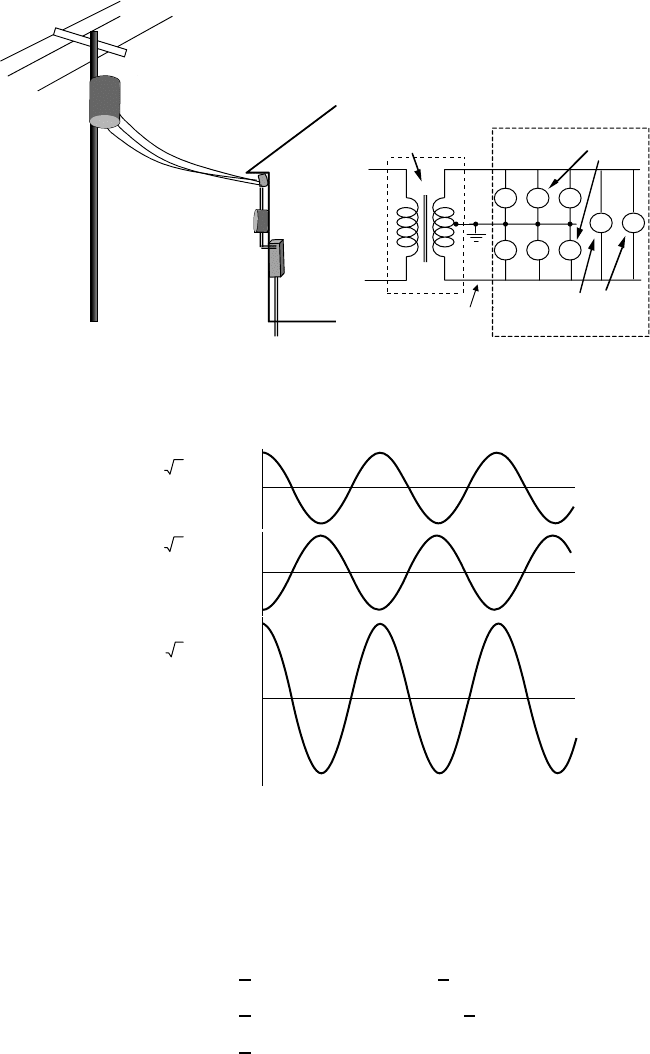
Figure 2.11 Three-wire, single-phase power drop, including the wiring in the breaker
box to feed 120-V and 240-V circuits in the house.
v
1
= 120 2 cos(377
t
)
v
2
= −120 2 cos(377
t
)
v
1
−
v
2
= 240 2 cos(377
t
)
Figure 2.12 Waveforms for ± 120 V and the difference between them creating 240 V.
There are a number of ways to demonstrate the creation of 240 V across the two
hot leads coming into a circuit. One is using algebra, which is modestly messy:
v
1
= 120
√
2cos(2π ·60t) = 120
√
2 cos 377t (2.47)
v
2
= 120
√
2cos(377t +π) =−120
√
2 cos 377t (2.48)
v
1
− v
2
= 240
√
2 cos 377t (2.49)
THREE-PHASE SYSTEMS 69
A second approach is to actually draw the waveforms, as has been done in
Fig. 2.12.
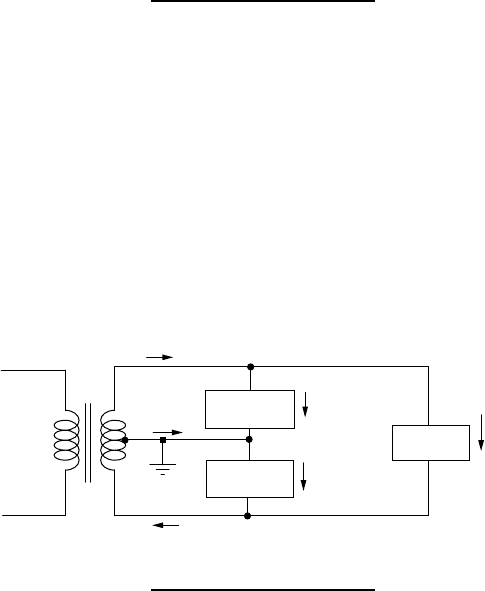
Example 2.9 Currents in a Single-Phase, Three-Wire System. Athree-wire,
120/240-V system supplies a residential load of 1200 W at 120 V on phase A,
2400 W at 120 V on phase B, and 4800 W at 240 V. The power factor for each
load is 1.0. Find the currents in each of the three legs.
Solution. The 1200-W load at 120 V draws 10 A; the 2400-W load draws 20 A;
and the 4800-W, 240-V load draws 20 A. A simple application of Kirchhoff’s
current law results in the following diagram. Notice that the sum of the currents
at each node equals zero; also note that the currents are rms values that we can
add directly since they each have current and voltage in phase.
1200 W
2400 W
4800 W
+120 V
−120 V
10 A
20 A
20 A
40 A
30 A
10 A
Example 2.9 illustrates the currents for a circuit with unequal power demand
in each of the 120-V legs. Because the load is unbalanced, the current in the
neutral wire is not equal to zero (it is 10 A). A balanced circuit has equal currents
in each hot leg, and the current in the neutral is zero.
2.6 THREE-PHASE SYSTEMS
Commercial electricity is almost always produced with three-phase synchronous
generators, and it is also almost always sent on its way along three-phase trans-
mission lines. There are at least two good reasons why three-phase circuits are
so common. For one, three-phase generators are much more efficient in terms of
power per unit of mass and they operate much smoother, with less vibration, than
single-phase generators. The second advantage is that three-phase transmission
and distribution systems use their wires much more efficiently.
70 FUNDAMENTALS OF ELECTRIC POWER
2.6.1 Balanced, Wye-Connected Systems
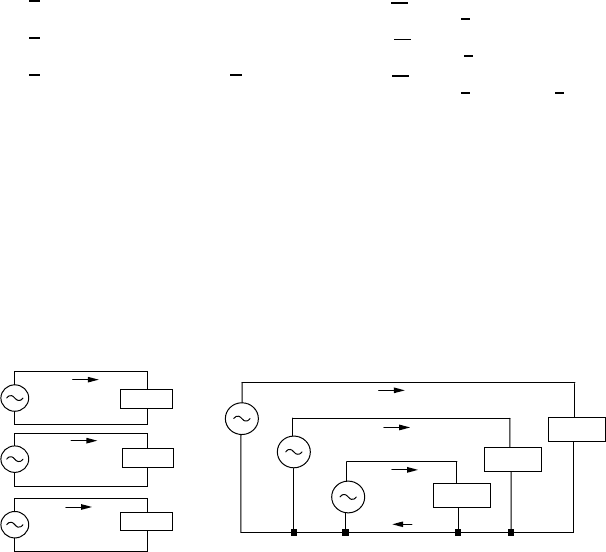
To understand the advantages of three-phase transmission lines, begin by
comparing the three independent, single-phase circuits in Fig. 2.13a with the
circuit shown in Fig. 2.13b. The three generators are the same in each case, so
the total power delivered hasn’t changed, but in Fig. 2.13b they are all sharing
the same wire to return current to the generators. That is, by sharing the “neutral”
return wire, only four wires are needed to transmit the same power as the six
wires needed in the three single-phase circuits. That would seem to sound like a
nice savings in transmission wire costs.
The potential problem with combining the neutral return wire for the three
circuits in 2.13a is that we now have to size the return wire to handle the sum
of the individual currents. So, maybe we haven’t gained much after all in terms
of saving money on the transmission cables. The key to making that return wire
oversizing problem disappear is to be more clever in our choice of generators.
Suppose that each generator develops the same voltage, but does so 120
◦
out of
phase with the other two generators, so that
v
a
= V
√
2cos(ωt) V
a
= V
0
◦
(2.50)
v
b
= V
√
2cos(ωt + 120
◦
) V
b
= V
120
◦
(2.51)
v
c
= V
√
2cos(ωt + 240
◦
) = V
√
2cos(ωt − 120
◦
) V
c
= V
240
◦
= V
− 120
◦
(2.52)
Notice the simple vector notation introduced in (2.50) to (2.52). Voltages are
described in terms of their rms values (e.g., V
b
) and phase angle (e.g., 120
◦
).
This notation is commonly used in electrical engineering to represent ac voltages
and currents as long as the frequency is not a concern.
Sizing the neutral return wire in Fig. 2.13b means that we need to look at
currents flowing in each phase of the circuit so that we can add them up. The
simplest situation to analyze occurs when each of the three loads are exactly the
same so that the currents are all the same except for their phase angles. When
+
V
c
load c
+
V
b
load b
+
V
a
load a
+
load A
load B
load C
i
a
i
b
i
c
V
c
+
−
−
−
−
−
−
V
a
+
V
b
i
a
i
b
i
c
i
n
=
i
a
+
i
b
+
i
c
(a) Three separate circuits (b) Combined use of the neutral line
Figure 2.13 By combining the return wires for the circuits in (a), the same power can
be sent using four wires instead of six. But it would appear the return wire could carry
much more current than the supply lines.

THREE-PHASE SYSTEMS 71
that is the case, the three-phase circuit is said to be balanced. With balanced
loads, the currents in each phase can be expressed as
i
a
= I
√
2cos(ωt), I
a
= I
0
◦
(2.53)
i
b
= I
√
2cos(ωt + 120
◦
), I
b
= I
120
◦
(2.54)
i
c
= I
√
2cos(ωt + 240
◦
) = I
√
2cos(ωt − 120
◦
), I
c
= I
240
◦
= I
− 120
◦
(2.55)
The current flowing in the neutral wire is therefore
i
n
= i
a
+ i
b
+ i
c
= I
√
2[cos(ωt) + cos(ωt + 120
◦
) + cos(ωt − 120
◦
)] (2.56)
This looks messy, but something great happens when you apply some trigono-
metry. Recall the identity
cos A · cos B =
1
2
[cos(A + B) + cos(A − B)] (2.57)
so that
cos ωt · cos(120
◦
) =
1
2
[cos(ωt + 120) + cos(ωt − 120
◦
)] (2.58)
Substituting (2.58) into (2.56) gives
i
n
= I
√
2[cos ωt + 2cosωt · cos(120
o
)] (2.59)
But cos(120
◦
) =−1/2, so that
i
n
= I
√
2[cos ωt + 2cosωt · (−1/2)] = 0 (2.60)
Now, we can see the startling conclusion: For a balanced three-phase cir-
cuit, there is no current in the neutral wire .... in fact, for a balanced three-
phase circuit, we don’t even need the neutral wire! Referring back to Fig. 2.13,
what we have done is to go from six transmission cables for three separate,
single-phase circuits to three transmission cables (of the same size) for a bal-
anced three-phase circuit. In three-phase transmission lines, the neutral con-
ductor is quite often eliminated or, if it is included at all, it will be a much
smaller conductor designed to handle only modest amounts of current when
loads are unbalanced.
While the algebra suggests transmission lines can do without their neutral
cable, the story is different for three-phase loads. For three-phase loads (as
opposed to three-phase transmission lines), the practice of undersizing neutral
lines in wiring systems in buildings has had unexpected, dangerous consequences.
As we will see later in this chapter, when loads include more and more computers,
copy machines, and other electronic equipment, harmonics of the fundamental
72 FUNDAMENTALS OF ELECTRIC POWER
60 Hz current are created, and those harmonics do not cancel out the way the
fundamental frequency did in (2.60). The result is that undersized neutral lines
in buildings can end up carrying much more current than expected, which can
cause dangerous overheating and fires. Those same harmonics also play havoc
on transformers in buildings as we shall see.
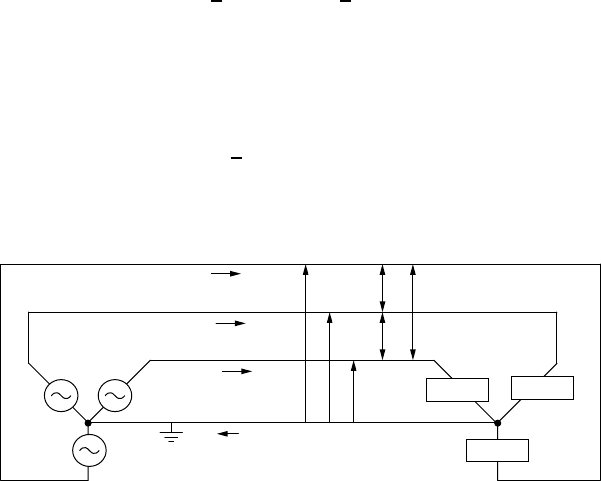
Figure 2.13b has been redrawn in its more conventional format in Fig. 2.14. As
drawn, the configuration is referred to as a three-phase, four-wire, wye connected
circuit. Later we will briefly look at another wiring system that creates circuits
in which the connections form a delta rather than a wye. Figure 2.14 shows the
specification of various voltages within the three-phase wye-connected system.
The voltages measured with respect to the neutral wire—that is, V
a
,V
b
,and
V
c
—are called phase voltages. Voltages measured between the phases themselves
are designated as follows: For example, the voltage at “a” with respect to the
voltage at “b” is labeled V
ab
. These voltages, V
ab
,V
ac
,andV
bc
, are called line
voltages. When the voltage on a transmission line or transformer is specified, it
is always the line voltages that are being referred to.
Let us derive the relationship between phase voltages and line voltages. Letting
the subscript “0” refer to the neutral line, we can write, for example, the line-to-
line voltage between line a and line b:
v
ab
= v
a0
+ v
0b
= v
a0
− v
b0
(2.61)
so
v
ab
= V
a
√
2cosωt − V
b
√
2cos(ωt − 120
◦
)(2.62)
We will specify that the rms values of all of the phase voltages are the same
(V
ph
), so by symmetry the rms voltages of the line voltages are all the same
(V
line
). Now we can write
v
line
= V
ph
√
2 · [cos ωt − cos(ωt − 120
◦
)] (2.63)
V
a
+
V
c
+
−
−
−
V
a
+
V
b
Load A
Load B
Load C
i
a
i
b
i
c
i
n
V
c
V
b
V
ac
V
bc
V
ab
b
a
c
Figure 2.14 A four-wire, wye-connected, three-phase circuit, showing source and load.

THREE-PHASE SYSTEMS 73
Using the trigonometric identity cos x − cos y =−2sin
1
2
(x + y)
· sin
1
2
(x − y)
gives
v
line
= V
ph
√
2 · (−2) sin
1
2
(ωt + ωt − 120
◦
)
· sin
1
2
(ωt − ωt + 120
◦
)
(2.64)
Assembling terms gives us
v
line
= V
ph
√
2 · (−2) sin(ωt − 60
◦
) · sin(60
◦
) = V
ph
√
2 · (−2)
√
3
2
· sin(ωt − 60
◦
) (2.65)
Finally, since sin x =−cos(x + 90
◦
),wehave
v
line
= V
phase
√
2 ·
√
3cos(ωt + 30
◦
) = V
line
√
2cos(ωt + θ) (2.66)
While (2.66) shows a phase shift, that is not the important result. What is
important is the rms value of line voltage as a function of the rms value of
phase voltage:
V
line
=
√
3 V
phase
(2.67)
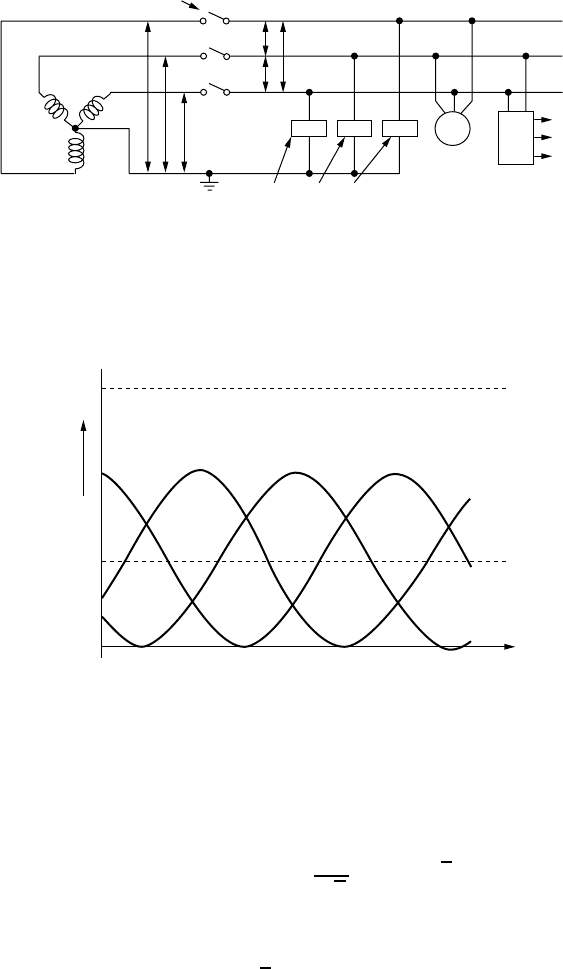
To illustrate (2.67), the most widely used four-wire, three-phase service to
buildings provides power at a line voltage of 208 V. With the neutral wire serving
as the reference voltage, that means that the phase voltages are
V
phase
=
V
line
√
3
=
208 V
√
3
= 120 V (2.68)
For relatively high power demands, such as large motors, a line voltage of 480 V
is often provided, which means that the phase voltage is V
phase
= 480/
√
3 =
277 V. The 277-V phase voltages are often used in large commercial buildings
to power fluorescent lighting systems. A wiring diagram for a 480/277-V system,
which includes a single-phase transfor mer to convert the 480-V line voltage into
120V/240V power, is shown in Fig. 2.15.
To find the power delivered in a balanced, three-phase system with a given
line voltage, we need to consider all three kinds of power: apparent power S
(VA), real power P (watts), and reactive power Q (VAR). The total apparent
power is three times the apparent power in each phase:
S
3φ
= 3V
phase
I
line
(volt-amps) (2.69)
74 FUNDAMENTALS OF ELECTRIC POWER
277 V
480 V
480 V
480 V
277 V
277 V
A
B
C
N
277-V fluorescent lighting
480-V
3f motor
120/240 V
1f, 3-wire
480/120-240-V
transformer
A
C
B
Circuit breakers
Figure 2.15 Example of a three-phase, 480-V, large-building wiring system that pro-
vides 480-V, 277-V, 240-V, and 120-V service. The voltage supply is represented by three
coils, which are the three windings on the secondary side of the three-phase transformer
serving the building. Source: Based on Stein and Reynolds (1992).
Average power
w
t
in
p
a
,
p
b
or
p
c
p
a
p
b
p
c
Power
Total power
p
a
+
p
b
+
p
c
is constant
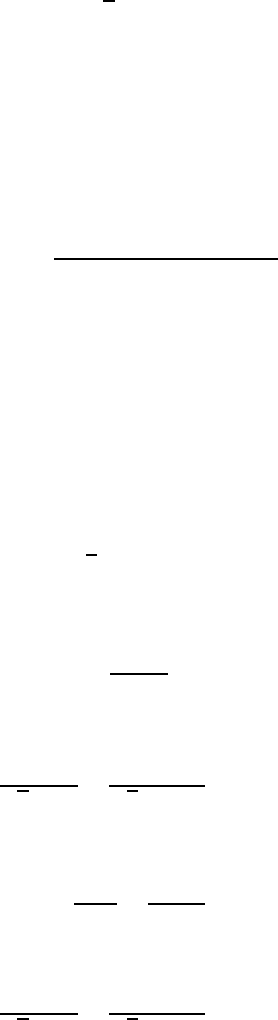
Figure 2.16 The sum of the three phases of power in balanced delta and wye loads is
a constant, not a function of time.
where V
phase
is the rms voltage in each phase, and I
line
is the rms current in each
phase (assumed to be the same in each phase). Applying (2.67) gives
S
3φ
= 3V
phase
I
line
= 3 ·
V
line
√
3
· I
line
=
√
3V
line
I
line
(2.70)
Similarly, the reactive power is
Q
3φ
=
√
3V
line
I
line
sin θ (VAR) (2.71)
where θ is the phase angle between line current and voltage, which is assumed
to be the same for all three phases since this is a balanced load. Finally, the real
THREE-PHASE SYSTEMS 75
power in a balanced three-phase circuit is given by
P
3φ
=
√
3V
line
I
line
cos θ (watts) (2.72)
While (2.72) gives an average value of real power, it can be shown alge-
braically that in fact the real power delivered is a constant that doesn’t vary with
time. The sketch shown in Fig. 2.16 shows how the summation of the power in
each of the three legs leads to a constant total. That constant level of power is
responsible for one of the advantages of three-phase power—that is, the smoother
performance of motors and generators. For single-phase systems, instantaneous
power varies sinusoidally leading to rougher motor operation.
Example 2.10 Correcting the Power Factor in a Three-Phase Circuit.
Suppose that a shop is served with a three-phase, 208-V transformer. The real
power demand of 80 kW is mostly single-phase motors, which cause the power
factor to be a rather poor 0.5. Find the total apparent power, the individual line
currents, and real power before and after the power factor is corrected to 0.9. If
power losses before PF correction is 5% (4 kW), what will they be after power
factor improvement?
Solution. Before correction, with 80 kW of real power being drawn, the apparent
power before PF correction can be found from
P
3φ
= 80 kW =
√
3V
line
I
line
cos θ = S
3φ
cos θ = S
3φ
· 0.5
so, the total apparent power is
S
3φ
=
80 kW
0.5
= 160 kVA
From (2.70), the current flowing in each leg of the three-phase system is
I
line
=
S
3φ
√
3 · V
line
=
160 kVA
√
3 · 208 V
= 0.444 kA = 444 A
After correcting the power factor to 0.9 the resulting apparent power is now
S
3φ
=
P
3φ
cos θ
=
80 kW
0.9
= 88.9kVA
The current in each line is now,
I
line
=
S
3φ
√
3 · V
line
=
88.9kVA
√
3 · 208 V
= 0.247 kA = 247 A
76 FUNDAMENTALS OF ELECTRIC POWER
Before correction, line losses are 5% of 80 kW, which is 4 kW. Since line losses
are proportional to the square of current, the losses after power factor correction
will be reduced to
Losses after correction, P
line
= 4kW·
(247)
2
(444)
2
= 1.24 kW
So, line losses in the factory have been cut from 5 kW to 1.24 kW—a decrease
of almost 70%.
Power factor adjustment not only reduces line losses (as the above example
illustrates) but also makes a smaller, less expensive transformer possible. In a
transformer, it is the heat given off as current runs through the windings that
determines its rating. Transformers are rated by their voltage and their kVA
limits, and not by the kW of real power delivered to their loads. In the above
example, the kVA needed drops from 160 to 88.9 kVA—a reduction of 44%.
That reduction could be used to accommodate future growth in factory demand
without needing to buy a new, bigger transformer; or perhaps, when the existing
transformer needs replacement, a smaller one could be purchased.
2.6.2 Delta-Connected, Three-Phase Systems
So far we have dealt only with three-phase circuits that are wired in the wye
configuration, but there is another way to connect three-phase generators, trans-
formers, transmission lines, and loads. The delta connection uses three wires
+
+
−
−
−
−
−
−
+
+
+
+
a
b
n
a
b
c
a
b
c
n
a
b
c
Wye
Delta
Wye
Delta
(a) Source (b) Load
c
Load anLoad bn
Load cn
Load acLoad ab
Load bc
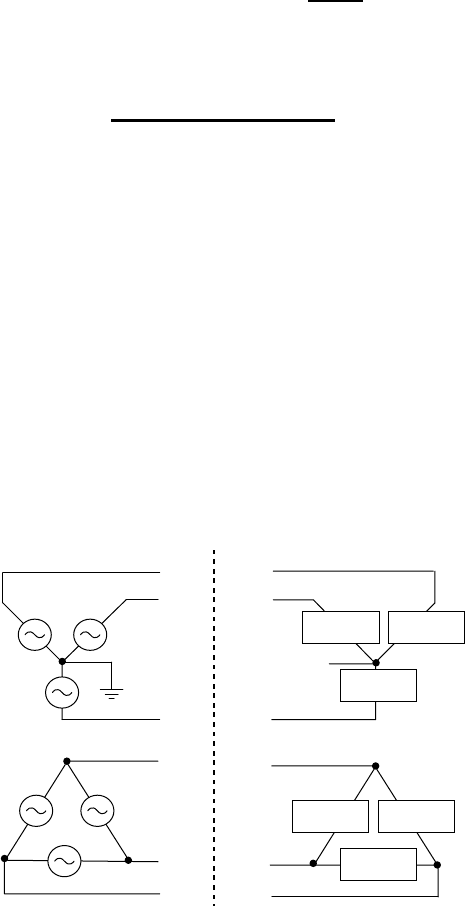
Figure 2.17 Wye and Delta sources and loads.
POWER SUPPLIES 77
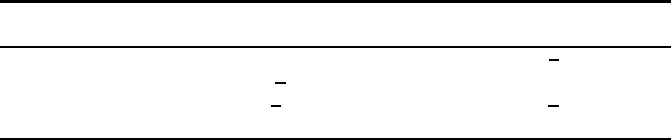
TA BLE 2.1 Summary of Wye and Delta-Connected Current, Voltage, and Power
Relationships
a
Quantity Wye-Connected Delta-Connected
Current (rms) I
line
= I
phase
I
line
=
√
3 I
phase
Voltage (rms) V
line
=
√
3 V
phase
V
line
= V
phase
Power P
3φ
=
√
3 V
line
I
line
cos θP
3φ
=
√
3 V
line
I
line
cos θ
a
The angle θ for delta system is the phase angle of the loads
and has no inherent ground or neutral line (though oftentimes, one of the lines
is grounded). The wiring diagrams for wye and delta connections are shown
in Fig. 2.17. A summary of the key relationships between currents and volt-
ages for wye-connected and delta-connected three-phase systems is presented in
Table 2.1.
2.7 POWER SUPPLIES
Almost all electronic equipment these days requires a power supply to con-
vert 120-V ac from the power lines into the low-voltage, 3- to 15-V dc needed
whenever digital technologies are incorporated into the device. Everything from
televisions to computers, copy machines, portable phones, electric-motor speed
controls, and so forth—virtually anything that has an integrated circuit, digi-
tal display, or electronic control function—uses them. Even portable electronic
products that operate with batteries will usually have an external power supply
to recharge their batteries. It has been estimated that roughly 6% of the total
electricity sold in the United States—some 210 billion kWh/yr—passes through
these power supplies, with roughly one-third of that simply ending up as waste
heat. Of the 2.5 billion power supplies in use in the United States, approximately
40% are ac adapters external to the device, while the remainder are mounted
inside the appliance itself.
Power supplies can be categorized into somewhat traditional linear supplies,
which are those that operate with transformers to drop the incoming ac voltage to
an appropriate level, and switching,orswitch-mode, power supplies that skip the
transformer and do their voltage conversion using a technique based on the rapid on-
and-off switching of a transistorized circuit. Linear power supplies typically operate
in the 50–60% range of energy efficiency, while switching power supplies are
closer to 70–80% energy efficient. Increasing the efficiency of both types of power
supplies, along with replacing linear with switch-mode supplies, could save roughly
1% of U.S. electricity and $2.5 billion a nnually (Calwell and Reeder, 2002).
Figure 2.18 provides an example comparing the efficiencies of a 9-V linear
power supply for a cordless phone versus one incorporating a switch-mode
supply. The switching supply is far more efficient throughout the range of currents