
Masters G.M. Renewable and Efficient Electric Power Systems
Подождите немного. Документ загружается.

148 THE ELECTRIC POWER INDUSTRY
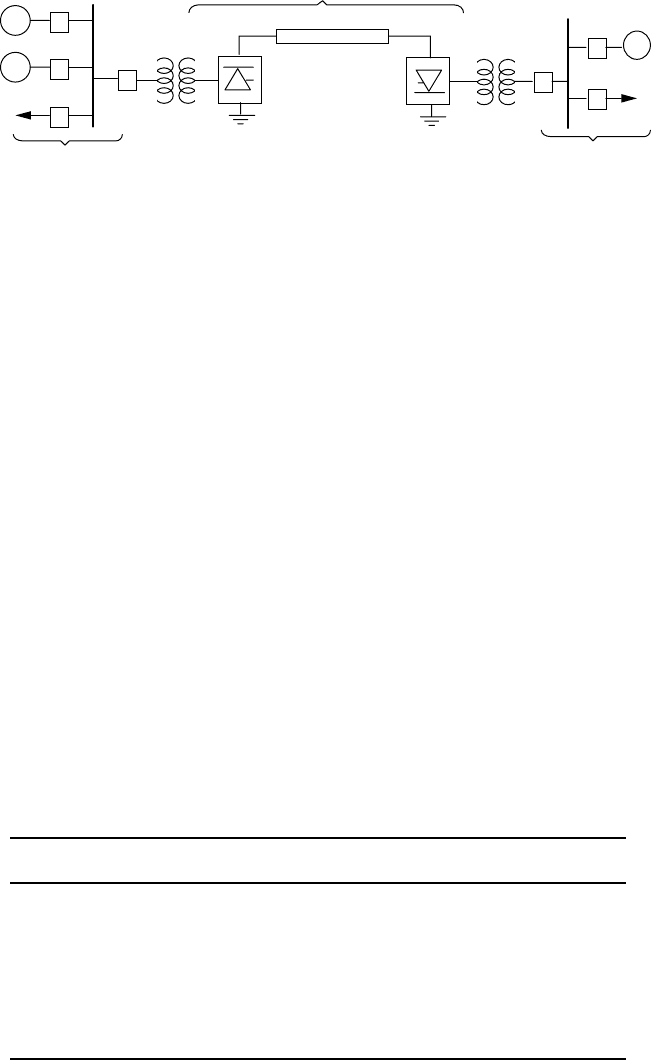
AC Generators
Breakers
Loads
Transformer
Rectifier
Inverter
DC Line
Transformer
HVDC Link
AC System
AC System
Figure 3.36 A one-line diagram of a dc link between ac systems. The inverter and
rectifier can switch roles to allow bidirectional power flow.
in either direction. A simple one-line drawing of an HVDC link is shown in
Fig. 3.36. HVDC lines offer the most economic form of transmission over very
long distances—that is, distances beyond about 500 miles or so. For these longer
distances, the extra costs of converters at each end can be more than offset by
the reduction in transmission line and tower costs.
3.10.2 Transmission Lines
The physical characteristics of transmission lines depend very much on the volt-
ages that they carry. Cables carrying higher voltages must be spaced further apart
from each other and from the ground to prevent arcing from line to line, and
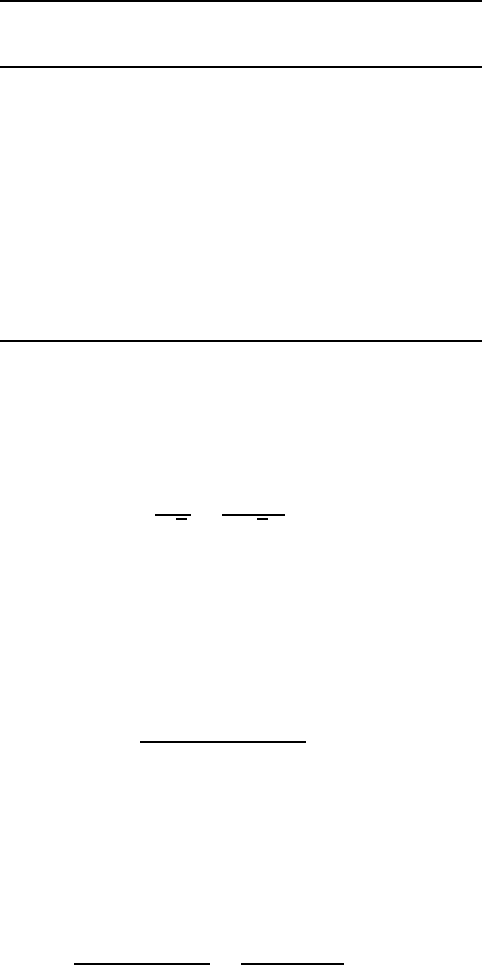
higher current levels require thicker conductors. Table 3.5 lists the most common
voltages in use in the United States along with their usual designation as being
transmission, subtransmission, distribution, or utilization voltages.
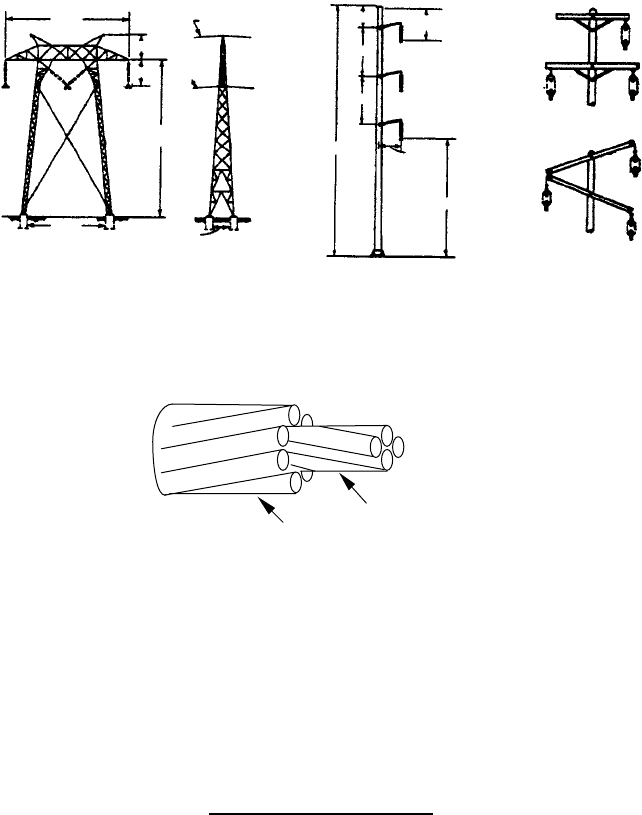
Figure 3.37 shows examples of towers used for various representative trans-
mission and subtransmission voltages. Notice that the 500-kV tower has three
suspended connections for the three-phase current, but it also shows a fourth
connection, namely, a ground wire above the entire structure. This ground wire
not only serves as a return path in case the phases are not balanced, but also
provides a certain amount of lightning protection.
TA BLE 3.5 Nominal Standard T&D System Voltages
Transmission (kV) Subtransmission (kV) Distribution (kV) Utilization (V)
765 138 24.94 600
500 115 22.86 480
345 69 13.8 240
230 46 13.2 208
161 34.5 12.47 120
8.32
4.16
TRANSMISSION AND DISTRIBUTION 149
84′
18′
17′
12′
18′
18′
10′
9′
48′
15′
holddown
weight
125′
58′
14′
Front view
Side view
(a) 500 kV (b) 230 kV (d) 46 kV
(c) 69 kV
Ground wire
Cond-
uctor
Figure 3.37 Examples of transmission towers: (a) 500 kV; (b) 230-kV steel pole;
(c) 69-kV wood tower; (d) 46-kV wood tower.
Inner Steel Strands
Outer Aluminum Strands
Figure 3.38 Aluminum conductor with steel reinforcing (ACSR).
Overhead transmission lines are usually uninsulated, stranded aluminum or
copper wire that is often wrapped around a steel core to add strength (Fig. 3.38).
The resistance of such cable is of obvious importance due to the i
2
R power losses
in the wires as they may carry hundreds of amps of current. Examples of cable
resistances, diameters, and current-carrying capacity are shown in Table 3.6.
Example 3.4 Transmission Line Losses. Consider a 40-mile-long, three-
phase, 230-kV (line-to-line) transmission system using 0.502-in.-diameter ACSR
cable. The line supplies a three-phase, wye-connected, 100-MW load with a 0.90
power factor. Find the power losses in the transmission line and its efficiency.
What savings would be achieved if the power factor could be corrected to 1.0?
Solution From Table 3.6, the cable has 0.7603-/mile resistance, so each line
has resistance
R = 40 mi × 0.7603 /mi = 30.41
150 THE ELECTRIC POWER INDUSTRY
TA BLE 3.6 Conductor Characteristics
a
Conductor
Material
Outer
Diameter (in.)
Resistance
(/mile)
Ampacity
(A)
ACSR 0.502 0.7603 315
ACSR 0.642 0.4113 475
ACSR 0.858 0.2302 659
ACSR 1.092 0.1436 889
ACSR 1.382 0.0913 1187
Copper 0.629 0.2402 590
Copper 0.813 0.1455 810
Copper 1.152 0.0762 1240
Aluminum 0.666 0.3326 513
Aluminum 0.918 0.1874 765
Aluminum 1.124 0.1193 982
a
Resistances at 75
◦
C conductor temperature and 60 Hz, ampacity at
25
◦
C ambient, and 2-ft/s wind velocity.
Source: Data from Bosela (1997).
The phase voltage from line to neutral is given by (2.67)
V
phase
=
V
line
√
3
=
230 kV
√
3
= 132.79 kV
The 100 MW of real power delivered is three times the power delivered in each
phase. From (2.72)
P = 3 V
phase
I
line
× PF = 100 × 10
6
W
Solving for the line current gives
I
line
=
100 × 10
6
3 × 132,790 × 0.90
= 278.9A
Checking Table 3.6, this is less than the 315 A the cable is rated for (at 25
◦
C).
The total line losses in the three phases is therefore
P = 3I
2
R = 3 × (278.9)
2
× 30.41 = 7.097 × 10
6
W = 7.097 MW
The overall efficiency of the transmission line is therefore
Efficiency =
Power delivered
Input power
=
100
100 + 7.097
= 0.9337 = 93.37%
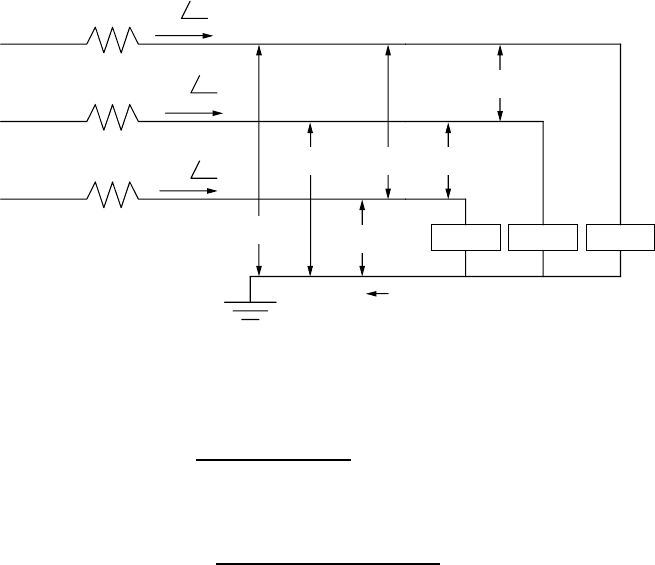
That is, there are 6.63% losses in the transmission line. The figure below sum-
marizes the calculations.
THEREGULATORYSIDEOFELECTRICPOWER 151
Load Load Load
30.41 Ω
30.41 Ω
30.41 Ω
278.9
0° A
132.79 kV
230 kV
230 kV
230 kV132.79 kV
132.79 kV
278.9
120° A
278.9
−120° A
I = 0 A
40-mile transmission line
100 MW
If the power factor could be corrected to 1.0, the line losses would be reduced to
P = 3 ×
100 × 10
6
3 × 132,790 × 1.0
2
× 30.41 = 5.75 MW
which is a 19% reduction in line losses.
As wires heat up due to high ambient temperatures and the self-heating asso-
ciated with internal losses, they not only expand and sag, which increases the
likelihood of arcing or shorting out, but their resistance also increases. For
example, the resistance of both copper and aluminum conductors increases by
about 4% for each 10
◦
C of heating. Resistance also depends on the ac frequency
of the current flowing. Due to a phenomenon called the skin effect, the resistance
at 60 Hz for a transmission line is about 5–10% higher than its dc resistance.
The skin effect is the result of induced emfs that oppose current flow by a greater
amount at the center of a conductor than at its edge. The result is that current
flows more easily through the outer edge of a c onductor than at its center. Recent
interest in dc transmission lines is partly based on the lower resistance posed by
the wires when carrying dc.
3.11 THE REGULATORY SIDE OF ELECTRIC POWER
Edison and Westinghouse launched the electric power industry in the United
States, but it was Insull who shaped what became the modern electric utility
by bringing the concepts of regulated utilities with monopoly franchises into
being. The economies of scale that went with increasingly large steam power
152 THE ELECTRIC POWER INDUSTRY
plants led to an industry based on centralized generation coupled with a complex
infrastructure of transmission lines and distribution facilities.
In the last two decades of the twentieth century, however, cheaper, smaller
turbines, the discovery of the customer’s side of the meter, and growing interest in
renewable energy systems led to increasing pressure for change in the regulatory
structure that guides and controls the industry.
A basic background in both electric power technology and the electricity
industry regulatory structure are essential to understanding the future of this most
important industry. What follows is a brief historical sketch of the evolution of
the regulatory side of the business.
3.11.1 The Public Utility Holding Company Act of 1935 (PUHCA)
In the early part of the twentieth century, as enormous amounts of money were
being made, utility companies began to merge and grow into larger conglom-
erates. A popular corporate form emerged, called a utility holding company.A
holding company is a financial shell that exercises management control of one
or more companies through ownership of their stock. Holding companies began
to purchase each other and by 1929, 16 holding companies controlled 80% of
the U.S. electricity market, with just three of them owning 45% of the total.
With so few entities having so much control, it should have come as no surprise
that financial abuses would emerge. Holding companies formed pyramids with
other holding companies, each owning stocks in subsequent layers of holding
companies. An actual operating utility at the bottom found itself directed by
layers of holding companies above it, with each layer demanding its own profits.
At one point, these pyramids were sometimes ten layers thick. When the stock
market crashed in 1929, the resulting Depression drove many holding companies
into bankruptcy, causing investors to lose fortunes. Insull became somewhat of a
scapegoat for the whole financial fiasco associated with holding companies, and
he fled the country amidst charges of mail fraud, embezzlement, and bankruptcy
violations, charges for which he was later cleared.
In response to these abuses, Congress created the Public Utility Holding Com-
pany Act of 1935 (PUHCA) to regulate the gas and electric industries and prevent
holding company excesses from reoccurring. Many holding companies were dis-
solved, their geographic size was limited, and the remaining ones came under
control of the newly created Securities and Exchange Commission (SEC).
While PUHCA has been an effective deterrent to previous holding company
financial abuses, recent changes in utility regulatory structures, with their goal of
increasing competition, have led many to say that it has outlived its usefulness
and should be modified or abolished. The main issue is a provision of PUHCA
that restricts holding companies to business within a single integrated utility,
which is a major deterrent to the modern pressure to allow wholesale wheeling
of power from one region in the country to another.
THEREGULATORYSIDEOFELECTRICPOWER 153
3.11.2 The Public Utility Regulatory Policies Act of 1978 (PURPA)
With the country in shock from the oil crisis of 1973 and with the economies
of scale associated with ever-larger power plants having pretty much played
out, the country was drawn toward energy efficiency, renewable energy systems,
and new, small, inexpensive gas turbines. To encourage these systems, President
Carter signed the Public Utility Regulatory Policies Act of 1978 (PURPA).
There are two key provisions of PURPA; both of these relate to allowing inde-
pendent power producers, under certain restricted conditions, to connect their
facilities to the utility-owned grid. For one, PURPA allows certain industrial
facilities and other customers to build and operate their own, small, on-site gen-
erators while remaining connected to the utility grid. Prior to PURPA, utilities
could refuse service to such customers, which meant that self-generators had to
provide all of their own power, all of the time, including their own redundant,
back-up power systems. That had virtually eliminated the possibility of using
efficient, economical on-site power production to provide just a portion of a
customer’s needs.
PURPA not only allowed grid interconnection, but also required utilities to
purchase electricity from certain qualifying facilities (QFs) at a “just and rea-
sonable price.” The purchase price of QF electricity was to be based on what
it would have cost the utility to generate the power itself or to purchase it on
the open market (referred to as the avoided cost ). This provision stimulated the
construction of numerous renewable energy facilities, especially in California,
since PURPA guaranteed a market, at a good price, for any electricity generated.
PURPA, as implemented by the Federal Regulatory Commission (FERC),
allows interconnection to the grid by Qualifying Small Power Producers or Quali-
fying Cogeneration Facilities; both are referred to as QFs. Small power producers
are less than 80 MW in size and use at least 75% wind, solar, geothermal,
hydroelectric, or municipal waste as energy sources. Cogenerators are defined as
facilities that produce both electricity and useful thermal energy in a sequential
process from a single source of fuel, which may be entirely oil or natural gas.
To encourage competition, ownership of QFs by investor-owned electric utilities
(IOUs) was limited to 50%.
PURPA not only gave birth to the electric side of the renewable energy indus-
try, but also enabled clear evidence to accrue which demonstrated that small,
on-site generation could deliver power at considerably lower cost than the retail
rates charged by utilities. Competition had begun.
3.11.3 The Energy Policy Act of 1992 (EPAct)
The Energy Policy Act of 1992 (EPAct) created even more competition in the
electricity generation market by opening the grid to more than just the QFs
identified in PURPA. A new category of access was granted to exempt wholesale
generators (EWGs), which can be of any size, using any fuel and any generation
technology, without the restrictions and ownership constraints that PURPA and
PUHCA impose. EPAct allows EWGs to generate electricity in one location and
154 THE ELECTRIC POWER INDUSTRY
sell it anywhere else in the country using someone else’s transmission system
to wheel their power from one location to another. The key restriction of an
EWG is that it deals exclusively with the wholesale wheeling of power from the
generator to a buyer who is not the final retail customer who uses that power.
Retail wheeling, in which generators wheel power over utility power lines and
then sell it directly to retail customers, is the next step, still underway, in the
process of creating effective competition for traditional utility generation. PURPA
allows retail wheeling for QFs. Other independent power producers (IPPs) can
also take advantage of retail wheeling if states allow it, but they continue to be
regulated under the rules of FERC and PUHCA.
3.11.4 FERC Order 888 and Order 2000
While the 1992 EPAct allowed IPPs to gain access to the transmission grid, prob-
lems arose during periods when the transmission lines were being used to near
capacity. In these and other circumstances, the investor-owned utilities (IOUs)
that owned the lines favored their own generators, and IPPs were often denied
access. In addition, the regulatory process administered by the Federal Energy
Regulatory Commission (FERC) was initially cumbersome and inefficient. To
eliminate such deterrents, the FERC issued Order 888 in 1996, which had as
a principal goal the elimination of anti-competitive practices in transmission
services by requiring IOUs to publish nondiscriminatory tariffs that applied to
all generators.
Order 888 also encouraged formation of independent system operators (ISOs),
which are nonprofit entities established to control operation of transmission facil-
ities owned by traditional IOUs. Later, in December 1999, FERC issued Order
2000, which broadens its efforts to break up vertically integrated utilities by call-
ing for the creation of regional transmission organizations (RTOs). R TOs can
follow the ISO model in which ownership of the transmission system remains
with the utilities, with the ISO being there to provide control of the system’s oper-
ation, or they would be separate transmission companies (TRANSCOs), which
would actually own the transmission facilities and operate them for a profit.
3.11.5 Utilities and Nonutility Generators
With PURPA and EPAct regulating certain categories of generators that are not
owned and operated by traditional utilities, a whole new set of definitions has
crept into the discussion of the electric power industry. Before addressing the
emergence of competition, it is worth clarifying the players. The industry is now
divided into utilities and nonutility generators (NUGs), and each has its own
subcategories.
Recall that utilities are categorized as being investor-owned (IOUs), federally
owned, such as the Bonneville Power Administration, publicly owned municipal
and state utilities, and local rural cooperatives owned by the members they serve.
THE EMERGENCE OF COMPETITIVE MARKETS 155
Utility
Nonutility Generator NUG
Investor
Owned
Federally
Owned
Publicly
Owned
Co-op
QF IPP
Cogeneration Renewable EWG Other
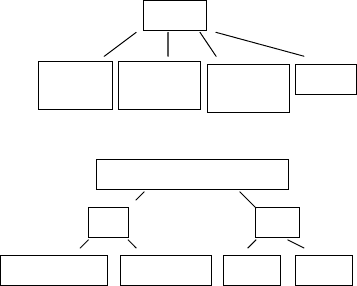
Figure 3.39 The electric power industry is now divided into utilities and nonutilities,
with each having its own subset of categories and distinctive features.
Nonutilities, or NUGs, have their own somewhat confusing nomenclature.
Qualifying facilities (QFs) meet certain ownership, operating, and efficiency
requirements as defined by PURPA. They may be cogenerators that sequentially
produce thermal and electrical energy, or they may be small power producers
that rely mostly on renewable energy sources. Utilities must purchase QF power
at a price based on the utility’s avoided cost.
Independent power producers (IPPs) are non-PURPA-regulated NUGs. A
major category of IPP is defined by EPAct as exempt wholesale generators
(EWGs). EWGs are exempt from PUHCA’s corporate and geographic restric-
tions, but they are not allowed to wheel power directly to retail customers.
Non-EWG IPPs are regulated by PUHCA, but they are allowed to sell to retail
customers.
Figure 3.39 summarizes these various categories of utilities and nonutilities.
3.12 THE EMERGENCE OF COMPETITIVE MARKETS
Prior to PURPA, the accepted method of regulation was based on monopoly
franchises, vertically integrated utilities that owned some or all of their own gen-
eration, transmission, and distribution facilities, and consumer protections based
on strict control of rates and utility profits. In the final decades of the twentieth
century, however, the successful deregulation of other traditional monopolies such
as telecommunications, airlines, and the natural gas industry provided evidence
that introducing competition in the electric power industry might also work there.
While the disadvantages of multiple systems of wires to transmit and distribute
power continue to suggest they be administered as regulated monopolies, there
is no inherent reason why there shouldn’t be competition between generators
who want to put power onto those wires. The whole thrust of both PURPA and
156 THE ELECTRIC POWER INDUSTRY
EPAct was to begin the opening up of that grid to allow generators to compete
for customers, thereby hopefully driving down costs and prices.
3.12.1 Technology Motivating Restructuring
Restructuring of the electric power industry has been motivated by the emer-
gence of new, small power plants, especially gas turbines and combined-cycle
plants, that offer both reduced first cost and operating costs compared with
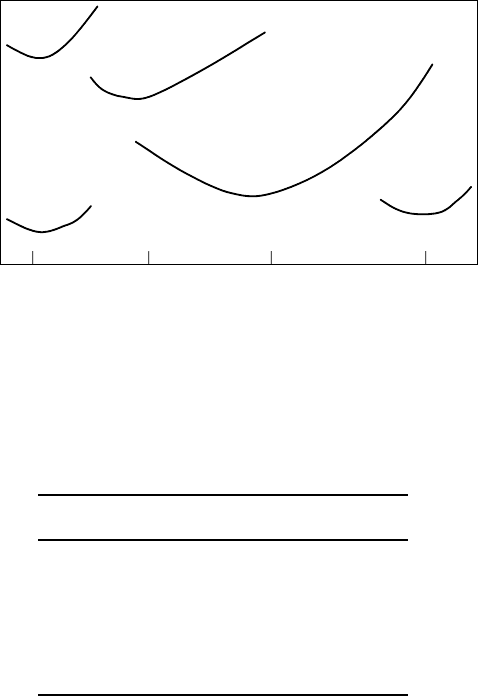
almost all of the generation facilities already on line. The economies of scale
that motivated ever-larger power plants in the past seem to have played out,
as illustrated in Fig. 3.40. By 2000 the largest plants being built were only
a few hundred megawatts, whereas in the previous decade they were closer
to 1400 MW. Table 3.7 shows the dramatic shift anticipated in power plant
1930
1950
1970
1980
1990
Gas turbine
Thermal plants
Installed cost of new plants ($/MW)
Plant size (MW)
50 200 600 1000
Figure 3.40 The era of bigger-is-better that dominated power plant construction for most
of the twentieth century shifted rather abruptly around 1990. From Bayliss (1994).
TA BLE 3.7 Total Projected Additions of
Electricity Generating Capability, in units of
Thousand Megawatts (GW), 1999–2020
Technology Capacity Additions
Coal steam 21.1
Combined cycle 135.2
Combustion turbine/Diesel 133.8
Fuel cells 0.1
Renewable sources 9.7
TOTAL 300
Source: EIA (2000).
THE EMERGENCE OF COMPETITIVE MARKETS 157
construction away from the workhorse, coal-fired steam turbines that now supply
more than half of all electricity generated in the United States. In the projection
shown, new coal-fired plants make up only 7% of the 300 GW of new power
plant generation anticipated by 2020.
The emergence of small, less capital-intensive power plants helped indepen-
dent power producers (IPPs) get into the power generation business. By the early
1990s the cost of electricity generated by IPPs was far less than the average
price of power charged by regulated utilities. With EPAct opening the grid, large
customers began to imagine how much better off they would be if they could just
bypass the regulated utility monopolies and purchase power directly from those
small, less expensive units. Large customers, with the wherewithal, threatened
to leave the grid entirely and generate their own electricity, while others, when
allowed, began to take advantage of retail wheeling to purchase power directly
from IPPs.
Not only did small power plants become more cost effective, independent
power producers found themselves with a considerable advantage over traditional
regulated utilities. Even though utilities and IPPs had equal access to new, less
expensive generation, the utilities had huge investments in their existing facilities,
so the addition of a few low-cost new turbines had almost no impact on their
overall average cost of generation.
To help utilities successfully compete with IPPs in the emerging competitive
marketplace, FERC included in Order 888 a provision to allow utilities to speed
up the recovery of costs on power plants that were no longer cost-effective.
The argument was based on the idea that when utilities built those expensive
power plants, they did so under a regulatory regime that allowed cost recovery
of all prudent investments. To be fair and to help assure utility support for a
new competitive market, FERC believed it was appropriate to allow utilities to
recover those stranded asset costs even if that might delay the emergence of a
competitive market. FERC then endorsed the concept of charging customers who
chose to leave the utility system a departure fee to help pay for those stranded
costs left behind.
3.12.2 California Begins to Restructure
With the grid opening up, a number of states began to develop restructuring
programs in the 1990s. It is no surprise that the states that took the initiative
tended to be those with higher utility costs.
While Fig. 3.7 showed average electricity prices, of greater importance to
understanding the driving force behind restructuring is the price of electricity for
large industrial customers. It is those customers who are most likely to threaten to
purchase power from an IPP, generate their own electricity, or move the location
of their operations to a state with lower electricity prices. Figure 3.41 shows
the state-by-state average revenue per kWh for the industrial sector. States with
the highest prices include California and much of New England. Both are areas
where restructuring began.