
Masters G.M. Renewable and Efficient Electric Power Systems
Подождите немного. Документ загружается.

158 THE ELECTRIC POWER INDUSTRY
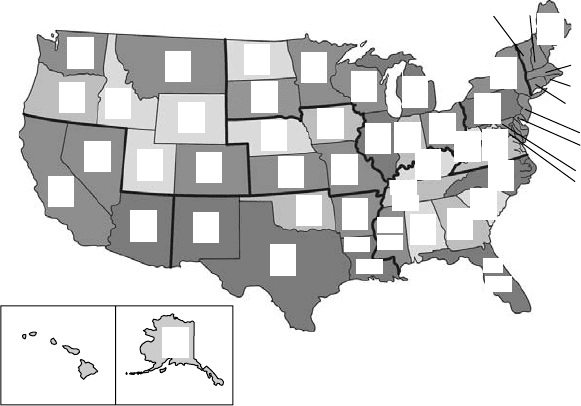
U.S. Industrial Average Revenue per kWh is 5.04 Cents
WA
4.48
OR
4.21
NV
6.56
ID
3.71
UT
3.53
WY
3.43
CO
4.48
CA
9.81
HI
11.68
AZ
5.24
AK
7.61
NM
5.45
MT
6.54
ND
3.98
SD
4.46
NE
3.76
KS
4.55
OK
4.29
AR
4.43
MO
4.39
IA
4.18
IAL
4.92
OH
4.3
IN
4.11
KY
3.04
NC
4.72
AL
3.8
GA
4.28
SC
3.88
PA
5.89
NY
5.51
VT
7.89
NH
9.11
ME
8.62
WV
3.74
VA
4.17
WI
4.37
MN
4.52
ML
5.09
TX
5.31
LA
5.58
FL
5.33
MS
4.4
TN
4.12
MA
10.13
RI
9.79
CT
7.62
NJ
8.27
DE
5.08
MD
4.41
DC
4.81
Figure 3.41 Av erage industrial sector revenue per kWh, 2001. California was 6.6¢/kWh
in 1998, before restructuring. From EIA (2003).
In the mid-1990s, California’s retail price of electricity for the industrial sector
was among the highest in the nation, yet the on-peak, wholesale market price
was less than one-fourth of that amount. Excess capacity in nearby states, along
with plenty of hydroelectric power, kept the wholesale marginal cost of electric-
ity low. The gap between wholesale and retail prices suggested that if utilities
could just rid themselves of their QF obligations and quickly pay down their
expensive existing generators, they would be able to dramatically lower prices
by simply purchasing their power in the wholesale market. Worried about losing
large industrial customers to other states with cheaper electric rates, the California
public utility commission (CPUC) in 1994 issued a proposed rule to restructure
the power industry with the goal of reducing the state’s high price of electricity.
The restructuring was unfortunately misnamed “deregulation,” and that became
the term that was used throughout the ensuing years of turmoil.
California’s AB 1890 Barely two years after the CPUC proposed to restruc-
ture the electric power industry, in 1996 the California Legislature responded
by enacting Assembly Bill 1890 (AB 1890). AB 1890 included the following
major provisions:
ž
The wholesale market was opened to competition, and all customers would
have a choice of electricity suppliers.
ž
Residential and small commercial customers would be given an immediate
4-year, 10% rate reduction to be funded by issuing bonds that would be
THE EMERGENCE OF COMPETITIVE MARKETS 159
repaid after the 4-year period ended. Larger customers who stayed with
their IOUs would have rates frozen at 1996 levels.
ž
Utilities would be given the opportunity to recover their stranded costs
(especially nuclear and QF obligations) during that 4-year rate-freeze period.
The assumption was that utilities would collect more revenue at the frozen,
retail rates than would be needed to purchase power in the wholesale market,
cover transmission and distribution costs, and make payments on their rate-
reduction bonds. The difference between retail price and those various costs,
called the competition transition charge (CTC), would be used to pay down
stranded assets over the 4-year rate-freeze period.
ž
A public goods charge would be levied to continue support for programs
focused on renewable energy, customer energy efficiency, and rate subsidies
for low-income consumers.
ž
Utilities were to sell off much of their generating capacity to create new
players in the market who would then compete to sell their power, thereby
lowering prices.
ž
After the initial 4 years—that is, by 2002—rates would be unfrozen and the
benefits associated with the free market would be realized. The rate freeze
would end sooner for any utility that paid off its stranded assets in less than
4 years.
AB 1890 applied to the state’s three major IOUs, Pacific Gas and Electric
(PG&E), Southern California Edison (SCE), and San Diego Gas and Electric
(SDG&E), which deliver roughly three-fourths of the electricity in California.
The remaining one-fourth is mostly made up of municipal utilities, which were
encouraged, but not required, to participate in the restructuring.
Following FERC’s Order 888, California established a not-for-profit indepen-
dent system operator (ISO) to operate and manage the state’s transmission grid.
The ISO was meant to assure access to the transmission system so that buyers
could purchase electricity from any sellers that they may choose. In addition,
the California Power Exchange (CalPX) was set up to match supply to demand
using daily auctions. It accepted price and quantity bids from participants in both
“Day-Ahead” and “Day-Of” markets from which the market clearing price at
which energy was bought and sold was determined.
One of the benefits of the restructuring was that customers could choose their
supplier of electricity. Competition was facilitated by energy service providers,
or power marketers, who offered a range of generation combinations, including
options for various fractions of renewables. To help make comparisons, utilities
and power marketers provided power content labels specifying the fraction of
their generation that was from renewables, coal, large hydroelectric, natural gas,
and nuclear.
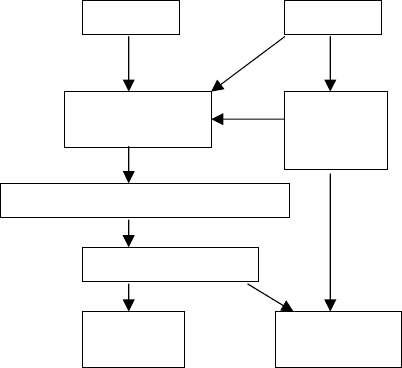
The basic structure of California’s intended, restructured electricity system is
diagrammed in Fig. 3.42.
160 THE ELECTRIC POWER INDUSTRY
Generator Generator
Power Exchange
(CalPX)
Energy
Service
Providers
Independent System Operator (ISO)
Distribution Utilities
Utility
Customers
Direct Access
Customers
Figure 3.42 California’s initial electric industry restructuring.
3.12.3 Collapse of ‘‘Deregulation’’ in California
California officially opened its wholesale electricity market to competition in
March 1998. For the first two years, it worked quite well, with wholesale
prices hovering around $35/MWh (3.5¢/kWh) which was far less than the
frozen retail rates. Even after adding on the cost of transmission, distribution
and rate-reduction bonds, utilities were still netting around $35/MWh to pay
down stranded assets (Wolak, 2003). PG&E, SCE, and SDG&E had sold off
approximately 18,000 MW of generation capacity, or roughly 40% of California’s
generating capacity, to five new entrants into the California market: Duke,
Dynergy, Reliant, AES, and Mirant. Marketers of green power were beginning
to make inroads into the residential market.
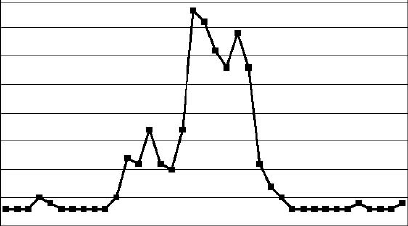
Then in the summer of 2000, it all began to unravel (Fig. 3.43). The cost of
power on the wholesale market rose to unheard of levels. In August 2000, at an
average price of $170/MWh (17¢/kWh) it was five times higher than it had been
in the same month in 1999, and on one day it reached $800/MWh (80¢/kWh).
Under the fixed retail-price constraints imposed by AB 1890, PG&E and SCE
were forced to purchase wholesale power at higher prices than they could sell it
for and began to rapidly acquire unsustainable levels of debt. SDG&E, however,
had already paid off its stranded assets and therefore was able to pass these
higher costs on to its customers, who, as a r esult, saw rates increase by as much
as 300%.
By the end of 2000, Californians had paid $33.5 billion for electricity, nearly
five times the $7.5 billion spent in 1999. Factors that contributed to the crisis
included higher-than-normal natural gas prices, a drought that reduced the avail-
ability of imported electricity, especially from the northwest, reduced efforts by
THE EMERGENCE OF COMPETITIVE MARKETS 161
California utilities to pursue customer efficiency programs in a deregulated envi-
ronment, and insufficient new plant construction. Arguably, this construction was
not necessitated by growth in California’s electricity demand, which had been
modest, but rather it was the lack of construction in adjacent states that had tra-
ditionally exported power to California. Those states were not keeping up with
their own demands, which eroded the amounts usually available for California to
import. But the principal cause was the discovery by new generation companies
that they could make a lot more money manipulating the market than meeting
the needs of California with adequate supplies. In November 2000, even FERC
concluded that unjust and unreasonable summer wholesale prices resulted from
the exercise of market power by generators.
In January 2001, California experienced almost daily Stage 3 emergencies
and had several days with rolling blackouts. To have rolling blackouts in January
when peak power demands are one third-lower than they are in the summer
provided compelling evidence that generators had gamed the system by purposely
removing capacity from the grid in order to raise prices and increase profits on the
facilities that they continued to operate. In fact, wholesale rates in January 2001
far exceeded those of the previous summer and at one point reached $1500/MWh
($1.50/kWh). California paid as much for electricity in the first month and a half
of 2001 as it had paid in all of 1999.
As Fig. 3.43 shows, wholesale prices remained extraordinarily high through
the spring of 2001. By May, PG&E had declared bankruptcy and SCE was on
the edge, the CalPX had been shut down, and CalISO began to purchase power
as well as operate the grid. The crisis finally began to ease by the summer
of 2001 after FERC instituted price caps on wholesale power, the Governor
began to negotiate long-term power contracts, and the state’s aggressive energy-
conservation efforts began to pay off.
The true success story in relieving the anticipated summer 2001 meltdown
was California’s intensive and effective energy conservation program. Additional
funds were devoted to energy efficiency programs including a “20/20” program
that provided a 20% percent rate reduction to customers who cut energy use by
40
35
30
25
20
15
10
5
0
Jul 99 Jan 00 Jul 00 Jan 01 Jul 01 Jan 02 Jul 02
Wholesale Electricity Price
(Norminal Cents Per kWh)
Figure 3.43 California wholesale electricity prices during the crisis of 2000–2001.
From: Bachrach et al. (2003).
162 THE ELECTRIC POWER INDUSTRY
14%
12%
10%
8%
6%
4%
2%
0%
Jan Feb Mar Apr May Jun Jul Aug Sep Oct Nov Dec Annual
Percent Savings
2001
2002
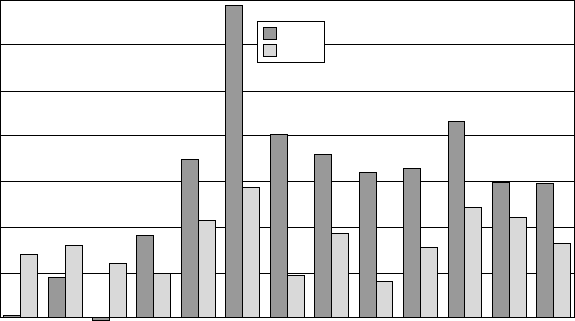
Figure 3.44 California weather-adjusted monthly electricity reductions relative to 2000
(Bachrach, 2003). Efficiency programs saved the state from what could have been a
catastrophic 2001 summer.
20%—a target that over one-third of residential customers achieved. A number
of specialized programs were created to focus on reducing peak demand. Relative
to June 2000, energy use in June 2001, adjusted for weather, was down almost
14% and for the whole summer it was almost 8% lower. Those were gains
during a year in which the economy grew by 2.3%. The estimated cost of the
state’s conservation program was less than 3 cents per kWh saved, an order of
magnitude below the average wholesale price the previous winter and half the
cost of the long-term contracts the state signed in March 2001 (Bachrach, 2003).
Moreover, as Fig. 3.44 shows, even after the crisis had passed, the conservation
gains showed every sign that they would persist.
In March 2003, the FERC issued a statement concluding that California elec-
tricity and natural gas prices were driven higher because of widespread manipu-
lation and misconduct by Enron and more than 30 other energy companies during
the 2000–2001 energy crisis.
While the momentum of the 1990s toward restructuring was shaken by the
California experience, the basic arguments in favor of a more competitive electric
power industry remain attractive. Analysis of the failure there has guided the
restructuring that continues to proceed in a number of other states. It is hoped
that they’ll do better.
REFERENCES
Bachrach, D., M. Ardema, and A. Leupp (2003). Energy Efficiency Leadership in Cali-
fornia: Preventing the Next Crisis, Natural Resources Defense Council, Silicon Valley
Manufacturing Group, April.
PROBLEMS 163
Bayliss, C. (1994). Less is More: Why Gas Turbines Will Transform Electric Utilities,
Public Utility Fortnightly, December 1, pp. 21–25.
Bosela, T. R. (1997). Introduction to Electrical Power System Technology, Prentice-Hall,
Englewood Cliffs, NJ.
Brown, R. E., and J. Koomey (2002). Electricity Use in California: Past Trends and
Present Usage Patterns, Lawrence Berkeley National Labs, LBL-47992, Berkeley, CA.
California Collaborative (1990). An Energy Efficiency Blueprint for California, January.
Culp, A. W., Jr. (1979). Principles of Energy Conversion, McGraw-Hill, New York.
Energy Information Administration (EIA, 2001). The Changing Structure of the Electric
Power Industry 2000: An Update, DOE/EIA-0562(00), Washington, DC.
Energy Information Administration (EIA, 2003). EIA Annual Energy Review 2001 ,
DOE/EIA-0348(2001), Washington, DC.
IPCC (1996). Climate Change 1995: Impacts, Adaptations and Mitigation of Climate
Change: Scientific-Technical Analyses, Intergovernmental Panel on Climate Change,
Cambridge University Press, New York.
Lovins, A. B., E. Datta, T. Feiler, K. Rabago, J. Swisher, A. Lehmann, and K. Wicker
(2002). Small is Profitable: The Hidden Economic Benefits of Making Electrical
Resources the Right Size, Rocky Mountain Institute, Snowmass, CO.
Masters, G. M. (1998). Introduction to Environmental Engineering and Science, 2nd ed.,
Prentice-Hall, Englewood Cliffs, NJ.
Penrose, J. E., Inventing Electrocution, Invention and Technology, Spring 1994, pp. 35–44.
Petchers, N. (2002). Combined Heating, Cooling & Power: Technologies & Applications,
The Fairmont Press, Lilburn, GA.
Sant, R. (1993). Competitive Generation is Here, The Electricity Journal, August/
September.
Union of Concerned Scientists (UCS, 1992). America’s Energy Choices: Investing in a
Strong Economy and a Clean Environment, Cambridge, MA.
Wolak, F. A. (2003). Lessons from the California Electricity Crisis, University of Cali-
fornia Energy Institute, Center for the Study of Energy Markets, CSEMWP110.
PROBLEMS
3.1 A Carnot heat engine receives 1000 kJ/s of heat from a high temperature
source at 600
◦
C and rejects heat to a cold temperature sink at 20
◦
C.
a. What is the thermal efficiency of this engine?
b. What is the power delivered by the engine in watts?
c. At what rate is heat rejected to the cold temperature sink?
d. What is the entropy change of the sink?
3.2 A heat engine supposedly receives 500 kJ/s of heat from an 1100-K source
and rejects 300 kJ/s to a low-temperature sink at 300 K.
a. Is this possible or impossible?
b. What would be the net rate of change of entropy for this system?
164 THE ELECTRIC POWER INDUSTRY
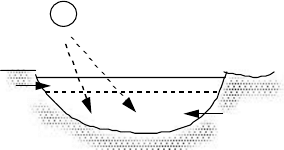
3.3 A solar pond consists of a thin layer of fresh water floating on top of a
denser layer of salt water. When the salty layer absorbs sunlight it warms
up and much of that heat is held there by the insulating effect of the fresh
water above it (without the fresh water, the warm salt water would rise
to the surface and dissipate its heat to the atmosphere). A solar pond can
easily be 100
◦
C above the ambient temperature.
Salty layer
Freshwater
Figure P3.3
a. What is the maximum efficiency of a heat engine operating off of a
120
◦
C solar pond on a 20
◦
Cday?
b. If a real engine is able to achieve half the efficiency of a Carnot engine,
how many kilowatt hours of electricity could be generated per day from
a 100 m × 100 m pond that captures and stores 50% of the 7 kWh/m
2
solar radiation striking the surface?
c. For a house that requires 500 kWh per (30-day) month, what area of
pond would be needed?
3.4 A combined-cycle, natural-gas, power plant has an efficiency of 52%. Nat-
ural gas has an energy density of 55,340 kJ/kg and about 77% of the fuel
is carbon.
a. What is the heat rate of this plant expressed as kJ/kWh and Btu/kWh?
b. Find the emission rate of carbon (kgC/kWh) and carbon dioxide
(kgCO
2
/kWh). Compare those with the average coal plant emission rates
found in Example 3.2.
3.5 A new coal-fired power plant with a heat rate of 9000 Btu/kWh burns coal
with an energy content of 24,000 kJ/kg. The coal content includes 62-%
carbon, 2-% sulfur and 10-% unburnable minerals called ash.
a. What will be the carbon emission rate (g C/kWh)?
b. What will be the uncontrolled sulfur emission rate (g S/kWh)?
c. If 70% of the ash is released as particular matter from the stack (called fly
ash), what would be the uncontrolled particulate emission rate (g/kWh)?
d. Since the Clean Air Act restricts SO
2
emissions to 130 g of sulfur per
10
6
kJ of heat into the plant, what removal efficiency does the scrubber
need to have for this plant?
PROBLEMS 165
e. What efficiency does the particulate removal equipment need to have to
meet the Clean Air Act standard of no more than 13 g of fly ash per
10
6
kJ of heat input?
3.6 Using the representative capital costs of power plant and fuels given in
Table 3.3, compute the cost of electricity from the following power plants.
For each, assume a fixed charge rate of 0.14/yr.
a. Pulverized coal steam plant with capacity factor CF = 0.7.
b. Advanced coal steam plant with CF = 0.8.
c. Oil/gas steam plant with CF = 0.5.
d. Combined cycle gas plant with CF = 0.5.
e. Gas-fired combustion turbine with CF = 0.2.
f. SIGT gas turbine with CF = 0.4.
g. New hydroelectric plant with CF = 0.6.
h. Wind turbine costing $800/kW, CF = 0.37, O&M = 0.60¢/kWh
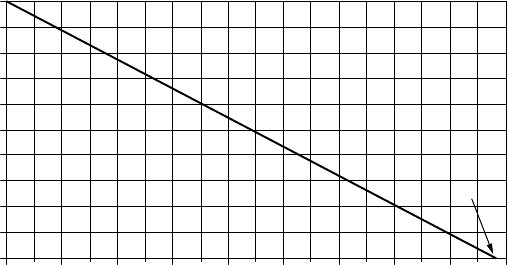
3.7 Consider the following very simplified load duration curve for a small utility:
9000800070006000500040003000200010000
0
100
200
300
400
500
600
700
800
900
1000
Hours/year
Demand (MW)
8760 hr/yr
Figure P3.7
a. How many hours per year is the load less than 200 MW?
b. How many hours per year is the load between 300 MW and 600 MW?
c. If the utility has 500 MW of base-load coal plants, what would their
average capacity factor be?
d. How many kWh would those coal plants deliver per year?
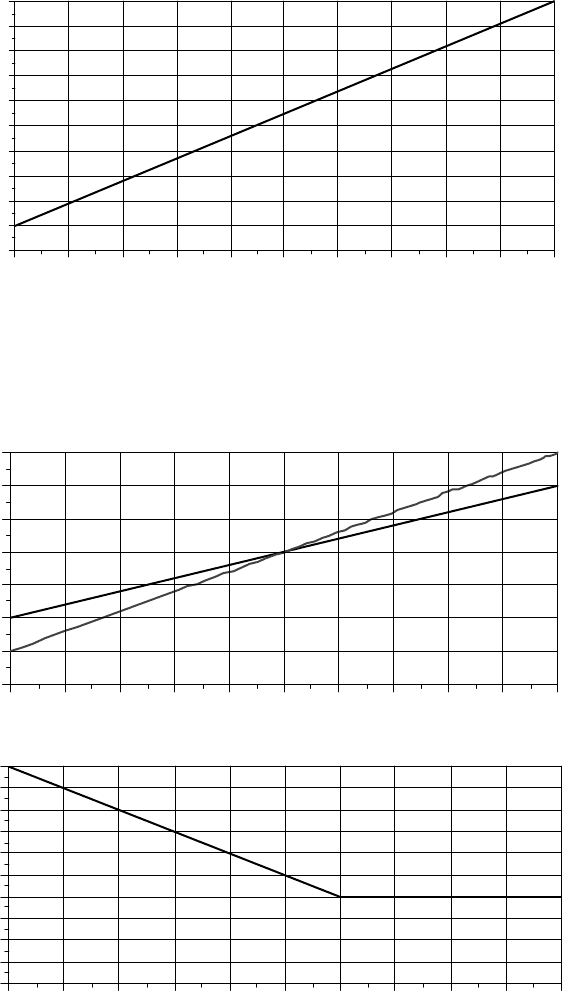
3.8 If the utility in Problem 3.7 has 400 MW of peaking power plants with the
following “revenue required” curve, what would be the cost of electricity
(¢/kWh) from these plants when operated as peakers?
166 THE ELECTRIC POWER INDUSTRY
1.00.90.80.70.60.50.40.30.20.10.0
0
50
100
150
200
250
300
350
400
450
500
Capacity Factor
$/YR-KW
Figure P3.8
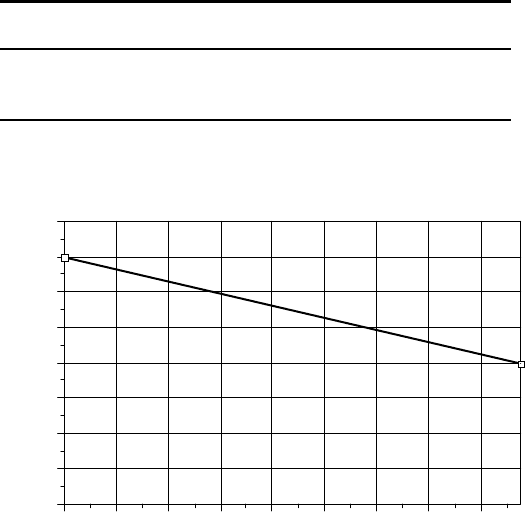
3.9 Consider screening curves for gas turbines and coal-fired power plants given
below along with a load duration curve for a hypothetical utility:
1.00.90.80.70.60.50.40.30.20.10.0
0
50
100
150
200
250
300
350
CAPACITY FACTOR
$/YR-KW
COAL
GAS
TURBINE
1009080706050403020100
0
1
2
3
4
5
6
7
8
9
10
% OF YEARLY HOURS
million kW
Figure P3.9
PROBLEMS 167
a. For a least-cost combination of power plants, how many MW of each
kind of power plant should the utility have?
b. What would the cost of electricity be ($/kWh) for the gas turbines sized
in (a)?
3.10 The following table gives capital costs and variable costs for a coal plant,
a natural gas combined-cycle plant, and a natural-gas-fired gas turbine:
COAL NG CC NG GT
Capital Cost ($/kW) $ 1,500.00 $ 1,000.00 $ 500.00
Variable Cost (¢/kWh) 2.50 4.00 8.00
The utility uses a fixed charge rate of 0.10/yr for capital costs. Its load duration
curveisshownasfollows.
800070006000500040003000200010000
0
1000
2000
3000
4000
5000
6000
7000
8000
HRS/YR
DEMAND (MW)
Figure P3.10
a. Draw the screening curves (Revenue Required $/yr-kW vs hr/yr) for each
of the three types of power plants.
b. For a least-cost combination of power plants, how many MW of each
kind of power plant should the utility have? If you plot this carefully, you
can do it graphically. Otherwise you may need to solve algebraically.
c. Estimate the average capacity factor for each type of power plant.
d. How many MWhr of electricity would each type of power plant generate
each year?