
Masters G.M. Renewable and Efficient Electric Power Systems
Подождите немного. Документ загружается.


298 ECONOMICS OF DISTRIBUTED RESOURCES
Since the cost to the participant and the utility ($3) is less than the benefit
associated with not generating that extra energy ($17.10), the measure is cost
effective using the TRC test.
It is interesting to note that a DSM measure can pass the RIM test yet still
flunk the TRC test, and vice versa. In other words, neither is inherently more
stringent, though it is more likely that a DSM program will pass the TRC test
than RIM.
A variation on the TRC test is called the societal test, the difference being
that the latter includes quantified impacts of environmental externalities in the
cost and benefit calculations.
Utility Cost Test (UCT). The utility cost test (UCT) is similar to the total
resource cost test in that it compares costs and benefits of DSM, but it does so
only from the perspective of the utility itself. Since this is a utility perspective,
the cost of DSM includes both the rebate and the administrative costs. If UCT is
satisfied, total energy bills go down; rates may go up or down, so nonparticipants
may see higher bills. Participants will see lower energy bills but, after paying for
more expensive equipment, may end up paying more for the same energy service
(e.g., illumination).
Applying UCT to Example 5.20 results in utility costs of $1 + $2 = $3 and
avoided-cost benefits of $17.10, so from the perspective of the utility the measure
is cost effective.
5.8.4 Achievements of DSM
Decoupling of utility profits from sales, adopting least-cost planning methods to
allow energy efficiency to compete with energy supply, and encouraging cost-
effective DSM with additional incentives to shareholders led to dramatic increases
in the early 1990s in the use of energy-efficient technologies to help reduce
demand growth. Many utilities embraced DSM and pursued it aggressively. For
example, Pacific Gas and Electric (PG&E), one of the nation’s largest utilities,
proclaimed in its 1992 Annual Report that its business strategy “...emphasizes
meeting growth in electric demand through improved customer energy efficiency
and renewables... efficiency is the most cost-effective way to meet our cus-
tomers’ growing electric needs... three-fourths of anticipated growth to 2000
will be met by customer energy efficiency.”
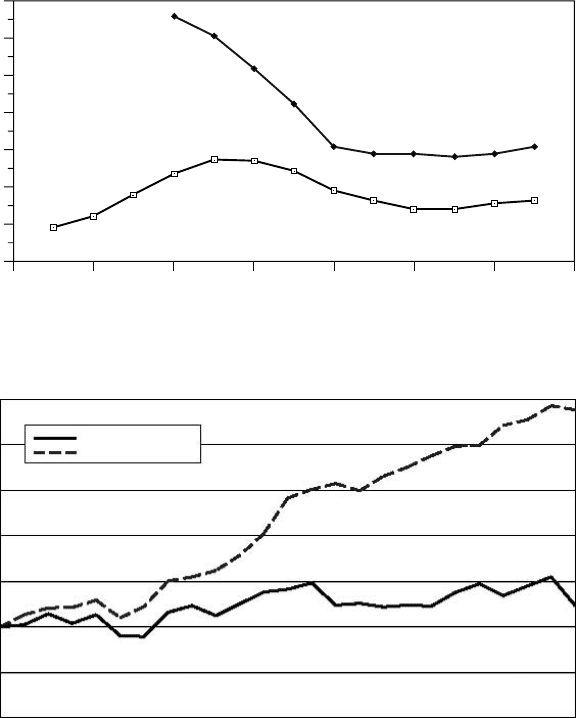
Utility spending on DSM programs rose rapidly in the early 1990s, leveled
off, then dropped for the rest of the decade in spite of the fact that the average
cost of the energy saved was close to 3¢/kWh in those later years (Fig. 5.31).
This is less than the average running cost of power plants, so it was cheaper
to save energy than to turn on the generators. The slump in spending can be
attributed in large part to the shift in focus in the mid-1990s to restructuring the
INTEGRATED RESOURCE PLANNING (IRP) AND DEMAND-SIDE MANAGEMENT (DSM) 299
20022000199819961994199219901988
0
1
2
3
4
5
6
7
Cost of conserved energy
Annual DSM spending
DSM Spending ($Billions/yr)
Cost of Conserved Energy (C/kWh)
Figure 5.31 Annual U.S. DSM spending and cost of conserved energy. Based on USEIA
Annual Electric Utility Data reports.
1.5
1.4
1.2
1.3
1.0
0.9
0.8
1.1
1977 1980 1985 1990 1995 2000
Indexed Electricity Use (kWh) per Person
California
Other 49 States
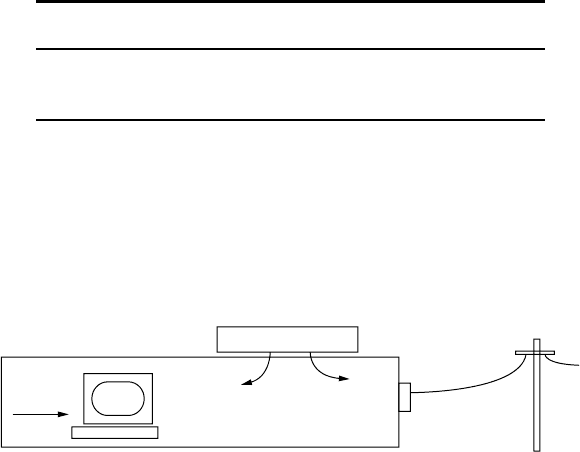
Figure 5.32 California’s aggressive DSM programs were very effective in controlling
growth in electricity demand. From Bachrach (2003).
electric power industry. For example, part of the 1996 legislation that set Cali-
fornia’s deregulation in motion abandoned the decoupling of sales from profits,
recreating the original disincentives to DSM. After the state’s 2000–2001 dis-
astrous experience with deregulation, however, decoupling was reauthorized and
through vigorous customer energy efficiency programs, the state began to return
to near-normal conditions.
Throughout the 1980s and through much of the 1990s, California was a leader
in DSM; as a result, in spite of the booming economic growth that characterized
much of that period, per capita growth in electricity use there rose at a far slower
rate than it did in the other 49 states (Fig. 5.32).
300 ECONOMICS OF DISTRIBUTED RESOURCES
REFERENCES
Bachrach, D., M. Ardenna, and A. Leupp (2003). Energy Efficiency Leadership in Cali-
fornia: Preventing the Next Crisis, Natural Resources Defense Council, Silicon Valley
Manufacturing Group, April.
California Collaborative (1990). An Energy Efficiency Blueprint for California, January.
California Public Utilities Commission (CPUC) and California Energy Commission
(1987). Economic Analysis of Demand-Side Management Programs, Standard Practice
Manual, P400-87-006.
Cler, G. I., and M. Shepard (1996). Distributed Generation: Good Things Are Coming in
Small Packages, Esource Tech Update, TU-96-12, Esource, Boulder, CO.
Culp, A. W. Jr. (1979). Principles of Energy Conversion, McGraw Hill, N.Y.
Eto, J. (1996). The Past, Present, and Future of U.S. Utility Demand-Side Management
Programs, Lawrence Berkeley National Laboratory, LBNL-39931, December.
Goldstein, D. B., and H. S. Geller (1999). Equipment Efficiency Standards: Mitigating
Global Climate Change at a Profit, Physics & Society, vol. 28, no. 2.
Ianucci, J. (1992). “The Distributed Utility: One view of the future,” Distributed Util-
ity—Is This the Future? EPRI, PG&E and NREL conference, December.
IPCC. (1996). Climate Change 1995: Impacts, Adaptations and Mitigation of Climate
Change: Scientific-Technical Analyses, Intergovernmental Panel on Climate Change,
Cambridge University Press.
Lovins, A. B, E. K. Datta, T. Feiler, K. R. Rabago, J. N. Swisher, A. Lehmann, and
K. Wicker (2002). Small Is Profitable: The Hidden Economic Benefits of Making
Electrical Resources the Right Size. Rocky Mountain Institute, Snowmass, CO.
National Academy of Sciences (1992). Policy Implications of Greenhouse Warming: Mit-
igation, Adaptation, and the Science Base. National Academic Press, Washington, DC.
Swisher, J. N. (2002). Cleaner Energy, Greener Profits: Fuel Cells as Cost-Effective Dis-
tributed Energy Resources, Rocky Mountain Institute, Snowmass, CO.
Swisher, J. N., and R. Orans (1996). The Use of Area-Specific Utility Costs to Target
Intensive DSM Campaigns, Utilities Policy,vol.5,pp3–4.
PROBLEMS
5.1 An office building is billed based on the rate structure given in Table 5.3.
As a money saving strategy, during the 21 days per month that the office
is occupied, it has been decided to shed 10 kW of load for an hour during
the period of peak demand in the summer.
a. How much energy will be saved (kWh/mo)?
b. By what amount will their bill be reduced ($/mo) during those months?
c. What is the value of the energy saved in ¢/kWh?
5.2 Suppose a small business can elect to use either the time-of-use (TOU)
rate schedule shown below or the rate structure involving a demand charge.
During the peak demand period they use 100 kW of power and 24,000
kWh/month, while off-peak they use 20 kW and 10,000 kWh/month.
PROBLEMS 301
A. TOU Rate Schedule B. Demand Charge Schedule
On-peak 12¢/kWh Energy charge 6¢/kWh
Off-peak 7¢/kWh Demand charge $9/mo-kW
a. Which rate schedule would give the lowest bills?
b. What would their load factor be (assume a 30-day month)?
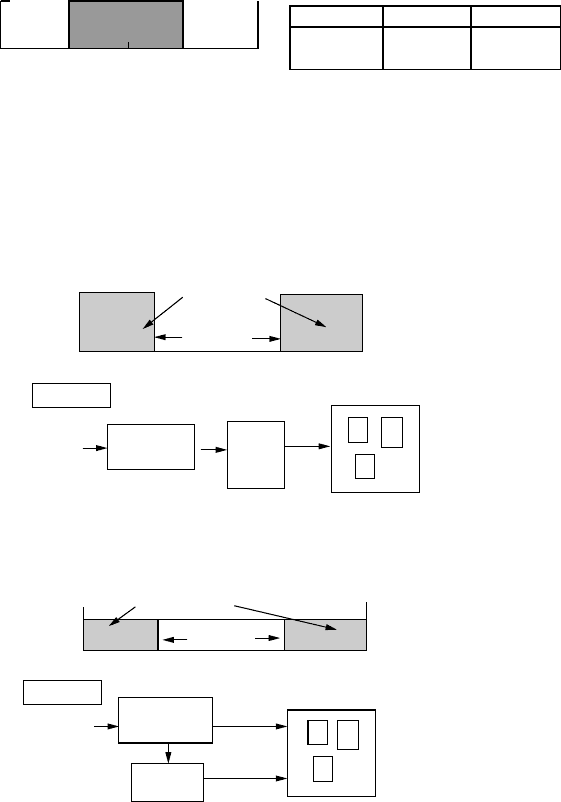
5.3 An office building is cooled with an air conditioning (A/C) system having a
COP = 3. Electricity costs $0.10/kWh plus demand charges of $10/mo-kW.
Suppose a 100-W computer is left on 8 hs/day, 5 days/week, 50 weeks/yr,
during which time the A/C is always on and the peak demand occurs.
A/C COP = 3
8 hr/d × 5 d/week × 50 wk/yr
100 W
10 ¢/kWh +
$10/mo-kW
Figure P5.3
a. Find the annual cost of electricity for the computer and its associated
air conditioning.
b. Find the total electricity cost per kWh used by the computer. Compare
that with the 10¢/kWh cost of electric energy.
5.4 Better windows for a building adds $3/ft
2
of window but saves $0.55/ft
2
per year in reduced heating, cooling and lighting costs. With a discount rate
of 12%:
a. What is the net present value (NPV) of the better windows over a 30-year
period with no escalation in the value of the annual savings?
b. What is the internal rate of return (IRR) with no escalation rate?
c. What is the NPV if the savings escalates at 7%/yr due to fuel savings?
d. What is the IRR with that fuel escalation rate?
5.5 A 30 kW photovoltaic system on a building reduces the peak demand by
25 kW and reduces the annual electricity demand by 60,000 kWh/yr. The
PV system costs $135,000 to install, has no annual maintenance costs, and
has an expected lifetime of 30 years. The utility rate structure charges
$0.07/kWh and $9/kW per month demand charge.
a. What annual savings in utility bills will the PVs deliver?
b. What is the internal rate of return on the investment with no escalation
in utility rates?
c. If the annual savings on utility bills increases 6% per year, what is
the IRR?
302 ECONOMICS OF DISTRIBUTED RESOURCES
5.6 A small, 10-kW wind turbine that costs $15,000 has a capacity factor of
0.25. If it is paid for with a 6-%, 20-year loan, what is the cost of electricity
generated (¢/kWh)?
5.7 An office building needs a steady 200 tons of cooling from 6 A.M. to 6
P.M., 250 days/yr (3000 hrs/yr). The electricity rate schedule is given in
the table below.
200 tons
Cooling
Load
MN 6 A.M. 6 P.M.NMn
Time
6 A.M.-6 P.M.
6 P.M.-6 A.M.
$0.10/kWh $10/mo-kW
$0.05/kWh $0
Energy
Demand
Figure P5.7a
A thermal energy storage (TES) system is to be used to help shift the load
to off-peak times. Option (a) uses a 200 kW, 200-ton chiller that runs 12
hours each night making ice that is melted during the day. Option (b) uses a
100 kW, 100-ton chiller that runs 24 hrs/day—the chiller delivers 100 tons
during the day and melting ice provides the other 100 tons.
200 kW
200 tons
MN 6am
6pm
NMn
making ice
melting
ice
200 ton
chiller
200 kW
TES
ice
200
tons
TES System with 200 ton chiller operated at night
$500,000
night
only
(a)
100 kW
100 tons
MN 6am 6pmNMn
making ice
100 ton
chiller
100 kW
24 hrs
TES
ice
100 tons
100 tons
TES System with 100 ton chiller operate 24 hrs/day
$250,000
melting
ice
(b)
Figure P5.7b
Option (a) costs $500,000 to build, while (b) costs $250,000.
PROBLEMS 303
Using a CRF = 0.10/yr, compute the annual cost to own and operate each
system. Which is the cheaper system?
5.8 A 2 kW photovoltaic (PV) system with capacity factor 0.20 costs $8000
after various incentives have been accounted for. It is to be paid for with
a 5%, 20-year loan. Since the household has a net income of $130,000 per
year, their marginal federal tax bracket is 30.5%.
a. Do a calculation by hand to find the cost of PV electricity in the
first year.
b. Set up a spreadsheet to show the annual cash flow and annual ¢/kWh
for this system. What is the cost of PV electricity in the 20th year?
5.9 The cost of fuel for a small power plant is currently $10,000 per year. The
owner’s discount rate is 12 percent and fuel is projected to increase at 6%
per year over the 30-yr life of the plant. What is the levelized cost of fuel?
5.10 A photovoltaic system that generates 8000 kWh/yr costs $15,000. It is paid
for with a 6%, 20-year loan.
a. Ignoring any tax implications, what is the cost of electricity from the
PV system?
b. With local utility electricity costing 11¢/kWh, at what rate would that
price have to escalate over the 20-year period in order for the levelized
cost of utility electricity be the same as the cost of electricity from the
PV system? Use Figure 5.4 and assume the buyer’s discount rate is 15%.
5.11 A 50 MW combined-cycle plant with a heat rate of 7700 Btu/kWh operates
with a 50-% capacity factor. Natural gas fuel now costs $5 per million
Btu (MMBtu). Annual O&M is 0.4¢/kWh. The capital cost of the plant is
$600/kW. The utility uses a fixed charge rate (FCR) of 0.12/yr.
a. What is the annualized capital cost of the plant ($/yr)?
b. What is the annual electricity production (kWh/yr)?
c. What is the annual fuel and O&M cost ($/kWh)?
d. What is the current cost of electricity from the plant ($/kWh)?
e. If fuel and O&M costs escalate at 6 percent per year and the utility uses
a discount rate of 0.14/yr, what will be the levelized bus-bar cost of
electricity from this plant over its 30-yr life?
5.12 Duplicate the spreadsheet shown in Table 5.6, then adjust it for a photo-
voltaic system that costs $12,000, generates 8000 kWh/yr (which avoids
purchasing that much from the utility) and is paid for with a 6%, 20-
year loan. Keep the tax bracket (30.5%), initial cost of utility electricity
(10¢/kWh), utility electricity rate escalation (5%/yr), and personal discount
factor the same. What is the first year net cash flow? What is the cumulative
net present value of the system?

304 ECONOMICS OF DISTRIBUTED RESOURCES
5.13 Consider the following energy conservation supply curve:
0
1
2
3
4
5
CCE (¢/kWh)
Thousand kWh/yr
0 102030405060708090
Figure P5.13
a. How much energy can be saved at a marginal cost of less than 3 ¢/kWh?
b. How much energy can be saved at an average cost of less than 3 ¢/kWh?
5.14 Four measures are being proposed for a small industrial facility to reduce
its need to purchase utility electricity. The following table describes each
measure and gives its capital cost and annual kWh savings. The owner uses
a capital recovery factor of 0.06/yr.
TABLE P5.14
Capital
Cost ($)
Savings
(kWh/yr)
A. Better lighting system 100,000 150,000
B. High efficiency motors 20,000 120,000
C. More efficient chiller 180,000 180,000
D. Photovoltaic system 150,000 60,000
a. Compute the cost of conserved energy (CCE) for each measure and plot
an appropriate energy conservation supply curve.
b. How much energy can be saved (kWh/yr) if the criterion is that each
measure must have a CCE of no more than 6¢/kWh?
c. How much energy can be saved (kWh/yr) if the criterion is that the
average cost of energy saved is no more than 6¢/kWh?
5.15 Consider a 7-kW fuel cell used in a combined heat and power application
(CHP) for a proposed green dorm. The fuel cell converts natural gas to
electricity with 35% efficiency while 40% of the input fuel ends up as
useful heat for the dorm’s water, space heating and space cooling demand.
Natural gas costs 90¢/therm (1 therm = 100,000 Btu).
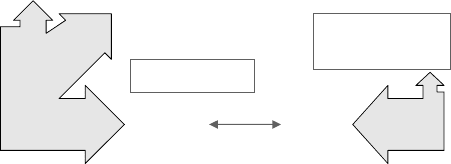
PROBLEMS 305
DISPLACED
“BOILER”
7 kW
e
electricity
35%
40% 85%Hea t
CHP Fuel Cell
Heat
Figure P5.15
The fuel cell costs $25,000 installed, which is to be paid for with a 6%, 20-
year loan. It operates with a capacity factor of 90%. Its (useful) waste heat
displaces the need for heat from an 85% efficient, natural-gas-fired boiler.
a. Find the energy chargeable to power (ECP)
b. Find the fuel cost chargeable to power (CCP)
c. Find the cost of electricity (¢/kWh) from the fuel cell.
5.16 Consider a 40% efficient, 100-kW microturbine having a capacity factor
of 0.8.
a. How many kWh/yr will the turbine generate?
b. Suppose the system is rigged for CHP such that half of the waste heat
from the turbine is recovered and used to offset the need for fuel in an
85% efficient, natural-gas-fired boiler. If gas costs $5 per million Btu,
what is the economic value of that waste heat recovery ($/yr)?
c. What economic value (¢/kWh) is associated with the waste heat recovery
when used to offset the cost of electricity generated by the turbine?
5.17 Consider the option value associated with building ten 100-MW power
plants to meet 10 years’ worth of demand versus building one 1000-MW
plant. The small plants can be built with a 1-year lead time while the
large plant has a 5-year lead time. If the single large plant costs $800/kW,
how much can each of the smaller plants cost to be equivalent on a present
worth basis using a discount factor of 10%?
a. Solve by using Table 5.10
b. Solve by doing the calculations that produced that entry in the table.
5.18 Use the energy chargeable to power method to calculate the carbon emis-
sions (gC/kWh) associated with a natural-gas-fueled microturbine with 30-
% electrical efficiency and 40-% thermal efficiency. Assume the thermal
output displaces the need for an 80-% efficient gas boiler. Compare that
with the 296 gC/kWh of a 33.3-% efficient coal plant without CHP.

CHAPTER 6
WIND POWER SYSTEMS
6.1 HISTORICAL DEVELOPMENT OF WIND POWER
Wind has been utilized as a source of power for thousands of years for such
tasks as propelling sailing ships, grinding grain, pumping water, and powering
factory machinery. The world’s first wind turbine used to generate electric-
ity was built by a Dane, Poul la Cour, in 1891. It is especially interesting
to note that La Cour used the electricity generated by his turbines to elec-
trolyze water, producing hydrogen for gas lights in the local schoolhouse. In
that regard we could say that he was 100 years ahead of his time since the
vision that many have for the twenty-first century includes photovoltaic and
wind power systems making hydrogen by electrolysis to generate electric power
in fuel cells.
In the United States the first wind-electric systems were built in the late
1890s; by the 1930s and 1940s, hundreds of thousands of small-capacity, wind-
electric systems were in use in rural areas not yet served by the electricity
grid. In 1941 one of the largest wind-powered systems ever built went into
operation at Grandpa’s Knob in Ve rmont. Designed to produce 1250 kW from
a 175-ft-diameter, two-bladed prop, the unit had withstood winds as high as
115 miles per hour before it catastrophically failed in 1945 in a modest 25-
mph wind (one of its 8-ton blades broke loose and was hurled 750 feet away).
Renewable and Efficient Electric Power Systems. By Gilbert M. Masters
ISBN 0-471-28060-7
2004 John W iley & Sons, Inc.
307