
Masters G.M. Renewable and Efficient Electric Power Systems
Подождите немного. Документ загружается.


538 PHOTOVOLTAIC SYSTEMS
TA BLE 9.4 Important Characteristics of Several High-Power PV Modules
Module:
Sharp
NE-K125U2
Kyocera
KC158G
Shell
SP150
Uni-Solar
SSR256
Material: Poly Crystal Multicrystal Monocrystal Triple junction a-Si
Rated power P
dc,STC
: 125 W 158 W 150 W 256 W
Voltage at max power: 26.0 V 23.2 V 34 V 66.0 V
Current at max power: 4.80 A 6.82 A 4.40 A 3.9
Open-circuit voltage V
OC
: 32.3 V 28.9 V 43.4 V 95.2
Short-circuit c urrent I
SC
: 5.46 A 7.58 A 4.8 A 4.8
Length: 1.190 m 1.290 m 1.619 m 11.124 m
Width: 0.792 m 0.990 m 0 .814 m 0.420 m
Efficiency: 13.3% 12.4% 11.4% 5.5%
TA BLE 9.5 Example Inverter Characteristics for Grid-Connected Systems
Manufacturer: Xantrex Xantrex Xantrex Sunny Boy Sunny Boy
Model: STXR1500 STXR2500 PV 10 SB2000 SB2500
AC power: 1500 W 2500 W 10,000 W 2000 W 2500 W
AC voltage: 211 –264 V 211–264 V 208 V, 3 198–251 V 198–251 V
PV voltage range
MPPT:
44–85 V 44–85 V 330–600 V 125–500 V 250–550 V
Max input voltage: 120 V 120 V 600 V 500 V 600 V
Max input current: — — 31.9 A 10 A 11 A
Maximum efficiency: 92% 94% 95% 96% 94%
To explore the interactions between modules, inverters, and the PV array, let
us continue the design started in Example 9.6. For this example, let us try the
Kyocera KC158G 158-W module with the Xantrex STXR2500 inverter. Begin
by determining the number of modules required. Since they are rated at 158 W
each and we need 2300 dc, STC watts, we have
Number of modules =
2300 W
158 W/module
= 14.6
To help us decide between 14 modules or 15 modules, consider how they might
be arranged into an array. With two modules per string, the STC rated voltage
would be 2 × 23.2 = 46.4 V, which just barely falls into the MPPT range of
44–85 V for the inverter picked. At higher temperatures, the module voltage
could drop below 44 V, which isn’t so good. At three modules per string, the
rated voltage becomes 3 × 23.2 = 69.6 V, which fits nicely with the MPPT range.
This suggests using an array with five strings of three modules each, for a total
of 15 modules.
GRID-CONNECTED SYSTEMS 539
It is important to estimate the maximum open-circuit voltage of the array to
be sure that it doesn’t violate the highest dc voltage that the inverter can accept,
which in this case is 120 V. With three modules in series, each having a V
OC
at
STC of 28.9 V, the string voltage could reach 3 × 28.9 = 86.7V.Thisiswell
below the 120-V limit. But, remember that V
OC
increases when cell temperature
is below the STC assumption of 25
◦
C. We could imagine that on a cold morning,
with a strong, cold wind and low sunlight, cell temperature might be close to
ambient, and that might be well below 25
◦
C. With V
OC
increasing by 0.38%/
◦
C
below 25
◦
C (for crystalline silicon), the open-circuit voltage could then be well
above its STC value.
Suppose that it is −5
◦
C on the coldest morning in Fresno, and assume that
cell temperature and ambient temperature are the same. The three-module string
V
OC
would now be
V
OC,max
= 86.7 V · [1 + 0.0038(25 + 5)] = 86.7 × 1.114 = 97 V
which is still below the 120-V limit of this inverter. That 1.114 multiplier is, of
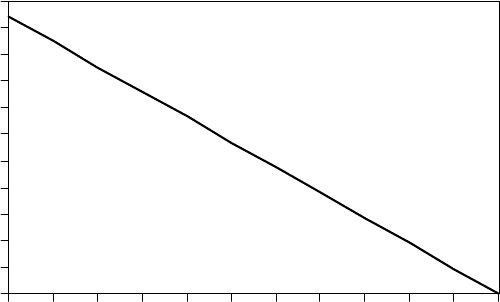
course, temperature-dependent, and Fig. 9.31 shows the relationship.
Another reason for checking the open-circuit voltage of a r esidential grid-
connected array under the coldest possible ambient conditions at the site is that the
National Electrical Code restricts all voltages in one- and two-family dwellings
to no more than 600 V (Wiles, 2001). Our array easily satisfies this constraint,
so we will choose a design with 15 modules arranged in five strings of three
modules each.
2520151050−5−10−15−20−25−30
1.00
1.02
1.04
1.06
1.08
1.10
1.12
1.14
1.16
1.18
1.20
1.22
AMBIENT TEMPERATURE (°C)
V
OC
MULTIPLIER
Figure 9.31 The V
OC
multiplier for crystalline silicon assuming cells are at ambient
temperature.

540 PHOTOVOLTAIC SYSTEMS
Example 9.8 Fresno House Example: Second Pass. Find the roof area
required for the 15-module Fresno system with the fixed orientation collector,
and estimate the annual energy delivered.
Solution. Collector dimensions are given in Table 9.4. With 15 modules, the
collector area will be
Area = 15 modules × 1.29 m × 0.99 m = 19.1m
2
(206 ft
2
)
which is just a bit larger than our original estimate of 18.4 m
2
.
The dc STC rated power of the array will be
P
dc,ST C
= 158 W/module × 15 modules = 2370 W
Assuming a 25% de-rating for ac and using the 5.7-kWh/m
2
-day average inso-
lation for Fresno means that the system is predicted to deliver
Energy = 2.37 kW × 0.75 × 5.7h/day × 365 day/yr = 3698 kWh/yr
So, our goal of 3600 kWh/yr has been met.
In addition to the 600-V maximum voltage limit for one- and two-family
dwellings, the proposed National Electrical Code for PV systems specifies other
constraints on the choice of wires, fuses, and disconnect switches. They must
be capable of withstanding 1.25 times the expected dc voltage. The NEC also
recommends multiplying all PV currents by 1.25 to account for two possibilities:
(1) the potential for insolation to exceed the 1-sun level of 1000 W/m
2
and
(2) the increase in short-circuit current (approximately 0.1%/
◦
C) caused by cell
temperatures above the 25
◦
C standard. In addition, the NEC requires that the
continuous current of any circuit be multiplied by 1.25 to ensure that fuses,
switches, and other disconnects as well as conductors are not operated above
80% of their rating. The two 125% current factors are independent and must be
multiplied (1.25 × 1.25 = 1.56) to properly size conductors and switchgear.
Finally, the allowable current that a conductor can handle (called its ampacity)
is related to the type of insulation it has and the ambient temperature to which it
is exposed. Standard ampacity ratings for cables assume an ambient temperature
of 30
◦
C. Given the possibility of higher ambients, exposure to sunlight, and
nearness to hot collector surfaces, cable ampacity should be de-rated by factors
of 0.33 to 0.58 depending on cable type, installation method (free air or conduit),
and the temperature rating of the insulation (Wiles, 2001).
GRID-CONNECTED SYSTEMS 541
Example 9.9 Current and Voltage Ratings for the Fresno House Breakers.
For our PV array consisting of five parallel strings of three Kyocera KC158G
modules each, what minimum current rating should fuses have in the combiner,
the array disconnect switch, and the utility breaker from the inverter? What
maximum voltage should switchgear be rated for if the minimum daytime ambient
temperature is expected to be −5
◦
C?
Solution. From Table 9.4, the STC short-circuit current for each string of panels
is 7.58 A. Applying the 125% factor for the effects of higher insolation and lower
temperature, plus the 125 percent factor to afford a safe oversizing margin, results
in combiner fuses that must allow at least
Combiner fuses > 7.58 A × 1.25 × 1.25 = 11.8A
The array disconnect fuse must accommodate five such strings, so it must handle
Array disconnect fuse > 11.8A× 5 = 59.2A
Applying the NEC 1.25 current multiplier to the 2500-W, 240-V inverter says
its fuse must be rated to handle
Inverter fuse > 1.25 ×
2500 W
240 V
= 13 A
Notice only a single 1.25 multiplier is used for the inverter since the PV tem-
perature and insolation adjustments don’t apply to the ac portions of the system.
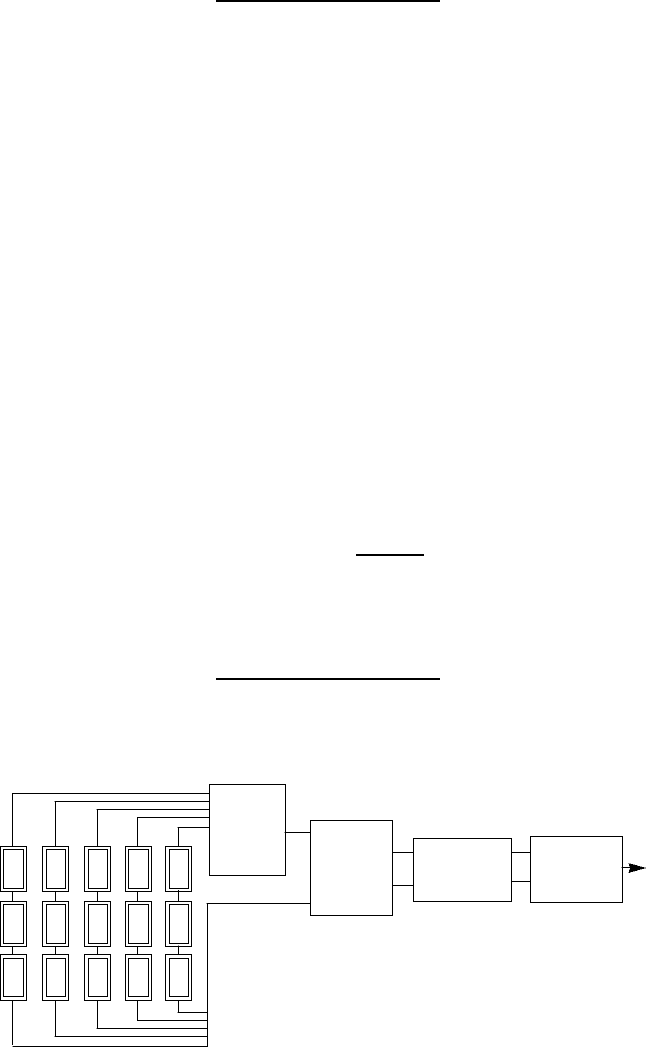
The final system design is for the Fresno house is shown in Fig. 9.32.
+
−
+
−
+
−
+
−
+
−
Combiner
5
12-A
fuses
Array
disconnect
60-A
fuse
Inverter
2500 W
240 V
Utility
disconnect
15-A
Grid
2370 Wdc
19.1 m
2
Array
Figure 9.32 System design for the Fresno house example.

542 PHOTOVOLTAIC SYSTEMS
TA BLE 9.6 Performance Adjustment Factors for
Various Roof Pitches and Directions for 40
◦
Latitude
Tilt Angle: Flat 20 30 40 50 90
South: 0.84 0.97 1.00 1.00 0.97 0.61
SE, SW: 0.84 0.92 0.93 0.92 0.88 0.56
E, W: 0.84 0.80 0.77 0.72 0.67 0.40
Reference condition is 30
◦
tilt, south facing.
Since most residential PV systems are mounted at the same pitch as the roof,
and since those roofs seldom face due south, it is handy to have an adjustment
factor to account for various collector orientations. The clear sky insolation tables
in Appendix D can be used to estimate these adjustments. An example presenta-
tion in which a due south array at a 30
◦
pitch is the reference condition is given
in Table 9.6.
9.4 GRID-CONNECTED PV SYSTEM ECONOMICS
We now have the tools to allow us to estimate the energy delivered by a grid-
connected PV system, so the next step is to explore its economic viability.
Two types of economic analyses need to be made. One helps to make deci-
sions between different system options—for example, whether to use a tracking
system or a fixed mount, which collectors and which inverter are most cost effec-
tive, and so forth—and the other helps a buyer decide whether the investment
is worthwhile.
9.4.1 System Trade-offs
To illustrate the decision between system options, consider the trade-off between
the benefits of higher irradiance with a tracking mount compared to a simple
fixed, roof mount. The following example demonstrates a process that can be
used, but realistic decisions depend on current and accurate cost estimates for
the equipment and installation.
Example 9.10 Should a House in Boulder Use a 1-Axis Tracker? A
PV system for a house in Boulder, CO, is to be designed to deliver about
4000 kWh/yr. Given the following costs, decide whether to recommend a fixed
array at tilt L-15 or a single-axis tracker. Assume 12%-efficient PVs and a 0.75
dc-to-ac efficiency factor.

GRID-CONNECTED PV SYSTEM ECONOMICS 543
Component Cost
PVs $4.20/Wdc
Inverter $1.20/ W
Tracker $400 + $100/m
2
Installation, BOS $3800
Solution
1-Axis Tracker: From Appendix E, annual insolation with a 1-axis tracker is
7.2 kWh/m
2
-day. Using the peak-hours approach combined with the derating
from dc, STC to ac:
kWh/yr ac = P
dc,ST C
(kW) · (Conversion efficiency)
·
h
day @1-sun
· 365 days/yr
P
dc,ST C
=
4000 kWh/yr
0.75 × 7.2h/day × 365 days/yr
= 2.03 kW
which would cost about $4.20/W × 2030 W = $8524 for the PVs.
At $1.20/W, a 2.03-kW inverter would cost $2435.
The area of collector needed at 12% efficiency would be
A(m
2
) =
P
dc,ST C
1 (kW/m
2
) · η
=
2.03 kW
1 × 0.12
= 16.9m
2
The extra cost of the tracker would be $400 + $100/m
2
× 16.9m
2
= $2091.
Fixed Array: The insolation at L-15 is 5.4 kWh/m
2
-day (Appendix E).
P
dc,ST C
=
4000 kWh/yr
0.75 × 5.4h/day × 365 day/yr
= 2.71 kW
costing $4.20/W × 2710 W = $11,365 for the PVs. Notice that a bigger inverter
is needed to accommodate the higher power rating of the collectors. A 2.71-kW
inverter would cost $1.20/W × 2710 W = $3247.
The cost summary is thus:
Component Tracker Fixed Tilt
PVs $8,524 $11,365
Inverter $2,435 $3,247
Tracker $2,091 $0
Installation, BOS $3,800 $3,800
Total $16,850 $18,412

544 PHOTOVOLTAIC SYSTEMS
It looks like there might some advantage to using the tracker, but only a more careful
analysis based on real components could affirm the validity of that conclusion.
9.4.2 Dollar-per-Watt Ambiguities
The most important inputs to any economic analysis of a PV system are the initial
cost of the system and the amount of energy it will deliver each year. Whether
the system is economically viable depends on other factors—most especially,
the price of the energy displaced by the system, whether there are any tax credits
or other economic incentives, and how the system is to be paid for. A detailed
economic analysis will include: estimates of operation and maintenance costs;
future costs of utility electricity; loan terms and income tax implications if the
money is to be borrowed, or personal discount rates if the owner purchases it
outright; system lifetime; costs or residual value when the system is ultimately
removed; and so forth.
Begin with the installed cost of the system. For individual buyers, it is total
dollars for their system that matters, but when an overall snapshot of the industry
is being presented, it is common practice to describe installed costs in dollars per
watt of peak power. There are two ambiguities with the $/W indicator, however,
which must be made clear for the parameter to have any meaning. One is whether
the watts are based on dc power from the PVs or ac power from the inverter. The
other is whether or not a tracker has been used. To illustrate these differences,
Table 9.7 summarizes the costs for the tracker versus fixed-array analysis just
derived in Example 9.10. As can be seen, even though the tracker delivers the
same kWh/yr and it is cheaper than the fixed-tilt array, it appears to have a
higher cost when expressed as $/Wdc or $/Wac. Clearly, some factor is needed
to account for the greater energy delivered by a module in a tracking system.
When a PV system uses tracking, an Energy Production Factor (EPF) must
be included in order to make the simple $/Wdc or $/Wac descriptors directly
comparable to those systems that have a fixed orientation. The EPF is essentially
the ratio of insolation on the tracking surface to that on a fixed surface (for the
example in Table 9.7, EPF = 7.2/5.4 = 1.333), which leads to the following:
Tracker($/W) =
$/W
EPF
=
$/W
(Tracking insolation/Fixed insolation)
(9.17)
When the EPF is included, the tracking array in Table 9.7 does correctly appear
to be the least-cost system.
So, having resolved the $/W ambiguities, how much do systems cost? Data
gathered by the Utility Photovoltaic Group (UPVG) on actual costs of over 600
residential PV systems installed between 1994 and 2000 has been summarized in
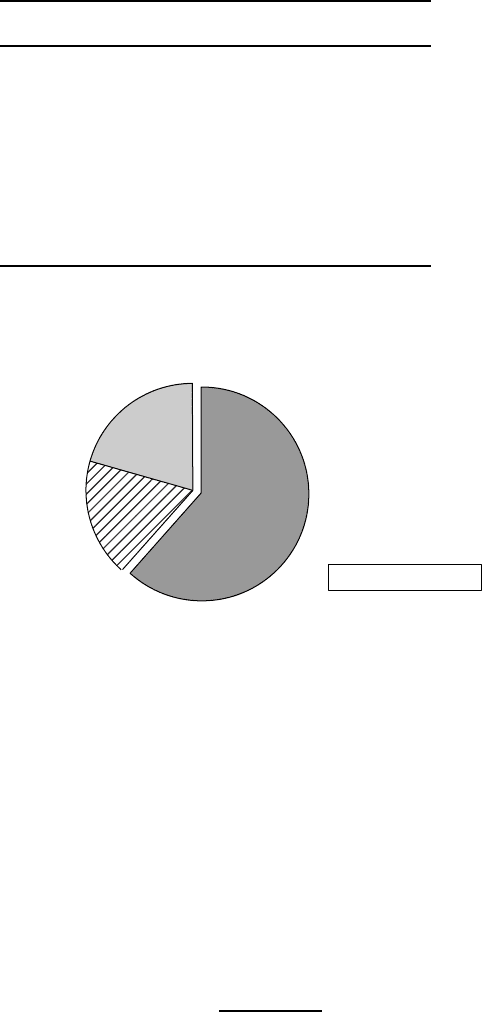
Fig. 9.33. Of the total $6.80/Wdc, a little over 60% is modules with the remainder
roughly equally divided between other components and installation.
GRID-CONNECTED PV SYSTEM ECONOMICS 545
TA BLE 9.7 Illustrating the Ambiguities Associated
with $/W Cost Indicators
a
Parameter Tracker Fixed Tilt
Energy (kWh/yr) 4000 4000
Insolation (kWh/m
2
-day) 7.2 5.4
System cost ($) $16,850 $18,412
P
dc,ST C
(W) 2029 2706
P
ac
(W) 1522 2029
Cost $/Wdc $8.30 $6.80
Cost $/Wac $11.07 $9.07
Cost $/Wdc (EPF) $6.23
Cost $/Wac (EPF) $8.30
a
Without an energy production factor (EPF) correction in $/W,
the tracking system incorrectly appears to be more expensive.
(Data are based on Example 9.10.)
MODULES
$4.20/Wdc
INSTALLATION + BOS
$1.40/Wdc
INVERTER
$1.20/Wdc
TOTAL $6.80/Wdc
Figure 9.33 Av erage installed cost for 625 residential PV systems installed between
1994 and 2000. From Chang (2000).
9.4.3 Amortizing Costs
A simple way to estimate the cost of electricity generated by a PV system is to
imagine taking out a loan to pay for the system and then using annual payments
divided by annual kWh delivered to give ¢/kWh. If an amount of money, or
principal, P ($), is borrowed over a period of n (years) at an interest rate of i
(decimal fraction/yr), then the annual loan payments, A ($/yr), will be
A = P · CRF(i, n) (9.18)
where CRF(i, n) is the capital recovery factor given by
CRF(i, n) =
i(1 + i)
n
(1 + i)
n
− 1
(9.19)

546 PHOTOVOLTAIC SYSTEMS
Example 9.11 Cost of PV Electricity for the Boulder House. The tracking
PV system of Example 9.10 costs $16,850 to deliver 4000 kWh/yr. If the system
is paid for with a 6%, 30-year loan, what would be the cost of electricity?
Solution. The capital recovery factor for this loan would be
CRF(i, n) =
i(1 + i)
n
(1 + i)
n
− 1
=
0.06(1.06)
30
(1.06)
30
− 1
= 0.07265/yr
So the annual payments would be
A = P CRF(i, n) = $16,850 × 0.07265/yr = $1224/yr
The cost per kWh is therefore
Cost of electricity =
$1224/yr
4000 kWh/yr
= $0.306/kWh
A significant factor that was ignored in the cost calculation of Example 9.11
is the impact of the income tax benefit that goes with a home loan. As was
described in Chapter 5, interest on such loans is tax deductible, which means
that a person’s gross income is reduced by the loan interest, and it is only the
resulting net income that is subject to income taxes. The tax benefit that results
depends on the marginal tax bracket (MTB) of the homeowner. For married
couples filing jointly, the 2002 MTB for federal taxes is shown in Table 9.8. For
example, a married couple earning $120,000 per year is in the 30.5% marginal
tax bracket, which means that a one-dollar tax deduction reduces their income
tax by 30.5 cents. The value of the tax deduction will be even greater when
it reduces the homeowner’s state income tax as well. For example, the same
taxpayer in California would be in the 37% marginal tax bracket when both state
and federal taxes are considered.
TABLE 9.8 Federal Income Tax for Married Couples Filing Jointly (2002)
Income Over But Not Over Tax Is of the Amount Over
$0 $45,200 15% $0
45,200 109,250 $6,780 + 27.5% 45,200
109,250 166,500 24,394 + 30.5% 109,250
166,500 297,350 41,855 + 35.5% 166,500
297,350 — 88,307 + 39.1% 297,350

GRID-CONNECTED PV SYSTEM ECONOMICS 547
During the first years of a long-term loan, almost all of the annual payments
will be interest, with very little left to reduce the principal, while the opposite
occurs toward the end of the loan. This means that the tax benefit of interest
payments varies from year to year. For example, in the first year, interest is
owed on the entire amount borrowed and the tax benefit is
First-year tax benefit = i × P × MTB (9.20)
where MTB is the marginal tax bracket.
Example 9.12 Cost of PV Energy Including Income Tax Benefit. The PV
system for the house in Boulder costs $16,850 and annual payments on its 6%,
30-year loan are $1224. If the homeowner is in the 30.5% marginal tax bracket,
what is the cost of PV energy in the first year?
Solution. From (9.20) the reduction in federal income tax will be
First-year tax benefit = 0.06 × $16,850 × 0.305 = $308
The net cost of the PV system in that first year will therefore be
First-year cost of PV = $1224 − $308 = $916
which means that its electricity cost will be
Cost of electricity =
$916/yr
4000 kWh/yr
= $0.23/kWh
Figure 9.34 shows how the first-year cost of electricity varies as a function
of annual insolation and system cost. A 30-year, 6% loan for a family in the
30.5% tax bracket has been used to derive the figure. For a reasonably good site,
with annual insolation above 5.5 kWh/m
2
-day, the installed cost of a PV system
needs to drop to below about $3/Wdc to make PV electricity competitive with
10¢/kWh electricity from the grid. At the $6.80/Wdc average cost at the turn of
the century, significant cost reductions are needed to make PVs competitive with
the local utility. To help encourage the PV industry, some states have initiated
sizable rebates and tax credits. California, for example, has a buy-down program
funded by utility ratepayers that offers a $4.50/Wac rebate (about $3.50/Wdc)
which pretty much closes the gap making PVs cost effective right now.
A very effective way to present the economics of a residential grid-connected
PV system is with a spreadsheet that incorporates the price of avoided electricity