
Masters G.M. Renewable and Efficient Electric Power Systems
Подождите немного. Документ загружается.

548 PHOTOVOLTAIC SYSTEMS
0
4.0 4.2 4.4 4.6 4.8 5.0 5.2 5.4 5.6 5.8 6.0 6.2 6.4 6.6 6.8 7.0
5
10
15
20
25
30
35
ANNUAL INSOLATION (kWh/m
2
-day)
FIRST-YEAR ELECTRICITY
COST (¢/kWh)
$7/Wdc
$6
$5
$4
$3
$2
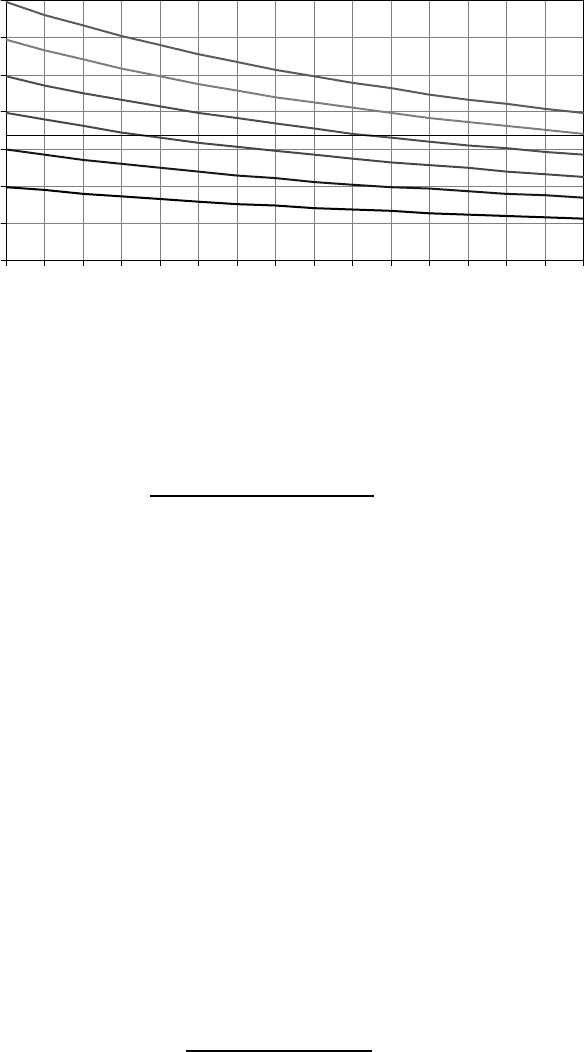
Figure 9.34 First-year cost of electricity with $/Wdc (STC) as the parameter. Assump-
tions: 6%, 30-yr loan, MTB 0.305, 75% conversion from dc (STC) to ac (PTC).
purchases, loan terms, including the homeowner MTB and income tax benefits,
and any rebates or other monetary features that affect the decision.
Example 9.13 Financing a PV System. A3-kWacPVsystemispredictedto
deliver 6000 kWh/yr to a house that currently pays $0.12/kWh for electricity.
The system, which costs $27,000, is eligible for a rebate of $4.50/Wac. If the
balance is paid for with a 6%, 30-year loan and the owner is in the 37% tax
bracket (combined state and federal), what is the cost of PV electricity in the
first year and what would be the net economic benefit in the first year?
Solution. The net cost of the system after the rebate is
P = $27,000 − $4.50/W × 3000 W = $13,500
From Example 9.11, CRF(0.06, 30 yr) is 0.07265/yr, so the annual loan pay-
ment is
Loan = 0.07265/yr × $13,500 = $980.78
The reduction in income taxes on the first-year’s interest portion of the loan
payment is
Tax savings = 0.06 × $13,500 × 0.37 = $299.70
The first-year cost of electricity from the PV system is therefore
Cost of electricity =
$980.78 − $299.70/yr
6000 kWh/yr
= $0.1135/kWh

GRID-CONNECTED PV SYSTEM ECONOMICS 549
The net economic benefit in the first year is
Benefit = 6000 kWh/yr × (0.12 − 0.1135)$/kWh = $39/yr
It is easy to set up a spreadsheet to show the year-by-year economic value of a
PV system as has been done in Ta ble 9.9 for Example 9.13. In that spreadsheet,
the price of utility electricity is assumed to escalate at 2%/yr, with the result that
TA BLE 9.9 Annual Cash Flow for the PV System of Example 9.13
a
Year
Loan
Balance
Loan
Payment
Loan
Interest
Delta
P
Delta
tax
Annual
Cost
PV cost
¢/kWh
Utility
¢/kWh
Savings
$/yr
0 13,500 981 810 171 300 681 11.4 12.0 39
1 13,329 981 800 181 296 685 11.4 12.2 50
2 13,148 981 789 192 292 689 11.5 12.5 60
3 12,956 981 777 203 288 693 11.6 12.7 71
4 12,753 981 765 216 283 698 11.6 13.0 82
5 12,537 981 752 229 278 702 11.7 13.2 93
6 12,309 981 739 242 273 708 11.8 13.5 103
7 12,067 981 724 257 268 713 11.9 13.8 114
8 11,810 981 709 272 262 719 12.0 14.1 125
9 11,538 981 692 288 256 725 12.1 14.3 136
10 11,249 981 675 306 250 731 12.2 14.6 147
11 10,943 981 657 324 243 738 12.3 14.9 157
12 10,619 981 637 344 236 745 12.4 15.2 168
13 10,276 981 617 364 228 753 12.5 15.5 179
14 9,911 981 595 386 220 761 12.7 15.8 189
15 9,525 981 572 409 211 769 12.8 16.2 200
16 9,116 981 547 434 202 778 13.0 16.5 210
17 8,682 981 521 460 193 788 13.1 16.8 220
18 8,223 981 493 487 183 798 13.3 17.1 230
19 7,735 981 464 517 172 809 13.5 17.5 240
20 7,218 981 433 548 160 821 13.7 17.8 249
21 6,671 981 400 581 148 833 13.9 18.2 259
22 6,090 981 365 615 135 846 14.1 18.6 268
23 5,475 981 328 652 122 859 14.3 18.9 276
24 4,823 981 289 691 107 874 14.6 19.3 284
25 4,131 981 248 733 92 889 14.8 19.7 292
26 3,398 981 204 777 75 905 15.1 20.1 300
27 2,622 981 157 823 58 923 15.4 20.5 306
28 1,798 981 108 873 40 941 15.7 20.9 313
29 925 981 56 925 21 960 16.0 21.3 318
30 0 0 0 0 0 0 0.0 21.7 1304
a
Buyer is in the 37% tax bracket and utility electricity is projected to grow at 2%/yr.
550 PHOTOVOLTAIC SYSTEMS
annual savings with the PV system grows year-by-year, reaching $318/yr in the
last year of the 30-year loan.
9.5 STAND-ALONE PV SYSTEMS
Since grid-connected systems use the utility for back-up, there is no need for
battery storage unless power outages are a problem. This makes them relatively
simple and relatively inexpensive. Having the grid right there, however, means
that they have to compete with relatively inexpensive utility power, which makes
it hard to justify the PV system unless significant subsidies are provided. When
the grid isn’t nearby, electricity suddenly becomes much more valuable and the
extra cost and complexity of a totally self-sufficient, stand-alone power system
can provide enormous benefit. Instead of competing with 10-cent utility power, a
PV–battery system competes with 50-cent gasoline or diesel-powered generators.
Or it competes with the cost of bringing the grid to the site, which may run many
thousands of dollars per mile. In developing countries, a panel and battery to run
a few lights and a radio can change people’s lives.
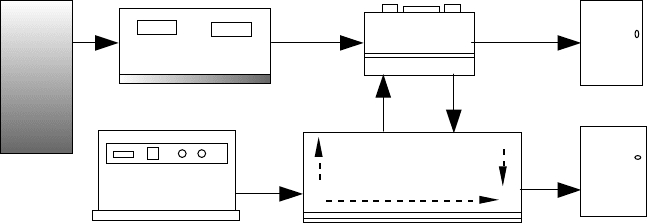
Figure 9.35 suggests a quite general system that includes a generator backup
as well as the possibility for some loads to be served directly with more-efficient
dc and others with ac. A combination charger–inverter is shown, which has the
capability to convert ac to dc or vice versa. As a charger, it converts ac from
the generator into dc to charge the batteries; as an inverter, it converts dc from
the batteries into ac needed by the load. The charger–inverter unit may include
an automatic transfer switch that allows the generator to supply ac loads directly
whenever it is running.
Off-grid systems must be designed with great care to assure satisfactory per-
formance. Users must be willing to check and maintain batteries, they must be
willing to adjust their energy demands as weather and battery charge vary, they
may have to fuel and fix a noisy generator, and they must take responsibility for
the safe operation of the system. The reward is electricity that is truly valued.
Charge Controller
Batteries
dc
Fuse
Box
Inverter
dc to ac
Charger
ac to dc
Generator
ac
ac
Fuse
Box
PVs
dc
ac
dc
dc
dc
Figure 9.35 A stand-alone system with back-up generator and separate outputs for dc
and ac loads.
STAND-ALONE PV SYSTEMS 551
9.5.1 Estimating the Load
The design process for stand-alone systems begins with an estimate of the loads
that are to be provided for. As with all design processes, a number of iterations
may be required. On the first pass, the user may try to provide the capability to
power anything and everything that normal, grid-connected living allows. Various
iterations will follow in which trade-offs are made between more expensive, but
more efficient, appliances and devices in exchange for fewer PVs and batteries.
Lifestyle adjustments need to be considered in which some loads are treated as
essentials that must be provided for, and others are luxuries to be used only when
conditions allow. A key decision involves whether to use all dc loads to avoid
the inefficiencies associated with inverters, or whether the convenience of an all
ac system is worth the extra cost, or perhaps a combination of the two is best.
Another important decision is whether to include a generator back-up system
and, if so, what fraction of the load it will have to supply.
The simplest of systems will incorporate only devices that run directly on dc.
A rather large market already exists for such dc equipment to meet the needs of
the boating and recreational vehicle communities. In addition, catalogs of such
equipment are readily available. For example, Real Goods Trading Corporation in
Ukiah, California, publishes its continuously updated Solar Living Source Book,
which not only provides detailed descriptions of specific equipment, but also
presents theory and perspectives on system design and equipment selection. At
the other extreme, off-grid homes can be as conventional as any other, with ac
appliances and devices purchased from mainstream suppliers.
Power needed by a load, as well as energy required over time by that load, is
important for system sizing. In the simplest case, energy (watt-hours or kilowatt-
hours) is just the product of some nominal power rating of the device multiplied
by the hours that it is in use. The situation is often more complicated, however.
For example, an amplifier needs more power when the volume is increased,
and many appliances, such as refrigerators and washing machines, use different
amounts of power during different portions of their operating cycle. An especially
important consideration for household electronic devices—TVs, VCRs, comput-
ers, portable phones, and so on—is the power consumed when the device is in its
standby or charging modes. Many devices, such as TVs, use power even while
they are turned off since some circuits remain energized awaiting the turn-on
signal from the remote. Consumer electronics now account for about 10% of all
U.S. residential electricity, and researchers at Lawrence Berkeley National Labs
conclude that almost two-thirds of this energy occurs when these devices are not
actually being used (Rosen and Meier, 2000). Major appliances and shop tools
have another complication caused by the surge of power required to start their
electric motors. While that large initial spike doesn’t add much to the energy
used by a motor, it has important implications for sizing inverters, wires, fuses,
and other ancillary electrical components in the system.
Table 9.10 lists examples of power used by a number of household electrical
loads. Some of these are simply watts of power, which can be multiplied by
hours of use to get watt-hours of energy. Many of the devices listed in the

552 PHOTOVOLTAIC SYSTEMS
TA BLE 9.10 Power Requirements of Typical Loads
Kitchen Appliances Power
Refrigerator: ac EnergyStar, 14 cu. ft 300 W, 1080 Wh/day
Refrigerator: ac EnergyStar, 19 cu. ft 300 W, 1140 Wh/day
Refrigerator: ac EnergyStar, 22 cu. ft 300 W, 1250 Wh/day
Refrigerator: dc Sun Frost, 12 cu. ft 58 W, 560 Wh/day
Freezer: ac 7.5 cu. ft 300 W, 540 Wh/day
Freezer: dc Sun Frost, 10 cu. ft 88 W, 880 Wh/day
Electric range (small burner) 1250 W
Electric range (large burner) 2100 W
Dishwasher: cool dry 700 W
Dishwasher: hot dry 1450 W
Microwave oven 750–1100 W
Coffeemaker (brewing) 1200 W
Coffeemaker (warming) 600 W
Toaster 800–1400 W
General Household
Clothes washer: vertical axis 500 W
Clothes washer: horizontal axis 250 W
Dryer (gas) 500 W
Vacuum cleaner 1000–1400 W
Furnace fan: 1/4 hp 600 W
Furnace fan: 1/3 hp 700 W
Furnace fan: 1/2 hp 875 W
Ceiling fan 65–175 W
Whole house fan 240–750 W
Air conditioner: window, 10,000 Btu 1200 W
Heater (portable) 1200–1875 W
Compact fluorescent lamp (100-W equivalent) 30 W
Compact fluorescent lamp (60-W equivalent) 16 W
Electric blanket, single/double 60/100 W
Clothes iron 1000–1800 W
Electric clock 4 W
Consumer Electronics
TV: >39-in. (active/standby) 142/3.5 W
TV: 25 to 27-in. color (active/standby) 90/4.9 W
TV: 19 to 20-in. color (active/standby) 68/5.1 W
Analog cable box (active/standby) 12/11 W
Satellite receiver (active/standby) 17/16 W
VCR (active/standby) 17/5.9 W
Component stereo (active/standby) 44/3 W
Compact stereo (active/standby) 22/9.8 W
Cordless phone 4 W
Clock radio (active/standby) 2.0/1.7 W
Computer, desktop (active/idle/standby) 125/80/2.2 W
Laptop computer 20 W

STAND-ALONE PV SYSTEMS 553
TABLE 9.10 (continued )
Ink-jet printer 35 W
Dot-matrix printer 200 W
Laser printer 900 W
Shop
Circular saw, 7 1/4
900 W
Table saw, 10-in. 1800 W
Hand drill, 1/4
250 W
Water Pumping
Centrifugal pump: 36 Vdc, 50-ft @ 10 gpm 450 W
Submersible pump: 24 Vdc, 100-ft @ 1.6 gpm 100 W
Submersible pump: 48 Vdc, 300-ft @ 1.5 gpm 180 W
DC pump (house pressure system), typical use 1–2 h/day 60 W
Source: Rosen and Meier (2000) and others.
consumer electronics category show power while they are being used (active)
and power consumed the rest of the time (standby), both of which must be
considered when determining energy consumption. Refrigerators are also unusual
since they are always turned on, but their power demand varies throughout the
day. The data given on refrigerator labels are average watt-hours per day based
on measurements made with the refrigerator located in a 90
◦
F room. This means
that they are likely to overstate actual demand in someone’s home—perhaps
by as much as 20%. Tables like this one are useful for average values, but the
best source of power and energy data are actual measurements that can easily be
performed with readily available meters. Another source is the device nameplate
itself, but those tend to overstate power since they are meant to describe maximum
demand rather than the likely average. Some nameplates provide only amperage
and voltage; and while it is tempting to multiply the two to get power, this can
also be an overestimate since it ignores the phase angle, or power factor, between
current and voltage.
Example 9.14 A Modest Household Demand. Estimate the monthly energy
demand for a cabin with all ac appliances, consisting of a 19-cu. ft refrigerator,
six 30-W compact fluorescents (CFLs) used 5 h/day, a 19-in. TV turned on
3 h/day and connected to a satellite, a cordless phone, a 1000-W microwave
used 6 min/day, and a 100-ft deep well that supplies 120 gallons/day.
Solution. Using data from Table 9.10, we can put together the following table
of power and energy demands. The total is just over 3.11 kWh/day.
Notice how little of the energy for TV/satellite is used during the 3 h that it is
actually turned on (255 Wh out of a total of 698 Wh, or 36.5%). This household

554 PHOTOVOLTAIC SYSTEMS
really needs to provide a power strip to allow manual complete shut off of these
electricity vampires.
Appliance Power (W) Hours Watt-hours/day Percentage
Refrigerator, 19 cu. ft 300 1140 37%
Lights (6 @ 30 W) 180 5 900 29%
TV, 19-in., active mode 68 3 204 7%
TV, 19-in., standby mode 5.1 21 107 3%
Satellite, active mode 17 3 51 2%
Satellite, standby mode 16 21 336 11%
Cordless phone 4 24 96 3%
Microwave 1000 0.1 100 3%
Washing machine 250 0.2 50 2%
Well pump, 100 ft, 1.6 gpm 100 1.25 125 4%
Total 3109 100%
9.5.2 The Inverter and the System Voltage
In Example 9.14, an example calculation was made for the average daily energy
consumption for appliances and loads that were all assumed to run on ac power.
To figure out how much power the batteries must supply, the calculation needs to
be modified to account for losses in the dc-to-ac inverter. This can be tricky to do
accurately since the inverter’s efficiency is a function of the magnitude of the load
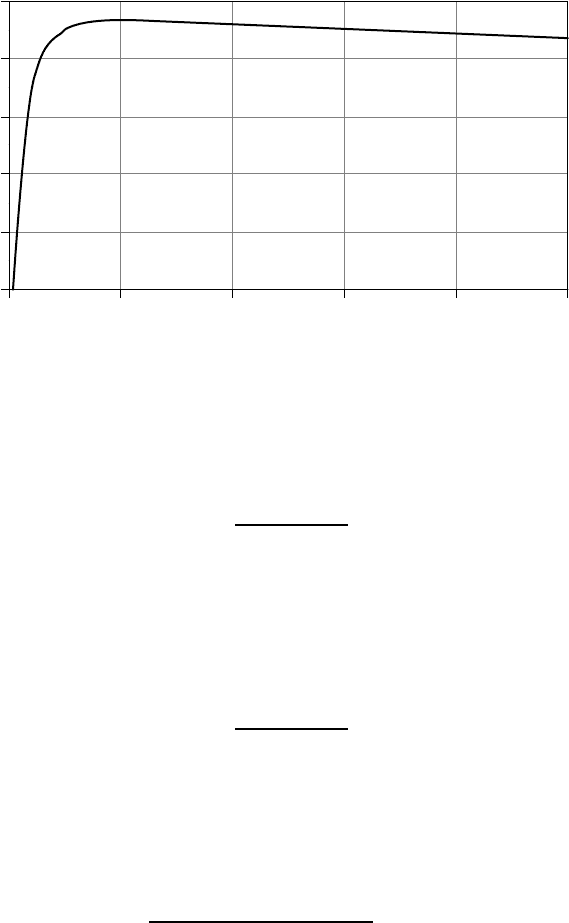
it happens to be supplying at that particular instant. Most inverters now operate
at around 90% efficiency over most of their range, as is suggested in Fig. 9.36.
For calculations, an overall inverter efficiency of about 85% is considered to be
a conservative default assumption.
When no load is present, a good inverter will power down to less than 1
watt of standby power while it waits for something to be turned on that needs
ac. When it senses a load, the inverter powers up and while it runs uses on the
order of 5–20 W of its own. That means those standby losses associated with so
many of our electronic devices may keep the inverter running continuously, even
though no real energy service is being delivered. In that case, that 5-to-20 watts
of inverter loss adds to the other standby losses, which emphasizes the need for
a manual shutdown of turned-off electronic equipment.
Example 9.15 Accounting for Inverter Losses. Suppose that a dc refrigerator
that uses 800 Wh/day is being considered instead of the 1140 Wh/d ac one given
in Example 9.14. Estimate the dc load that the batteries must provide if an 85%
efficient inverter is used (a) with all loads running on ac and (b) with everything
but the refrigerator running on ac.
STAND-ALONE PV SYSTEMS 555
100806040200
0
20
40
60
80
100
Percent of Rated Power
Efficiency (%)
Figure 9.36 Typical efficiency of a stand-alone system inverter.
Solution
a. With all 3109 Wh/day running on an 85% efficient inverter, the dc load
that the batteries must supply would be
dc battery load =
3109 Wh/day
0.85
= 3658 Wh/day
b. With the 1140-Wh/day refrigerator removed, the remaining ac load is
ac load = (3109 − 1140) Wh/day = 1969 Wh/day
accounting for the inverter efficiency, that ac load would be supplied by
dc for ac loads =
1969 Wh/day
0.85
= 2316 Wh/day
Adding in the 800-Wh/day dc refrigerator, the total dc load becomes
dc battery load = (2316 + 800) Wh/day = 3116 Wh/day
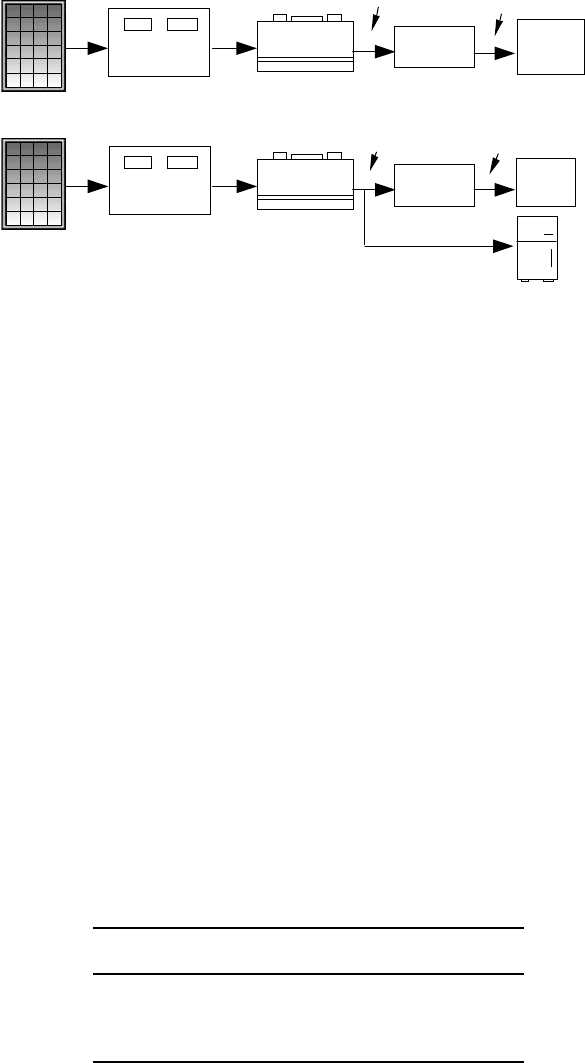
That’s a 15% decrease in energy needed. Figure 9.37 shows these data.
Swapping out the ac refrigerator in the above example for a dc one reduces the
total dc load that the batteries have to supply by about 15%. This can translate
into a 15% reduction in the size and cost of the photovoltaic array as well as
the batteries. Moreover, the inverter itself can be smaller and cheaper since it
doesn’t have to supply as much ac power. Offsetting those gains is the additional
556 PHOTOVOLTAIC SYSTEMS
(a) All ac
Charge
Controller
Batteries
Inverter
dc
dc
3658 Wh/d dc 3109 Wh/d ac
All ac
loads
(b) ac/dc
Charge
Controller
Batteries
Inverter
1969 Wh/d ac
dc
dc
3116 Wh/d dc
800 Wh/d dc
ac
loads
dc
Fridge
Figure 9.37 Switching out the ac refrigerator with a more efficient dc one. Numbers are
based on Example 9.15.
cost of a dc refrigerator plus the added complexity and cost of wiring a house to
provide for some ac and some dc loads. An economic analysis would be needed
to determine the right decision.
System Voltage Inverters are specified by their dc input voltage as well as by
their ac output voltage, continuous power handling capability, and the amount of
surge power they can supply for brief periods of time. The inverter’s dc input
voltage, which is the same as the voltage of the battery bank and the PV array,
is called the system voltage. The system voltage is usually 12 V, 24 V, or 48 V.
Higher voltages need less current, making it easier to minimize wire losses.
On the other hand, higher voltage means more batteries wired in series, which
impacts the number of batteries that may be needed to supply the load.
One guideline that can be used to pick the system voltage is based on keeping
the maximum steady-state current drawn below around 100 A so that readily
available electrical hardware and wire sizes can be used. Using this guideline
results in the system-voltage suggestions given in Table 9.11.
The maximum ac power that the inverter needs to deliver can be estimated
by adding the power demand of all of the loads that will ever be anticipated to
TA BLE 9.11 Suggested System Voltages Based on
Limiting Current to 100 A
Maximum ac Power System dc Voltage
<1200 W 12 V
1200–2400 W 24 V
2400–4800 W 48 V

STAND-ALONE PV SYSTEMS 557
TA BLE 9.12 The Maximum Continuous Power
Demand for The House in Example 9.14
Load Watts
Refrigerator 300
Lights 180
TV/satellite, active mode 85
Cordless phone 4
Microwave 1000
Washing machine 250
Well pump 100
Maximum ac power demand 1919
be operating simultaneously. Table 9.10 provides representative values of steady-
state power for a number of common household devices, which can be used as
a starting point in the analysis. For the house described in Example 9.14, the
total ac power demand with everything turned on at once would be 1919 W
(Table 9.12), which would draw 160 A if the system voltage is only 12 V. A
24-V inverter would allow plenty of growth in demand without exceeding the
100-A guideline and so should be chosen for this system.
The most important specification for an inverter is the amount of ac power
that it can supply on a continuous basis. But it is also critically important that
the inverter be able to supply surges of current that occur when electric motors
are started. Until the rotor starts spinning, there is no back emf to limit motor
current and surges many times higher than steady state can occur. Table 9.13
provides estimates of steady-state and surge power requirements for typical
household loads.
9.5.3 Batteries
Stand-alone systems obviously need some method to store energy gathered during
good times to be able to use it during the bad. While various exotic technologies
are possible—including flywheels, compressed air, or even hydrogen produc-
tion—it is the lowly battery that makes the most sense today. And, among the
many possible battery technologies, it is the familiar lead-acid battery that con-
tinues to be the workhorse of PV systems. In addition to energy storage, batteries
provide several other important energy services for PV systems, including the
ability to provide surges of current that are much higher than the instantaneous
current available from the array, as well as the inherent and automatic property
of controlling the output voltage of the array so that loads receive voltages that
are within their own range of acceptability.
Competitors to conventional lead-acid batteries include nickel–cadmium,
nickel–metal hydride, lithium–ion, lithium–polymer, and nickel–zinc technolo-
gies. Of these, only nickel–cadmium “Nicads” are even barely competitive with