
Masters G.M. Renewable and Efficient Electric Power Systems
Подождите немного. Документ загружается.

578 PHOTOVOLTAIC SYSTEMS
The 85% efficient inverter will deliver
Inverter output = 142 Ah/day × 24 V × 0.85 = 2900 Wh/day @ 120 Vac
So, the design is just a bit shy of its goal of 3000 Wh/day ac. The system diagram
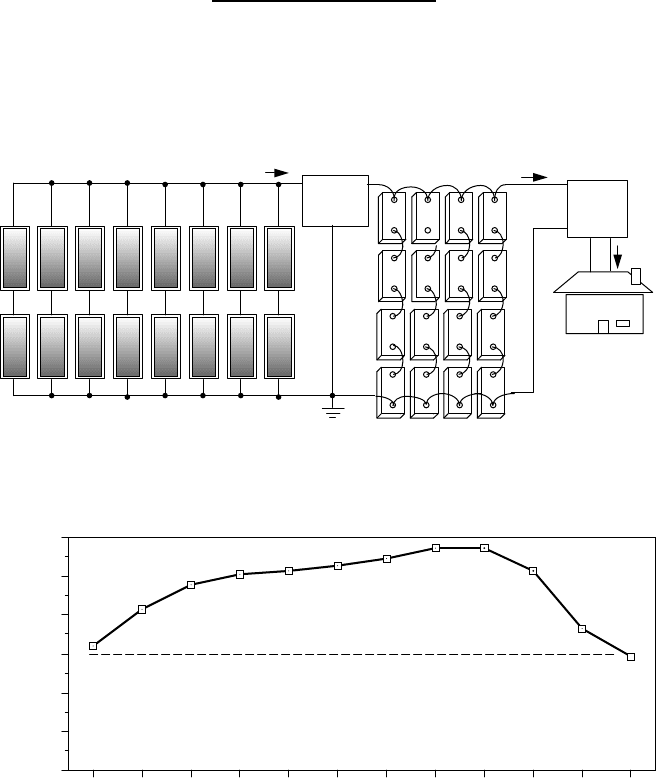
for this cabin, including some of the energy flows for December, is shown in
Fig. 9.51.
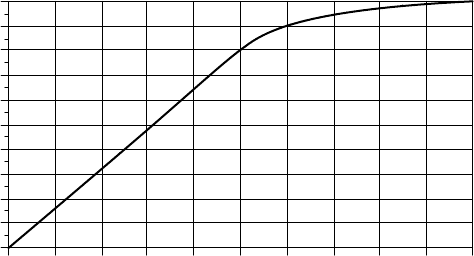
The month-by-month energy that the system just designed will deliver is shown
in Fig. 9.52. The system delivers far more energy in the summer than was needed
in the winter.
+
−
−
+
−
+
−
+
−
+
−
+
−
+
−
+
−
+
−
+
−
+
−
+
+
−
Charge
controller
2500-W
Inverter
0.85
158 Ah/d
142 Ah/d
120 V
ac
+
−
+
−
+
+
−
24 V
+
dc
24 V
900 Ah
−
2900 Wh/d
+
−
++
−
−
Figure 9.51 Design for the cabin in Salt Lake City (additional fuses, breakers, and
diodes not shown). Energy values are for the design month, December.
0
Jan Feb Mar Apr May Jun Jly Aug Sep Oct Nov Dec
1000
2000
3000
4000
5000
6000
Demand 3000 Wh/d
Supply
Energy delivered (Wh/d)
Figure 9.52 A PV–battery system sized to cover the worst month delivers much more
energy than is needed during the rest of the year. Data are for the system designed in
Example 9.20.
STAND-ALONE PV SYSTEMS 579
9.5.10 Hybrid PV Systems
A PV system designed to supply the entire load in the worst month (the “design
month”) usually delivers much more energy than is needed during the rest of the
year. Outside of the tropics, it is not at all unusual for the energy supplied during
the best month to be nearly double that of the design month. Figure 9.52 shows
that to be the case for the cabin in Salt Lake City designed in Example 9.20.
After figuring out the cost of a system that has been designed to be completely
solar, a buyer may very well decide that a hybrid system with most of the load
covered by PVs and the remainder supplied by a generator is worth considering.
The key to that decision is estimating the relationship between shrinking the
PV system and increasing the fraction of the load carried by the generator. An
analysis based on month-by-month calculations of energy supplied by the solar
portion of the system while varying the area of PVs is quite straightforward.
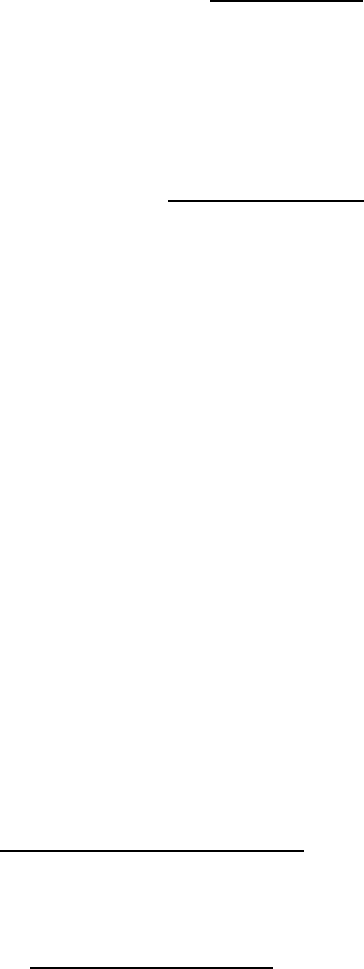
Figure 9.53 shows a pretty typical result (drawn for Salt Lake City with south-
facing array at a tilt of L + 15
◦
). As can be seen, significant reductions in the
size of the solar system may still cover a high fraction of the annual load. For
example, Fig. 9.53 suggests that a PV system designed to deliver only 50% of
the load in the design month will still cover about 80% of the annual load.
An approximation to Fig. 9.53 that is helpful for computer analysis is the
following:
Design mo. solar fraction = 0.625 × Annual solar fraction
(Annual ≤ 0.80) (9.36)
Design mo. solar fraction = 0.50 + 28(Annual solar fraction − 0.80)
2.5
(Annual > 0.80) (9.37)
1009080706050403020100
0
10
20
30
40
50
60
70
80
90
100
Design Month Solar Percentage
Annual Load From Solar (%)
Figure 9.53 The fraction of the annual load supplied by solar as a function of the percent
of the load covered in the worst month of the year. Derived for Salt Lake City.

580 PHOTOVOLTAIC SYSTEMS
TA BLE 9.16 Characteristics of Generators for Hybrid PV Systems
Size
Maintenance Intervals (hours)
Range
Cost
Type
(kW)
Applications
($/W)
Oil Change Tune-up Engine Rebuild
Gasoline
(3600 rpm)
1–20 Cabin Light
use
$0.50 25 300 2000–5000
Gasoline
(1800 rpm)
5–20 Residence
Heavy use
$0.75 50 300 2000–5000
Diesel 3–100 Industrial $1.00 125 –750 500–1500 6000
Source: Sandia National Laboratories (1995).
When a generator is included in the system, the most versatile inverter is an
inverter-charger capable of converting dc from the batteries into ac for the load, as
well as converting ac from the generator into dc to charge the batteries. Switching
from one mode to the other can be done manually or with an automatic transfer
switch in the unit itself. The generator can be sized just to charge the batteries,
which is the usual case, or it can be sized large enough to charge batteries and
simultaneously run the entire household.
With a hybrid system, the battery storage bank can be smaller since the gen-
erator can charge the batteries during prolonged periods of poor weather. One
constraint on how small storage can be is to check to be sure that the load can’t
discharge the batteries at too fast a rate—certainly no faster than C/5. A nominal
3-day storage system is often recommended since it will avoid discharging too
rapidly, while at the same time keeping the number of times the generator has to
be fired up to a reasonable level. Finally, the generator should be sized so that it
doesn’t charge the batteries too rapidly—again, certainly no faster than C/5.
Generators are somewhat costly, depending on the quality of the machine.
They require periodic oil changes, tune-ups, and major overhauls. Home-size
generators burn fuel at varying rates, but a rough estimate is that they will
generate about 5 kWh per gallon of fuel. Table 9.16 summarizes some of the
cost and maintenance characteristics of generators.
9.5.11 Stand-Alone System Design Summary
While the above series of examples and sets of equations for stand-alone sizing of
PV systems may at first appear daunting, it is actually quite straightforward and
can fairly easily be set up in a spreadsheet, which allows multiple design options
to be quickly explored. The following is a summary of the design approach for
the principal components of the system.
Load Analysis
1. Analyze the load to determine daily watt-hours of demand. See Table 9.10
for representative load power. Adjust ac loads using an inverter efficiency
STAND-ALONE PV SYSTEMS 581
(default 85%) to find their dc equivalent and add it to the load that runs
directly on dc:
Total dc load (Wh/day) = dc load (Wh/day) +
ac load (Wh/day)
Inverter efficiency
(9.38)
2. Use Tables 9.10 and 9.13 to estimate the maximum steady-state power
demand (W) and, with the help of Table 9.11, pick an appropriate system
voltage (12 V, 24 V, or 48 V).
3. Convert total dc load to a load expressed as Ah @ the system voltage:
Total load (Ah/day @ System voltage) =
Total dc load (Wh/day)
System voltage (V)
(9.39)
4. Use Fig. 9.53 [or Eqs. (9.36) and (9.37)] to help decide what annual solar
fraction to design for and to determine from that the solar fraction in the
design month. The design-month load is then
Design-month load (Ah/day) = Design-month fraction
× Total load (Ah/day) (9.40)
PV Sizing
5. Using insolation data for the site (Appendix E), find the insolation
(kWh/m
2
-day = hours @ 1-sun) in the worst month of the year (the
design month).
6. Pick a PV module and use its rated current I
R
along with an estimated
Coulomb efficiency (default 0.90), de-rating factor (default 0.90), and
the design month insolation to determine design-month Ah/day delivered
per string:
Ah/day-string = Insolation (h/day @ 1-sun) × I
R
(A) × Coulomb.
× De-rating (9.41)
7. Find an integer value for the number of parallel strings of modules
based on
Strings in parallel =
Design-month load (Ah/day)
Ah/day per module in design month
(9.42)
8. Find the number of modules in series from
Modules in series =
System voltage (V)
Nominal module voltage (V)
(9.43)

582 PHOTOVOLTAIC SYSTEMS
Battery Sizing
9. Decide the number of days of storage needed. For a totally solar system,
use design-month insolation in Fig. 9.46 as a guide. For a hybrid sys-
tem, the choice depends on how inconvenient running the generator is
perceived to be (3 days of storage is a reasonable default).
10. Find the usable storage needed from the Total load (Ah/day) found in
Step 3 and the days of storage found in step 9:
Usable storage (Ah) = Total load (Ah/day) × Days of storage (days)
(9.44)
11. Using the days of storage as an indicator of the discharge rate C/T , along
with anticipated minimum battery temperature, find the temperature and
discharge rate factor (T , DR) from Fig. 9.42.
12. Pick the maximum depth of discharge (MDOD defaults: deep-cycle lead-
acid 0.80, auto SLI 0.25, NiCad 0.90) subject to the freeze constraint
given in Fig. 9.39.
13. Find the total storage capacity from
Total storage capacity
(Ah @ C/20, 25
◦
C)
=
Usable storage capacity (Ah)
(MDOD) × (T , DR)
(9.45)
14. Check to be sure the battery capacity is sufficient to avoid a too-rapid
discharge rate (default C/5 rate). Use the maximum power demand found
in step 2 along with a maximum discharge rate of C/5 to find the minimum
storage capacity:
Minimum storage
capacity (Ah)
=
Maximum load power (W) × 5h
System voltage (V) × Max depth of discharge
(9.46)
Choose the tentative storage capacity to be the larger of the total and
minimum.
15. Choose a battery (voltage and Ah) and determine the number of batteries
in series in each string and the number of parallel strings:
Number of batteries in series =
System voltage
Nominal battery voltage
(9.47)
Number of strings of batteries
in parallel
=
Total storage capacity (Ah)
Capacity of a single battery (Ah)
(9.48)
Actual battery capacity is then
Actual battery capacity (Ah) = Ah/battery × No. of parallel strings
(9.49)

STAND-ALONE PV SYSTEMS 583
Generator Sizing
16. A generator should be able to replenish the batteries in a reasonable
amount of time, but no faster than at a C/5 rate. Including a charger
efficiency factor (default 0.80), the generator output to the battery charger
should be
Generator (W) =
Total storage capacity (Ah) × System voltage (V)
Charge time (h) × Charger efficiency
(9.50)
The actual generator size will be determined by what is available on
the market.
17. The generator output and run time can be estimated from the annual solar
fraction (step 4) along with the annual dc load and the charger efficiency
(default 0.80):
Generator (kWh/yr) =
Total dc load (Wh/day) × 365 day/yr
×(1 − Annual solar fraction)
Charger efficiency × 1000 (W/kW)
(9.51)
Generator run time (h/yr) =
Generator (kWh/yr)
Generator rated power (kW)
(9.52)
System Costs
18. In lieu of actual data on component costs, the following can be used for
preliminary estimates of total system cost:
Photovoltaics: $4.00/W
Batteries: Golf cart $0.07/Wh; True Deep cycle $0.10/Wh
Inverter-charger: $0.60/W
Generator: Light duty $0.50/W; heavy duty $0.75/W
Installation + BOS: 20% × (PV + batteries + inverter + generator $)
19. Annual fuel costs can be estimated based on unit cost and use rate (default:
$1.50/gal × 0.2 gal/kWh = $0.30/kWh)
Fuel ($/yr) = Generator (kWh/yr) × Fuel cost ($/gal)
× Fuel rate (gal/kWh) (9.53)
Maintenance costs depend on hours of use, maintenance intervals and unit
costs. (Defaults: $100 tune-ups @ 300 h, $400 overhauls @ 4000 h):
Maintenance ($/yr) =
Generator run time (h/yr) × Rate ($/service)
Maintenance interval (h/service)
(9.54)
584 PHOTOVOLTAIC SYSTEMS
14,000
13,000
12,000
11,000
10,000
9000
8000
7000
6000
Capital Cost of System ($)
30 40 50 60 70 80 90 100
Annual Percentage Solar
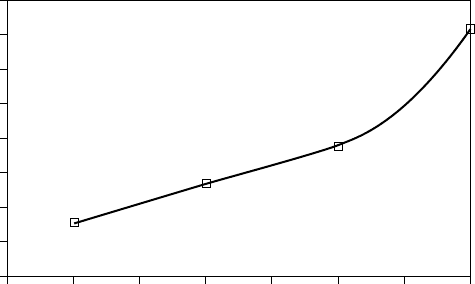
Figure 9.54 The capital cost of the Salt Lake City off-grid cabin drops quickly when it
includes a backup generator to supply even a small portion of the annual load.
While these 19 design steps may imply a linear flow from top to bottom, a real
design will of course involve many iterations as different modules and batteries
are analyzed and as the economics of various solar fractions are determined.
Figure 9.54 is based on applying the above sequence of steps to the cabin
already analyzed in previous examples, and it does so for a system that is
100% solar for comparison with hybrid systems having annual solar fractions
of 80% 60% and 40%. Even though the cost estimates used are crude, the
conclusions drawn are quite robust. That is, the capital cost of a system drops
rather dramatically when a generator provides even a small fraction of the annual
energy.
9.6 PV-POWERED WATER PUMPING
One of the most economically viable photovoltaic applications today is for water
pumping in remote areas. For an off-grid home, a simple PV system can raise
water from a well or spring and store it in either a pressurized or an unpressur-
ized tank, or it can circulate water through a solar water heating system. Water
for irrigation, cattle watering, or village water supply—especially in developing
countries—can be critically important, and the value of a PV water-pumping
system in these circumstances can far exceed its costs.
The simplest PV water-pumping systems consist of just a PV array attached
to a dc pump. Water that is pumped when the sun is out may be used at that
time or stored in a tank for use later, so the disadvantages of battery storage
can be avoided. The result can be a system that combines simplicity, low cost,
and reliability. Matching photovoltaics and pumps in such directly coupled sys-
tems (without battery storage), along with predicting their daily performance, is
PV-POWERED WATER PUMPING 585
+
−
I
V
PV
DC
Pump
Pump
"Load"
H
Q
ELECTRICAL SIDE
HYDRAULIC SIDE
dc motor
w
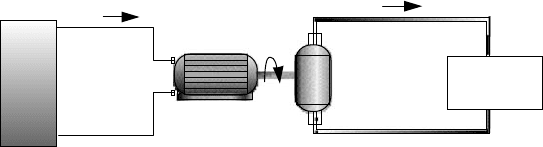
Figure 9.55 The electrical characteristics of the PV–motor combination need to be
matched to the hydraulic characteristics of the pump and its load.
actually a quite challenging task. More complex systems may include a battery
and inverter to run a conventional ac pump, along with a linear current booster
(LCB) to improve performance in low-light conditions.
As suggested in Fig. 9.55, a simple, directly coupled PV–pump system has
(a) an electrical side in which PVs create a voltage V that drives current I
through wires to a motor load and (b) a hydraulic side in which a pump creates
a pressure H (for head) that drives water at some flow rate Q through pipes
to some destination. The figure suggests that the hydraulic side is a closed loop
with water circulating back to the pump, but it may also be an open system
in which water is raised from one level to the next and then released. On the
electrical side of the system, the voltage and current delivered at any instant
are determined by the intersection of the PV I –V curve and the motor I –V
curve. In the hydraulic system, H is analogous to voltage while Q is analogous
to current; as we shall see, the role of H –Q curves in determining a hydraulic
operating point is exactly analogous to the role of I –V curves that determine
the electrical operating point.
9.6.1 Hydraulic System Curves
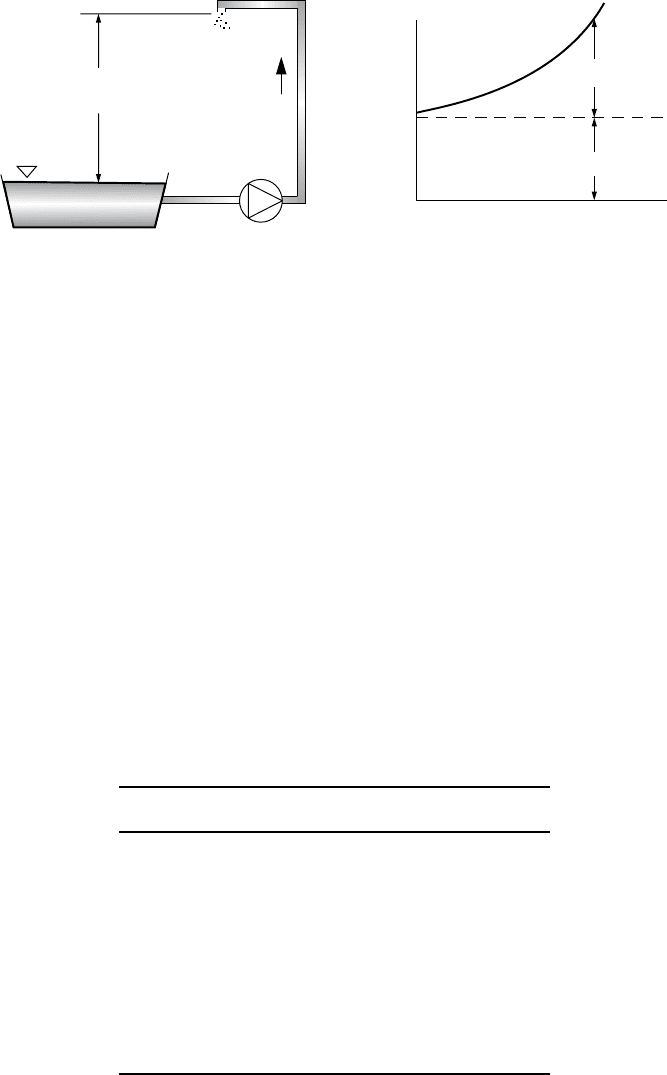
Figure 9.56a shows an open system in which water is to be raised from one
level to the next. The vertical distance between the lower water surface and the
elevation of the discharge point is referred to as the static head (or gravity head),
and in the United States it is usually given in “feet of water.” Head can also be
measured in units of pressure, such a s pounds per square inch (psi) or pascals
(1 psi = 6895 Pa). To convert between these two equivalent approaches to units,
just picture the pressure that a cube of water exerts on its base. For example, the
pressure that a 1-ft cube weighing 62.4 lb would exert on its 144 square inches
of base would be
1 ft of head = 62.4lb/144 in.
2
= 0.433 psi (9.55)
Conversely, 1 psi = 2.31 ft of water. Typical city water pressure is about 60 psi
which corresponds to a column of water roughly 140 ft high.
586 PHOTOVOLTAIC SYSTEMS
(a)
Pump
Q
Total Dynamic Head (ft)
Discharge,
Q
(gpm)
(b)
Static
Head
Static Head
Friction Head
Figure 9.56 An “open” system and the resulting “system curve” showing the static and
friction head components.
If the pump is capable of supplying only enough pressure to the column of
water to overcome the static head, the water would rise in the pipe and just
make it to the discharge point and then stop. In order to create flow, the pump
must provide an extra amount of head to overcome friction losses in the piping
system. These friction losses rise roughly as the square of the flow velocity (as is
suggested in Figure 9.56); they depend on roughness of the inside of the pipe and
on the numbers of bends and valves in the system. For example, the pressure drop
per 100 ft of plastic water pipe for various flow rates and diameters is presented
in Table 9.17. In keeping with U.S. tradition, flow rates are given in gallons per
minute (gpm), pipe diameters in inches, and head in feet of water.
Table 9.18 gives pressure drop of various plumbing fittings expressed as equiv-
alent lengths of pipe. For example, each 3/4
90
◦
elbow in a plumbing run adds
to the pressure drop the same amount as would 2.0 ft of straight pipe. So we can
TABLE 9.17 Pressure Loss Due to Friction in
Plastic Pipe, Feet of Water per 100 ft of Tube for
Various Nominal Tube Diameters
gpm 0.5 in. 0.75 in. 1 in. 1.5 in. 2 in. 3 in.
1 1.4 0.4 0.1 0.0 0.0 0.0
2 4.8 1.2 0.4 0.0 0.0 0.0
3 10.0 2.5 0.8 0.1 0.0 0.0
4 17.1 4.2 1.3 0.2 0.0 0.0
5 25.8 6.3 1.9 0.2 0.0 0.0
6 36.3 8.8 2.7 0.3 0.1 0.0
8 63.7 15.2 4.6 0.6 0.2 0.0
10 97.5 26.0 6.9 0.8 0.3 0.0
15 49.7 14.6 1.7 0.5 0.0
20 86.9 25.1 2.9 0.9 0.1
PV-POWERED WATER PUMPING 587
TA BLE 9.18 Friction Loss in Valves and Elbows Expressed as Equivalent Lengths
of Tube
a
Fitting 0.5 in. 0.75 in. 1 in. 1.5 in. 2 in. 3 in.
90-degree ell 1.5 2.0 2.7 4.3 5.5 8.0
45-degree ell 0.8 1.0 1.3 2.0 2.5 3.8
Long sweep ell 1.0 1.4 1.7 2.7 3.5 5.2
Close return bend 3.6 5.0 6.0 10.0 13.0 18.0
Tee—straight run 1.0 2.0 2.0 3.0 4.0
Tee— side inlet or outlet 3.3 4.5 5.7 9.0 12.0 17.0
Globe valve, open 17.0 22.0 27.0 43.0 55.0 82.0
Gate valve, open 0.4 0.5 0.6 1.0 1.2 1.7
Check valve, swing 4.0 5.0 7.0 11.0 13.0 20.0
a
Units are feet of pipe for various nominal pipe diameters.
add up all the bends and valves in a pipe run and find what equivalent length of
straight pipe would have the same pressure drop.
The sum of the friction head and the static head is known as the total dynamic
head (H).
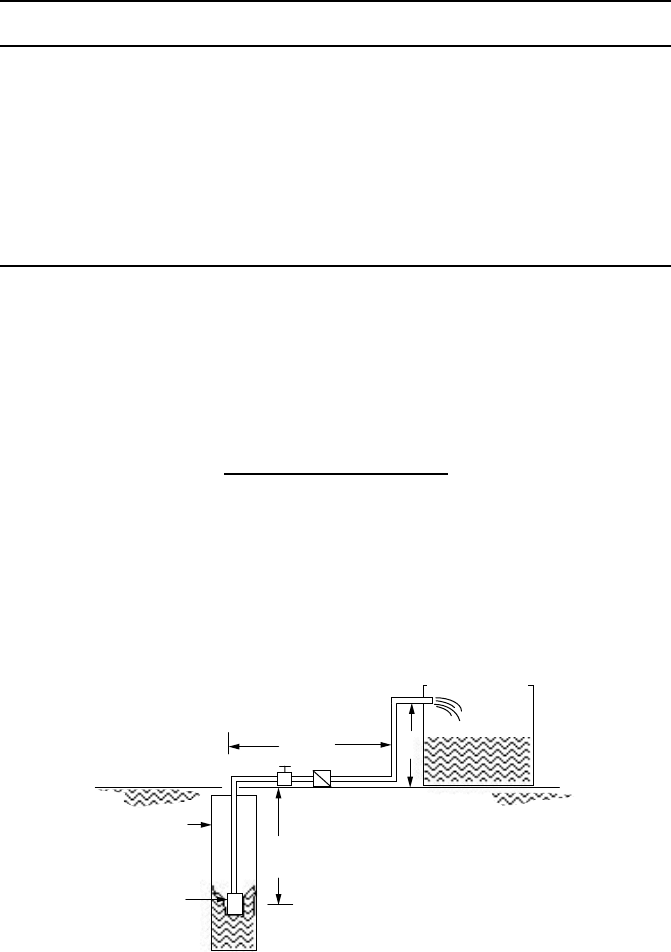
Example 9.21 Total Dynamic Head for a Well. What pumping head would
be required to deliver 4 gpm from a depth of 150 ft. The well is 80 ft from
the storage tank, and the delivery pipe rises another 10 ft. The piping is 3/4-in.
diameter plastic, and there are three 90
◦
elbows, one swing-type check valve,
and one gate valve in the line.
150 ft
80 ft 10′
4 gpm
Valve
check
3/4″
PVC
Pump
Well
Tank
Solution. The total length of pipe is 150 + 80 + 10 = 240 ft. From Table 9.18,
the three ells add the equivalent of 3 × 2.0 = 6 ft of pipe; the check valve adds