
Moulson A.J., Herbert J.M. Electroceramics: Materials, Properties, Applications
Подождите немного. Документ загружается.

planes, with the whole comprising a so-called Magne
´
li phase (named after A.
Magne
´
li). In the case of TiO
2
, non-stoichiometric compositions can be shown to
belong to the stoichiometric series Ti
n
O
2n71
in which n ¼ 15, 16, 18, 19, 20, 22,
29, 31 etc. For example, TiO
1.95
is actually Ti
20
O
39
.
The change in conductivity with oxygen pressure can be exploited for gas
sensing as discussed in Section 4.6.2. Most compositions containing TiO
2
show
similar behaviour when fired in reducing atmospheres, so that sintering in air or
oxygen is essential if they are to be used as low-loss dielectrics.
292 DIELECTRICS AND INSULATORS
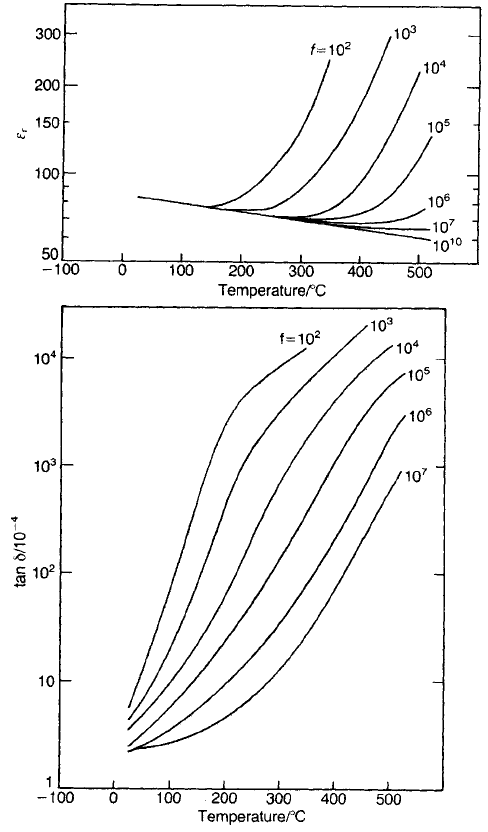
Fig. 5.28 Dielectric properties of titania ceramic as a function of frequency and temperature.
TEAMFLY
Team-Fly
®
5.6.2 Degradation in titanium-containing oxides
The degradation of capacitor dielectrics has been discussed in general terms in
Section 5.2.2 and 5.4.1. Here the topic is amplified with regard to titanium-
containing oxides. Deterioration can occur under two different sets of conditions
and most probably with differing mechanisms.
MEDIUM-PERMITTIVITY CERAMICS 293
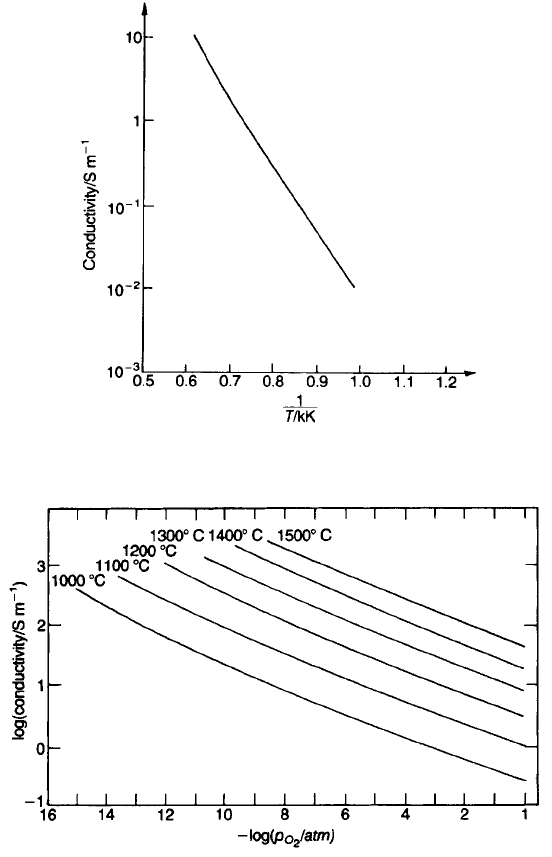
Fig. 5.29 Conductivity of titania ceramic in oxygen (101 kPa; 1 atm) as a function of
temperature.
Fig. 5.30 The conductivity measured in the c direction of a rutile single crystal as a function
of oxygen pressure and temperature (after R.N. Blumenthal et al.: see [7] p. 145).
In one circumstance, for capacitors with thin dielectrics (approximately 25 mm
thick) subjected to less than 5 V d.c. at room temperature, the resistance drops
rapidly during prolonged life tests. It can be restored to its initial level by the
brief application of a higher (106) voltage, or sometimes just by minor
mechanical disturbance. The reason for this behaviour is not known for certain
but it seems likely that silver has migrated in the form of a filament which results
in a low-resistance path bridging the electrodes. An increased current is able to
destroy the filament by Joule heating and fusion. The effect of mechanical shock
is less easy to explain. Multilayer capacitors containing structural defects such as
cracks or laminations appear to be more likely to be subject to this behaviour.
The presence of moisture may also be a factor.
Another circumstance is when deterioration becomes apparent under fields in
excess of 0.5 MV m
71
at temperatures above 85 8C, and occurs more rapidly the
higher the field or the temperature. The fall in resistance has been observed in
single crystals of rutile and barium titanate and so must be assumed to be a bulk
rather than a grain boundary effect, although there is evidence that grain
boundaries play a part in degradation processes in ceramics.
The mechanisms responsible for degradation are complex with V
..
O
playing an
important role. Because they act as an effective positive charge they migrate
under the influence of a d.c. field towards the cathode with a corresponding
depletion in the anode region. Accompanying these changes are corresponding
changes in electron and hole concentrations in the bulk of the ceramic and it is
the steady build-up of electron currents which is responsible for the degradation
process. The degradation mechanism is discussed in detail in a series of papers by
R. Waser, T. Baiatu and K.-H. Ha
¨
rdtl [8].
Degradation can be slowed down by suitable substituents. The presence of
donor ions at levels exceeding 2 mol.%, e.g. substituting Nb
5+
for Ti
4+
,La
3+
for
Ba
2+
or F
7
for O
27
, prolongs useful life. Donor ions reduce the concentration of
oxygen vacancies, which are relatively mobile, and increase the concentration of
cation vacancies. The latter have low mobilities at room temperature and, when
combined with holes in the valence band, behave as acceptors (see Section 2.6.2,
and Section 5.7.3).
Manganese at the 1% level in air-fired dielectrics acts as a palliative. It is present
as both Mn
4+
and Mn
3+
. The former ion must be expected to act as an effective
electron trap since it is readily converted into Mn
3+
. However, the presence of
Mn
3+
will result in a corresponding concentration of oxygen vacancies.
Humidity is known to accelerate degradation and it is argued that the
mechanism involves protons incorporated into the structure, as discussed in the
context of hydrogen sensors (see Section 4.6.1). Because an hydroxyl group can
occupy a vacant oxygen ion site without distorting the lattice, ‘water’ may be
incorporated into the structure according to the reaction:
H
2
O þ V
O
þ O
2
! 2OH
ð5:21Þ
294 DIELECTRICS AND INSULATORS

Proton conduction can then occur via a ‘hopping’ mechanism between hydroxyl
ions.
It is also established that ‘water’ is able to enter a vitreous phase and, acting as
a glass ‘network modifier’, enhance ionic mobilities. There is no doubt that the
nature of the grain boundary phase, coupled with the presence of water vapour,
influences the diffusion of silver from electrodes and terminations in multilayer
capacitors leading to eventual inter-electrode shorting and component failure [9].
5.6.3 High-power capacitors
The capacitors in the output stage of high-frequency generators provide an
application for Class I dielectrics. These units isolate the d.c. voltage component
from the external load and the whole output from the generator passes through
them. Their values range up to 5000 pF and their frequency of operation ranges
up to 50 MHz. They may have to withstand up to 25 kV and pass 150 A. Their
shape and fabrication have been outlined in Section 5.4.3. The properties of the
principal dielectrics used are given in Table 5.5. The low loss tangents are
achieved by selecting raw materials which are low in impurities, especially
transition elements, and ensuring that none are introduced during processing.
It is instructive to consider important features of the design of high-power
capacitors in some detail, particularly with regard to power dissipation. The
average rate
PP at which heat is developed in a dielectric due to the dissipation of
electrical energy is
PP ¼ IU tan d ð5:22Þ
in which I and U are the root mean square (r.m.s.) current and voltage. Therefore
a 500 kW unit with tan d ¼ 2 10
4
has to dissipate 100 W as heat. Clearly a
particular application requires a particular capacitance value C and, since
I ¼ 2pfUC and C ¼ eA=h, Eq. (5.22) becomes
PP ¼ 2p fU
2
e
A
h
tan d ð5:23Þ
MEDIUM-PERMITTIVITY CERAMICS 295
Table 5.5 Properties of dielectrics for ‘transmitter’ capacitors
Principal
constituent
Relative
permittivity tan d=10
4
TCC/MK
71
Steatite 6 3–5 +100 to +150
MgTiO
3
12–15 1–3 +60 to +100
BaTi
4
O
9
36–40 1–3 730 to +36
TiO
2
80–90 2–4 7800 to 7700

If it is assumed that the rate at which heat can be removed from the unit is
proportional to its exposed surface area and to its temperature excess DT over
the surroundings, we obtain
DT / fU
2
e
h
tan d ð5:24Þ
Therefore, for a given application, the temperature rise increases with
permittivity and frequency, and decreases with the thickness of the dielectric.
An allowed DT defines the maximum power rating
PP
m
for a given capacitor and
this, in turn, defines upper and lower bounds on the frequency range over which
the unit can be operated at maximum power level.
At low frequencies, say below f
1
, the power-handling capability is limited by
the high reactance 1/oC and therefore by the voltage rating U
m
of the capacitor.
Above a frequency f
2
the reactance is low, so that the power capability is limited
by the current rating I
m
. The frequencies are given by
f
1
¼
PP
m
2pU
2
m
C
and f
2
¼
I
2
m
2pP
m
C
ð5:25Þ
It is also necessary to consider the power
PP
e
dissipated by the electrodes, which
is given by
PP
e
¼ R
e
I
2
ð5:26Þ
where R
e
is the electrode resistance. Since
PP
m
¼ IU ¼ I
2
=2p fC, Eq. (5.26) can be
written
PP
e
¼ R
e
2p fC
PP
m
ð5:27Þ
R
e
is complicated by the ‘skin effect’, by which high-frequency currents are
concentrated near the surface of a conductor. The effect arises for the following
reason. When a direct current flows down a wire the current density is distributed
evenly over the cross-section of the wire. The wire can be considered as being
made up of elementary current-carrying filaments, each of which has its
associated magnetic induction. A little consideration (or consultation of a
textbook on electricity) will show that a central filament is linked with more flux
than a filament running along the outer surface of the wire. Therefore, when the
current alternates, the back e.m.f. is greater along the centre of the cross-section
than at the surface. Consequently the current density along the length increases
radially from the centre outwards towards the surface. In fact the current density
falls off exponentially with depth below the surface, and at a depth d
s
its value is
1/e of that at the surface. Clearly the effect becomes more pronounced with
increasing frequency.
296 DIELECTRICS AND INSULATORS
The skin depth d
s
is inversely proportional to the square root of the frequency,
and at 1 MHz is 0.064 mm for silver, 0.066 mm for copper and 0.19 mm for a
typical solder. A surface resistivity r
s
can be defined by
r
s
¼ r=d
s
ð5:28Þ
where r is the volume resistivity. Alternatively the variation in d
s
with frequency
can be introduced explicitly by defining a surface resistivity r
0
s
, which is a
material property independent of frequency, such that
r
s
¼ r
0
s
f
1=2
ð5:29Þ
For silver, copper and solder r
0
s
is 2.5610
77
O Hz
71/2
, 2.6610
77
O Hz
71/2
and
7.7610
77
O Hz
71/2
respectively.
In order to evaluate the order of magnitude of the power
PP
e
dissipated in the
electrode, a value is required for R
e
in Eq. (5.27). Because R
e
¼ r
s
l=w, where l/w
is the length-to-width ratio, and l w, then R
e
r
s
. Therefore it follows that
PP
e
2p f
3=2
r
0
s
C
PP
m
ð5:30Þ
For example, for a 500 kW 500 pF unit with r
0
s
¼ 4 10
7
O Hz
1=2
,
PP
e
is 0.02 W
at 0.1 MHz and 7 kW at 500 MHz. Therefore it is evident that below 1 MHz the
major contribution to heat generation is dielectric loss, whilst at higher frequencies
a significant proportion is due to electrode resistance, and that, because of the skin
effect, this resistance cannot be reduced by making the electrodes or leads thicker
than a small fraction of a millimetre. However, the thicker the electrodes and leads
are the better is the heat transfer from the capacitor.
The TCC is not of the greatest importance for these units since the capacitance
values themselves may vary some 10% from nominal in most cases.
A higher-permittivity dielectric based on CaTiO
3
is sometimes used. It has a
relative permittivity of about 140 and a dissipation factor of 2610
74
. The TCC
is about double that of rutile-based dielectrics.
5.6.4 Low-TCC low-loss capacitors
A common function of circuits is the provision of an accurate resonance state.
For instance, for a resonance frequency to stay within a tolerance of 0.1% over a
temperature range of 100 K a temperature coefficient of less than 10 MK
71
would be required. It might be achieved in the 10–100 kHz range by using a
manganese zinc ferrite pot-core inductor (see Section 9.5.1) with a small positive
temperature coefficient of inductance combined with a ceramic capacitor having
an equal, but negative, temperature coefficient. This is clear from the resonance
condition
o
0
¼ðLCÞ
1=2
MEDIUM-PERMITTIVITY CERAMICS 297

which when differentiated with respect to temperature yields
1
o
0
do
0
@T
¼
1
2
1
L
@L
@T
þ
1
C
@C
@T
ð5:31Þ
In most applications a resonance tolerance of 0.1% would only be useful if the
resonance were correspondingly sharp, e.g. with a Q in the neighbourhood of
1000 (tan d ¼ 10
3
). Thus low-TCC capacitors must also be low loss if they are
to be of practical value in such applications.
The parameters that contribute to the TCC can be identified by first
considering a rectangular parallel-plate capacitor with sides of length x and y
and thickness z. Then, since the capacitance is given by
C ¼
e xy
z
differentiation with respect to temperature leads to
1
C
@C
@T
¼
1
e
@e
@T
þ
1
x
@x
@T
þ
1
y
@y
@T
1
z
@z
@T
¼
1
e
@e
@T
þ a
L
or
TCC ¼ TC
e
þ a
L
ð5:32Þ
in which TC
e
is the temperature coefficient of permittivity and a
L
is the linear
expansion coefficient. Eq. (5.32) is derived under the assumption that the
expansion coefficients in the x, y and z directions are identical, i.e. the dielectric
has isotropic linear expansion characteristics.
The capacitance may change with temperature not only because the
dimensions of the capacitor change but also because the permittivity of the
dielectric changes. To gain some insight into the sources of the variation in
permittivity with temperature, the Clausius–Mosotti equation (Eq. (2.88)) can be
differentiated with respect to temperature to give
TC
e
¼
1
e
@e
@T
¼
ðe
r
1Þðe
r
þ 2Þ
3e
r
1
a
@a
@T
þ
1
N
@N
@T
ð5:33Þ
When e
r
52,
ðe
r
1Þðe
r
þ 2Þ
3e
r
e
r
3
and
298 DIELECTRICS AND INSULATORS

1
N
@N
@T
¼
1
V
@V
@T
¼3a
L
where V is the volume containing N polarizable units. Eq. (5.33) therefore
reduces to
TC
e
e
r
3
1
a
@a
@T
3a
L
ð5:34Þ
For a number of dielectrics with e
r
430, TC
e
is negative and within 15% of
a
L
e
r
as illustrated by the examples given in Table 5.6. Eq. (5.34) suggests that
the temperature variation of polarizability is small compared with the volume
expansion coefficient in these cases. Lower-permittivity oxides have positive TC
e
s
and in their case the temperature coefficient of polarizability can be assumed to
exceed the volume expansion coefficient. However, the extent to which the
Clausius–Mosotti equation can be applied to ionic solids is open to debate.
In order to improve volumetric efficiency, dielectrics combining a small TC
e
with a high permittivity have been sought. Since, in many cases, it is not zero TC
e
but a controlled value that is required, combinations of two components with
different TC
e
s in a series of ratios has provided ranges of useful dielectrics. A
typical combination has end-members with compositions corresponding to
BaTi
3
O
7
(e
r
¼ 35, TC
e
¼þ35 MK
71
) and TiO
2
(e
r
¼ 100,TC
e
¼750 MK
1
)
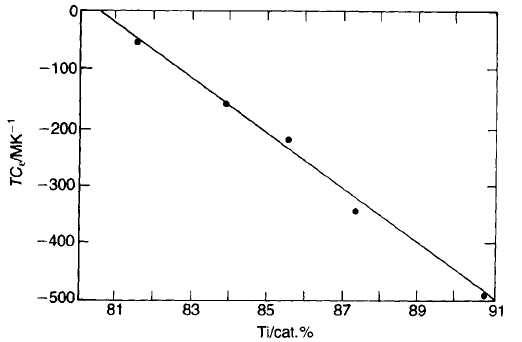
which covers the range of TC
e
and permittivity lying between these two extremes
as illustrated in Fig. 5.31.
Combinations of high positive TC
e
with high permittivity and low loss are
rare. The antiferroelectric compound PbZrO
3
has e
r
¼ 110 and TC
e
¼1400 but
tan d ¼ 28 10
4
. Sphene (CaSiTiO
5
), which is also known as titanite, has
e
r
¼ 45, TC
e
¼ 1200 and tan d ¼ 5 10
4
. A combination of sphene and rutile
gives a dielectric with zero TC
e
, e
r
¼ 60–70 and low loss. The crystal structure of
sphene consists of chains of corner-sharing TiO
6
octahedra interlinked by SiO
4
tetrahedra by corner sharing. The Ti
4+
ions are displaced from the centres of the
octahedra by about 10 pm but in opposite directions in alternate groups;
MEDIUM-PERMITTIVITY CERAMICS 299
Table 5.6 Temperature coefficient of permittivity of Class I dielectrics
TC
e
/MK
71
Composition e
r
a
L
=MK
1
Reported e
r
a
L
TiO
2
100 7.5 7750 7750
SrTiO
3
230 10.3 72400 72370
CaTiO
3
170 10.8 71600 71836
MgTiO
3
17 7 +100 7119
Al
2
O
3
10 8.5 +120 785
MgO 10 13.5 +190 7135
therefore it is an antipolar structure. It is not antiferroelectric since there is no
transition to a paraelectric state in which the Ti
4+
ions have zero displacements.
As pointed out earlier (Chapter 2, Section 2.7.4), Lichtenecker’s rule for
mixtures leads to the prediction that the TC
e
of a mixture will be equal to the
volume average of the TC
e
s of its constituents. This presupposes that there is no
reaction leading to the formation of new compounds. The permittivity of the
mixture can also be predicted approximately by Lichtenecker’s rule.
5.6.5 Microwave ceramics
‘Wireless technologies’ have already penetrated many aspects of modern life and
the trend is set to continue. This has in turn been a strong stimulant to the
development of specially tailored microwave dielectrics.
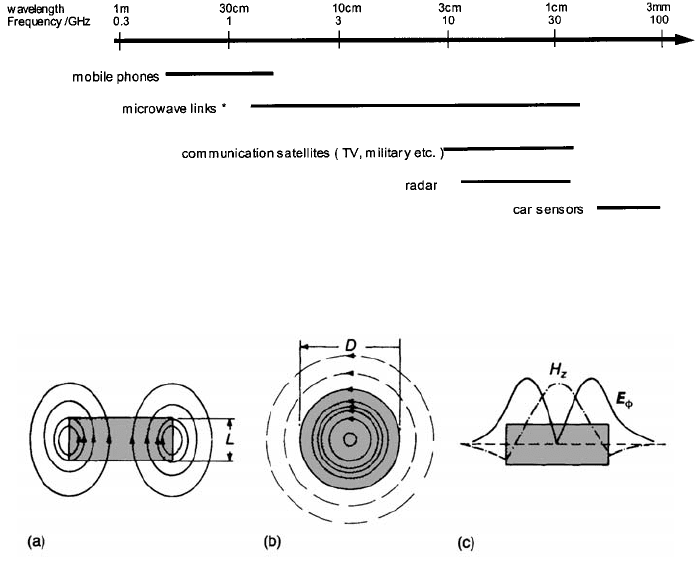
Figure 5.32 gives an indication of specific technologies and of the
corresponding frequency bands.
Dielectric resonators
The rapid growth of satellite and mobile radio communications has led to a
requirement for narrow band, frequency-stable filters and oscillators. Selectivity
and stability are necessary to ensure that signals are confined to closely defined
allotted frequency bands and to prevent the intrusion of unwanted signals which
would interfere with the satisfactory performance of the system. Antennae are
also critical components of any wireless communications system. The need for
compactness in satellite and hand-held mobile systems is self-evident.
300 DIELECTRICS AND INSULATORS
Fig. 5.31 Temperature coefficient versus TiO
2
content for BaTi
3
O
7
–TiO
2
mixtures.
The solution to providing stable filters and oscillators in the past lay in bulky
coaxial and cavity resonators fabricated from the temperature-stable metal
alloy Invar. The dielectric resonator (DR) offers a means of miniaturizing the
device.
In its simplest form a DR is a cylinder of ceramic of relative permittivity e
r
sufficiently high for a standing electromagnetic wave to be sustained within its
volume because of reflection at the dielectric–air interface. The electric and
magnetic field components of the fundamental mode of a standing electro-
magnetic field are illustrated in Fig. 5.33.
The wavelength l
d
of the standing wave in the dielectric approximates to the
diameter, D, of the cylinder, i.e. l
d
D. If the resonance frequency is f
r
then in
free space f
r
¼ c=l
0
where c and l
0
are respectively the free space velocity and
wavelength. In a non-magnetic dielectric medium the velocity
v
d
¼ c=e
1=2
r
(see
Eq. (2.120)) so that
f
r
¼ c=ðl
d
e
1=2
r
Þc=ðDe
1=2
r
Þð5:35Þ
MEDIUM-PERMITTIVITY CERAMICS 301
Fig. 5.32 Frequency bands covered by the various wireless technologies (*includes
‘Bluetooth’; Harald Blatand (Bluetooth) was a famous King of Denmark c.960 who is
known for encouraging communication between people).
Fig. 5.33 Fields in a microwave resonance dielectric in the simplest standing wave mode: (a)
magnetic field; (b) electric field; (c) variation in E
’
and E
z
with r at z ¼ 0, with reference to
cylindrical coordinates (the z axis is perpendicular to the plane of the disc and the origin is at
the disc centre).