
Vaccari D.A., Strom P.F., Alleman J.E. Environmental Biology for Engineers and Scientists
Подождите немного. Документ загружается.

Asthma is a spasm of the bronchioles that greatly restricts the air-exchange capability of
the lungs. The bronchioles lead to groups of sacs arranged like clusters of grapes. These
are dead-end chambers called alveoli, which are the site of actual mass transfer of oxygen
and CO
2
. Each alveolus is surrounded by capillaries. The gases need to diffuse as little as
0.1 mm to cross between the lumen of the alveoli and the blood. Both oxygen and CO
2
are
lipid soluble, so diffusion is relatively easy.
Most of the epithelium of the respiratory tract, from the nasal passages to the bronchi,
secretes sticky, viscous mucus onto the surface. The epithelial cel ls are lined with cilia
that sweep continuously the mucus toward the pharynx, where it can be swallowed,
along with trapped particles. This mechanism, called the mucociliary escalator, traps
particles larger than 10 mm. The mechanism is damaged by tobacco smoking, as evi-
denced by ‘‘smokers’ cough,’’ which is needed to replace the mechanism’s throat-clearing
effect. The mucociliary escalator does not cover bronchioles or alveoli. However, special
macrophages called dust cel ls roam about and consume particles of size 1 to 5 mm that
may be deposited in the alveoli. Particles smaller than about 0.5 mm remain suspended
and pass out of the lung with expiration. In the genetic disease cystic fibrosis the mucus
is unusually thick and cannot be removed by the cilia, resulting in lung blockage and fre-
quent infections.
The atmosphere, with its total pressure of 760 mmHg, is 20.9% oxygen (a partial pres-
sure of 159 mmHg). It has 400 ppmv CO
2
(0.04%, or 0.3 mmHg) and about 2 to 20 mmHg
of water vapor, depending on the humidity. Th e air we breathe out is saturated with water
at physiological temperature: 6.2% or 47 mmHg. Oxygen has dropped to about 15.3%
(116 mmHg) and CO
2
increased to 3.7% (28 mmHg). Oxygen-depleted blood arriving
in the lungs absorbs oxygen due to the mass transfer driving force between the air and
the blood. For the same reason, it releases carbon dioxide.
Another mechanism enhances this transfer. The capacity of hemoglobin for oxygen
depends on the pH of the blood. This, in turn, is affected by how much CO
2
is being car-
ried by the blood. The hemoglobin carries some CO
2
, but most is dissolved in the blood
plasma. Carbon dioxide reacts with water to form carbonic acid,H
2
CO
3
, which dissoci-
ates at a normal blood pH range of 7.2 to 7.6. Since CO
2
is being produced in the tissues,
its concentration increases there. As blood passes through, its pH drops, from the form-
ation of carbonic acid. As a result, the capacity of hemoglobin for oxygen also drops,
forcing the hemoglobin to release oxygen. The reverse situation occurs in the lungs.
The force for inspiration (inhalation) comes from the diaphragm, a sheet of muscle
that spans the chest under the lungs, plus other muscles that lie over the ribs. Expiration
may occur passively by elastic rebound or by contraction of muscles under the ribs and of
the abdomen. A resting adult breathes at a frequency, f, of about 12 to 18 min
1
. The
volume inhaled or exhaled with each breath under resting conditions is called the tidal
volume, V
T
. The respiratory flow, Q, is the product f V
T
. For example, a typical
tidal volume for an adult is 0.5 L. At a frequency of 12 breaths/min, the flow would be
6.0 L/min. The U.S. Environmental Protection Agency uses a respiratory flow rate of
20 m
3
/day (about 13.9 L/min) to estimate exposure to atmospheric toxins for risk assess-
ment purposes.
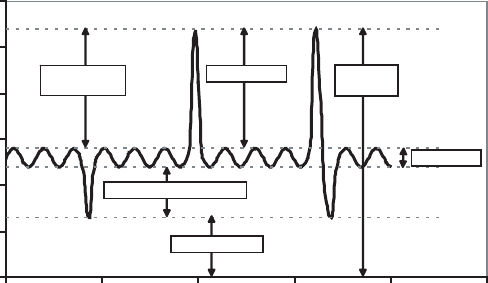
Physicians use an instrument called a spirometer to measure tidal volume and other
respiratory air volumes, as shown in Figure 9.11. The vital capacity is measured by
having the patient draw in a very deep breath and then blow out as completely as possible
into a spirometer. This measurement is used to detect harm in populations exposed to air
pollutants.
198 THE HUMAN ANIMAL
Breathing is controlled by centers in the medulla oblongata of the brain. Two groups of
nerves fire alternately to stimulate inspiration and expiration. Of course, the brain can
control these centers voluntarily as well as involuntarily. The brain is very poor at detect-
ing low oxygen concentration and will not respond to oxygen deprivation by increasing
the breathing rate. However, it strongly senses CO
2
accumulation in the blood and will
increase the breathing rate in response to CO
2
buildup.
9.9 DIGESTION
The digestive system has as its main function the absorption of nutrients. However, it also
has an important role in excretion of waste products. Furthermore, the digestive tract is one
of the three main routes of exposure to toxins from the environment. Digestion is the phy-
sical and chemical breakdown of food into components that can be absor bed and used. It
is accomplished by the action of mechanical mixing, acid conditions (in the stomach), and
digestive enzymes. Digestive enzymes may include:
Protein-digesting proteases, which produce peptides and amino acid s
Fat-digesting lipases, which produce fatty acids
Complex carbohydrate–digesting amylases, which produce simple sugars or small
oligosaccharides
Nucleic acid–digesting nucleases, which produce nucleotides
Some digestive enzymes are secreted in an inactive form called a zymogen or proen-
zyme, designated by the suffix ‘‘-ogen’’ or the prefix ‘‘pro-.’’ The zymogen is then con-
verted, or activated, in the lumen of the digestive tract. For example, the pancreas produces
the zymogen trypsinogen, which is converted in the intestines to the protease trypsin.
The digestive system consists of the digestive tract and accessory organs. The diges-
tive tract,orgut, is basically a muscular tube including the oral cavity, pharynx, esopha-
gus, stomach, small intestine, and large intestine. The accessory organs include the teeth,
0
1
2
3
4
5
6
Time
Lung volume (L)
Inspiratory
reserve volume
Tidal volume
Vital capacity
Expiratory reserve volume
Total lung
capacity
Residual volume
Figure 9.11 Spirogram, showing respiratory air volumes. (Based on Van de Graaff and Rhees,
1997.)
DIGESTION 199
tongue, and several exocrine glandular organs, such as the salivary glands, liver, and
pancreas. The digestive tract is lined with an epithelial tissue called the mucosa,or
mucous membrane, under lain by loose connective tissue. The mucus protects the epithe-
lium from digestive acids and enzymes.
Food is crushed by teeth in the oral cavity and mixed with saliva, which contains lubri-
cating glycoproteins and amylase. Amylase begins the breakdown of polysaccharides into
their component sugars. After swallowing, the ball of food, which is now called a bolus,is
propelled down the esophagus to the stomach by a wavelike muscle contraction called
peristalsis.
The stomach serves four main functions: (1) storage, (2) mechanical breakdown of
food, (3) digestion by acids and enzymes, and (4) production of intrinsic factor, a glyco-
protein essential for the absorption of vitamin B
12
in the intestines. When full, the
stomach can contain 1.0 to 1.5 L of material. The stomach produces about 2 L/day of
hydrochloric acid, to maintain the pH at 1.5 to 2.0. The acidic conditions disinfect the
food by killing microorganisms, denature enzymes and other proteins in the food, and
break down plant cell walls and animal connective tissue in the food.
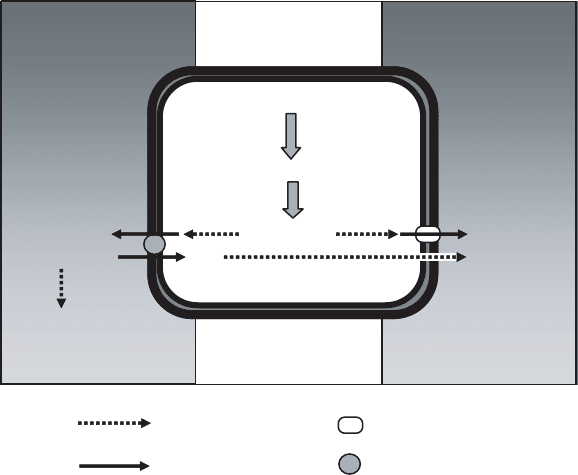
Hydrochloric acid is secreted by parietal cells by an interesting mechanism that
avoids the production of the acid within the cells themselves (Figure 9.12). CO
2
and
water form carbonic acid, which dissociates into bicarbonate ions and hydrogen ions.
The bicarbonate passes into the bloodstream by a passive membrane transport mecha-
nism that is coupled with the transport of chloride ions out of the blood. (Thus, the alkalinity
of the blood increases.) This maintains electroneutrality across the membrane. The chlo-
ride accumulation in the cell is secreted toward the stomach through calcium channels. At
CO
2
+ H
2
O
H
2
CO
3
Carbonic
Anhydrase
HCO
3
−
+ H
+
H
2
CO
3
−
Cl
−
Cl
−
H
+
Cl
−
Alkaline Tide
to bloodstream
PARIETAL CELL
Interstitial
Fluid
Lumen of
Gastric
Gland
Diffusion
Carrier-mediated
Transport
Active transport
Countertransport
Figure 9.12 Hydrochloric acid secretion by parietal cells of the stomach. (Based on Martini,
1998.)
200
THE HUMAN ANIMAL
the same time, active transport uses ATP to move the hydrogen ions from the carbonic
acid toward the stomach.
The zymogen pepsinogen is secreted into the stomach and converted by the low pH
into the protease pepsin. By secreting an inactive form, the cells of the stomach them-
selves are protected from being digested. The stomach also secretes hormones, including
gastrin, which stimulates contraction of the stomach for mixing and the secretion of
hydrochloric acid, intrinsic factor, and pepsinogen. Gastrin secretion is stimulated by pro-
tein in the food. It is also stimulated by coffee (both caffeinated and decaffeinated). Food
stays in the stomach several hours. Then the mixture, now called chyme, is squirted into
the beginning of the small intestine by repeated waves of stomach contractions. Proteins
and complex carbohydrates in chyme are partially digested, and fats are undigested.
The small intestine averages 6 m in length and has three sectio ns. In the first 25 cm
of the small intestine, calle d the duodenum, chyme is mixed with digestive secretions
from the liver and pancreas. The next 2.5 m is the jejunum, where most of the digestion
and absorption occurs. The last 3.5 m is the ileum, which performs additional absorption.
It is lined with lymph nodes that protect the small intestine against bacteria from the
large intestine. The inside of the small intestine, especially the jejunum, has numerous
folds. The surface, especially of the duodenum and jejunum, is covered with tiny finger-
like projections called villi. Furthermore, each epithelial cell on the villi has fingerlike
projections of its plasma membrane called microvilli. Taken together, these projections
greatly increase the intestinal surface area for absorption. This means, of cours e, not
only adsorption of food, but potentially of toxins as well.
The pancreas produces about 1 L/day of digestive juices containing enzymes and
zymogens. It also secret es bicarbonate alkalinity to neutralize the acid pH of the stomach
by a mechanism similar to the stomach secretion of HCl in reverse. The enzymes
produced by the pancreas or its secretions include the proteases trypsin, chymotrypsin,
carboxypeptidase, and elastase. Each attacks peptide bonds between specific amino
acids and leave the others, producing a mixture of dipeptides, tripeptides, and amino
acids. It also produces amylase, lipase, and nucleases.
The liver, the largest visceral organ, is remarkable for the number of vital roles it plays
in the body. Over 200 different functions have been identified. Besides its digestive func-
tion, it has major control of the following metabolic and blood functions:
Carbohydrate metabolism. Controls blood sugar by forming and breaking down
glycogen reserves, or synthesizing glucose from fats, proteins, or other compounds.
Lipid metaboli sm. Maintains blood levels of triglycerides, fatty acids, and cholesterol.
Amino acid metabolism. Removes excess amino acids from circulation. Some may be
destroyed by removal of the amine group, producing ammonia. This is then con-
verted to urea, which is removed by the kidneys.
Vitamin storage. The fat-soluble vitamins A, D, E, K, and B
12
are stored in reserve.
Mineral storage. Iron from the breakdown of red blood cells is stored in the liver.
Detoxification. Drugs and other toxins are transformed into easier-to-excrete forms.
Erythrocyte recycling. Red blood cells are broken down.
Production of plasma proteins. The liver produces albumins, various transport proteins,
clotting proteins, and the complement proteins of the immune system.
Removal of hormones. The liver removes and recycles hormones such as epinephrine,
norepinephrine, thyroid hormones, and steroid hormones.
DIGESTION 201
Storage or excretion of toxins. Lipophilic toxins such as DDT are removed from
circulation and stored in the liver. Others are excreted in the bile.
Production of bile. The last function returns us to the role of the liver in digestion. Bile
is a digestive secretion of the liver. It is stored in the gallbladder, which releases it to
the duodenum upon stimulation by cholecystokinin. Bile cont ains six major compo-
nents: (1) bile salts (synthesized from cholesterol), (2) cholesterol, (3) lecithin
(a phospholipid), (4) bicarbonate ions and other inorganic salts, (5) bile pigments
such as bilirubin, and (6) trace amounts of metals. The first three act as an emulsifier
for lipids in the food. The bicarbonate contributes to neut ralizing stomach acid.
The bile pigments and metals are excretions of the liver destined for elimination
with the feces.
The blood supply of the liver is unusual. Besides the usual oxygenated blood, it receives
all the deoxygenated blood from the intestines, and these are mixed in the liver. The liver
then processes nutrients and may attack toxins. By receiving all the blood from the intes-
tines, the liver serves as a first line of defense against toxins, before substances absorbed
in the intestines are spread throughout the body. After they have done their work, most of
the bile salts are absorbed in the ileum and recycled in the liver. The circulation of bile
salts from liver to intestines and back to the liver via the blood is called the enterohepatic
circulation. Enterohepatic circulation may also result in the recycling of lipophilic toxins.
It takes an average of 5 hours for food to move through the small intestine. Contrac-
tions gradually move the remainin g unabsorbed food to the large intestine. The large
intestine connects the small intestine to the anus. It is about 1.5 m long and 7.5 cm in
diameter and consists of the cecum, the colon, and the rectum. The cecum is a pouch
at the entrance attached to which is a small worm-shaped structure about 9 cm long called
the appendix. The appendix is part of the lymphatic system and contains lymph nodes.
The second, and major part of the large intestine is the colon, which absorbs water, vita-
mins, and minerals from the chyme. Bacteria are a natural component of the colon. They
include Escherichia coli, Lactobacillus, and Streptococcus, collectively called the intes-
tinal flora. These bacteria, especially E. coli, are used as indicators to detect fecal
contamination of water. The bacteria in our gut benefit us by displacing harmful bacteria
and by producing vitamins, including thiamine, riboflavin, B
12
, and K. Some materials in
our food are poorly digested. For example, beans contain large amounts of indigestible
polysaccharides. These are used by the intestinal flora, producing gas called flatus,
consisting mostly of CO
2
and nitrogen, plus smaller amounts of hydrogen, methane,
and hydrogen sulfide.
Material takes 12 to 36 hours to move through the colon. The resulting product is about
150 g per day of feces, which is about two-thirds water. The 50 g of dry solids in feces is
more than 60% bacteria, plus undigested polysaccharides (including dietary fiber), bile
pigments, cholesterol, and salts such as potassium. The last 15 cm of the large intestine
is the rectum, which stores feces until discharge through the anus (the exterior opening).
The colon absorbs water by first absorbing sodium, and the water then follows by
osmosis. Some diseases, notably cholera, disable the main sodium transport mechanism,
preventing water absorption. Cholera is transmitted by contaminated drinking water due
to poor sanitary conditions. The result is diarrhea, the loss of large amounts of water and
minerals with the feces. Diarrhea is the major cause of death in children in the developing
world, killing about 4 million under the age of 5 each year. This makes the lack of proper
sanitation the most important environmental problem in the world today.
202 THE HUMAN ANIMAL
Cholera by itself is not deadly. If the loss of water and minerals is compensated
for, the prognosis is quite good. However, in the past this has meant intravenous
injection, which was not widely available in poorer parts of the world. Over the last sev-
eral decades a simpler treatment has been developed, called oral rehydration therapy
(ORT). ORT is based on the observation that there are other mechanism s by which the
intestines transport sodium that are not affected by cholera. Specifically, there is a
mechanism involving the cotransport of glucose and sodium that can be stimulated
by drinking a dilute solution containing both solutes, plus potassium chloride and triso-
dium citrate. This kind of solution has reduced cholera mortality from 50 or 60% to less
than 1%.
Popular soft drinks have concentrations of sugar and other solutes that make them
hypertonic. Thus, by osmosis, they increase the flow of water into the gut, water which then
has to be removed. To avoid this problem, ‘‘sports drinks’’ are formul ated to be isotonic.
The digestive system is controlled both by hormones (at least four, and perhaps up
to 12) and neural control. As noted above, gastrin, is a hormone that stimulates stomach
activity. The endocrine hormone secretin is secreted by the duodenum and stimulates the
pancreas to start producing enzymes and bicarbonate alkalinity. Secretin was the first hor-
mone to be discovered. The intestinal mucosa secrete the hormone cholecystokinin, which
further stimulates the pancreatic secretions.
9.10 NUTRITION
Males between the ages of 19 and 75 require between 2000 and 3300 Cal in their diet.
Females of the same age range need between 1400 and 2500 Cal. The body requires about
50 substances that are either not produced by it or not produced as fast as they are used.
These substances, called essential nutrients, must be provided in the diet.
Adult females need 46 g of protein per day, males about 55 g. About 170 g (6 ounces)
of lean roast beef is all that is needed to satisfy this requirement. The eight essential
amino acids: isoleucine, leuc ine, lysine, methioni ne, phenylalanine, threonine, trypto-
phan, and valine, must be obtained in the diet. Furthermore, these amino acids must be
present in proper proportions and taken together at the same meal. The body does not
store amino acids. Individual plants may be deficient in some essential amino acids and
should be consumed in combina tion with other plant protein that makes up for the lack. If
protein is consumed in excess of requirements for maintenance and growth, the body dea-
minates the amino acids to produce carbohydrates or fats. The nitrogen goes into urea,
which must be excreted in the urine.
Two essential fatty acids contain double bonds and cannot be synthesized: linoleic
acid and linolenic acid. However, deficiency of these is rare. Linoleic acid can be synthe-
sized from arachidonic acid. If the diet lipids are mostly saturated fats (such as from
meat), the blood lipid levels may be twice as high as if polyunsaturated fats dominate
the diet.
There are no essential carbohydrates. However, if carbohydrates are omitted from the
diet, fats must make up the caloric requirement, since fairly small amounts of protein
produce a feeling of satiety that causes people to limit their intake.
Several other compounds are important in cell metabolism and regulation. Examples
are the sugar inositol and the precursor molecule choline, which are widely distributed in
foods. A deficiency is generally found only in laboratory animal experiments.
NUTRITION 203

The body requires about 1500 g of water per day. Carbon, hydrogen, oxygen, and nitro-
gen make up 99.3% of the atoms in the body. The next most important elements, called
the macronutrients, make up about 0.7%. These are calcium, phosphorus, potassium,
sulfur, sodium, chlorine, and magnesium.
Another 13 trace elements or micronutrients make up less than 0.01% of the body’s
atoms. Deficiency of these elements is rare. Deficiency of zinc has been observed in com-
munities in the Middle East that use unleavened breads and eat grains high in phytic acid,
which prevents zinc absorption. Yeast has enzymes that break down phytic acid. In addi-
tion to the elements in Table 9.5, other elements that may be essential are cobalt, nickel,
tin, vanadium, and possibly even arsenic!
Vitamins are organic molecules require d in very small amounts, whose absence read-
ily produces deficiency diseases. There are 13 in all (14 if you include choline, as some
people do). They are classified as either water-soluble vitamins (Table 9.6) or fat-soluble
TABLE 9.5 Mineral Total Body Reserves and Adult Requirements
Mineral Function Total Reserves Recommended Daily Intake
Macronutrients More than 300 mg
Sodium Essential for membrane
function, mostly in
intercellular fluid and
plasma
110 g 0.5–1.0 g
(up to 3.3 is safe)
Potassium Essential for membrane
function, mostly in
cytoplasm
140 g 1.9–5.6 g
Chloride Major anion in body fluids 89 g 0.7–1.4 g
Calcium Essential for muscle and
neuron function and
bone structure
1.36 kg, mostly in
skeleton
0.8–1.2 g
Phosphorus Part of nucleic acids,
ATP, and bone structure
744 g, mostly in
skeleton
0.8–1.2 g
Magnesium Enzyme cofactor and
membrane functions
29 g (17 g in
skeleton)
0.3–0.4 g
Micronutrients Less than 20 mg
Iron Required for hemoglobin,
myoglobins, and
cytochromes
3.9 g (incl. 1.6 g
in storage)
10–18 mg
Zinc Enzyme cofactor 2 g 15 mg
Copper Cofactor for hemoglobin
synthesis
127 mg 2–3 mg
Manganese Enzyme cofactor 11 mg 2.5–5 mg
Iodine Thyroid hormones 150 mg
Fluoride Essential for dental health 1.5–4.0 mg
Chromium Affects sensitivity of
tissues to insulin
0.05–0.2 mg
Selenium Component of enzymes 60 mg
Silicon Present in large amounts
in arterial walls
Cobalt Component of vitamin B
12
Molybdenum 0.15–0.5 mg
Source: Martini (1998).
204 THE HUMAN ANIMAL

TABLE 9.6 Water-Soluble Vitamins
Vitamin Function Sources Daily Req’t
B
1
(thiamine) Coenzyme in decarboxylation of pyruvate
and other compounds. Deficiency causes
beriberi, which exhibits muscle weakness,
anxiety and confusion, acute cardiac
problems. Deficiency often found in
alcoholics. Excess causes low blood
pressure.
Outer layer of
seeds, meat
(esp. pork)
1.9 mg
B
2
(riboflavin) Used to synthesize the flavins FAD and
FMN. Deficiency not a prime factor in
human disease, but found with other
deficiencies.
Liver, yeast,
wheat germ,
milk, meat
1.2–1.8 mg
Niacin
(nicotinic
acid)
Forms coenzyme NAD and NADP. Deficiency
of this and other B vitamins and protein
causes pellagra, which exhibits dermatitis
in sun-exposed skin, gastrointestinal tract
deterioration, diarrhea, dementia.
Can be made
from
tryptophan;
meat, liver,
whole grain
12–20 mg
B
5
(pantothenic
acid)
Part of acetyl-CoA and ultimately about
70 enzymes. Deficiency not observed
in humans.
Yeast, liver,
eggs, meat,
milk
5–10 mg
B
6
(pyridoxine) Three equivalent forms. Involved in amino
acid conversions. Deficiency can cause
convulsions.
Germ of grain,
egg yolk,
yeast, liver,
kidney
Varies with
amount of
protein in
diet
Folic acid
(folacin)
Involved in synthesis of amino acids
and nucleotides. Deficiency causes growth
failure and anemia.
Widely
distributed in
plants and
animals
400 mg;
800 mgin
pregnancy
B
12
(cobalamin) Formed of porphyrin rings such as
hemoglobin, but with cobalt in center
instead of iron. Only microorganisms,
including those in the gut, produce it.
Meat 4.5 mg
Biotin Forms prosthetic group in enzymes
(e.g., acetyl-CoA carboxylase). Deficiency
has been caused in lab animals by feeding
large amounts of raw egg whites, which
has a protein that prevents biotin
absorption. Symptoms of deficiency
include dermatitis, fatigue, nausea.
Widely
distributed; esp.
in beef liver,
yeast, peanuts,
chocolate, eggs
10 mg,
although
bacteria in
gut may
supply
needs
C (ascorbic
acid)
Biochemical reducing agent (hydrogenator),
antioxidant. Deficiency causes scurvy,
deterioration of epithelial and mucosal
tissues, sore gums, loose teeth,
subcutaneous hemorrhage, joint
pain, anemia.
Fresh fruits and
vegetables,
leafy
greens, citrus
(heat labile, i.e.,
destroyed by
cooking)
60 mg
NUTRITION 205

vitamins (Table 9.7). The water-soluble vitamins are mostly components of coenzymes.
The fat-soluble vitamins have a variety of specialized functions. They are produced by
plants and obtained by eating either plants or animals that eat plants.
Despite the beneficial reputation that vitamins have, an excess of vitamin intake, par-
ticularly of the fat-soluble vitamins, can produce toxic symptoms collectively called
hypervitaminosis. Vitamin A is the most often overdosed vitamin. Children who received
500,000 RE per day showed tender swelling over the long bones. Higher dosages cause
severe headache, nosebleed, anorexia, nausea, weakness, and dermatitis. Chronic excess
vitamin D may leave bones prone to fracture.
Other growth factors may await discovery. Some deficiencies are difficult to develop,
either because intestinal flora satisfy the normal requirement, or because a long-term sup-
ply is stored in the body or even transmitted from mother to child in utero.
TABLE 9.7 Fat-Soluble Vitamins
Vitamin Function Sources Daily Req’t
A (retinol) Precursor of vision pigments, necessary
for epithelial tissues. Available in
several active forms, including the
carotenes. First symptom of
deficiency is night blindness, also
cessation of bone growth in children.
Excess dosage causes bone fragility
and other problems.
Yellow and leafy
green vegetables,
fish liver oils
1 mg [1000
retinol
equivalents
(REs)]
D Several forms available, including
cholecalciferol, which is formed
from sterols in the skin upon
irradiation by UV light. Mediates
absorption of calcium and mobilization
in bone. Deficiency causes rickets
when bone mineral formation is
slowed, causing curved bones to form.
Ten times the normal level can cause
bone fragility.
Fish liver oils,
fortified milk
5 mg, or
equivalent
exposure to
sunlight
E (tocopherols) Protects vitamin A against oxidation,
protects red blood cells from oxidation
by peroxides, may protect plasma
membranes. In lab animals deficiency
causes infertility, hepatic necrosis,
RBC lysis, vitamin A deficiency,
and muscular dystrophy. In humans,
deficiency is associated with poor
lipid absorption.
Plant oils (esp.
wheat germ)
12 mg
K Required for liver production of
several blood clotting proenzymes.
Deficiency may result in bleeding
or hemorrhage. Newborns may be
deficient due to intestinal flora
not yet being established.
Intestinal flora,
vegetables, meat
0.7–0.14 mg
206
THE HUMAN ANIMAL
9.11 EXCRETORY SYSTEM
Excretion is the elimination of waste products from the body. We excrete substances
mostly in the urine or the feces, but also by sweat, milk, other body fluids, and even in
our hair. Excretion is important from an environmental viewpoint for two reasons: (1) It is
a means by which the body eliminates toxic substances; and (2) excretory organs may
themselves be susceptible to the action of toxic substances, damaging their ability to
maintain homeostasis.
In this section we focus on urinary excretion, that is, on kidney function. The kidneys
are one of the most fascinating organs from an engineering point of view. They are at
the center of several important control mechanisms, and their excretory function illus-
trates several important principles of mass transfer. The kidneys have a wide variety of
functions, like the liver, but less so. Only the first four of these functions have to do
with excretion:
Regulation of water and electrolyte balance, including blood pH.
Removal of metabolic waste products, such as nitrogen wastes, from the blood.
Removal of foreign chemicals from the blood.
Control of blood pressure and volume through the secretion of renin, which
ultimately affects water and sodium excretion (Section 9.5.2).
Control of red blood cell formation through the secretion of erythropoietin
(Section 9.6).
Control of calcium levels by formation of the active form of vitamin D.
Conversion of amino acids into glucose during prolonged fasting.
Wastes from the metabo lism of carbohydrate s and fats produces CO
2
and metabolic
water, which do not need to be excreted by the kidney. However, the breakdown of nitro-
genous compounds such as amino acids produces ammonia, which would be toxic if
accumulated in the blood. The liver converts the ammonia to urea, which is relatively
nontoxic. We excrete about 21 g of urea per day, plus small amounts of ammonia and
uric acid. Some animals excrete nitrogen mostly as uric acid, which is insoluble. This
further improves water conservation. The white material in bird droppings is mostly
uric acid. We also produce about 1.8 g of creatinine per day for excretion, a breakdown
product of creatine phosphate. Sodium, potassium , and chloride are lost with the urine and
must be replaced in the diet. To conserve water, the kidneys concentrate these solutes to a
total concentration over four times that of blood plasma. The kidney must remove these
substances from the blood without losing vital solutes such as sugars and amino acids. The
kidney concentrates solutes from the osmolarity of blood plasma, about 300 mOsmol/L,
by more than four times, to 1200 to 1400 mOsmol/L.
The kidney has three major regions, arranged in layers (Figure 9.13). The outer layer is
the renal cortex, the middle layer is the renal medulla, and the innermost part is a cavity
the renal pelvis. The fundamental unit of the kidney’s mass transfer and urine production
is a tiny tubule called a nephron, which is surrounded by blood vessels. The nephron
starts in the cortex, passes into the medulla, and then back out to the cortex, where it con-
nects to a collecting duct that conducts the urine into the pelvis. Each of the two kidneys is
connected by a ureter to the bladder, which stores urine until a person is ready to release
it by urination. The tube that drains the bladder to the outside of the body is called the
urethra.
EXCRETORY SYSTEM 207