
Vaccari D.A., Strom P.F., Alleman J.E. Environmental Biology for Engineers and Scientists
Подождите немного. Документ загружается.

The new genetic tools (Section 10.4.4) have provided some quantitative means of
determining whether individual strains of prokaryotes belong to the same species. One
approach compares the degree of DNA homology (similarity in sequence of DNA base
pairs) among microorganisms. Generally, if the DNA homology of two organisms is more
than 70 %, they will be considered the same species. If homology exceeds 20%, they may
be considered to belong to the same genus. Using another tool, similarities of ribosom al
RNA sequences of greater than 97% has led to considering two organisms to be the same
species, while similarities of greater than 93 to 95% usually indicates the same genus.
[The higher similarity for the rRNA analysis stems from the more highly conserved
(less variable) nature of these sequences.]
The use of such techniques has led to the renaming of a number of microorganisms, as
well as the ‘‘discovery’’ of the Archae a (Section 10.2.5). For example, the well-estab-
lished species Pseudomonas cepacia was renamed Burkholderia cepacia when it was rea-
lized that it belonged to a different group of Proteobacteria than (and thus was not a close
(relative of ) other Pseudomonas species (Section 10.5.6).
10.4.3 Naming of Microorganisms
When microorganisms were first discovered, there were only two kingdoms, Plant and
Animal. Thus, protozoans were considered ‘‘single-celled animals’’ studied by zoologists,
and fungi, algae, and bacteria were ‘‘plants,’’ studied by botanists. As a result, the latter
organisms are still sometimes referred to as ‘‘flora’’ (and protozoans as ‘‘fauna’’). How-
ever, based on our improved knowledge of their taxonomy, a better term today is biota.
The formal assignment of the Latin and Greek names (nomenclature) used in micro-
bial taxonomy is now closely controlled. The official journal for publication of new pro-
karyote species is the International Journal of Systematic Bacteriology (note the holdover
from the time when all prokaryotes were considered bacteria). If the new species descrip-
tion is first publishe d elsewhere, it must be forwarded to IJSB to be formall y accepted and
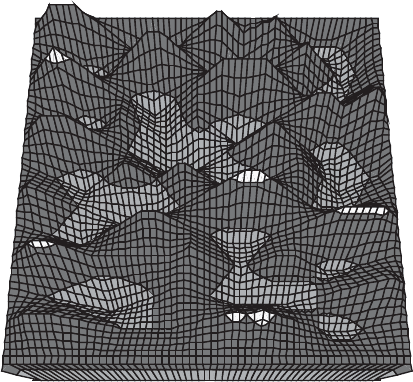
Figure 10.6 Three-dimensional surface: visualizing prokaryotic species as more stable (valleys),
and hence more likely, combinations of characteristics, although intermediates may exist.
228
MICROBIAL GROUPS
included in the next approved list of names. The official representative, or type, culture of
a newly labeled microorganism is held in an approved culture collection such as that
maintained in the United States by the American Type Culture Collection (ATCC) or
in Germany by the Deutsche Sammlung von Mikroorganismen und Zellkulturen
(DSMZ). Rediscovered species (original type culture lost or never saved) are deposited
as neotype strains. Species of some microorganisms have been subdivided further as spe-
cific cell strains, subspecies, or types (e.g., Escherichia coli type 0157:H7).
When a new bacterial or archaeal strain is isolated and characterized, it is compared to
the existing information on described speci es, and/or directly to the type species. Tradi-
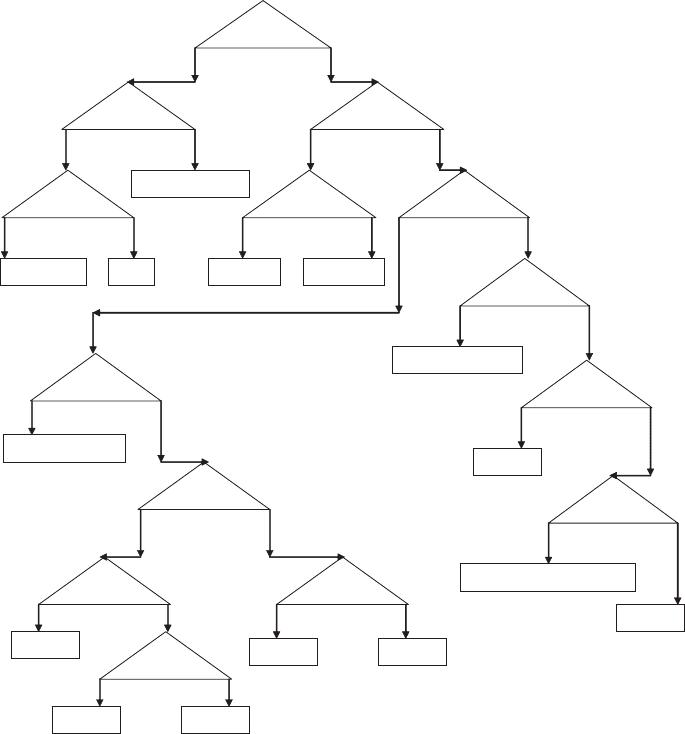
tional (mainly phenotypic) comparisons are made using keys (Figure 10.7) and standard
references, particularly Bergey’s Manual of Determinative Bacteriology. Genotypic infor-
mation is included in Bergey’s Manual, but large databases are also now available online
(e.g., the Ribosomal Databa se Project maintained by the Center for Microbial Ecology at
Michigan State University, for ribosomal RNA sequences, http://www.cme.msu.edu/RDP/).
motility
true
branching
branching
diameter
< 1.0 µm
Sphaerotilus natans
Nocardia-like fungi Beggiatoa
sulfur
granules
Thiothrix-like
visible
“crosswalls”
Gram
stain
Microthrix parvicella
Neisser
stain
Type 0092
straight
Haliscomenobacter hydrossis
Type 0581
Neisser
stain
Nostocoida limicola
diameter
< 1.0 µm
spherical
cells
sheathed
rods
Type 1863
Type 0803Type 1701
Gram +
rectangular cells
Type 0041 Type 021N
+
+
+
+
+
+
+
+
+
+
+
+
+
+
-
--
---
-
-
-
-
-
--
-
Figure 10.7 Simplified dichotomous key for identifying filamentous organisms in activated sludge.
MICROBIAL TAXONOMY 229
Phylogenetic relationships (as opposed to identification) are the focus of Bergey’s Manual
of Systematic Bacteriology.
The designation of genus and species names can be based on a variety of factors. The
following examples demonstrate some of the ways in which these names might be chosen:
The environment in which they grow (e.g., aquaticus, marina, coli)
Their usual host (bovis, avium)
The environmental conditions they favor (thermophilus, halophila , a cidophilus)
Their shape (ovalis, longum, sphaericus)
Their colo r [aureus (golden), niger (black)]
Their substrates (denitrificans, ferrooxidans)
Their products [ Methanobacterium, cerevisiae (beer)]
The disease with which they are associated (typhi, botulinum, pneumoniae)
After a person: the discoverer or as a tribute (winogradskii, Beijerinckia)
In the following sections we provide an overview of many of the important groups of
microorganisms. However, it may be useful to keep in mind that our view of microbial
taxonomy (particularly for prokaryotes) is continuing to evolve, and that the names and
groupings of organisms may be in dispute and may change in the future.
10.4.4 Characterization of Prokaryotes
Before looking at the various groups of Bacteria and Archaea, it is useful to describe
briefly some of the characteristics commonly used to differentiate among them. In
many cases it is necessary first to isolate the organism and then to grow it in pure culture
(only one species present) before testing.
Shape Prokaryotic cel ls show a remarkable diversity of shapes (Figure 10.2 showed
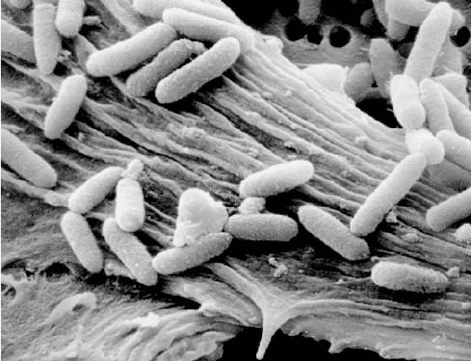
a few). Most common are cylindrical rods (Figure 10.8), also called bacilli (singular,
Figure 10.8 Rod-shaped bacteria: Pseudomonas. (SEM image courtesy of the University of Iowa
Central Microscopy Research Facility.)
230
MICROBIAL GROUPS
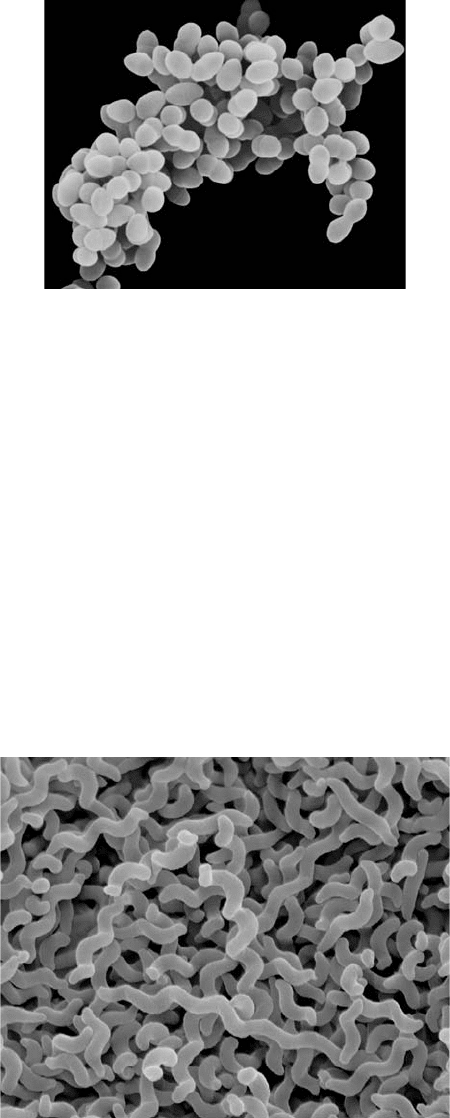
bacillus), and spherical cells (Figure 1 0.9), called cocci (singular, coccus). Variations
include short rods (coccobacilli), bent or comma-shaped rods (vibrios), and greatly elon-
gated rods. There are also a variety of spiral cells (Figure 10.10), cells with specialized
appendages, and those with irregular, indefinite, or special shapes.
The shape of a cell can also change during its life cycle. For example, Arthrobacter
(Section 10.5.7) cells routinely alternate between cocci and rods.
Size Typical rods may be 0.5 to 1.0 mm in diameter and 2 to 4 mm long, but size can vary
tremendously, from diameters of 0.1 mm or less up to lengths of 200 mm or more. Most
cocci have diameters of 0.5 to 2.0 mm, but again there is a considerable range.
Growth Form Many microorganisms grow as individual, single cells. However, some
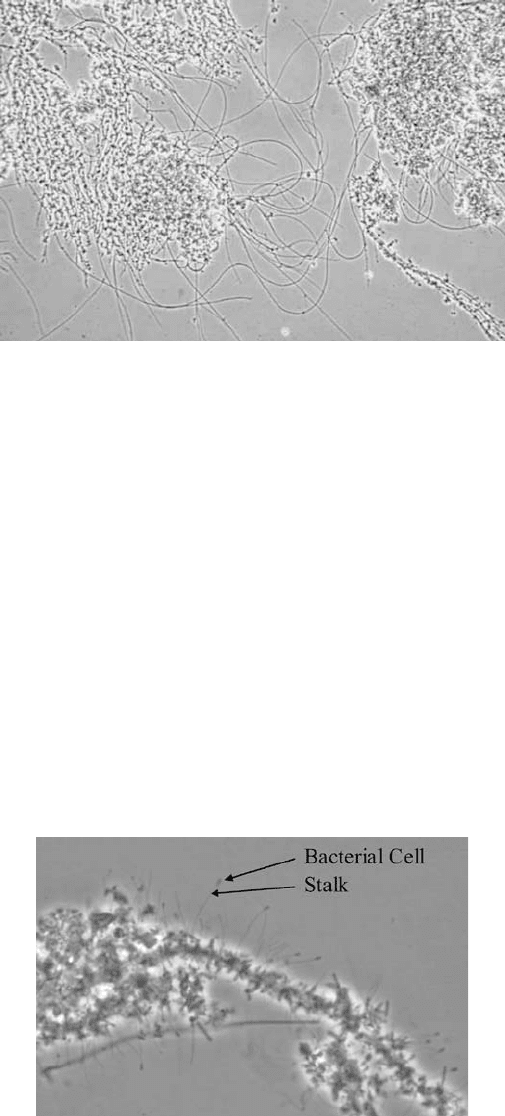
grow in chains, or filaments, composed of a single species (Figure 10.11). Others may
grow in clusters, or be found in clumps (floc; also in Figure 10.11) or other associations
(such as biofilms or floating mats), sometimes with characteristic shapes, and often with
Figure 10.9 Cocci: Staphylococcus. (SEM copyright Dennis Kunkel Microscopy, Inc.)
Figure 10.10 Spiral-shaped bacteria: Campylobacter. (SEM copyright Dennis Kunkel Micro-
scopy, Inc.)
MICROBIAL TAXONOMY 231
multiple species. Some go through a life cycle in which their form or type of association
changes in a predictable way.
Prokaryotic cells usually reproduce by binary fission, or splitting into two roughly
equal ‘‘daughter’’ cells. However, some bacteria reproduce by budding, in which a smal-
ler new cell separates from the original one, and some bacteria produce special structures
for releasing new cells for dispersal.
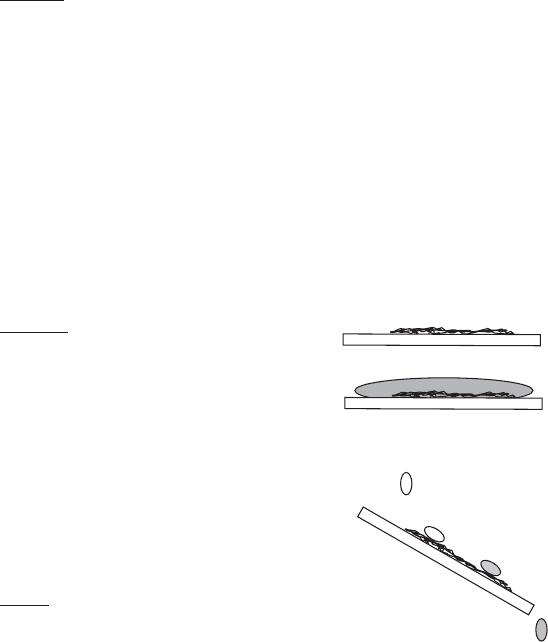
Stalked bacteria (Figure 10.12) produce an appendage that usually serves for attach-
ment to a surface. If the stalk consists of an extrusion of cytoplasm surrounded by the cell
membrane and wall, it is called a prostheca (plural, prosthecae). Some cells may attach
directly to a surface with a small structure known as a holdfast.
Staining The way in which their cells respond to certain colo red chemicals ( stains)is
used to differentiate some species. The most widely used staining technique for bacteria is
the Gram stain (Figure 10.13), developed in 1884 by Dutch bacteriologist Hans Christian
Figure 10.11 A filamentous bacteria growing with floc in an activated sludge wastewater
treatment plant.
Figure 10.12 Stalked bacteria growing on a filament in activated sludge.
232
MICROBIAL GROUPS
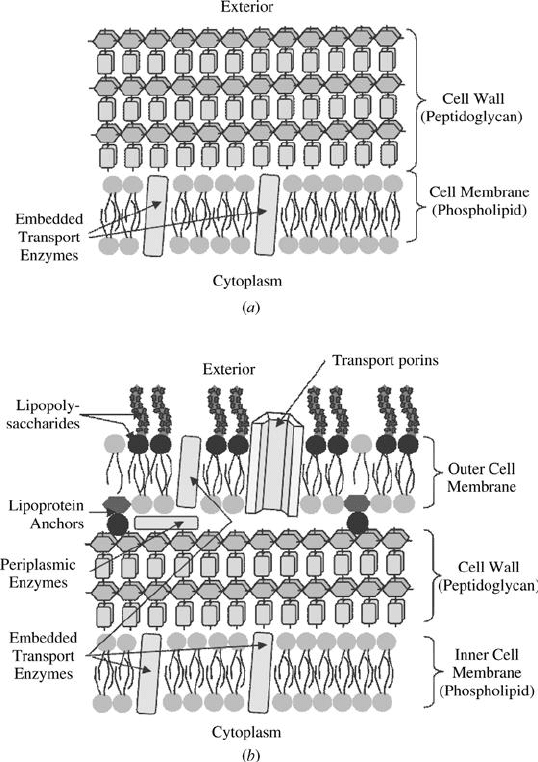
Joachim Gram. Although the method was developed empirically and seemed to show
important differences between cells, it was not until much later that it was learned that
a fundamental difference in cell wall composition was being highlighted (Figure 10.14).
Gram-positive cells stain blue-violet because they retain the crystal violet, gram-negative
cells are red because they are decolorized by ethanol and then take up the safranin coun-
terstain.
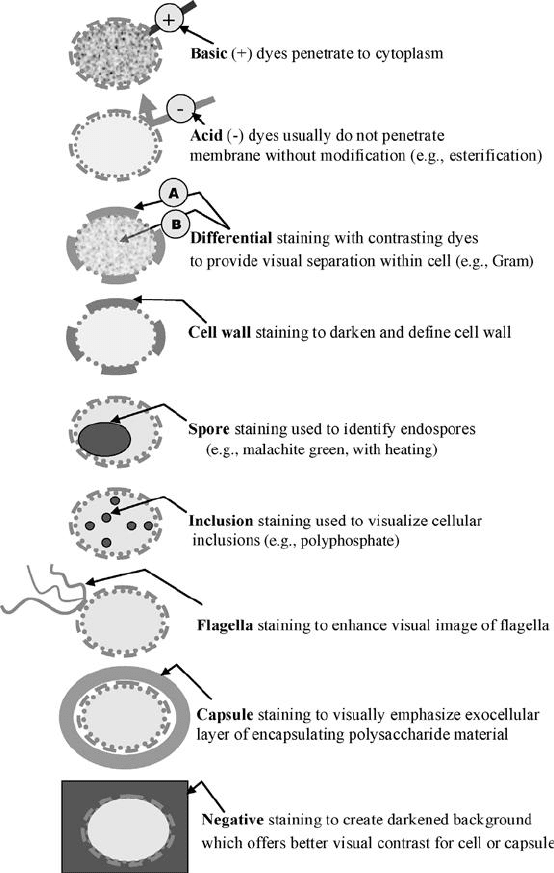
Other stains also may be of great utility in differentiating among organisms or in visua-
lizing cell structures. Figure 10.15 shows several types of staining approaches. Various
staining procedures were particularly necessary prior to development of phase contrast
and electron microscopy, and still may be highly useful.
Motility Many prokaryotes have motility, the ability to move, by means of one or more
flagella (singular, flagellum), long, thin, hairlike organelles that protrude from the cell.
Flagella at the end of a rod-shaped cell are referred to as polar; those on the sides are
peritrichous. The flagella of prokaryotes are too small to be seen with a light microscope
Solutions
Solution 1: Hucker’s crystal violet
Component A: 2 g crystal violet in 20 mL 95% ethanol;
Component B: 0.8 g ammonium oxalate in 80 mL distilled water;
Mix A and B (lasts 3 months).
Solution 2: modified Lugol’s solution
Mix 1 g iodine and 2 g potassium iodide in 300 mL distilled water;
Store in dark (lasts 3 months).
Solution 3: decolorizing agent
95% ethanol
Solution 4: counterstain
Safranin O solution: 2.5 g in 100 mL 95% ethanol;
Mix 10 mL in 100 mL distilled water.
Procedure
Make thin smear of culture on glass slide.
Allow to thoroughly air dry.
Cover with Solution 1 for 1 minute.
Gently rinse with tap or distilled water.
Cover with Solution 2 for 1 minute.
Hold slide at angle.
Decolorize drop by drop with Solution 3 until no more color runs off.
Rinse with water.
Counterstain with Solution 4 for 1 minute.
Rinse with water, then blot dry.
Put drop of immersion oil directly on slide.
Observe under microscope at 1000 X.
Results
Blue/violet = Gram positive;
Red = Gram negative.
Figure 10.13 Gram stain technique. This modification (one of many) is recommended for staining
of activated sludge mixed liquor.
MICROBIAL TAXONOMY 233
but can be made visible through staining or observed with an electron microscope. Also,
in some cases there may be visible tufts, consisting of numerous flagella. Both bacteria
and archaea may be flagellated (as are some algae and protozoa). Rates of movement can
exceed 50 mm/s.
Some cells are motile even without flagella. Several species , particularly of filamentous
bacteria, are able to ‘‘push’’ against a surface or other object, resulting in gliding motility,
or can flex the filament, leading to twitching motility. However, speeds typically are much
slower (<10 mm/s) than for flagellated organisms.
Organism movement may be in response to a gradient. Chemotaxis, for example, is
movement toward (or occasionally away from) a higher concentration of a chemical;
phototaxis is in response to light. Magnetotaxis, response to a magnetic field, has also
been observed in a few specialized species, such as Magnetospirillum (Section 10.5.6) .
Figure 10.14 Bacterial cell wall and membrane: (a) gram positive; (b) gram negative.
234
MICROBIAL GROUPS
Pigmentation Most prokaryotes appear colorless under the microscope, and colorless or
whitish in liquid culture and on agar plates. However, a number of groups are photosyn-
thetic and have appropriate pigments for this purpose. There are also a number of other
pigments that might be formed by particular strains, so that cells and cultures may have a
variety of colors (including red, pink, orange, yellow, and purple). Usually, any pigments
formed will be within the cell, but in some cases they are released and may color the
growth medium.
Figure 10.15 Staining approaches.
MICROBIAL TAXONOMY 235
Sporulation A number of prokaryotes produce resting stages, known as spores, that are
resistant to hostile environmental conditions such as desiccation. Some gram-positive bac-
teria produce an especially heat-resistant structure within the cell, called an endospore.
Some spores may be seen directly under a light or phase-contrast microscope, whereas
others may be made visible by staining.
Intracellular Inclusions A wide variety of materials may be deposited within cel ls,
often as a means of energy storage. Some are readily visible under a microscope, whereas
others require staining before they becom e apparent. Examples include poly-b-hydroxy-
butyrate (PHB), glycogen, polyphosphate (volutin), and elemental sulfu r.
Nitrogen and Sulfur Sources Many microorganisms are able to use inorganic nitroge n
in the form of ammonium and/or nitrate as their nitrogen source. Others require organic
forms of nitrogen, especially certain amino acids. A relatively specialized ability is utili-
zation, or fixation, of elemental nitrogen. Similarly, many cells can utilize sulfur in the
form of sulfate, or perhaps sulfide, but others may require organic sulfur. Some organisms
are able to use inorganic nitrogen or sulfur compounds as energy sources or as electron
acceptors.
Carbon and Energy Sources; Terminal Electron Acceptors and Relationships to
Oxygen As discussed above (Sections 10.3.1 and 10.3.2), organisms can be photo-
trophic or chemotrophic, organotrophic or lithotrophic (if chemotrophs), and autotrophic
or heterotrophic. The various relationships to oxygen (e.g., aerobic, anaer obic; Section
10.3.3) and the terminal electron acceptors they are able to use are also important for
characterization.
Habitat Preferences/Tolerances In addition to oxygen, other environmental conditions
preferred or tolerated can be useful in characterization. These include such factors as
temperature, pH, and salinity, as mentioned above, but also include association with
more specific habitats, such as the intestines of warm-blooded animals or plant root
nodules.
Range of Substrates; Reaction Products; Presence of Specific Enzymes The range of
substrates metabolizable by a microorganism, and the reaction products formed, consti-
tute a major part of the traditional identification process. Wide ranges of substrates might
be tested in what is potentially a very laborious process. Ability to grow, the presence of
specific enzymes, the general nature of the products formed (e.g., acid and/or gas produc-
tion), and specific chemical products might be looked for. Production of catalase, which
decomposes potentially toxic hydrogen perox ide to oxygen and water, and oxidase, which
mediates the oxidation of some cytochromes, are two common tests for enzymes; both are
related to the ability to grow aerobically. Modern techniques include some commercial
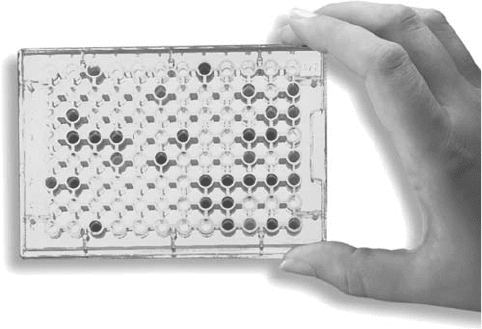
tests, such as Biolog (Figure 10.16; Biolog, Inc., Hayward, California, www.biolog.com),
capable of screening many compounds at once. Other systems, such as Enterotube
(Becton, Dickinson and Company, Franklin Lakes, New Jersey, www.bd.com) and API
strips (bioMe
´
rieux, Inc., Durham, North Carolina, www.biomerieux-inc.com), have been
developed for identifying species within a particular family, such as Enterobac teriaceae
(the enteric Proteobacteria; see Section 10.5.6).
236 MICROBIAL GROUPS
Pathogenicity Although most prokaryotes are free-living saprobes or saprophytes
(organisms that feed on dead organic material), some bacteria are associated with diseases
of humans, other animals, or plants (C hapter 12). Often, these pathogens (disease-causing
organisms) infect a single species, although som e have a relatively wide range of hosts.
Bacteria are also part of the normal biota of higher organisms (e.g., on the skin or in the
intestinal tract of humans) without causing disease. Occasionally, opportunistic patho-
gens, which normally are free-living, may attack a compromised (weakened) host.
Immunological Properties Antibodies may be used to detect specific antigens, which
are typically cell surface proteins. Such testing is used widely in clinical microbiology
for identification of pathogens. It can be highly specific, capable of differentiating
among the sometimes numerous strains, or serotypes, of a single species.
Inhibition/Resistance Patterns Inhibition of growth or activity by certain chemicals
may be a helpful diagnostic tool. The pattern of resistance to specific antibiotics, with
their different modes of action, can be particularly useful.
Analysis of Fatty Acids Different species have different fatty acid compositions of their
cell membrane lipids. Composition will also change based on growth conditions, but if
these are standardized and the fatty acids extracted and analyzed, the resulting pattern
can be highly useful in identification. The most widely used procedure involves forming
the methyl ester of the fatty acid to make it readily analyzable by gas chromatography.
FAME (fatt y acid methyl ester) profiles (Figure 10.17) can be compared to a database for
rapid identification of many isolates.
%Gþ C Composition Recall from Chapter 3 that guanine is always paired with cyto-
sine in DNA, and adenine with thymine. Thus, the base-pair composition of an organism’s
Figure 10.16 Biolog test; 95 test compounds and a control well are included in each plate. The
plate shown was used to identify a gram-negative bacterium as Leminorella grimontii, based on
comparing the pattern of positive (dark) and negative tests to results in a database. (Photo courtesy
of Biolog, Inc.)
MICROBIAL TAXONOMY 237