
Vaccari D.A., Strom P.F., Alleman J.E. Environmental Biology for Engineers and Scientists
Подождите немного. Документ загружается.


In the case of a free-water-surface operation, the determination of minimal hydraulic
retention time is based simply on the ratio of the system’s open water volume to the
expected peak incoming wastewater flow. For subsurface-flow designs, however, this cal-
culation must take into account the available pore volume of the medium through which
the wastewater will be flowing, as follows:
HRT ¼
ADP
Q
ð16:3Þ
where A is the wetland surface area (m
2
), D is the wetland depth (m), P is the porosity
(dimensionless), and Q is the incoming peak wastewater flow (m
3
/day).
Despite widespread use of the latter hydraulic retention-time para meter, there is con-
siderable uncertainty as to its validity and usefulness. Much of this uncertainty hinges on
the fact that the pore space volume of newly installed gravel will change once it begins to
fill with root material, interstitial microbial growth, and entrapped suspended. As seen in
Figure 16.35, the density of plants placed within a typical wetl and tends to be quite high,
to the point where their root systems undoubtedly fill a sizable fraction of the soil’s avail-
able pore space.
Once the anticipated waste stream extends much above a few thousand liters per day,
constructed wetlands are usually designed with multiple cells arranged to receive the
incoming flow in serial-flow fashion. Within each cell the ratio of length to width used
for the actual layout of constructed wetlands is known as the aspect ratio. Low aspect
values, particularly those below 1 : 1 (L/W, leng th to width), are prone to short-circuiting
hydraulic problems, where the passing flow is not distributed equitably across the entire
cross section of the cell. This problem would then be reflected in poor and uneven levels
of treatment (i.e., erratic levels of BOD, TSS, and ammonia removal). Performance will
typically improve with larger aspect ratios, but these benefits level off around a figure of
3 : 1. Even at this ratio, attention must still be given to ensuring that the incoming waste
stream is distributed uniformly across the face of the wetland.
Various technical references recommend that these organic loadings be kept below 80
to 110 kg BOD/haday [approximately 8 to 11 g (0.008 to 0.011 kg) of carbonaceous
BOD (CBOD) applied per square meter per day] in order to achieve acceptable levels
of treatment. Hydraulic loading rates should also considered in the design of most con-
structed wetlands. These values are inversely related to HRT, whereby longer retention-
time systems will be maintained with a loading range of 150 to 300 m
3
/haday, whereas
the highly loaded, shorter HRT designs will operate at hydraulic loadings from 300 to
600 m
3
/haday.
Most wetlands will experience a significant loss of water on a seasonal basis due to
evapotranspiration, especially during a warm late spring through early fall time frame.
This behavior is beneficial in the sense that it reduces the neces sary volume of discharge,
but evapotranspiration may also complicate the process of discharge permitting. Indeed,
the current practice of establishing effluent discharge limits on BOD, suspended solids,
ammonia, nitrate, and so on, for any wastewater treatment operation is almost always
based on cont aminant concentrations rather than total mass. If, for instance, a warm-
weather SSF wetland operation were to release one-half of its incoming wastewater
flow via evapotranspiration, the remaining 50% flow rate subject to actual discharge
might well experience seemingly unacceptable effluent concentrations despite the reality
that the total mass of contaminants had actually been reduced. Consideration is therefore
628 BIOLOGICAL APPLICATIONS FOR ENVIRONMENTAL CO NTROL
being given to an arrangement whereby these permits might be written to secure a neces-
sary reduction in influent mass of BOD, and so on, rather than concentration.
The next set of design issues covers installation of a subsurface liner as well as cell
depth and media placement. SSF and FWS cell bottoms will need to covered with an
impervious, low-permeability liner, typically constructed with overlapped, seamed sec-
tions of high-density polyethylene (HDPE) sheets rolled across the cell floors and side-
walls. The peripheral edges of these sites are typically edged with an elevated soil berm,
with the wetland’s impervious underlying liner rolled up and over the top of the berm,
where it is then tucked into a stone-filled trench to secure it in place. This exposed section
of the liner is then covered with a layer of gravel that protects the liner against direct phy-
sical wear as well as blocking sunlight irradiation that could degrade the liner. The key
benefit of installing these berms is that they restrict stormwater runoff from directly enter-
ing the wetland, where it would impose an unnecessary additional hydraulic loading.
Balanced against the aforementioned engineering details and recommendations applied
to the design and construction of these facilities, though, our technical understanding of
wetlands is frankly still evolving, given our relatively brief experience with their use. In
fact, the current state of the art for constructed wetlands is still far less established than
that of conventional wastewater treatment options (e.g., attached- and suspen ded-growth),
to the point where the engineered practice of designing and operating constructed wet-
lands remains a rather inexact science.
Of course, a key factor with wetlands is that of maintaining a healthy population of true
‘‘wetland’’ plants and ensuring their ability to grow under truly wet conditions. Plantings
introduced to these wetland systems during construction will typically encompass a vari-
ety of plants as opposed to just one type, as a means of promoting a more ecologically
stable population (i.e., a diverse population whose varying levels of water uptake, root
depths, root densities, and so on, inherently provided a higher degree of environmental
tolerance, disease resistance, contaminant sensitivities, etc.).
Free-water-surface systems will usually include a combination of free-floating and
rooted plants and they will naturally distribute themselves across the surface of the wet-
land. However, in the case of subsurface-flow units, a preplanned layout is typically used
for the installed plants, where they are initially placed in successive layers or bands
stretched perpendicularly across the face of the direction of flow. Second, the plants
selected for each such band are often staggered to take advantage of their various root
forms. Shallower rooted plants tend to be placed earlier in the bed to give the incoming
wastewater flow more of a chance to pass downward into the underlying medium, which
helps to negate short-circuiting across the top edge of the bed. Subsequently, deeper-
rooted plants may be placed farther back in the bed as the flow reaches a point where
it has been fully distributed across the vertical profile of the bed.
As for the types of water-tolerant, if not water-loving plants actually planted within
these facilities during initial construction, a number of options are commonly associated
with each of these subsurface-flow and free-water-surface systems Table 16.8. Interest-
ingly, fragmites plants are banned in some regions because of their aggressive nature,
because their seeds might travel away from the site and subsequently colonize areas out-
side the original site. For that matter, each of the various plant types tends to have good
and bad features.
Figure 16.38 depicts schematically the aboveground and root-zone conformations
observed with a few of the more widely used plants associated with subsurface-flow
design. Bulrush plants (such as river bulrush, Scirpus fluviatilis) and sedges (such as
WASTEWATER TREATMENT 629
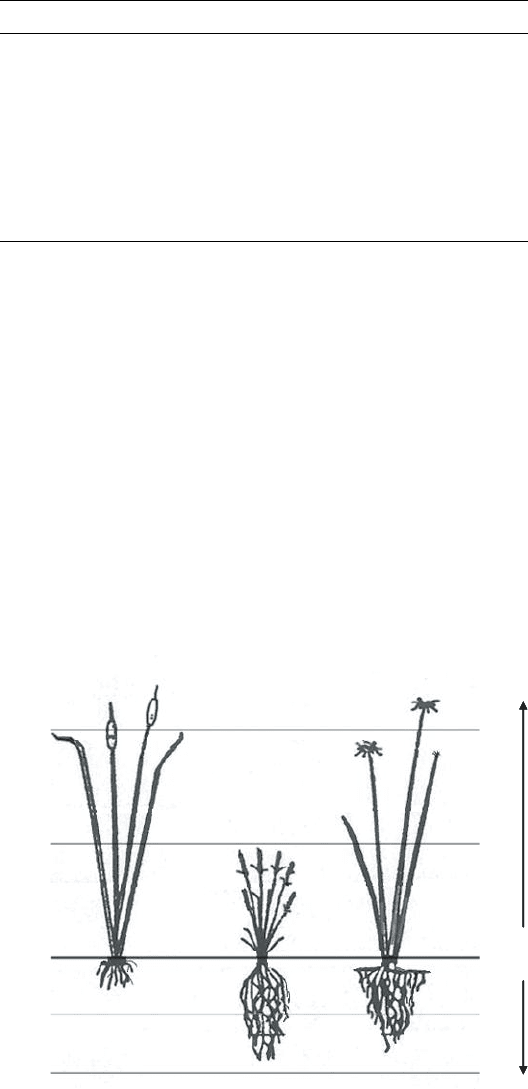
fox sedge, Carex vulpinoidea) are generally considered to offer superior levels of nutrient
removal, with ideal levels of root-zone penetra tion (typically 0.6 m) and high levels of
root mass and surface area. Conversely, although cattails (Typha latifolia) are often
observed in natural wetland settings, they are generally regarded as a nuisance plant in
constructed wetlands since their shallow-rooting tendency leads to relatively low treat-
ment properties (i.e., much of the wastewater passing through an SSF bed would pass
beneath the cattail root zone).
Duckweed and water hyacint hs (see the insert image on the top of Figure 16.34) are
commonly used in free-water systems. Duckweed has a far smaller root mass than that of
hyacinth, and it extends far less deeply into the FWS system water depth, but even then it
is often considered to be an important contributor to free-water systems, either by itself or
as a secondary plant form. Water hyacinths are even more favored in free-water
TABLE 16.8 Typical Constructed Wetland System Plant Types
Recommended Plant Type Subsurface Flow Free-Water-Surface
Arrowhead (Sagittaria spp.)
Bulrush (Scipus spp.)
Coontail (Ceratophyllum spp.)
Pondweed (Potamogeton spp.)
Rush (Juncus spp.)
Sedge (Carex spp.)
Water plantain (Alisma spp.)
Water hyacinth
Duckweed
1
0
0.5
1
2
Meters
Shallow
rooting cattail
(Typha latifolia)
Deeper
rooting fox sedge
(Carex vulpinoidea)
Deeper
rooting
river bulrush
(Scirpus fluviatilis)
1
0
0.5
1
2
Deeper
rooting
(
Figure 16.38 Representative subsurface-flow constructed wetland plant types.
630
BIOLOGICAL APPLICATIONS FOR ENVIRONMENTAL CONTROL
systems given the sizable extent of their root systems, which extend deeply into the depth
of these ponds. Hyacinths can also sustain high nutrient uptake rates, and as such they are
also used in applications for tertiary-level wastewater polishing wetlands. Large, rapidly
growing plants such as hyacinths, thoug h, can clog a free-water system unless they are
harvested on a regular basis, and in turn this residual plant mass could constitute a
sizable waste materia l. Even then, however, these waste plants may still be put to bene-
ficial use; for example, Disney World in Florida mulches their waste hyacinth plants and
digests the residual organics to produce methane gas for use as an energy-rich fuel.
One of the key uncertainties with wetland systems, though, is that of the true mechan-
ism(s) behind which contaminants are removed within wetlands, and whether the respon-
sible agent be that of plant- or microbial-based pathways. Much the same argument could
also be raised for phyto remediation systems (see Section 16.2.4), in that our understand-
ing of these processes bears a similar degree of lingering fuzziness.
Undoubtedly, plants can contribute directly to the observed uptake and degradation of
contaminants, using a complementary range of plant-based sorption, uptake, accumula-
tion, volatilization, and degradation mechanisms. Furthermore, the medium itself will
provide some measure of complementary treatment, through either simple filtration or
more complex physical–chemical mechanisms (e.g., sorption, ion exchange). Plants
will also play a significant role in the metabolic passage of water through a wetland,
and in some instances their rates of water loss through evapotranspiration will prove to
be the dominant path for water movement, even to the point where the wetland may
have little, if any (e.g., 5% or less), actual free-flowing discharge.
However, microbes extensively colonized onto and around plant root surfaces will
clearly play an important, perhaps even dominant role with contaminant removal in
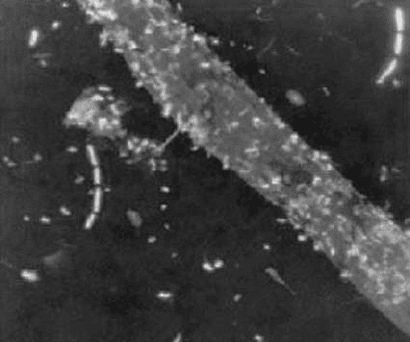
plant-based wetlands. Figure 16.39 depicts this sort of extensive bacterial attachment,
using an acridine orange cell stain to highlight living cells agai nst the darker, unstained
root surface.
Wetland plants nurture this sort of microbial colonization actively on several accounts.
First, plant root and root tip surfaces inherently offer an extensive surface area for this sort
of microbe growth. Second, plants will pump photosynthetically generat ed oxygen
Figure 16.39 Representative image of bacterial colonization on plant root surface. (Courtesy of
Jay Garland.)
WASTEWATER TREATMENT 631
through these same roots, such that this release will nurture the growth and colonization of
aerobic microbes (i. e., largely bacteria plus fungi) within the root’s immediate vicinity.
Third, plants actively release an organic-rich mix of simple sugars from their root,
known as root exudates, which will again sustain and promote active microbial growth.
On a collective basis, therefore, these plants will promote the extensive growth of
microbial biomass within the immediate vicinity of their root structures and, in turn,
these microbes will contribute to the wetland system’s overall treatment efficiency. Cyclic
oxygen release and uptake by wetland plants will actually occur on a diurnal cycle com-
mensurate with the metabolic swing between daytime photosynthesis and nighttime
respiration. FWS systems may consequently experience daily shifts in oxidizing and redu-
cing conditions within the bulk wetland fluid, which intermittently promotes aerobic,
anoxic, and anaerobic bacterial metabolism. For SSF systems, though, these same shifts
in day–night plant behavior will similarly affect microbial growth in the root rhizosphere
zone. Microbes immediately adjacent to root surfaces will probably be capable of sus-
tained aerobic activity during daytime periods, but far ther back from this oxygenated
zone, the soil and its microbes will routinely follow a more anaerobic life-style. As
such, there both aerobic and anaerobic microbial mechanisms will be involved in the
degradation process, as well as a variety of interrelated precipitation, sorption, ion-
exchange, filtration, and even volatilization reactions.
Regional climactic conditions will represent another significant design factor, both in
terms of selecting an SSF vs. FWS design strategy and in selecting the types of plants to
be used. Whereas free-water wetlands are not suited to geographical areas in which pro-
longed winter weather would freeze much of the system, SSF operations have proven to
be useful in cold-weather regions extending even into the Arctic Circle. During the winter,
an ice layer will develop across the top of SSF wetlands, extending perhaps as much as
20 cm or more in depth. However, overlying ice and snow layers act as an insulating cover
so that the underlying medium and roots remain at a temperature above freezing. Granted,
at these ambient air temperatures the plants themselves will have shifted from an active to
a dormant state, but their remaining vascular stalks are believed to act as physical chan-
nels or conduits that carry oxygen thr ough the ice and into the medium where degradative
metabolism is still maintained by an active microbial consortia. The reduced temperature,
however, results in slower metabolic rates that must be taken into account by providing
longer hydraulic retention times. Conversely, summertime wetland operations not only
enjoy considerably faster rates of microbial degradation, but in many instance the plants
involved will maintain far higher rates of evapotranspiration. In fact, depending on which
plants are used, there may even be periods during summer season operation at which a
wetland’s incoming flow is largely released into the atmosphere rather than being released
as a conventional discharge.
Many of the emergent plant species used in SSF systems tend to be fairly tolerant of
cold-weather exposure. Conversely, hyacinths used in FWS applications are not hardy
(able to tolerate freezing weather), and therefore their use is limited to warm climates.
Duckweed, on the other hand, is able to withstand colder climates, but even then this
plant form is still not widely used in these areas, given the general reluctance to use
free-water systems in cold-weather localities.
Notwithstanding the apparent biological benefits of constructed wetlands, negative
factors can be associated with these operations that must be addressed. For example,
free-water systems, particularly those without supplemental aeration, have been known
to encounter troublesome problems with mosquito growth as well as occasional odor
632 BIOLOGICAL APPLICATIONS FOR ENVIRONMENTAL CO NTROL
generation. In both instances, though, these types of problems can be alleviated or
avoided with either aerated free-water systems or subsurface-flow operations.
Annual maintenance for wetlands is, again, a rather inexact science. Harvesting is
practiced infrequently with plants grown within subsurface syst ems. Instead, carefully
controlled burning is used more commonly to remove the burden of dead, senescent plants
and to help with eradicating invasive plants that have moved into the wetland during
the past growth season. Dandelions and golde nrod are two of the more common invasive
species.
With free-water wetlands, the plants maintained within lowly loaded operations will
probably have to be thinned out with harvesting on an annual basis. Commensurate
with increased loading levels, these harvesting rates will then have to be increased, to
the point where monthly or biweekly plant thinning may be necessary with the more
highly loaded (e.g., aerated) systems.
As for the regulatory requirements and monitoring policies currently stipulated by var-
ious states for constructed wetlands, there is considerable variation. For example, different
stipulations may be placed on the location of flow monitoring equipment, but in most
instances this equipment is situated at the effluent end of the last wetland cell. In some
instances, a second flow monitori ng device (i.e., typically a flow totalizer) is installed at
the head end of the system, by which the operations personnel can then quantify the level
of water loss maintained within the overall operation due to direct evaporation plus plant-
based evapotranspiration.
FWS and SSF systems both typically exhibit fairly high level BOD and SS removal
efficiencies, ranging from 750 to 90%, albeit somewhat below the performance levels
that might be achieved with either fixed-film or activated sludge processes. For many wet-
land applications, particularly those faced with tight surface or subsurface discharge lim-
its, nitrification will probably represent one of the most critical issues, and the relative
rates, and efficiencies, of removing nitrogenous contaminants in these wetlands can
vary immensely with time and from one site to the next in relation to plant type, organic
loading rate, hydraulic loading, and climate. It is certainly possible for nitrification to
occur in these wetlands, but the results quantified to date regarding wetland nitrification
have been rather erratic, probably due to the fact that the temperatures and dissolved oxy-
gen levels in these wetlands can vary quickly. One recent upgrade on this account has
been that of using parallel SSF cells maintained in a flip-flop sequence of cyclic fill-
and-draw stages, where these periodic, diurnal-type drain steps would hopefully provide
increased oxygenation of nitrifiers working within the rhizosphere region.
16.2 SLUDGE TREATMENT
Wastewater treatment systems are designed to remove contaminants from the influent
waste stream, thereby producing a clean liquid effluent as well as a concentrated, semi-
solid residual that contains the extracted contaminants plus newly generated biological
cells. Rather understandably, the latter concentrated residuals, particularly those in raw
form, can have a rather unpleasant, if not altogether foul nature if not handled and man-
aged properly. In fact, one of the most worrisome aspects of these sludge residuals, in
terms of human health, is that of their potential contamination with a wide range of patho-
genic, disease-causing organisms, ranging from viruses and bacteria and extending
upward in scale to protozoans, as shown in Table 16.9.
SLUDGE TREATMENT 633

Up until the past decade, all forms of these concentrated residuals, whether raw or trea-
ted, were commonly described with the same ‘‘sludge’’ label in deference to the typically
negative context associated with words whose spelling begins with ‘‘sl...’’ (e.g., slap,
sleet, slum, slam, etc.). However, despite the unwholesome connotations implied by
sludge, the nature and makeup of many properly treated residuals (i.e., suitably degraded,
stabilized, disinfected, and dewatered) can actually be rather positive, if not altogether
even valuable: harkening back, as it were, to the earliest days of wastewater processing
as a means of generating nutrient-rich fertilizers.
In fact, many properly treated sludges can be used as beneficial soil amendments
on agricultural lands once their negative attributes (i.e., pathogen content, high-level
degradability, etc.) have been effectively resolved. A more positive label for these properly
TABLE 16.9 Principal Pathogens of Concern Associated with Municipal
Wastewater Biosolids
Organism Type Disease/Symptoms
Bacteria
Salmonella Salmonellosis and typhoid
Shigella Bacillary dysentery
Yersinia sp. Acute gastroenteritis
Vibrio cholerae Cholera
Campylobacter jejuni Gastroenteritis
Escherichia coli Gastroenteritis
Enteric viruses
Hepatitus A virus Infectious hepatitis
Norwalk and Epidemic gastroenteritis
Norwalk-like viruses
Rotaviruses
Acute gastroenteritis Enteroviruses
Polioviruses Poliomyelitis
Coxsackieviruses Meningitis, encephalitis
Echoviruses Gastroenteritis and respiratory infections
Reoviruses Gastroenteritis and respiratory infections
Astroviruses Epidemic gastroenteritis
Caliciviruses Epidemic gastroenteritis
Protozoans
Cryptosporidium Gastroenteritis
Entamoeba histolytica Acute enteritis
Giardia lamblia Giardiasis
Balantidium coli Diarrhea and dysentery
Toxoplasma gondii Toxoplasmosis
Helminth worms
Ascaris lumbricoides Ascarids
Toxocara sp. Ascarids
Trichuris sp. Whipworms
Necatur americanus Hookworm
Hymenolepis sp. Taeniasis (tapeworms)
Taenia sp. Taeniasis (tapeworms)
634
BIOLOGICAL APPLICATIONS FOR ENVIRONMENTAL CONTROL
treated sludges, biosolids, was consequently chosen in conjunction with a national campaign
by a U.S. association representing wastewater operations (i.e., the Water Environment
Federation) during the 1990s to promote a more proactive image for a finished product
whose prior standing as raw sludge carried a poor reputation among the general public.
The efficient and economical management of these wastewater residuals correspondingly
represents an important engineering task, one that usually relies on the alternative use of
several different biosolids treatment schemes. Granted, physical (e.g., wet air oxidation,
pasteurization, gamma irradiation) and chemical (e.g., lime stabilization, silicate-based
solidification) methods are used to stabilize and/or disinfect these residuals, but the major-
ity of sludge proce ssing systems emp loy biological mechanisms whose goal is similarly
focused on degrading, stabilizing, and disinfecting the putrescent (easily degradable) and
pathogenic (i.e., bacteria, viruses, parasites, etc.) problems associated with raw sludges.
The putrescible fraction of wastes can produce both nuisance (e.g., odor generation)
and hazardous (e.g., hazardous gas generation, such as hydrogen sulfide) conditions,
and a major goal of sludge treatment is stabi lization with these putrescible materials.
Digestion is a biochemical process by which stabilization can be achieved, such that phy-
sical reductions will then be realized in both the original solids mass and volume. Both
anaerobic and aerobic digestion options are used with liquid-phase sludge processing sys-
tems, and aerobic digestion can also be completed in a more concentrated slur ry- or
solids-type mode using composting procedures.
One additional goal with any of these processes would be that of disinfection,by
which another reduction will be secured in the original pathogen content. Of course,
extending beyond any of these digestion schemes there is usually a final processing
step, called dewatering, which is intended to reduce the water content of the biosolids
and produce a semisolid material for subsequent disposal with a total suspended solids
concentration above about 25%. The latter dewatering step is usually completed by phy-
sical processes such as filtration or centrifugation.
Before addressing specific biological options for sludge processing, further clarifica-
tion is warranted as to the fact that tw o versions of raw residuals are produced at most
primary and secondary wastewater plants. In either case, these raw residuals are then
referred to as sludge, while their biochemical transformation and treatment subsequently
generates a finished biosolids product. The primary sludge fraction includes heavy, parti-
culate organic solids as well as various combinations of grit and inorganic fines extracted
from the raw wastewater during its primary sedimentation. On the other hand, a large frac-
tion of secondary sludge residuals is simply that of bacterial cells that grew within, and
were then wasted from, the secondary biological treatment operations. Table 16.10
TABLE 16.10 Raw Primary and Secondary Sludge
Characteristics
Organic Grouping Primary % Secondary %
Protein content 20–30
a
32–41
a
Grease and fat content 6–35
a
Low
Cellulose content 8–15
a
Low
Volatile solids 60–80
a
59–88
a
a
By weight of dry total sludge solids.
Source: Adapted from Metcalf and Eddy (2003); Crites and
Tchobanoglous (1998).
SLUDGE TREATMENT
635
provides a general characterization of primary and secondary sludge forms. Before
using any one of the various biological digestion and stabilization schemes, these primary
and secondary streams will typically be blended and concentrated to achieve a desired
starting point with a total solids content of 1.5 to 6% solids (by weight). In the follow-
ing sections we provide additional details regarding strategies for converting sludge into
biosolids.
16.2.1 Anaerobic Digestion
Although each of the alternative sludge digestion and composting processes have its own
degree of metabolic complexity and operational peculiarities, anaerobic systems are
widely regarded as the most difficult to maintain given the interlinked sensitivity of
their bioc hemical pathways. Furthermore, where the aerobic options (i.e., aerobic diges-
tion and composting) involve only an oxidative breakdown of the sludge solids and a sin-
gle separation (liquid–solid) step, the anaerobic digestion process entails a sequential
series of complex metabolic pathways and concluding separations of gas, liquid, and
solid products. As a result, this digestion strategy has historically tended to require more
attention and care while being more prone to upset. Conversely, though, there are a
number of potential benefits to be gained with this technology. Most notably, the anaero-
bic digestion process tends to have a far lower energy demand (since it does not require
aeration); at the same time, it can be used to generate a useful, energy-rich by-product in
the form of methane gas that is created reductively by these metabolic reactions.
The underlying biochemical mechanism with anaerobic digestion is that of fermenta-
tion rather than the respiration reactions maintained in most aerobic wastewater treatment
systems, as discussed previously. In either case, these options again involve a balanced set
of oxidative and reductive (i.e., redox) reactions that are linked to electron donor and
acceptor compound conversions, respectively. With fermentation reactions, the ele ctron
donor and acceptor compounds are typically both organic in form, although there are
also critical pathways in which inorganic hydrogen and carbon dioxide gas species can
fill the associated roles (Zehnder, 1988). Yet another unique feature of fermentation is
that of a metabolic flexibility which allows a single organic compound to fill both
roles, not only accepting electrons but also serving as the electron donor. For example,
during the fermentative anaerobic transformation of acetate, this single substrate can
simultaneously be oxidized to CO
2
(CH
3
COO
þ 2H
2
O ! 2CO
2
þ 4e
þ
þ 7H
þ
Þ and
reduced to methane, CH
4
(CH
3
COO
þ 4e
þ
þ 9H
þ
! 2CH
4
þ 2H
2
OÞ.
Figure 16.40 provides an overview of the three progressive metabolic steps that take
place during the complete anaerobic digestion process: hydrolysis, acidogenesis, and
methanogenesis. During the first, hydrolysis step, macromolecular organic compounds
entering the system are transformed hydrolytically from large, and in many instanc es
solid-phase macromolecular materials (e.g., cellulose, grease, protein, microbial cells)
into their smaller, soluble building blocks (e.g., amino acids released from protein, carbo-
hydrates from polysaccharides, fatty acids from lipids and fats). During subsequent fer-
mentation maintained by the anaerobic digestion process, one fraction of these hydrolyzed
organics will eventually be oxidized to carbon dioxide, another fraction will be reduc-
tively converted to methane, and a third, comparatively smaller fraction will be assimi-
lated anabolically into a new anaerobic cell mass.
The two fermentation reactions following hydrolysis sequentially are acidogenesis
and methanogenosis. Acidogenesis involves the formation of acid products by which
636 BIOLOGICAL APPLICATIONS FOR ENVIRONMENTAL CO NTROL
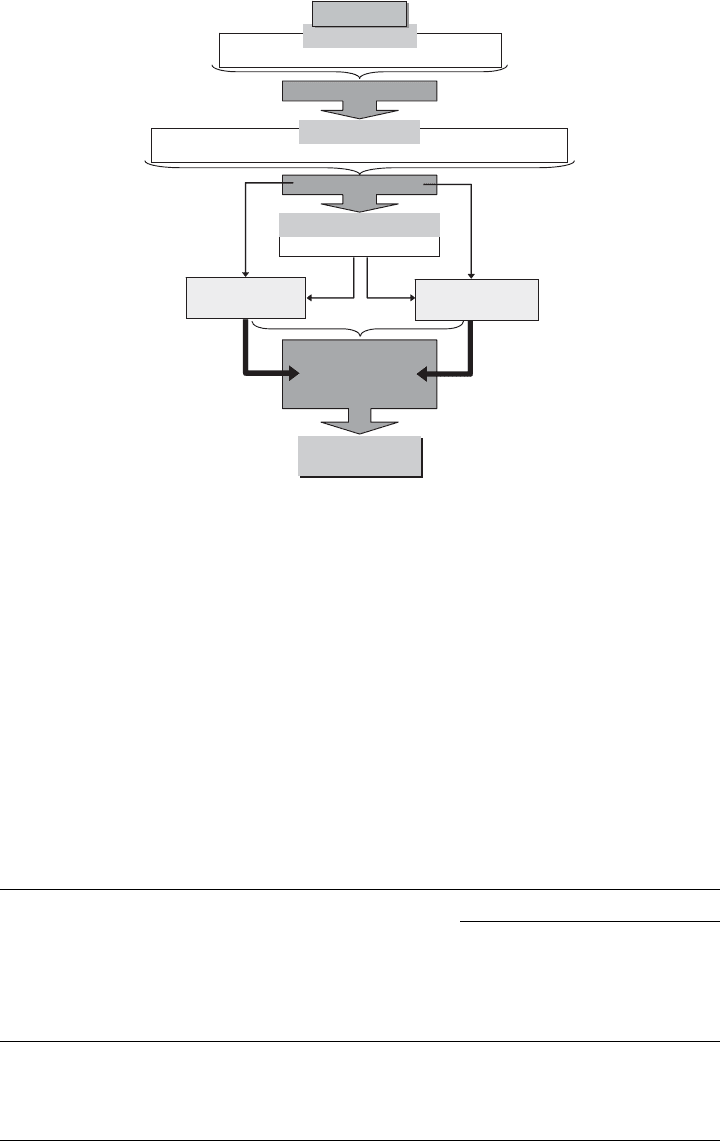
the previously hydrolyzed organics are transformed into three substrate precursors (i.e.,
CO
2
,H
2
, and acetate) in preparation for the concluding methanogenes is transformation.
Two different types of acidogenesis reactions are involved: one- and two-step conversions.
The first such mechanism produces acetate primarily (i.e., by means of an acetogenic con-
version, encompassing reactions that produce organic acids directly), whereas the second
fermentative conversion involves intermediate production of volatile fatty acids (e.g.,
butyric and proprionic aci d) and alcohols, which are converted subsequently to acetate,
hydrogen, and carbon dioxide. The latter conversions are mediated by a wide range of
gram-positive and gram-negative bacteria, whose classifications depend on the primary
form of their fermentative products (Table 16.11).
Methane (CH
4
)
Carbon Dioxide (CO
2
)
Methane (CH
4
)
Carbon Dioxide (CO
2
)
Monosaccharides Purines & PyrimidinesFatty acids Amino Acids & Peptides
Simple Organics
Proteins
Lipids
Polysaccharides
Nucleic acids
Complex Organics
BIOSOLIDS
BIOSOLIDS
Short-Chain Fatty Acids
Proprionate Butyrate
Phase I - Hydrolysis
Phase III
Methanogenesis
Phase II - Acidogenesis
Acetate
(CH
3
COO
–
)
Hydrogen (H
2
)
Carbon Dioxide (CO
2
)
Figure 16.40 Anaerobic biosolids digestion metabolic phases.
TABLE 16.11 Fermentative Bacterial Types and Products
Anaerobic Reaction Products
Fermentative
Bacterial Groups
Representative
Bacterial Forms
Proprionate
Butyrate
Acetate
Formate
Alchohols
H
2
CO
2
Proprionic acid
bacteria
Proprionibacterium
Chlostridium propionicum
Butyric acid bacteria Chlostridium butyricum
Mixed acid bacteria Enteric gram-negative bacteria
SLUDGE TREATMENT 637