
Zhang K., Li D. Electromagnetic Theory for Microwaves and Optoelectronics
Подождите немного. Документ загружается.

8.7 General Formalisms of EM Waves in Reciprocal Media 521
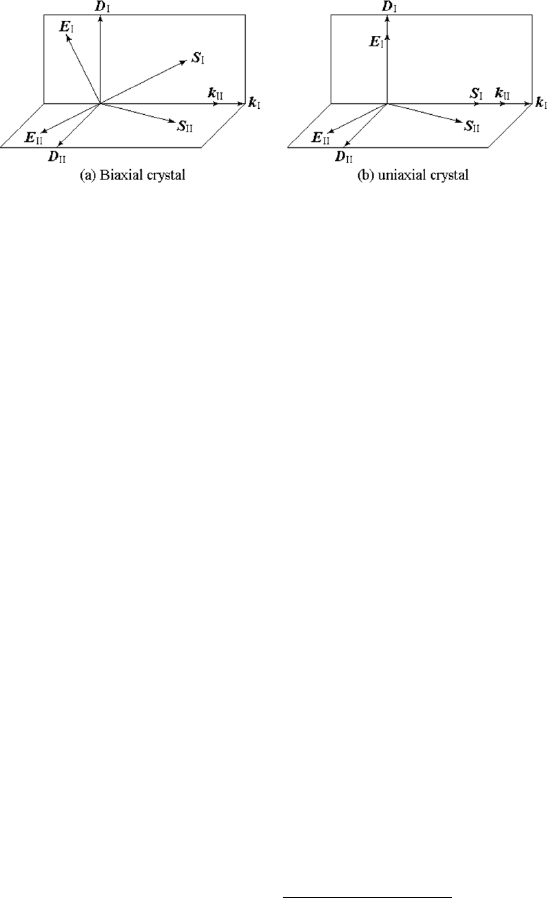
Figure 8.16: Eigenwaves in reciprocal media.
The two roots of eigenvalue equation (8.182) are equal to each other under
the following condition:
£
k
2
1
k
2
2
¡
cos
2
α + cos
2
β
¢
+ k
2
2
k
2
3
¡
cos
2
β + cos
2
γ
¢
+ k
2
3
k
2
1
¡
cos
2
γ + cos
2
α
¢¤
2
−4
¡
k
2
1
cos
2
α + k
2
2
cos
2
β + k
2
3
cos
2
γ
¢
k
2
1
k
2
2
k
2
3
= 0. (8.191)
Solving (8.191) and (8.174) gives two sets of solutions α
1
, β
1
, γ
1
and
α
2
, β
2
, γ
2
so that k
2
I
= k
2
II
. These two specific directions corresp ond to
the two optical axes of the biaxial medium.
(2) Plane Waves in Uniaxial Crystals
In a uniaxial medium, k
2
1
= k
2
2
= ω
2
µ
0
²
1
and k
3
= ω
2
µ
0
²
3
, then the eigen-
value equation (8.182) becomes
k
4
£
k
2
1
¡
cos
2
α + cos
2
β
¢
+ k
2
3
cos
2
γ
¤
− k
2
£
k
4
1
¡
cos
2
α + cos
2
β
¢
+ k
2
1
k
2
3
¡
cos
2
α + cos
2
β + 2 cos
2
γ
¢¤
+ k
4
1
k
2
3
= 0. (8.192)
Considering cos
2
α + cos
2
β + cos
2
γ = 1 and 1 −cos
2
γ = sin
2
γ in the above
equation, we obtain the eigenvalue equation for plane waves in uniaxial media:
¡
k
2
− k
2
1
¢£
k
2
¡
k
2
1
sin
2
γ + k
2
3
cos
2
γ
¢
− k
2
1
k
2
3
¤
= 0. (8.193)
The two roots of this equation are
k
2
I
= k
2
1
, k
2
II
=
k
2
1
k
2
3
k
2
1
sin
2
γ + k
2
3
cos
2
γ
. (8.194)
These roots are the same as those we obtained in the last section, (8.146)
and (8.151), so that k
I
= k
⊥
and k
II
= k
k
, which correspond to an ordinary
wave and an extraordinary wave, respectively. See Fig. 8.16(b).
The condition for equal roots is γ = 0, which corresponds to plane waves
along the optical axis z.
522 8. Electromagnetic Waves in Dispersive Media and Anisotropic Media
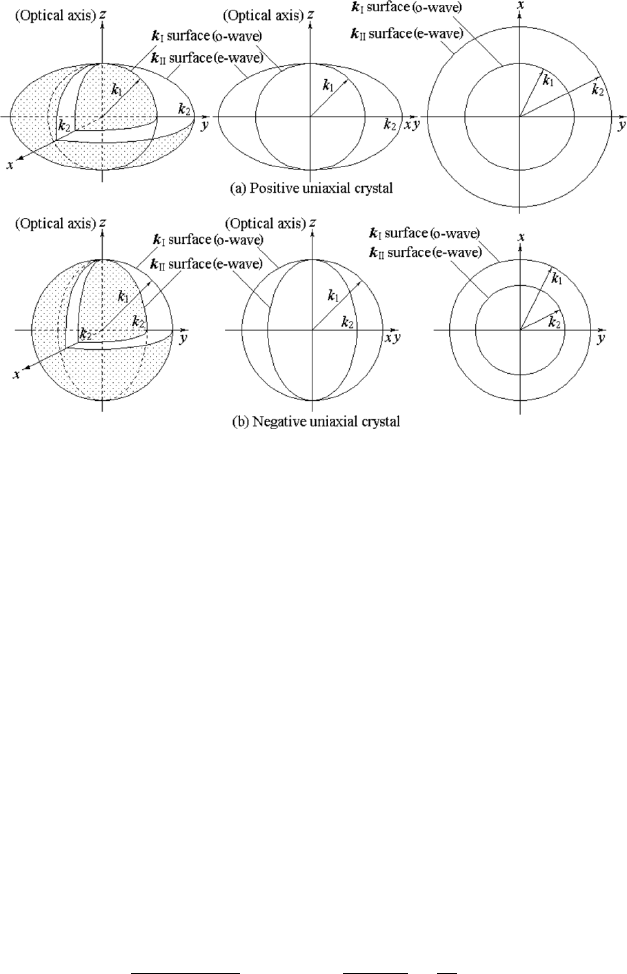
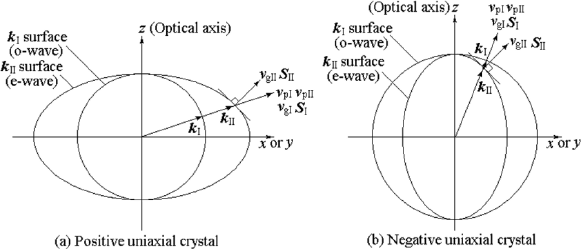
Figure 8.17: Normal surfaces for (a) positive and (b) negative uniaxial media.
8.7.4 Normal Surface and Effective-Index Surface
Consider the hyper-surface described by the eigenvalue equation (8.181) for
a constant frequency, in which the distance from the origin to a given point
on the surface is equal to the magnitude of the wave vector of an eigenwave
propagating along this direction. The surface is known as the wave surface
or normal surface. Generally, the eigenvalue equation (8.181) has two roots
k
I
and k
II
, hence the wave surface is a double-layer surface which consists of
two surfaces corresponding to the two eigenwaves. Only for isotropic media,
they reduce to one surface.
(1) Normal Surface for Uniaxial Media
For uniaxial media, k
2
1
= k
2
2
, the general eigenvalue equation (8.181) reduces
to
¡
k
2
x
+ k
2
y
+ k
2
z
− k
2
1
¢£
k
2
1
¡
k
2
x
+ k
2
y
¢
+ k
2
3
k
2
z
− k
2
1
k
2
3
¤
= 0. (8.195)
It becomes the following two quadratic equations:
k
2
x
+ k
2
y
+ k
2
z
k
2
1
= 1,
k
2
x
+ k
2
y
k
2
3
+
k
2
z
k
2
1
= 1. (8.196)
The first equation represents a sphere with radius k
1
, which is the normal
surface for an ordinary wave; and the second equation represents a ellipsoid
8.7 General Formalisms of EM Waves in Reciprocal Media 523
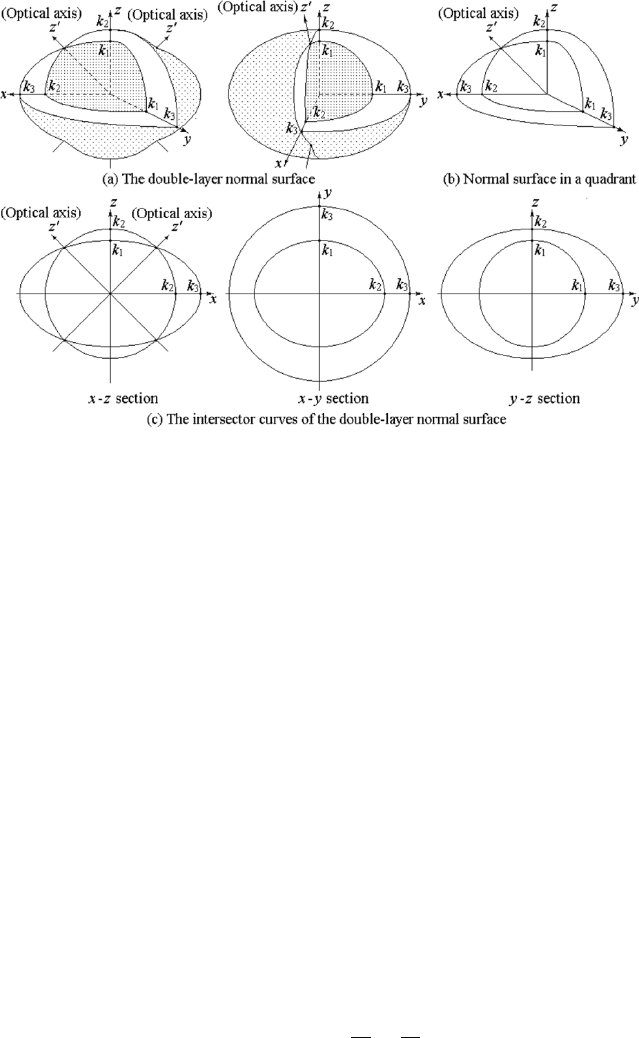
Figure 8.18: Normal surfaces for biaxial media and their intersector curves
on three coordinate planes.
of revolution with semi-axes k
1
in the z direction and k
3
in the x and y
directions, which is the normal surface for an extraordinary wave. For a
positive uniaxial medium, k
1
< k
3
, the normal surface for the extraordinary
wave is an oblate spheroid, which is externally tangential to normal surface
for the ordinary wave and intersects at two points on the optical axis, see
Fig. 8.17(a). For a negative uniaxial medium, k
1
> k
3
, the normal surface for
the extraordinary wave is an prolate spheroid, which is internally tangential
to the normal surface for the ordinary wave and also intersects at two points
on the optical axis, refer to Fig. 8.17(b).
(2) Normal Surface for Biaxial Media
For biaxial media, k
2
1
6= k
2
2
6= k
2
3
, the normal surface is determined by the
general eigenvalue equation (8.181), which is a complicate double-layer sur-
face. The two layers intersect at four points on the two optical axes, refer to
Fig. 8.18(a), (b).
The equations of the intersector curves of the double-layer normal surface
on the x-y, y-z, and z-x planes are given by
k
2
x
+ k
2
y
− k
2
3
= 0,
k
2
x
k
2
2
+
k
2
y
k
2
1
− 1 = 0, (8.197)

524 8. Electromagnetic Waves in Dispersive Media and Anisotropic Media
k
2
y
+ k
2
z
− k
2
1
= 0,
k
2
y
k
2
3
+
k
2
z
k
2
2
− 1 = 0, (8.198)
k
2
z
+ k
2
x
− k
2
2
= 0,
k
2
z
k
2
1
+
k
2
x
k
2
3
− 1 = 0. (8.199)
They are a circle and an ellipse in each plane. Suppose that k
3
> k
2
> k
1
,
the circle is enclosed in the ellipse in the x-y plane; the ellipse is enclosed
in the circle in the y-z plane; and the circle and the ellipse intersect at four
points on the two optical axes in the z-x plane. See Fig. 8.18(c).
(3) Effective Index Surface
Corresponding to the wave number of the eigenwave, we define an effective
index n
e
as follows:
n
2
e
= n
2
x
+n
2
y
+n
2
z
, n
x
= n
e
cos α, n
y
= n
e
cos β, n
z
= n
e
cos γ, (8.200)
where
k
2
x
= ω
2
µ
0
²
0
n
2
x
, k
2
y
= ω
2
µ
0
²
0
n
2
y
, k
2
z
= ω
2
µ
0
²
0
n
2
z
. (8.201)
The relations between the principle wave numbers and the principle indices
are
k
2
1
= ω
2
µ
0
²
0
n
2
1
, k
2
2
= ω
2
µ
0
²
0
n
2
2
, k
2
3
= ω
2
µ
0
²
0
n
2
3
. (8.202)
Then the eigenvalue equation (8.181) becomes
¡
n
2
1
n
2
x
+ n
2
2
n
2
y
+ n
2
3
n
2
z
¢¡
n
2
x
+ n
2
y
+ n
2
z
¢
−
£
n
2
1
¡
n
2
2
− n
2
3
¢
n
2
x
+ n
2
2
¡
n
2
3
− n
2
1
¢
n
2
y
+ n
2
3
¡
n
2
1
− n
2
2
¢
n
2
z
¤
+ n
2
1
n
2
2
n
2
3
= 0. (8.203)
The surface determined by this equation is known as the effective-index sur-
face or simply the index surface. The configuration of the index surface is
entirely the same as that of the normal surface except that the scales of the
coordinates are different.
The index ellipsoid and the index surface are two different surfaces. The
former describes the spatial distribution of the refractive indices of a crystal,
which is a single-layer surface, and the later represents the spatial distribution
of the effective indices corresponding to the wave numbers of the eigenwaves,
which is a double-layer surface.
The equations for the index surface for uniaxial medium are derived from
(8.196) as follows
n
2
x
+ n
2
y
+ n
2
z
n
2
1
= 1,
n
2
x
+ n
2
y
n
2
3
+
n
2
z
n
2
1
= 1. (8.204)
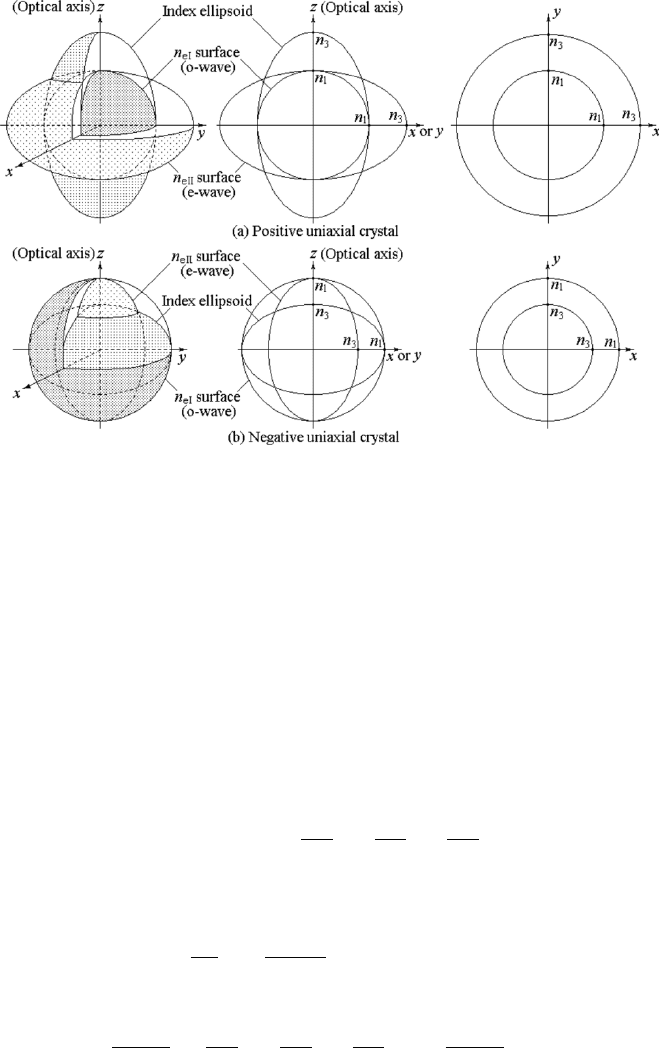
The index surfaces and the index ellipsoids for positive and negative uniaxial
media are shown in Fig. 8.19. We can see the difference and the relation
between them.
8.7 General Formalisms of EM Waves in Reciprocal Media 525
Figure 8.19: Index surfaces and index ellipsoids for uniaxial media.
8.7.5 Phase Velocity and Group Velocity of the Plane
Waves in Reciprocal Crystals
The normal surface is a spatial surface for the vector k and is a function of
frequency, hence the general equation for it can be expressed as
f(k
x
, k
y
, k
z
, ω) = 0. (8.205)
The magnitude of the phase velocity of a plane wave is given by v
p
= ω/k
and the direction is that of the vector from the origin to a given point on the
normal surface.
The group velocity of a plane wave is given by
v
g
=
ˆ
xv
gx
+
ˆ
yv
gy
+
ˆ
zv
gz
=
ˆ
x
∂ω
∂k
x
+
ˆ
y
∂ω
∂k
y
+
ˆ
z
∂ω
∂k
z
= ∇
k
ω, (8.206)
where ∇
k
denotes the gradient operator in k space. The ith component of
the group velocity vector is
v
gi
=
∂ω
∂k
i
= −
∂f/∂k
i
∂f/∂ω
, i = x, y, z,
so we obtain
v
g
= −
1
∂f/∂ω
µ
ˆ
x
∂f
∂k
x
+
ˆ
y
∂f
∂k
y
+
ˆ
z
∂f
∂k
z

= −
1
∂f/∂ω
∇
k
f. (8.207)
526 8. Electromagnetic Waves in Dispersive Media and Anisotropic Media
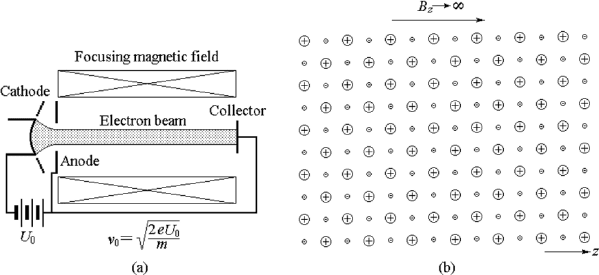
Figure 8.20: The directions of phase velocity and group velocity illustrated
in the wave-vector space.
The direction of ∇
k
f is perpendicular to the surface determined by
f(k
x
, k
y
, k
z
, ω) = 0, i.e., perpendicular to the normal surface.
The orientation in space of the phase velocity and group velocity are
shown in Fig. 8.20. We easily see that the phase velocity and the group
velocity are in the same direction for an ordinary wave, but they are in
different directions for an extraordinary wave.
8.8 Waves in Electron Beams
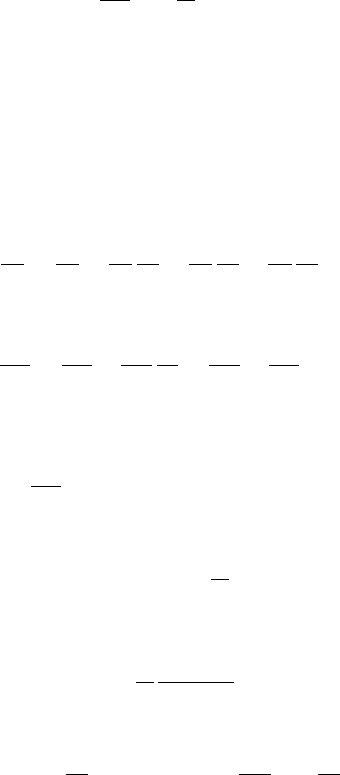
An electron beam is a stream of moving electrons in vacuum, emitted from
a cathode, accelerated by the electric field between the cathode and the
anode, confined by a longitudinal magnetic field, and finally collected by a
collector. See Fig. 8.21(a). An electron beam is an important part of most
microwave devices such as klystrons, traveling-wave amplifiers, backward-
wave oscillators, and free-electron lasers.
8.8.1 Permittivity Tensor for an Electron Beam
For simplicity, the following assumptions are introduced in our analysis.
1. The average charge density of electrons is compensated by an equal
charge density of positive ions so that the d-c electric field is neglected
and the potential is supposed to be uniform throughout the beam. The
reason of this assumption is that the residual gas is fully ionized.
2. The positive ions are considered to be unaffected by the action of time-
varying fields, because the mass of the ion is much greater than that of
the electron.
8.8 Waves in Electron Beams 527
Figure 8.21: (a) Electron beam and (b) model of electron beam/plasma.
3. The electron beam is immersed in a longitudinal (z-direction) d-c mag-
netic field which is sufficiently strong for all transverse motion to be
precluded and the electrons can move only in the z direction, B
z
→ ∞,
v =
ˆ
zv
z
, and J =
ˆ
zJ
z
.
4. The fields, charge density, and electron velocity in the beam are as-
sumed to b e uniform in the transverse section. The problem becomes
one dimensional, ∂/∂x = 0 and ∂/∂y = 0.
Under the ab ove assumptions, the model of the electron beam is a moving
plasma shown in Fig. 8.21(b).
The charge density, electron velocity, and convection current density of the
beam consist of d-c and a-c components. We assume that the a-c component
is much less than the corresponding d-c component, so that the cross products
of a-c quantities can be neglected. This is known as the small-amplitude
assumption and the analysis of the problem becomes a linear approach.
Suppose that the t dependence and z dependence of a-c quantities are
sinusoidal plane wave function e
j(ωt−k
z
z)
, then the charge density ρ, electron
velocity v, and convection current density J are given by
ρ = −ρ
0
+ ˜ρ = −ρ
0
+ ρ
1
e
j(ωt−k
z
z)
, (8.208)
v
z
= v
0
+ ˜v = v
0
+ v
1
e
j(ωt−k
z
z)
, (8.209)
J
z
= −J
0
+
˜
J = −J
0
+ J
1
e
j(ωt−k
z
z)
. (8.210)
The convection current density is J = ρv,
−J
0
+
˜
J = (−ρ
0
+ ˜ρ)(v
0
+ ˜v) = −ρ
0
v
0
− ρ
0
˜v + ˜ρv
0
+ ˜ρ˜v.
For small-amplitude analysis, the cross pro ducts of a-c quantities ˜ρ˜v are to
be neglected, so that
J
0
= ρ
0
v
0
,
˜
J = −ρ
0
˜v + ˜ρv
0
, i.e., J
1
= −ρ
0
v
1
+ ρ
1
v
0
. (8.211)
528 8. Electromagnetic Waves in Dispersive Media and Anisotropic Media
The alternative components ˜ρ = ρ
1
e
j(ωt−k
z
z)
, ˜v = v
1
e
j(ωt−k
z
z)
and
˜
J =
J
1
e
j(ωt−k
z
z)
denotes the velocity modulation, the charge density modulation
and the current density modulation, respectively.
The electric field has only a time-varying z component, i.e.,
E
z
= E
zm
e
j(ωt−k
z
z)
. (8.212)
The governing equations for the motion of electrons and the fields are the
Newton equation, the Lorentz force equation, the continuity equation, and
the Maxwell equations.
the Newton equation and the Lorentz force equation are combined as
dv
z
dt
= −
e
m
E
z
, (8.213)
where the magnetic force term is set to zero since the d-c magnetic field is
in the z direction parallel to the velocity and the effect of the a-c magnetic
field is neglected because the velocity of the electron is much smaller than c.
In this section, for a electron beam, the d-c electron charge density and
the d-c electron current density is written as −ρ
0
and −J
0
, respectively, and
the electron charge-to-mass ratio is taken as −e/m, so the values of ρ
0
, J
0
and e/m are positive. Refer to [10].
The total time derivative must in general be written as
dv
dt
=
∂v
∂t
+
∂v
∂x
dx
dt
+
∂v
∂y
dy
dt
+
∂v
∂z
dz
dt
. (8.214)
For the case of v =
ˆ
zv
z
, ∂/∂x = 0, and ∂/∂y = 0, it becomes
dv
z
dt
=
∂v
z
∂t
+
∂v
z
∂z
dz
dt
=
∂v
z
∂t
+
∂v
z
∂z
v
z
. (8.215)
Substituting (8.209) into this equation and neglecting the cross products of
the a-c quantities yield
dv
z
dt
= j(ω − k
z
v
0
)v
1
e
j(ωt−k
z
z)
. (8.216)
Then the Newton equation (8.213) reduces to
j(ω − k
z
v
0
)v
1
= −
e
m
E
zm
,
and we obtain the velocity modulation due to the action of the a-c electric
field E
z
,
v
1
= j
e
m
E
zm
ω − k
z
v
0
. (8.217)
The charge density and current density satisfy the continuity equation
∇ · J = −
∂ρ
∂t
, i.e.,
∂J
z
∂z
= −
∂ρ
∂t
. (8.218)
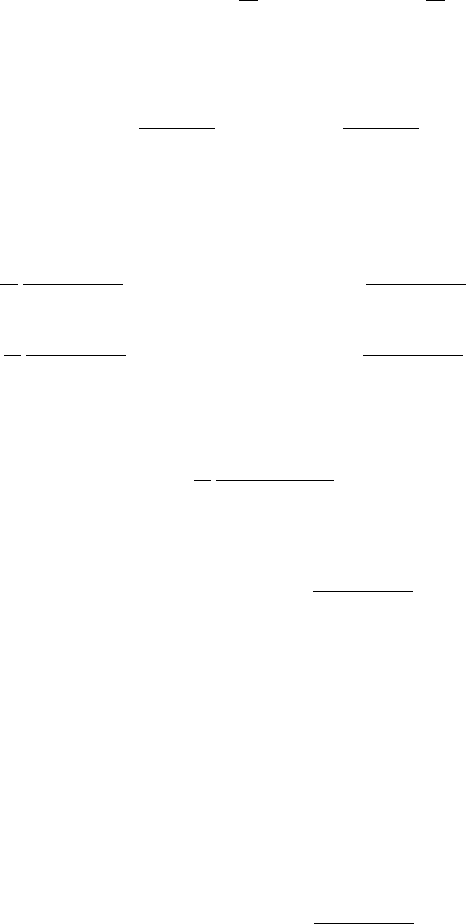
8.8 Waves in Electron Beams 529
Following (8.208), (8.210) and (8.218), we have
jk
z
J
1
= jωρ
1
i.e., J
1
=
ω
k
z
ρ
1
or ρ
1
=
k
z
ω
J
1
. (8.219)
Substituting (8.219) into (8.211) gives the charge density modulations and
current density modulations with respect to the velocity modulation,
ρ
1
= −
k
z
ρ
0
v
1
ω − k
z
v
0
, J
1
= −
ωρ
0
v
1
ω − k
z
v
0
. (8.220)
Substituting (8.217) into these expressions, we obtain the charge density
modulation and the current density modulation due to the action of the a-c
electric field E
z
,
ρ
1
= −j
e
m
k
z
ρ
0
(ω − k
z
v
0
)
2
E
zm
or ρ
1
= −jk
z
²
0
ω
2
p
(ω − k
z
v
0
)
2
E
zm
, (8.221)
J
1
= −j
e
m
ωρ
0
(ω − k
z
v
0
)
2
E
zm
or J
1
= −jω²
0
ω
2
p
(ω − k
z
v
0
)
2
E
zm
, (8.222)
where ω
p
denotes the angular plasma frequency defined in Section 8.1.7,
ω
2
p
= (ρ
0
e)/(²
0
m). The another expressions for J
1
is
J
1
= −j
e
m
ωJ
0
v
0
(ω − k
z
v
0
)
2
E
zm
. (8.223)
Substituting (8.222) into Maxwell’s equation for the curl of H gives
∇ × H = jω²
0
E +
ˆ
zJ
1
= jω²
0
E − jω²
0
ω
2
p
(ω − k
z
v
0
)
2
E
zm
ˆ
z. (8.224)
As a result of the interaction between fields and electrons, the effect of the
longitudinal field component E
z
is different from those of E
x
and E
y
, and
therefore the electron beam becomes an anisotropic medium. The ab ove
equation can be explained as
∇ × H = jω² · E, (8.225)
where
² =
²
1
0 0
0 ²
1
0
0 0 ²
3
, (8.226)
²
1
= ²
0
, ²
3
= ²
0
"
1 −
ω
2
p
(ω − k
z
v
0
)
2
#
. (8.227)
The conclusion is that the constitutional relation for an electron beam
confined by an infinite d-c magnetic field is the same as that for the uniaxial

530 8. Electromagnetic Waves in Dispersive Media and Anisotropic Media
crystal. Hence the propagation characteristics for plane waves in uniaxial
media are also suitable for the waves in an electron beam [84].
If the d-c electron velocity is zero, v
0
= 0, the electron beam becomes a
stationary plasma. Then
²
1
= ²
0
, ²
3
= ²
0
"
1 −
ω
2
p
ω
2
#
. (8.228)
This is the same as the result in Section 8.9.1.
8.8.2 Space Charge Waves
In Section 8.5, we considered waves in uniaxial media (including electron
beam) having no electric field component in the direction of propagation.
Let us now examine the case of waves where a component of electric field is
considered to exist in the direction of propagation. These waves are called
space-charge waves which play an important role in the amplification and
generation of microwaves in electron-beam devices [10].
(1) General Space-Charge-Wave Equation
Rewrite the wave equation for electromagnetic waves in ²-anisotropic media,
(8.90):
∇
2
E − ∇(∇ · E) + ω
2
µ
0
² · E = 0.
Only the space-charge field E
z
of a wave propagating along z, i.e., the direc-
tion of the d-c magnetic field is considered:
E =
ˆ
zE
z
=
ˆ
zE
zm
e
j(ωt−k
z
z)
, ∇ · E =
∂E
z
∂z
=
˜ρ
²
0
, ∇ = −jk
z
ˆ
z,
∇
2
E =
ˆ
z∇
2
E
z
, ∇
2
E
z
= ∇
2
T
E
z
+
∂
2
E
z
∂z
2
= ∇
2
T
E
z
− k
2
z
E
z
.
Then the z component of equation (8.90) may be written as
∇
2
T
E
z
− k
2
z
E
z
+ jk
z
˜ρ
²
0
+ ω
2
µ
0
²
3
E
z
= 0. (8.229)
Using (8.223) for ˜ρ and (8.227) for ²
3
, we obtain the wave equation for space-
charge–field interaction:
∇
2
T
E
z
+
¡
ω
2
µ
0
²
0
− k
2
z
¢
"
1 −
ω
2
p
(ω − k
z
v
0
)
2
#
E
z
= 0. (8.230)
This is the general space-charge wave equation.