
Yao N. Focused Ion Beam Systems: Basics and Applications
Подождите немного. Документ загружается.

semiconductor industry for mask repairing, device modification, failure
analysis, and integrated circuit (IC) debugging, but also a popular tool in
making high-quality and high-precision nanostructures [1–3].
Two basic schemes, projection printing and direct writing, are used in IB
nano-fabrication. In projection printing, a collimated beam of ions passes
through a stencil mask and the image of the mask is projected onto the
substrate using electrostatic lens systems, while in direct writing, a small spot
of the focused ion beam (FIB) is struck directly onto the substrate without a
mask. The technique of ion projection printing, also known as ion projection
lithography (IPL), which originates from the semiconductor industry,
enables parallel production of a large number of devices and has been one of
the major candidates for next-generation lithography (NGL) to replace the
currently used optical lithographic technique. Other types of printing
schemes, including proximity printing and contact printing, are not included
in this chapter because they offer limited flexibility and no rigorous devel-
opment efforts have been reported for future industrial applications. The IB
direct writing is a collection of several techniques, including milling,
implantation, ion induced deposition, and ion assisted etching, which remove
materials from, change properties in, or deposit materials on a substrate by
direct impingement of the ion beam on the target with or without chemical
reactions.
In this chapter, both projection printing and direct writing techniques are
explored for their abilities in fabricating nanostructures. In projection
printing, the current developments in its equipment, ion source, masks, and
resists with focus on their applications for NGL are assessed. The nanos-
tructures resulted from different exposures and trial tests are presented to
illustrate their feasibility and resolution. In direct writing, the ion source
and equipment for FIB are first assessed; the principles and techniques of
four FIB-related processes are then introduced and evaluated separately.
The associated nanostructures made by different procedures are also pre-
sented in order to illustrate the versatility and advancement of the FIB-
related techniques. Finally, concluding remarks with recommendations are
provided.
7.2 Ion projection lithography (IPL)
Lithography is the process of transferring patterns from one medium to
another. In this section, recent development related to the technology of IPL
is presented.
Focused ion beam systems188
7.2.1 Ion source
Two types of ion sources, either point or volume-plasma sources, have been
developed to produce nanometer resolution patterns. The volume-plasma
sources are normally used for IPL, where a collimated ion beam is formed
and projected on a substrate or resist through a mask with or without
demagnification. On the other hand, the point source is used to shape an IB
for direct writing.
In general, the axial energy spread of the ion beam, when coupled with the
chromatic aberration in the ion optical column, can lead to blurring in the
printed pattern on the target. The multicusp volume-plasma source has
replaced the duoplasmatron volume source for ion projection printing
because its ability to provide a lower axial-energy spread of ions minimizes
the chromatic aberration of the projected image. Also, the multicusp source
can be used to produce large volumes of uniform, quiescent, and high-density
plasmas with high gas and electrical efficiencies. The multicusp source is
based on electron-impact ionization, in which the energy transferred to a gas
molecule from an energetic electron exceeds the ionization energy by means
of ionizing collisions. Both the electrons and excited ions are accelerated by a
dc field or rf power at a frequency of a few MHz (up to 13.56 MHz) and
confined by an imposed magnetic field. The multicusp source is generally
used to produce hydrogen and helium ion beams. Other ion beams of Ne, Ar,
and Xe can also be generated.
An international IPL development program, called MEDEA, led by Infi-
neon and Sematech, has used a coaxial multicusp ion source for its newly
built IPL system, also known as the process development tool (PDT) for
testing the virtual source size, energy spread, homogeneity, total extract
current, and life time of the source [4]. With a specially designed extraction
system, the PDT can extract a 5 keV He
þ
beam to yield an axial energy
spread as low as 0.6 eV. Consequently, this ion source can be expected to
produce sharp features and to achieve the 50 nm resolution target. The light
ions (H
þ
,H
2
þ
,H
3
þ
,He
þ
) are particularly suitable for projection printing
because they have very little forward scattering and give off very little energy
to the secondary electrons in the polymeric resist.
7.2.2 IPL system
In an IPL system, a collimated beam of ions passes through a mask and is
accelerated by an electrostatic lens to create a demagnified image of the mask
on the wafer. The wafer is stepped chip by chip. Many efforts have been
Fabrication of nanoscale structures using ion beams 189
devoted to the advancement of IPL technologies for the applications below
100 nm. In the MEDEA project, a 4 · reduction ion optics has been devel-
oped for its prototype process development tool (PDT), in which a printing
area of 12.5 mm · 12.5 mm is designed to be printed on the wafer. To obtain a
full image of the wafer, each printing area is stitched one-by-one via syn-
chronization of the beam and wafer moment [5]. The PDT has been used to
investigate the industrial suitability for mass production of next-generation
chips and is one of the major candidates for NGL to replace the conventional
photolithography.
The co-axial multicusp ion source used in PDT has a very low energy
spread at the 1 eV FWHM (full-width-half-maximum) level. Multi-electrode
electrostatic ion optics has been used as the diverging electrostatic lens while
an online diagnostic system and field composable lens are used to compensate
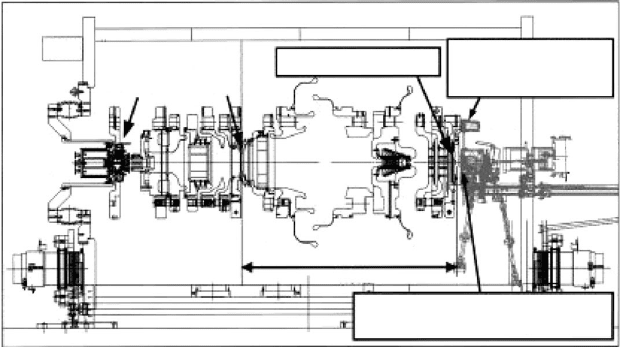
for mechanical manufacturing inaccuracies. Figure 7.1 shows a schematic of
the PDT ion-optical system. The multicusp ion source is equipped with a
co-axial Wien (EXB) mass filter. A multi-electrode electrostatic condenser
lens illuminates the 150 mm stencil mask with a nearly telecentric ion beam of
115 mm in diameter. After exciting the stencil mask, the ion beamlets are
further accelerated to energies in the 70–150 keV range and then demagnified
into a parallel beam whose image is focused at the wafer. A nine-element
multi-electrode reduction optics is used to accelerate and demagnify the
beamlets, while a pattern lock system monitors the position of 12 reference
beamlets as they travel through the ion-optical system. Diagnostic elements
are provided to measure the energy spread, beam uniformity, and distortion.
Vacuum
Ion
source
Injection
unit (ExB)
Stencil
mask
Condenser
ion optics
Turbo
pump
4× reduction ion optics
1.9 m
150 mm wafer exposure station
and in-situ distortion measurement
Si wafer
vacuum
lock
Metrology stage
Pattern lock system
Diagnostic systems:
• energy spread
• beam homogeneity
Cryo
Figure 7.1 Schematic of PDT system. (Reprinted from [13] with permission
from American Institute of Physics.)
Focused ion beam systems190
The uniformity of the current density can be controlled within 3%. By system
optimization, it is expected that the uniformity can be achieved within 1%.
The Lawrence Berkeley National Laboratory has developed a maskless ion
projection printing system called maskless microion-beam reduction litho-
graphy (MMRL). As reported by Ngo et al. [6], MMRL consists of a co-axial
multicusp ion source, a multibeamlet pattern generator, and an all-electrostatic
reduction ion-optical column. The pattern generator is used to create litho-
graphic patterns to eliminate the need for masks. During processing, each
individual ion beamlet can be switched on or off to form the lithographic
pattern by biasing the extraction electrode with respect to the plasma electrode.
Removing the use of stencil masks and the first stage, normally required by the
other IPL systems (such as PDT), can eliminate the cost and efforts for mask
development and fabrication as well as having a great potential to reduce the
equipment and operation cost. Jiang et al. [7] and Ngo et al. [6] have used nine
50 mm switchable apertures to generate the beamlets with 10 · reduction ion
optics to demonstrate the proof-of-concept of MMRL and concluded that the
maskless system is a vital candidate for NGL.
7.2.3 Mask and resist
Most of the IPL systems use two types of masks for pattern transformation as
indicated by many investigators [5,8,9]. The mask needs to be made from an
ion-transparent substrate with a pattern made up of an absorber surface. The
first one can be made of a single layer of silicon that uses a varying thickness of
the silicon acting as the absorber and the transparent membrane. Using the
same single silicon crystal minimizes the problem created due to the thermal
distortion and proton scattering in conventional masks. This is relatively easy
to manufacture using the conventional IC processes. The second type, known
as the stencil or open mask technology, is made up of open masks, in which the
patterns are etched on the metal foils. This type of mask has excellent contrast,
as the ions are not affected by passing through the open hole before striking on
the resist. However, since there is no sub-layer to hold the etched metal pat-
tern, every section in the etched pattern has to be connected to each other and
no island or detached sections can be included in the pattern. As a result, the
second type can only be used for very limited geometries.
Deep-ultraviolet (DUV) chemical-amplified resists and polymethyl metha-
crylate (PMMA) are the two most popular types of IPL resists [5,6]. They
have the best combination of resolution, minor sensitivity, and etch resistivity.
Other resists used for IPL include Hoechst’s AZ series, Olin’s HPR 506,
OCG’s HPR and ARCH [9,10]. By applying the Top Surface Imaging (TSI)
Fabrication of nanoscale structures using ion beams 191
principle and using Ga ion beam exposure associated with silylation and
oxygen dry etching, a DNQ (diazonaphthoquinone)/novolak-based resist
pattern can be obtained to be as small as 30 nm, yet maintaining a high aspect
ratio of up to 15 as indicated by Arshak et al. [ 11].
For a PDT demonstration, 150 mm stencil masks have been developed and
fabricated on SOI (silicon-on-insulator) mask-wafer blanks using established
semiconductor fabrication processes. The silicon membrane is 3 mm thick and
coated with a 500 nm thick carbon protection layer to ensure adequate mask
life. The design of these masks contains an array of overlay measurement
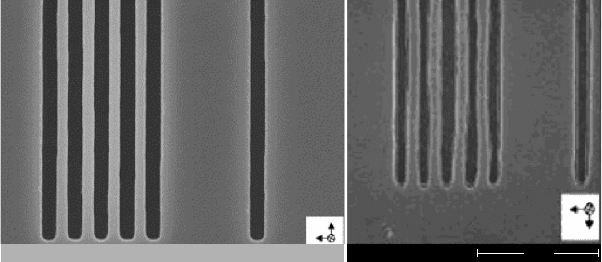
structures. Through PDT’s 4 · reduction ion-optics, one of the overlay test
masks having an array of I-marks with a linewidth of 400 nm (Figure 7.2(a ))
has been successfully used to print a 100 nm wide I-marks pattern in a 240 nm
thick Shipley XP9946-D resist as shown in Figure 7.2(b ) [ 5]. A 37.5 keV He
þ
ion beam at an exposure dose of 1.35 m C/cm
2
is used to project the I-marks
pattern on this Shipley DUV chemical amplified resist, which exhibits a sen-
sitivity of 0.8 mC/cm
2
fo r 3 7. 5 ke V He
þ
io ns [ 12 ]. This and other tests have
demonstrated that mask-to-wafer transfer for isolated and arrayed lines/space
can be performed within the required accuracy. Also, as reported by Lo
¨
es ch ne r
et al. [ 13 ], 75 nm feature patterns can be achieved and pattern collapses are the
limiting factor for determining the ultimate resolution of the system.
Moreover, exposures have been performed using the ion projector IPLM-
02 manufactured by Ion Microfabrication Systems (IMS) on the Shipley UV II
HS resist [ 14]. A 3.5 keV He
þ
ion beam is used and accelerated behind the mask
to 75 keV. The resist used is 180 nm thick and has been diluted so that a smaller
resist thickness of 180 nm could be obtained. For a 75 keV H
þ
ion exposure, the
(a) (b)
Sl-OTM-TF2-01-FS3,7-RTP-x-y-0,4-3, 11h,10kV, Wpt 3 µm
POT CO
POT CO
x
x
y
z
z
y
µm-3/4, 30k, 10kV, W 1 µm
Figure 7.2 Mask-to-wafer transfer by PDT. (a) SEM image of 400 nm
resolution patterns of overlay test mask (modified from [ 5 ]), (b) 100 nm line-
space pattern printed in 240 nm thick Shipley XP9946-D resist. (Courtesy of
Hans Lo
¨
eschner of IMS Nanofabrication in Vienna.)
Focused ion beam systems192
resist sensitivity is 10
12
ions/cm
2
, which corresponds to 0.15 m C/cm
2
. An open
stencil mask with arrayed patterns fabricated on a SOI wafer is used for a
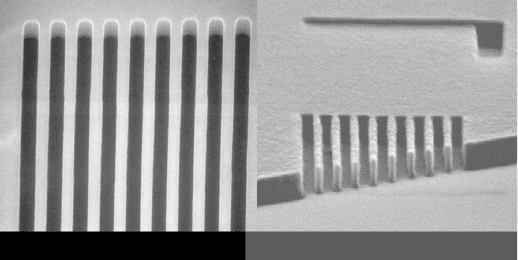
resolution study. Figure 7.3(a) shows the stencil mask with a linewidth of
650 nm, while, through an 8.7 demagnification by ion optics, a pattern of
75 nm wide lines and spaces is printed on the DUV resist without pattern
collapse as shown in Figure 7.3 (b). As indicated in Figure 7.3, the mask
shows good edge quality, while no proximity effect is visible at the line ends
in the exposed resist pattern, even though the resist has been removed by a
second exposure of equal dose in the front part of the picture to allow SEM
side view. It is noteworthy that the higher dose used in the test could effec-
tively reduce the edge roughness of the resist.
7.2.4 Resistless IPL
Ions have a unique feature of directly modifying a wide range of materials
without the need of a resist. In IPL, a whole surface area can be treated in
parallel and can be patterned into a substrate in a single-step process that
should be much faster than the series process or direct writing using FIB. IPL
has been used for the resistless patterning of semiconductors (Si, GaAs, poly-
Si), insulating layers (SiO
2
,Si
3
N
4
), and metals (Al, Ni, Mo, Au) in addition
to patterning organic thin films and resists. In many conditions, it is desirable
to avoid the use of a resist. For instance, in making high-temperature
superconductor nanostructures, undesirable chemical reactions could occur
with the resist.
Bruenger et al. [ 15] have used the IPLM-02 ion projector to perform
direct milling on a 35 nm thick Au film using an open stencil mask with 8.7
(b)(a)
000005 25KV X6.00K 5.0um
.. . . . . . .. . .
000028 25KV X40.0K 0.75um
.. . . . . . . . . .
Figure 7.3 Ion projection resolution evaluation. (a) SEM image of stencil
mask with 650 nm wide lines and spaces, (b) SEM image of 75 nm line
pattern printed by 8.7 · reduction in 180 nm thick Shipley DUV resist.
(Courtesy of W. H. Bruenger of Fraunhofer Institute in Berlin.)
Fabrication of nanoscale structures using ion beams 193
demagnification ion optics. To increase the milling rate, the light ions
normally provided by the multicusp ion source used in IPLM-02 are
replaced by the heavier Xe
þ
species without any change in emission sta-
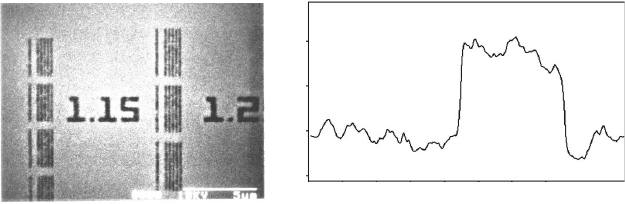
bility or uniformity. Figure 7.4(a) shows an array of line patterns milled
with a dose of 2 · 10
15
Xe
þ
ion/cm
2
at 75 keV having the smallest linewidth
of 130 nm, while, based on the profile measurement by white light inter-
ferometry shown in Figure 7.4(b), the milling depth is 8 nm. The apparent
roughness of the gold film is believed to be due to its grain structure.
IPL milling should be especially attractive for fabricating magnetic nano-
dots, since other techniques, including photolithography, e-beam lithography,
and nanoimprint lithography have to use resist-based processes that are not
preferable to keep the topography of a surface unchanged. This is extremely
important for magnetic disks with a surface roughness of a few nanometers.
Through a stencil mask, Dietzel et al. [ 16 ,17] used the IPLM-02 projector
with a 3 · 10
14
Xe
þ
io n/ cm
2
dose at 73 keV to mill magnetic Co-Pt multi-
layers. Based on the magnetically altered areas measured by magnetic force
microscopy (MFM), Dietzel et al. [16,17 ] reported that magnetic islands
with an averaged diameter of less than 100 nm are formed. Also, the atomic
force microscopy (AFM) measurement indicates that the surface roughness of
the topography after the IPL process is 1.1 nm in rms, which confirms that
the topography change by IPL is negligible. Thus, IPL is acceptable for
magnetic media applications. Earlier, Bruenger et al. [ 15 ] had also used the
IPLM-02 projector to mill a magnetic Fe-Pt film with a 10
16
He
þ
io n/ cm
2
dose
at 75 keV and reported that the averaged magnetic island size was 340 nm. By
experimental evidence and numerical simulation, Dietzel et al. [16]and
Bruenger et al. [15,18] noticed that Xe
þ
and Ar
þ
are more effective by two
orders of magnitude compared to He
þ
and believe that with an appropriate
nm
µm140120100806040200
4
–4
0
–8
(a) (b)
Figure 7.4 IPL milling with Xe
þ
ion in polycrystalline Au film. (a) SEM
image of milled line pattern with smallest width of 130 nm, (b) depth profile
of milled pattern measured by white light interferometry. (Courtesy of
W. H. Bruenger of Fraunhofer Institute in Berlin.)
Focused ion beam systems194
mask design, IPLM-02 can make magnetic dots as small as 50 nm in diameter,
which would result in a storage density greater than 10 Gbit/cm
2
.
7.3 Direct writing
FIB is normally used for the direct writing of nanostructures. IB direct
writing is a process of transferring patterns by using an energetic FIB to
directly hit the target to cause physical and/or chemical changes in the target
materials. Four major direct writing processes will be considered in this
section milling, implantation, ion assisted etching, and ion induced deposi-
tion. While the first two are governed by physical alterations, the latter two
are dominated by chemical transformation.
7.3.1 Ion source
FIBs use liquid-metal ion sources (LMIS), which are high brightness ion
sources because they can produce a beam of heaver ions that can be focused
into fine spots of the order of 10 nm with adequate current densities for direct
writing. Almost all metals that have relatively low melting temperatures and
low reactivity can be used as the sources. The range of materials being used in
FIB systems is also expanding to further increase the extent of their appli-
cations. The ion sources that are currently available include Al, As, Au, Be,
Bi, Cs, Cu, Ga, Ge, Er, Fe, In, Li, Ni, Pb, Pd, Pr, Pt, U, and Zn [1]. Among
these, Ga is the most popular ion species used in FIB for direct writing. In
order to lower the melting point and to control the reactivity, alloy sources,
such as PdAs, PdAsB, AuSi, and AuSiBe, are frequently used to deliver the
dopants for semiconductors [19].
A typical LMIS consists of a capillary tube with a needle through it, an
extraction electrode, and a shielding. The capillary acts as a reservoir that feeds
liquid-metal to the tip. The interaction of the strong electrostatic force gen-
erated by the extraction electrode and the surface tension causes the liquid-
metal meniscus to form a sharply peaked cone, also known as the Taylor cone.
The application of the critical Taylor voltage on the liquid-metal cone extracts
positively charged ions. The ions are condensed into focused parallel beams by
the lens and ground electrodes, also called the upper or condenser lens [1].
7.3.2 FIB systems
The basic components of an FIB system consist of an ion source, ion optics, a
substrate stage, and a vacuum chamber with auxiliary equipment. Figure 7.5
Fabrication of nanoscale structures using ion beams 195
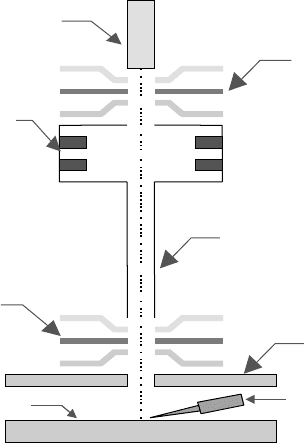
schematically shows an FIB system with an LMIS. The ions are focused and
collimated into parallel beams by the upper (condenser) lens. Then, the ion
beam is passed through a mass separator and a drift tube. A mass separator
is only necessary for high-energy systems equipped with liquid alloy ion
sources. It is set up to filter out unwanted ion species emitted from the alloy
ion sources by allowing only the required ions with a fixed mass–charge ratio
to pass through. Below the mass separator, there is a long collinear drift tube
equipped with a stigmatic focusing lens for stigmatism and collimation,
which eliminates the ions that are not directed vertically. The lower (objec-
tive) lens is located below the drift tube and helps in reducing the spot size
and in improving the focus. Following the objective lens is an electrostatic
beam deflector that controls the final trajectory or landing location of the
ions on the substrate.
Many accessories, including the nozzle shown in Figure 7.5, are equipped
for FIB assisted etching and induced deposition. Also, in processing insu-
lated substrates, a nozzle type of equipment is needed to provide low energy
nonfocused electrons to compensate the charging on the substrate surface
and to neutralize the substrate. Often, a multi-channel plate (MCP) is
located above the target. The MCP helps in recording the secondary electron
emission and thereby, helps in viewing the substrate. All the components are
usually placed in a low-pressure chamber evacuated to the 10
7
Torr regime.
Source
(LMIS)
Substrate
Nozzle
Drift tube
Mass
separator
Upper
lens
Lower
lens
Beam
deflector and
MCP
Figure 7.5 Schematic of FIB system.
Focused ion beam systems196
This is done so that the mean free paths of the ions are increased and the
strength of the beam is not reduced due to the interference of the particles in
the chamber [1,20].
7.3.3 FIB milling
Essentially, milling is a process combining physical sputtering, material
redeposition, and amorphization. In this section, following the evaluation of
sputtering, the effects of redeposition and amorphization are discussed. The
combined effects in milling are then illustrated by evaluating the milling
characteristics of three basic nanostructures: holes, trenches, and 3D stacked
structures. An understanding of these milled patterns can lead to enhancing
the material removal rate in milling and further improving the dimensional
controllability for milling high-precision, more complex nanostructures.
Sputtering and sputter yield
When an energetic ion bombards the surface of the target solid, a variety of
ion–target interactions can occur. The most important interaction for milling
is sputtering, in which the energy transferred from the ions to the targeted
substrate is high enough leading to a collision cascade involving substrate
atoms on or near the surface to cause material removal. For the majority of
the ion sources used in FIB, the optimized ion energy leading to a surface
collision cascade of most engineering target materials is in the range from 10
to 100 keV. For energy higher than the order of 100 keV, the ions can easily
penetrate into and be trapped inside the target substrate where the implan-
tation occurs. For ion energy higher than the order of 1 MeV, inelastic
interactions can become dominant and many high-energy particles can be
generated. In milling, only the sputtering interaction is desirable.
Normally, the sputter yield is used to measure the efficiency of the sput-
tering process and is defined as the number of atoms ejected from the target
surface per incident ion. A software package, called SRIM (Stopping and
Range of Ion in Matter), has been widely used for predicting the sputter yield
for many different ions over a wide range of energies. SRIM is a compre-
hensive program that uses a Monte Carlo treatment of ion–atom collisions to
calculate the stopping range of ions (10 eV to 2 GeV/atomic mass unit) into
matter [21,22]. It provides the distribution of the ions and the kinetic phe-
nomena associated with the ion’s energy loss, including target damage,
phonon production, ionization, ion reflection, implantation, and sputtering.
The dependence of the sputter yield on ion energy, incident angle, and the
target material can be predicted by SRIM. Figure 7.6 shows the sputter yield
Fabrication of nanoscale structures using ion beams 197