Николаева О.С. (сост.) Документы по истории японской деревни. Часть 1. Конец XVII - первая половина XVIII в
Подождите немного. Документ загружается.

Приложения
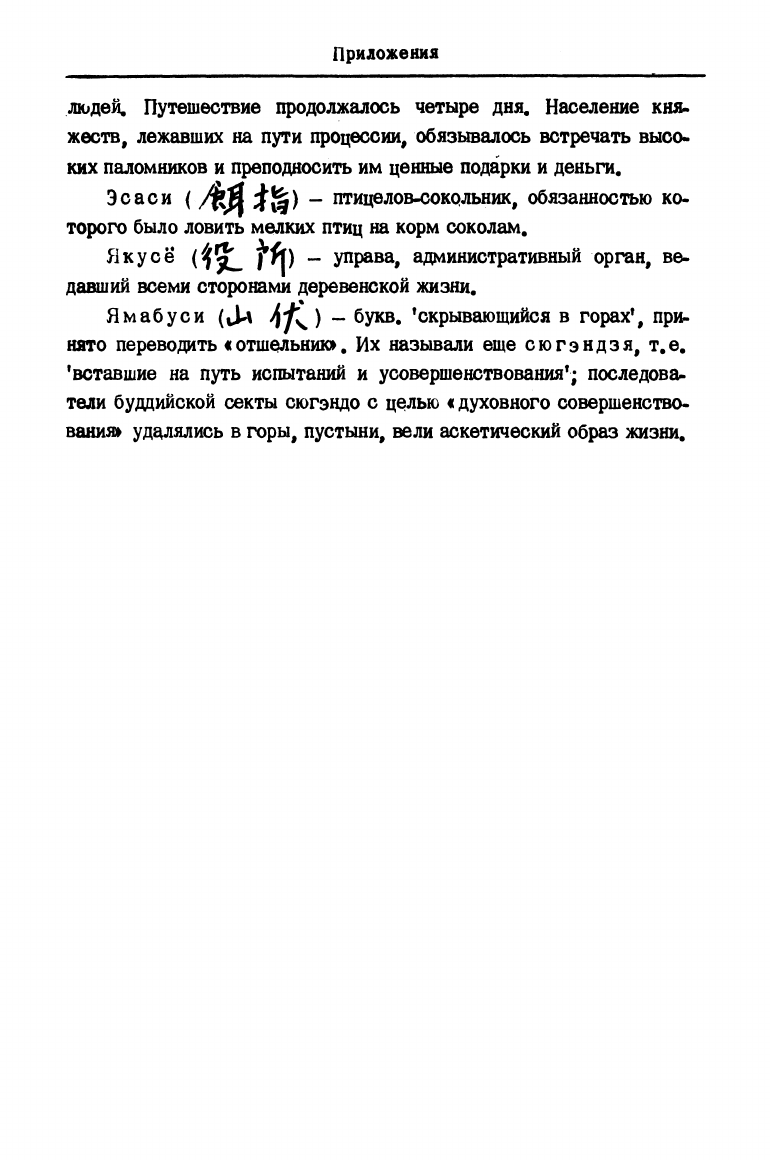
людей.
Путешествие продолжалось четыре дня. Население кня-
жеств,
лежавших на пути процессии, обязывалось встречать высо-
ких
паломников и преподносить им ценные подарки и деньги.
Эсаси
( foй $%j) - птицелов-сокрльник, обязанностью ко-
торого
было ловить мелких птиц на корм соколам.
Яку
се (№i f ft) - управа, административный орган, ве-
давший всеми сторонами деревенской жизни.
Ямабуси
(ий 4/ч) "" букв. Скрывающийся в горах
1
, при-
нято
переводить «отшельник». Их называли еще сюгэндзя, т.е.
'вставшие на путь испытаний и усовершенствования
1
; последова-
тели
будцийской секты сюгэндо с целью «духовного совершенство-
вания» удалялись в горы, пустыни, вели аскетический образ жизни.
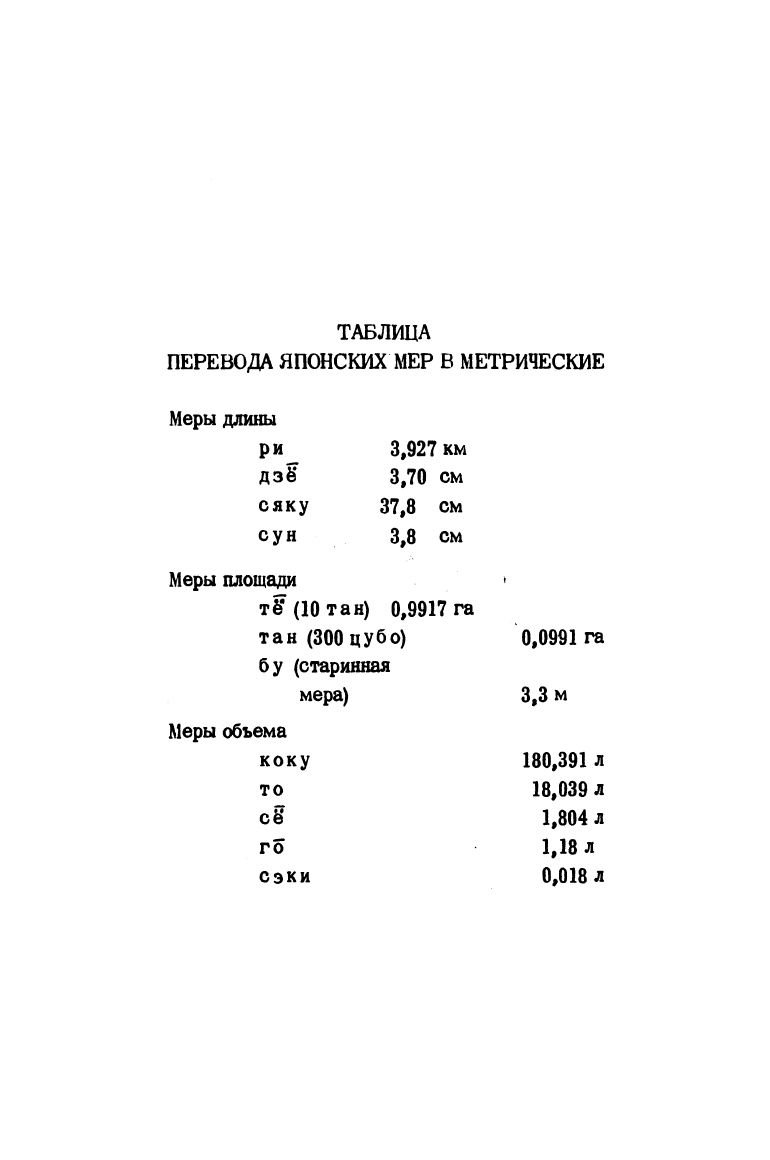
ТАБЛИЦА
ПЕРЕВОДА ЯПОНСКИХ МЕР
В
МЕТРИЧЕСКИЕ
Меры
длины
ри 3,927
км
дзё 3,70 см
с
яку 37,8 см
сун 3,8 см
Меры площади <
т£(10тан) 0,9917 га
тан (300 цубо) 0,0991 га
бу (старинная
мера) 3,3 м
Меры объема
коку
180,391л
то
18,039 л
сё 1,804 л
го 1,18 л
сэки
0,018 л


SUMMARY

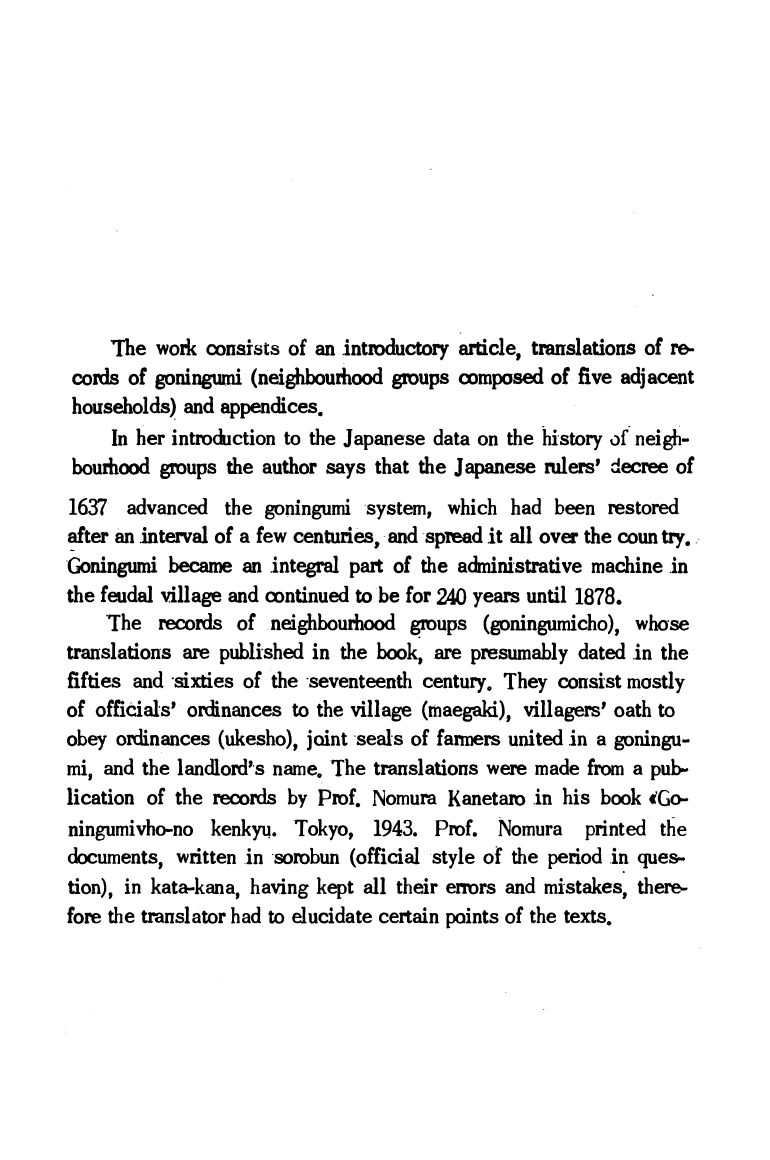
The work consists of an introductory article, translations of re-
cords of goningumi (neighbourhood groups composed of five adjacent
households) and appendices.
In her introduction to the Japanese data on the history of neigh-
bouihood groups the author says that the Japanese rulers' decree of
1637 advanced the goningumi system, which had been restored
after an interval of a few centuries, and spread it all over the coun try.
Goningumi became an integral part of the administrative machine in
the feudal village and continued to be for 240 years until 1878.
The records of neighbourhood groups (goningumicho), whose
translations are published in the book, are presumably dated in the
fifties and sixties of the seventeenth century. They consist mostly
of officials' ordinances to the village (maegaki), villagers
1
oath to
obey ordinances (ukesho), joint seals of farmers united in a goningu-
mi, and the landlord's name. The translations were made from a pub-
lication of the records by
Prof.
Nomura Kanetaro in his book «Go-
ningumivho-no kenkyu. Tokyo, 1943.
Prof.
Nomura printed the
documents, written in sorobun (official style of the period in ques-
tion),
in kata-kana, having kept all their errors and mistakes, there-
fore the translator had to elucidate certain points of the texts.
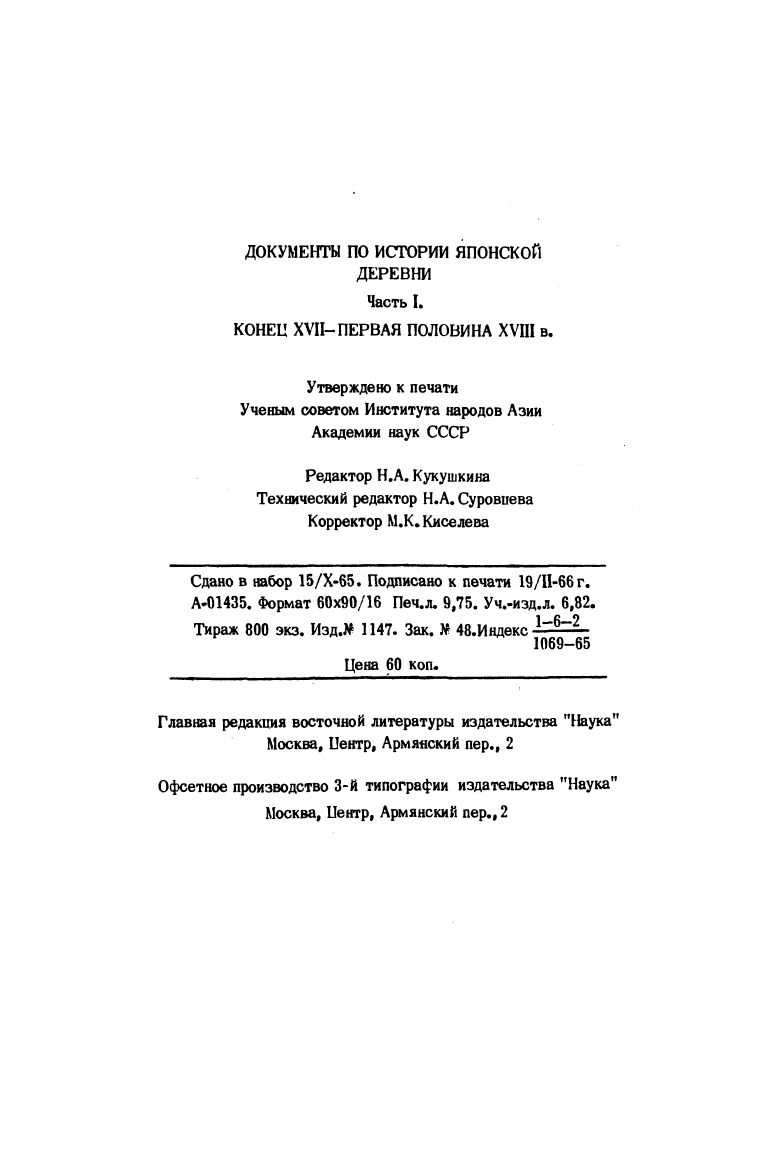
ДОКУМЕНТЫ
ПО
ИСТОРИИ
ЯПОНСКОЙ
ДЕРЕВНИ
Часть
I.
КОНЕЦ
XVII-ПЕРВАЯ
ПОЛОВИНА
XVIII в.
Утверждено
к печати
Ученым советом Института народов Азии
Академии наук СССР
Редактор
Н.А. Кукушкина
Технический редактор Н.А. Суровцева
Корректор М.К.Киселева
Сдано
в набор
15/Х-65.
Подписано к печати
19/11-66
г.
А-01435.
Формат
60x90/16
Печ.л. 9,75. Уч.-изд.л. 6,82.
Тираж 800 экз.
Изд.й
1147. Зак.
№
48.Индекс Ь
6
"
2
1069-65
Цена
60 коп.
Главная редакция восточной литературы издательства "Наука"
Москва,
Центр,
Армянский
пер., 2
Офсетное
производство 3-й типографии издательства "Наука"
Москва,
Центр,
Армянский
пер., 2